Fulltext
The full text of this article is available on the PDF file.
Zahedan Journal of Research in Medical Sciences
The Official Journal of Zahedan University of Medical Sciences
Image Credit:Zahedan J Res Med Sci
Authors
Background : So many methods have been developed and tested to control post-surgical pain. In this study, the effect of bupivacaine-H medicine (along with epinephrine) on the post-surgical pain reduction in cesarean mothers was examined.
Materials and Method s: In a double blind randomized clinical trial study conducted in Kerman, 70 pregnant women who were eligible for elective cesarean section participated in the study as randomized into two case and control groups. In all the patients, cesarean section incision lengths were equal and bupivacaine was injected after infant delivery. In the control group, physiological serum was used as placebo instead of medicine. Pain severity was compared between two groups using Visual Analogue Scale (VAS) on 6, 12, 24 and 48 hours after operation. The results were analyzed applying SPSS-11 software and using Mann-Whitney U and Wilcoxon tests.
Results : Mean age of the patients was 25.36 years with standard aviation of 2.48 years and the age range of 18-28 years. A previous cesarean with relative frequency of 38.5 percent was the main cause of cesarean section in such patients. In the case group, pain severity before 24 hours was less than that in the control group. After 24 hours of the operation, the pain severity in both case and control groups were similar.
Conclusion : In general, bupivacaine injection into the cesarean incision area will cause to reduce the pain after cesarean section in the mothers and considering its minor complications, such medicine may be used as an effective pain control method in women.
© 2013, Author(s). This open-access article is available under the Creative Commons Attribution 4.0 (CC BY 4.0) International License (https://creativecommons.org/licenses/by/4.0/), which allows for unrestricted use, distribution, and reproduction in any medium, provided that the original work is properly cited.
Hirmanpour A, Talakoub R, Mansouri H. Effect of Intravenous Infusion of Lidocaine on Pain Reduction after Cesarean Section under General Anesthesia. J Cell Mol Anesth. 2018;3(1):e149542. doi: https://doi.org/10.22037/jcma.v3i1.16045
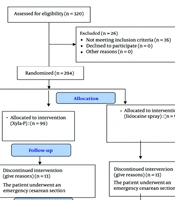
Ghalenoii Z, Movahedi S, Motezaker A, Ebrahimi E. Xyla-P Cream vs. Lidocaine Spray: Impact on Patient Satisfaction, Anxiety, Cooperation, and Pain in Spinal Anesthesia for Cesarean Section. Anesth Pain Med. 2024;14(6):e157126. doi: https://doi.org/10.5812/aapm-157126
Pakzad Moghadam SH, Pourparizi M, Mirzaei T, Ravari A, Mirzaeikhalilabadi S. Analgesic Effect of Preoperative Intravenous Administration of Paracetamol on Post-cesarean Pain: A Randomized Clinical Trial. Anesth Pain Med. 2023;13(1):e134316. doi: https://doi.org/10.5812/aapm-134316
Darvish H, Memar Ardestani B, Mohammadkhani Shali S, Tajik A. Analgesic Efficacy of Diclofenac and Paracetamol vs. Meperidine in Cesarean Section. Anesth Pain Med. 2014;4(1):e9997. doi: https://doi.org/10.5812/aapm.9997
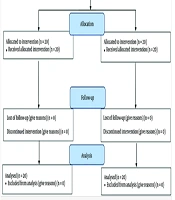
Jamshidi M, Ghaderi M, Hojatansari M. Comparing Analgesic Efficacy: Ropivacaine with Dexamethasone vs. Ropivacaine with Dexmedetomidine After Cesarean Section Using Transversus Abdominis Plane Block (2020 - 2021). Anesth Pain Med. 2024;14(5):e147872. doi: https://doi.org/10.5812/aapm-147872
More by these authors
Last Update: 2 weeks ago
Last Update: 2 weeks ago
Last Update: 2 weeks ago
Last Update: 3 hours ago
Last Update: 6 hours ago
Last Update: 5 days ago