Fulltext
The full text of this article is available on the PDF file.
Zahedan Journal of Research in Medical Sciences
The Official Journal of Zahedan University of Medical Sciences
Image Credit:Zahedan J Res Med Sci
Authors
Background: The objective of this study is to evaluate the refractive error and oculomotor conditions of infants born by assisted reproductive techniques (ART) in patients referring to Royan Institute as well as Child Health and Development Center.
Materials and Methods: In this cross-sectional study, 270 ART-exposed infants aged less than 9 months were tested by retinoscopy, fixation conditions, Hirschberg and Doll's eye maneuver.
Results: The average refractive error of these infants shows hyperopic Shift +0.9±1.1 D. The average astigmatism recorded in these infants is -0.6±0.6D. The prevalence of refractive errors in these infants is myopia 6%, hyperopia 85% and emmetropia 9%. Impairment of fixation conditions, Hirschberg test and Doll's eye maneuver was respectively observed in 20.4, 1.4 and 3.7% of the studied infants.
Conclusion: Given the sensitivities in the visual system development process and critical period which is important for every infant in the very first months of birth, it seems that visual-ocular studies are more important in ART-exposed infants who were exposed to different factors until their birth. The results of refractive errors, fixation conditions, Hirschberg test and Doll’s head maneuver which was conducted in this study for these infants reveal that, it is likely that visual impairment in these infants is higher than the results of foreign studies. However, lack of access to population studies in infants below 1 year of age in Iran necessitates more extensive studies and follow-ups of vision of ART-exposed infants more seriously.
© 2012, Author(s). This open-access article is available under the Creative Commons Attribution 4.0 (CC BY 4.0) International License (https://creativecommons.org/licenses/by/4.0/), which allows for unrestricted use, distribution, and reproduction in any medium, provided that the original work is properly cited.
Noori S, Nedaeifard L, Agarasouli Z, Koohpaiehzadeh J, Mozafari Kermani R, et al. Prelinguistic Behavior of Infants of Assisted Reproductive Techniques. Inn J Pediatr. 2012;22(4):. doi:
Shahzadehfazeli A, Nedaifard L, Nateghi M, Kouhpayezadeh J, Zoljalali S, et al. Evaluation of the Growth Process of Infants Conceived by Assisted Reproductive Techniques at Royan Institute from Birth to 9 Months. Inn J Pediatr. 2016;22(1):. doi:
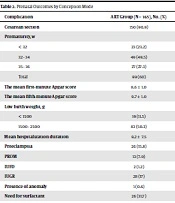
Khoei E, Afjehi SA, Tajalli S, Aliyari R, Fallahi M. Infantile Prognosis of Neonates Conceived by Assisted Reproductive Technology: A Prospective Study. Inn J Pediatr. 2023;33(2):e132408. doi: https://doi.org/10.5812/ijp-132408
Yekta AA, Hashemi H, Shadalouee Z, Dadbin N, Ostadimoghaddam H, et al. Distribution of Binocular Vision Anomalies and Refractive Errors in Iranian Children With Learning Disabilities. J Compr Ped. 2015;6(4):e32680. doi: https://doi.org/10.17795/compreped-32680
Ghasemi M. Prevalence of Amblyopia in Bou-Ali eye clinic. J Inflamm Dis. 2024;4(3):e154723. doi:
Last Update: 2 weeks ago
Last Update: 2 weeks ago
Last Update: 2 weeks ago
Last Update: 3 hours ago
Last Update: 1 day ago
Last Update: 4 days ago