Fulltext
The full text of this article is available on the PDF file.
Zahedan Journal of Research in Medical Sciences
The Official Journal of Zahedan University of Medical Sciences
Image Credit:Zahedan J Res Med Sci
Authors
Background: The one step in evaluation of binocular vision is determination of type and amount of deviation. For this purpose objective and subjective methods were used. The purpose of this study is was to compare the measured heterophoria with objective (cover test) and subjective methods (von Graefe, Maddox rod, phi phenomenon) considering motor dominancy.
Materials and Method: In this semi-experimental study, 100 students of Zahedan University of medical sciences who had inclusion criteria, selected, randomly. Refractive errors and dominant eye were determined by retinoscopy and hole in the card test, respectively. The deviation was measured objectively by using alternate prism cover test and subjectively by von Graefe, Maddox rod and phi phenomenon tests so dominant and nondominant eye were fixed alternatively. Data were analyzed in SPSS-15 software using repeated measurement of ANOVA and correlation tests.
Results: There were considerable statistical difference between different measurement methods considering the dominancy of fixator eye (p<0.001). In the correlation test, the most and least correlations were related to phi phenomenon (dominant eye fixator) and phi phenomenon (non dominant eye fixator) and von Graefe and phi phenomenon (with dominant eye fixator), respectively.
Conclusion: The most accurate heterophoria measurement methods were phi phenomenon, cover test, Maddox rod and von Graefe, respectively. Although accuracy of phi phenomenon was more than other methods in determination of deviation, because subjective methods cannot be used in all conditions, cover test is the best method in measuring eye deviation. Also, measured deviations in all of methods were lower when dominant eye was fixator.
© 2011, Author(s). This open-access article is available under the Creative Commons Attribution 4.0 (CC BY 4.0) International License (https://creativecommons.org/licenses/by/4.0/), which allows for unrestricted use, distribution, and reproduction in any medium, provided that the original work is properly cited.
Ashtari A, Mortazavi A, Aliyaei M. Comparison of the correlation between refractive errors (myopia hyperopia) with stereopsis. koomesh. 2006;7(1):e152078. doi:
Moemeni H, Yekta A, Ansari H. The Study of relationship between binocular vision and near point of convergence while near vision. Zahedan J Res Med Sci. 2007;9(1):e94827. doi:
Ghasemi M. Prevalence of Amblyopia in Bou-Ali eye clinic. J Inflamm Dis. 2024;4(3):e154723. doi:
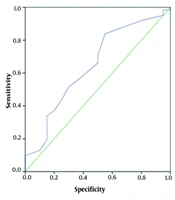
Zhao G, Hong J, Zhao B, Liu P, Qi M, et al. Postoperative Changes of Fusional Vergence in Children Intermittent Exotropia. Inn J Pediatr. 2024;34(6):e143575. doi: https://doi.org/10.5812/ijp-143575
Yekta A, Bahraini Toosi M, Ostadi Mogaddam H, Afzal Aghai M, Asadpour A, et al. Refractive errors before and after presbyopia. J Inflamm Dis. 2024;9(3):e155142. doi:
Last Update: 3 weeks ago
Last Update: 3 weeks ago
Last Update: 3 weeks ago
Last Update: 10 hours ago
Last Update: 1 day ago
Last Update: 4 days ago