Fulltext
The full text of this article is available on the PDF file.
Zahedan Journal of Research in Medical Sciences
The Official Journal of Zahedan University of Medical Sciences
Image Credit:Zahedan J Res Med Sci
Authors
Background: Choosing the effective disinfectants and using the standard methods of sterilization in
hospitals, can be useful in decreasing nosocomial infections. The aims of this study were the evaluation of
efficacy of disinfectants being used in surgical rooms, ICU, CCU, burn wards and delivery rooms of
Hamedan hospitals and also determination of bacterial contamination.
Methods and Materials: In this study 400 samples were collected from different parts of operation rooms,
ICU, CCU and delivery rooms of four hospitals (Mobasher Kashani, Imam Khomainy, Ekbatan and
Fatemieh) in 2006. The samples were cultured on blood agar, then the microbial agents were identified by
differential and biochemical tests. Disinfectants that were used were as follow: Cidex (Glutaraldeyde),
Sodium hypochlorite, Kereoeline 2.5%, Hygiene1%, Betadine, Alcohol 70%, Savlone 3.2%, Chlorohexidine
1%. The efficacy of disinfectants was evaluated on 60 Staphylococcus epidermidis and 60 Pseudomonas
aeroginosa through disk diffusion method. Data were gathered through a questionnaire and analysed using
T-test and SPSS software.
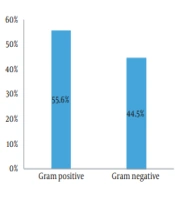
Results: Contamination tests in the four hospital were positive in 44.5% of cultures (178 cultures). The
highest frequency of contamination was in Mobasher hospital with 38.2% and the less frequency was in
Fatemieh hospital with 13.5%. From 400 samples, 52.2% of isolates were gram-positive bacteria and 47.7%
were gram-negative bacteria. The most important bacteria isolated were as follow: E.coli, Staphylococcus
epidemidis, Micrococci, Bacillus subtili and Pseudomonas aeroginosa. The most effective disinfectants on 60
Staphylococcus epidemidis were as follow: Cidex, Sodium Hypochlorite and Kereoeline and the least
effective disinfectants and antiseptics was Alcohol 70%. The most effective disinfectants on 60 Pseudomonas
aeroginosa were as follow: Cidex and Kereoeline and the least effective disinfectants and antiseptics were
Alcohol 70% and Savlone.
Conclusion: results showed that kereoline and cidex were among the most effective disinfectants, and
there is not a significant difference between their effects on staphylococcus epidermidis (P=0.469) and on
pseudomonas aeroginosa (P=0.053). The efficacy of other disinfectants on two mentioned bacteria were
different and significant differences were found.
© 2006, Author(s). This open-access article is available under the Creative Commons Attribution 4.0 (CC BY 4.0) International License (https://creativecommons.org/licenses/by/4.0/), which allows for unrestricted use, distribution, and reproduction in any medium, provided that the original work is properly cited.
Ekrami A, Kayedani A, Jahangir M, Kalantar E, Jalali M. Isolation of common aerobic bacterial pathogens from the environment of seven hospitals, Ahvaz, Iran. Jundishapur J Microbiol. 2011;4(2):. doi:
Hamidi F, Rahmani A, Yousefzadeh S, Eslami M, Nassehinia H. Evaluating the Effectiveness of Two Disinfection Processes on Bacteria Causing Nosocomial Infections in the Intensive Care Units of an Educational, Research, and Treatment Hospital in Semnan, Iran. Health Scope. 2024;13(3):e142411. doi: https://doi.org/10.5812/healthscope-142411
Armin S, Karimi A, Fallah F, Rafiei Tabatabaii S, Hoseini Alfatemi SM, et al. Antimicrobial Resistance Patterns of Acinetobacter baumannii, Pseudomonas aeruginosa and Staphylococcus aureus Isolated From Patients With Nosocomial Infections Admitted to Tehran Hospitals. Arch Pediatr Infect Dis. 2015;3(4):e32554. doi: https://doi.org/10.5812/pedinfect.32554
Avestan Z, Jami M, Mirzaei M, Amini Y, Ghazvini K, et al. Investigation of the Microbial Contamination of the Hands of Healthcare Workers in Different Wards of Sheikh Hospital in Mashhad. Int J Infect. 2022;9(3):e130579. doi: https://doi.org/10.5812/iji-130579
Nazemsadati S, Allami A, Hajmanoochehri F. Staphylococcus aureus colonization in Qazvin University hospitals healthcare workers. J Inflamm Dis. 2024;22(2):e156078. doi:
Last Update: 1 month ago
Last Update: 1 month ago
Last Update: 1 month ago
Last Update: 4 hours ago
Last Update: 7 hours ago
Last Update: 4 days ago