Full Text
Full text is available in PDF
Archives of Pediatric Infectious Diseases
The Official Journal of Pediatric Infections Research Center, SBMU
Authors
Neonatal sepsis is a serious problem in neonatal intensive care units, as it causes high rates of morbidity and mortality.
The purpose of this study is to evaluate various etiologic agents, antimicrobial susceptibility, clinical manifestations and the mortality rate in an intensive care unit in Kashan, Iran.
One hundred and four neonates with documented early onset sepsis in a 2 year period from 2006 to 2008 were enrolled in this descriptive study. The results of blood cultures and antimicrobial susceptibility and clinical manifestations and outcome were collected in questionnaires and subsequently analyzed.
We evaluated 104 cases including 63 (61%) males and 41 (39%) females. The most common clinical presentations were respiratory distress in 28 (26.9%), poor feeding in 18 (17.3%), lethargy in 15 (14.5%), fever in 15 (14.5%) and jaundice in 13 cases (12.5%). The most common organisms isolated from blood cultures were
The most common isolated organism from blood cultures was
© 2013, Author(s). This open-access article is available under the Creative Commons Attribution 4.0 (CC BY 4.0) International License (https://creativecommons.org/licenses/by/4.0/), which allows for unrestricted use, distribution, and reproduction in any medium, provided that the original work is properly cited.
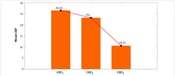
Oboodi R, Hashemi Z, Jaafarzadeh E, Yazdani N, Barzegar H. Bacterial Etiology and Antibiotic Susceptibility Profile in Neonatal Sepsis. Arch Pediatr Infect Dis. 2024;12(1):e136487. doi: https://doi.org/10.5812/apid-136487
Behmadi H, Borji A, Taghavi-Rad A, Soghandi L, Behmadi R. Prevalence and Antibiotic Resistance of Neonatal Sepsis Pathogens in Neyshabour, Iran. Arch Pediatr Infect Dis. 2016;4(2):e33818. doi: https://doi.org/10.5812/pedinfect.33818
Basiri B, Sabzehei MK, Shokouhi M, Moradi A. Evaluating the Incidence and Risk Factors of Nosocomial Infection in Neonates Hospitalized in the Neonatal Intensive Care Unit of Fatemieh Hospital in Hamadan, Iran, 2012 - 2013. Arch Pediatr Infect Dis. 2015;3(2):e23327. doi: https://doi.org/10.5812/pedinfect.23327
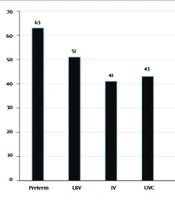
Saeidi F, Kialashaki A, Sadighi A, Bahadori A, Valizadeh S, et al. A Survey of the Prevalence Rate and Antibiotic Resistance Pattern of Microbial Agents in Preterm Neonatal Sepsis. Arch Pediatr Infect Dis. 2024;12(1):e137546. doi: https://doi.org/10.5812/apid-137546
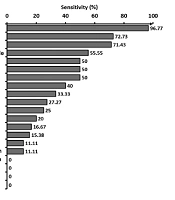
Boskabadi H, Moradi A, Ramazani A, Zakerihamidi M. Sensitivity and Resistance of the Microorganisms Responsible for Neonatal Sepsis to Antibiotics. Arch Clin Infect Dis. 2020;15(6):e84710. doi: https://doi.org/10.5812/archcid.84710
More by these authors
Last Update: 3 weeks ago
Last Update: 3 weeks ago
Last Update: 3 weeks ago
Last Update: 6 days ago