
1. Background
Naphthalene is an aromatic hydrocarbon used in the production of plasticizers, resins, and insecticides, as well as in a variety of consumer products such as moth repellents (1). It is thought that a considerable source of non-occupational exposure in residential surroundings is due to the use of naphthalene-based products, particularly mothballs (2). The International Agency for Research on Cancer (IARC) and the US Environmental Protection Agency (USEPA) have classified naphthalene as a potential human carcinogen since 2000 (3).
Accidental or intentional poisoning by naphthalene has been reported by swallowing, skin contact, and inhalation. The metabolite of naphthalene (usually α-naphthol) is the main cause of poisoning. Exposure to naphthalene commonly causes headache, nausea, vomiting, diarrhea, abdominal pain, fever, and altered mental status. Hemolysis and methemoglobinemia usually become clinically evident, as early as 24 to 48 hours post-exposure. Patients with G6PD deficiency are at an increased risk of both hemolysis and methemoglobinemia (4). The estimated lethal dose of naphthalene is 5 - 15 grams for adults and 2 - 3 grams for children (5).
2. Objectives
To our knowledge, no study has been conducted on naphthalene poisoning in Iran so far. Therefore, the main purpose of this study was to investigate the clinical presentation and outcome of naphthalene poisoning.
3. Methods
This descriptive, retrospective study was done using the archived medical records of patients hospitalized in Loghman-Hakim hospital in Tehran, Iran, over 10 years (2008 - 2018). The research population included all patients hospitalized due to naphthalene poisoning. A data collection form was designed for this research that was filled based on the patients' medical files archived under the code T60.1. In general, 70 medical files were studied. After the exclusion of 18 cases because of multiple drug toxicity, 52 cases were included in the study. The collected data were analyzed by SPSS version 25 software. We used the chi-square test for data analysis and P < 0.05 was defined as significant.
4. Results
In the 52 studied cases, 23 (44%) were females and 29 (56%) were males. The highest prevalence was observed in the age groups of below five years and 20 - 25 years. The average interval between taking naphthalene and admission to the hospital was 4.6 hours. All patients took naphthalene orally (mothball). The least number of taken mothballs was half a ball and the highest number was 20 naphthalene balls. The cause of poisoning was intentional in 34 (65%) cases and accidental in 18 (35%) cases. The clinical presentations are given in Figure 1. Impaired consciousness was not observed, and none of the patients needed intubation or admission to the intensive care unit.
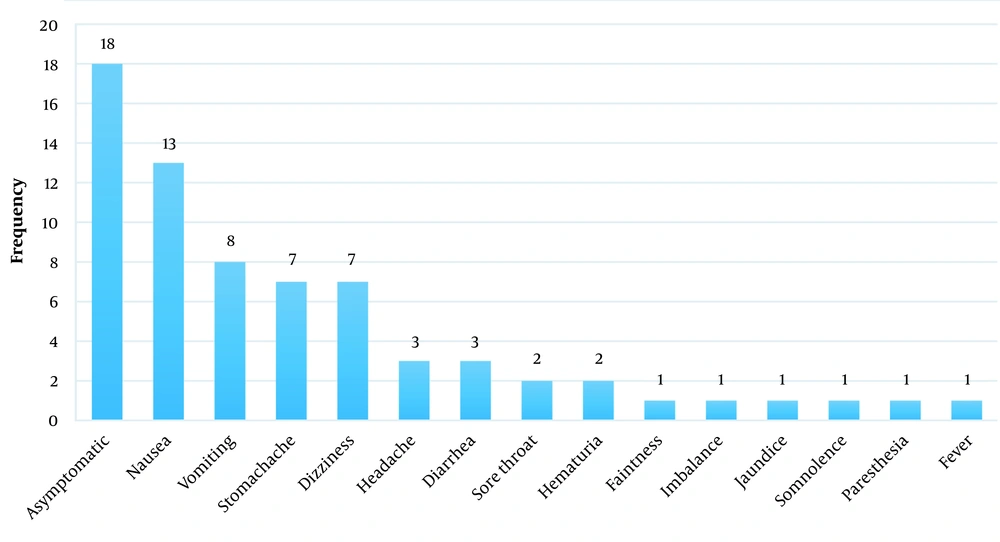
Figure 1.
Clinical presentations
The laboratory test results are given in Table 1. Among the 52 cases, hemolysis was observed only in one patient with a background of G6PD deficiency, which occurred 48 hours after poisoning. The duration of hospitalization was one day in 28 (54%) cases, less than one day in 19 (37%) cases, two days in four (8%) cases, and six days in one (2%) case. The medical treatment was supportive in 24 cases, charcoal in 22 cases, gastric lavage in five cases, and blood transfusion in one case. All patients were discharged from the hospital without any complications.
Table 1.
Results of Laboratory Tests
| Laboratory test | Frequency | Percent |
|---|---|---|
| CBC | ||
| Normal | 28 a | 53.8 |
| Leukocytosis | 6 | 11.5 |
| Anemia | 1 | 1.9 |
| Leukocytosis and Anemia | 2 | 3.8 |
| Missing | 15 | 28.8 |
| VBG | ||
| Normal | 17 | 32.7 |
| Abnormal | 13 | 25 |
| Missing | 22 | 42.3 |
| LDH | ||
| Normal | 9 | 17.3 |
| Elevated | 9 | 17.3 |
| Missing | 34 | 65.4 |
| CPK | ||
| Normal | 15 a | 28.8 |
| Elevated | 2 | 3.8 |
| Missing | 35 | 67.3 |
| Bilirubin | ||
| Normal | 19 a | 36.5 |
| Indirect Hyperbilirubinemia | 2 | 3.8 |
| Missing | 31 | 59.6 |
| Urine analysis | ||
| Normal | 15 a | 28.8 |
| Abnormal | 5 | 9.6 |
| Missing | 32 | 61.5 |
a P < 0.05.
5. Discussion
In our study, most of the poisoning cases were observed in children, especially at the age below five years, which could be due to the use of naphthalene and its availability at home. Besides, a high prevalence rate was observed in the age group of 20 - 25 years, caused by the intentional use of naphthalene for committing suicide.
In a study in India, the prevalence of naphthalene poisoning was reported at 5% in home poisoning cases over 10 years (6). In a case report, a 10-year-old boy was affected by methemoglobinemia and hemolysis 48 hours after taking an uncertain amount of naphthalene ball (7). In another case report, naphthalene poisoning in a woman resulted in acute kidney failure and pulmonary edema in addition to hemolysis (8). In another study, a one-year-old child was affected by hemolysis, acute kidney failure, and pigmented nephropathy following ingestion of naphthalene balls (9). The occurrence of hemolysis is higher in patients with G6PD deficiency, as observed in a case report of a 15-year-old boy with hemolysis, methemoglobinemia, and kidney injury following the ingestion of a single naphthalene ball (10). Naphthalene toxicity has also been reported in a newborn baby with a history of maternal mothball ingestion (11). This study suggested the transplacental transfer of naphthalene. Also, some studies have shown the carcinogenicity of naphthalene in rats (12, 13). The noteworthy point is an average of 48 hours interval between taking naphthalene and hemolysis occurrence. It makes the clinical judgment difficult in the early hours.
The research constraints include the deficiency of information in medical records. Furthermore, as most cases were related to self-injury intention, it was not possible to investigate the patients directly.
In conclusion, naphthalene poisoning is not highly prevalent and it is not lethal in Iran. Besides, proper clinical judgment and treatment will lead to a good prognosis in most patients. The other important point is the necessity of a longer period of follow-up for patients who are prone to the occurrence of complications, such as patients with G6PD deficiency. It is also recommended to ban the sale of naphthalene, especially by groceries, and authorized sale centers must warn users