Global Optimal PEEP for Anesthetized Patients

Author(s):
Ata MahmoodpoorAta MahmoodpoorAta Mahmoodpoor ORCID1, Samad EJ GolzariSamad EJ GolzariSamad EJ Golzari ORCID2,*
1Department of Anesthesiology and Intensive Care Medicine, Tabriz University of Medical Sciences, Tabriz, Iran
2Research Center for Evidence Based Medcine, Tabriz University of Medical Sciences, Tabriz, Iran

Anesthesiology and Pain Medicine:Vol. 7, issue 4; e14457
Published online:Aug 27, 2017
Article type:Editorial
Received:Apr 25, 2017
Accepted:Aug 07, 2017
How to Cite:Mahmoodpoor A, Golzari SE. Global Optimal PEEP for Anesthetized Patients. Anesth Pain Med. 2017;7(4):e14457. doi: https://doi.org/10.5812/aapm.14457

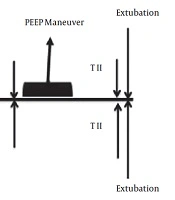
Patients are at increased risk of lung injury throughout the perioperative period. Numerous intraoperative measures have been postulated and implemented to modulate anesthesia- and ventilation-related injuries. Based on these studies, PEEP has been suggested to both improve oxygenation and keep the lungs open in anesthetized patients if the operation lasts for more than two hours. Nevertheless, if the anesthesia continues for less than two hours, FEEP is appropriate only for keeping the lungs open rather than improving oxygenation (1). Accordingly, applying PEEP is superior to ZEEP in anesthetized patients to avoid postoperative atelectasis.
Any mechanical ventilation strategy consisting of high levels of PEEP and low tidal volume is believed to be beneficial for patients and not to result in barotrauma, longer duration of mechanical ventilation or mortality (2, 3). Previous studies suggesting reduction of pulmonary inflammation following surgery used high levels of PEEP with low tidal volume during general anesthesia (4); whereas, some recent large studies suggest that the use of high levels of PEEP can be associated with increased levels of some plasma biomarkers. Nevertheless, a limitation of these studies is lack of following the lung protective strategy based on the low volume strategy and setting the tidal volume to higher values (i.e. 8 mL/Kg of the PBW). Such strategies not only might affect the results obtained from these studies but also should be avoided in order not to impose any further damage to the patients with simultaneous use of higher PEEP levels (5).
The distribution of ventilation within the lungs, especially during mechanical ventilation, even in healthy lungs is heterogeneous. This heterogeneity can change the effect of PEEP on different lung regions. In some areas, it may be insufficient to keep the alveoli open; and in some areas, it may lead to over inflation with subsequent lung tissue injury and inflammation. Therefore, enhanced oxygenation ought not to be interpreted as improved outcomes, as it not only would not be associated with any benefits in outcomes but also would harm the patients. Clinicians might be falsely reassured that the patients are in clinically stable state and overlook what lies beneath. There is no “global optimal PEEP”; optimal PEEP and ventilator setting adjustment must be personalized according to physiologic and mechanical parameters (pulmonary, hemodynamic, etc.) of every individual in order to prevent any ventilator induced lung injury.
References

  • 1.
    Hedenstierna G. Optimum PEEP During Anesthesia and in Intensive Care is a Compromise but is Better than Nothing. Turk J Anaesthesiol Reanim. 2016;44(4):161-2. [PubMed ID: 27909586]. https://doi.org/10.5152/TJAR.2016.001.
  • 2.
    Villar J, Kacmarek RM, Perez-Mendez L, Aguirre-Jaime A. A high positive end-expiratory pressure, low tidal volume ventilatory strategy improves outcome in persistent acute respiratory distress syndrome: a randomized, controlled trial. Crit Care Med. 2006;34(5):1311-8. [PubMed ID: 16557151]. https://doi.org/10.1097/01.CCM.0000215598.84885.01.
  • 3.
    Mehta S, Cook DJ, Skrobik Y, Muscedere J, Martin CM, Stewart TE, et al. A ventilator strategy combining low tidal volume ventilation, recruitment maneuvers, and high positive end-expiratory pressure does not increase sedative, opioid, or neuromuscular blocker use in adults with acute respiratory distress syndrome and may improve patient comfort. Ann Intensive Care. 2014;4:33. [PubMed ID: 25593749]. https://doi.org/10.1186/s13613-014-0033-9.
  • 4.
    Reis Miranda D, Gommers D, Struijs A, Dekker R, Mekel J, Feelders R, et al. Ventilation according to the open lung concept attenuates pulmonary inflammatory response in cardiac surgery. Eur J Cardiothorac Surg. 2005;28(6):889-95. [PubMed ID: 16271479]. https://doi.org/10.1016/j.ejcts.2005.10.007.
  • 5.
    Serpa Neto A, Campos PP, Hemmes SN, Bos LD, Bluth T, Ferner M, et al. Kinetics of plasma biomarkers of inflammation and lung injury in surgical patients with or without postoperative pulmonary complications. Eur J Anaesthesiol. 2017;34(4):229-38. [PubMed ID: 28187051]. https://doi.org/10.1097/EJA.0000000000000614.

Similar Articles

28
Jul
2020

The Stepwise Slow Titration of Positive End-Expiratory Pressure Before the End of General Anaesthesia Improves Lung Mechanics in Children: A Randomized Open Label Clinical Trial

Ana Dragoljub Mandras,
Maja Sujica,
Nikola Stankovic,
Sladjana Vasiljevic,
Vesna Milojkovic,
Dusica Simic

Mandras AD, Sujica M, Stankovic N, Vasiljevic S, Milojkovic V, et al. The Stepwise Slow Titration of Positive End-Expiratory Pressure Before the End of General Anaesthesia Improves Lung Mechanics in Children: A Randomized Open Label Clinical Trial. Inn J Pediatr. 2020;30(4):e101801. doi: https://doi.org/10.5812/ijp.101801

5
Mar
2016

Is the Pressure Control Mode for Pediatric Anesthesia Machines Really Required?

Ali Shahriari,
Mahdi Sheikh

Shahriari A, Sheikh M. Is the Pressure Control Mode for Pediatric Anesthesia Machines Really Required?. Anesth Pain Med. 2016;6(2):e35350. doi: https://doi.org/10.5812/aapm.35350

19
Nov
2019
Iranian Journal of Pediatrics

Slow Positive End-Expiratory Pressure Titration During General Anesthesia with Muscle Paralysis Improves Lung Function Without Compromising Hemodynamic Stability in Preschool Children: A Randomized Control Clinical Trial

Ana Dragoljub Mandras,
Ivan Soldatovic,
Maja Sujica,
Vesna Stevanovic,
Dejan Markovic,
Zoran Paunovic
,et al.

Mandras AD, Soldatovic I, Sujica M, Stevanovic V, Markovic D, et al. Slow Positive End-Expiratory Pressure Titration During General Anesthesia with Muscle Paralysis Improves Lung Function Without Compromising Hemodynamic Stability in Preschool Children: A Randomized Control Clinical Trial. Inn J Pediatr. 2019;29(6):e92269. doi: https://doi.org/10.5812/ijp.92269

29
Dec
2020

Oblivion Orchestra Hall: How to Facilitate Emergence from Anesthesia with Music

seyed mohammad seyed alshohadaei,
Fereshteh Baghizadeh,
Seyed Bashir Mirtajani

seyed alshohadaei SM, Baghizadeh F, Mirtajani SB. Oblivion Orchestra Hall: How to Facilitate Emergence from Anesthesia with Music. J Cell Mol Anesth. 2021;6(3):e149648. doi: https://doi.org/10.22037/jcma.v6i3.31963

13
Jan
2023

Lung Ultrasound Versus Dynamic Lung Compliance to Detect the Optimum Positive End-Expiratory Pressure After Alveolar Recruitment for Patients Undergoing Laparoscopic Gastric Sleeve Surgery: A Randomized Trial

Amin Alansary,
Marwa Elbeialy,
Minatallah Elshafie

Alansary A, Elbeialy M, Elshafie M. Lung Ultrasound Versus Dynamic Lung Compliance to Detect the Optimum Positive End-Expiratory Pressure After Alveolar Recruitment for Patients Undergoing Laparoscopic Gastric Sleeve Surgery: A Randomized Trial. J Cell Mol Anesth. 2023;8(3):e151429. doi: https://doi.org/10.22037/jcma.v8i2.39534

Indexed in

Crossmark
Crossmark
Checking
Share on
Cited by
Metrics

Ordering Reprints

Articles are published under the Creative Commons license stated on each article. No permission or royalty fee is required for uses permitted by that license. CCC handles optional bulk and customized reprint orders. Any quotation covers production and delivery services only, not copyright permission. > Request Reprints from CCC 

Search Relations

Author(s):

Related Articles