Cover image of the article: Comment on: Facial Expression-Based Pain Detection: Development and Validation in the Post-anesthesia Care Unit. Beyond Pain Recognition: Toward AI-supported Clinical Decision Support in the Post-anesthesia Care Unit (AI-generated illustration)

Image Credit:AI-generated illustration

Comment on: Facial Expression-Based Pain Detection: Development and Validation in the Post-anesthesia Care Unit. Beyond Pain Recognition: Toward AI-supported Clinical Decision Support in the Post-anesthesia Care Unit

Authors

Ali DabbaghAli Dabbagh ORCID1, Firoozeh MadadiFiroozeh Madadi ORCID1,*
How to Cite:Dabbagh A, Madadi F. Comment on: Facial Expression-Based Pain Detection: Development and Validation in the Post-anesthesia Care Unit. Beyond Pain Recognition: Toward AI-supported Clinical Decision Support in the Post-anesthesia Care Unit. Anesth Pain Med. 2026;16(3):e176180. doi: https://doi.org/10.5812/aapm-176180

Dear Editor,
Despite technological advances, patient self-report remains the primary basis for postoperative pain assessment. Although instruments such as the visual analog scale and the numerical rating scale are simple and widely used, they are subjective, and their utility is limited when patients cannot communicate effectively because of residual anesthesia, sedation, cognitive impairment, delirium, language barriers, or critical illness. Against this background, the study by Tarkhan et al., which evaluated facial expression-based pain detection in the post-anesthesia care unit (PACU), represents a promising step toward objective and potentially continuous pain assessment (1). The clinical evaluation of such a system depends not only on its ability to replicate or align with traditional pain measures but also on the meaning of its facial-expression outputs, their consistency across diverse postoperative patients, and their eventual impact on clinical decision-making. These concerns provide a basis for discussing both the study's contribution and the next translational steps in artificial intelligence (AI)-assisted pain assessment.
An algorithm capable of identifying facial expressions or behavioral patterns associated with pain may be particularly valuable during the perioperative period, when communication is difficult. However, its outputs should not be interpreted as direct measurements of the patient's subjective pain experience. Future systems could extend beyond estimating current pain-related behavior to address clinically relevant predictive questions, including the likelihood of significant postoperative pain, the need for rescue analgesia, the risk of opioid-related adverse effects, and the selection of an individualized analgesic strategy.
This potential transition is consistent with broader advances in perioperative predictive analytics. Machine-learning approaches using large clinical datasets have demonstrated the feasibility of individualized risk prediction while underscoring the importance of calibration and external validation before clinical implementation (2). In pain management, similar AI-based approaches are increasingly being investigated and may ultimately contribute to more individualized risk assessment and therapeutic decision-making (3). Nonetheless, this remains a translational goal that requires substantial external validation and prospective evidence of clinical applicability before these approaches are incorporated into perioperative decision-making.
The promising results of facial-expression algorithms should also be interpreted in light of the conceptual distinction among nociception, pain experience, and pain behavior. These distinctions are relevant to interpreting the results presented by Tarkhan et al. Although their study demonstrates the feasibility of automated facial expression-based pain detection in the PACU, concordance between algorithmic outputs and traditional pain assessments should not be taken to establish a direct correspondence between facial expressions and the subjective experience of pain. Moreover, postoperative facial expressions may be altered by residual anesthesia, drowsiness, nausea, anxiety, emergence phenomena, and individual behavioral traits. Validation across diverse surgical cohorts and clinical settings, together with evaluation of calibration and clinical significance, will therefore be essential before such systems are integrated into routine PACU decision-making.
This issue extends beyond the present study. Systematic evaluations of AI-based facial pain assessment have demonstrated promising diagnostic performance, but substantial heterogeneity, dataset imbalance, relatively small datasets, and limited external validation remain recurring methodological concerns (4, 5).
Future AI-based postoperative pain assessment may therefore benefit from multimodal assessment rather than facial analysis alone. Integrating facial features with physiological signals and relevant perioperative clinical data could provide a more comprehensive representation of postoperative pain-related behavior and analgesic needs (6).
Perhaps the most important next question is whether AI-derived pain assessment changes patient management and improves outcomes. Future studies should therefore move beyond agreement and discrimination metrics to prospective impact studies. Relevant outcomes could include time to rescue analgesia, cumulative opioid exposure, episodes of severe pain, opioid-related adverse events, PACU length of stay, quality of recovery, and patient satisfaction.
Evidence already supports this broader paradigm. Machine-learning-derived nociception monitoring has been used not simply to display physiological information but also to guide intraoperative opioid administration. In pooled randomized data, nociception level-guided fentanyl dosing was associated with lower early PACU pain and fewer patients experiencing severe postoperative pain (7). Although nociception monitoring and facial pain recognition measure different phenomena, this example illustrates an important principle: the greatest value of intelligent monitoring may emerge when measurement is linked to a therapeutic decision.
Although the study by Tarkhan et al. does not assess clinical decision support, externally validated facial pain recognition has the potential to enhance multimodal PACU systems that integrate perioperative clinical data with facial and physiological signals. This integration could facilitate dynamic assessment of pain and analgesia-related risks. More broadly, AI-enabled perioperative clinical decision-support systems may integrate and interpret real-time clinical data to provide patient-specific recommendations (8).
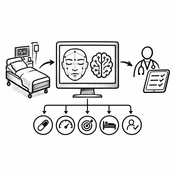
The study by Tarkhan et al. should therefore be viewed not simply as an attempt to automate the VAS but as an early step in a broader transformation of perioperative pain management (Figure 1). Progress along this pathway will require a corresponding evolution in research endpoints, from correlation and accuracy to external validity, clinical utility, and ultimately patient-centered outcomes.
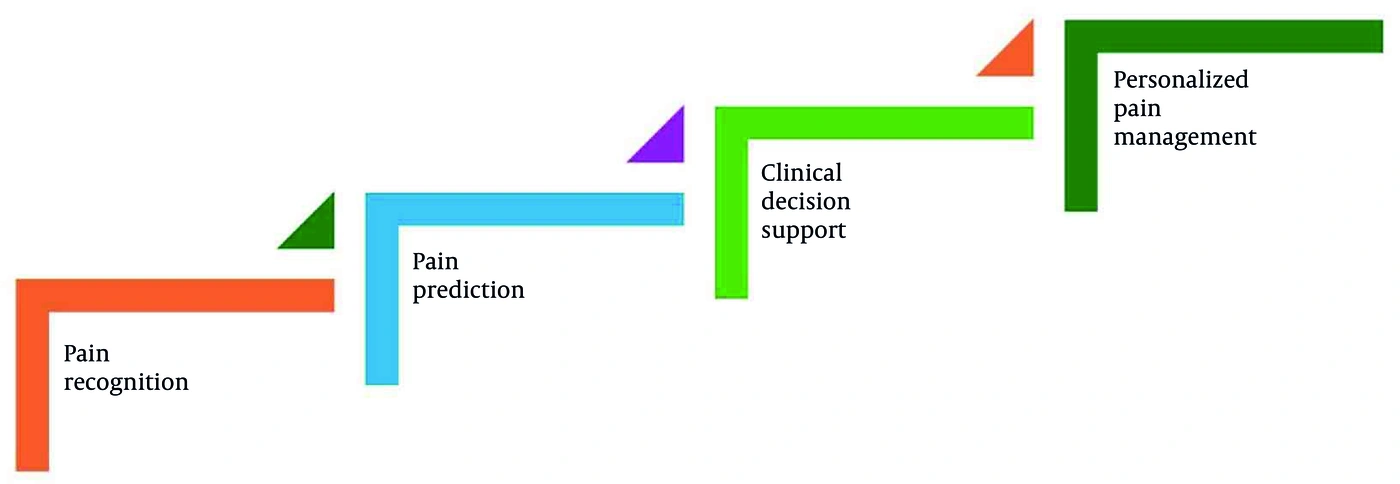
The translational pathway of pain management with artificial intelligence (AI).
Figure 1.
The translational pathway of pain management with artificial intelligence (AI).
Footnotes

  • AI Use Disclosure:The authors declare that no generative AI tools were used in the creation of this article.

  • Authors' Contribution:Conceptualization, Critical Review, and Intellectual Input: A. D.; Writing – Original Draft and Writing – Review & Editing: F. M.; Both authors reviewed and approved the final manuscript.

  • Conflict of Interests Statement:The authors declare no conflicts of interest for this study.

  • Funding/Support:The authors did not receive any funding for this study.

References

  • 1.
    Tarkhan F, Bijani A, Alijanpour S, Hamidi SH. Facial expression-based pain detection: Development and validation in the post-anesthesia care unit. Anesth Pain Med. 2026;16(2). e171818. [PubMed ID: 42852162]. [PubMed Central ID: PMC13647228]. https://doi.org/10.5812/aapm-171818.
  • 2.
    Asgari G, Amini A, Vahedi P, Tabatabavakili Y, Muzik J, Nazari E, et al. Predictive modeling of anesthesia types and their associations with clinical outcomes using the MIMIC-IV database. J Cell Mol Anesth. 2025;10(4). e166293. https://doi.org/10.5812/jcma-166293.
  • 3.
    Medeiros HJS, Dabbagh A, Vlassakov K, Sabouri AS. Artificial intelligence in regional anesthesia and pain management. Anesthesiol Clin. 2025;43(3):491-505. [PubMed ID: 40752949]. https://doi.org/10.1016/j.anclin.2025.05.004.
  • 4.
    Huo J, Yu Y, Lin W, Hu A, Wu C. Application of AI in multilevel pain assessment using facial images: Systematic review and meta-analysis. J Med Internet Res. 2024;26. e51250. [PubMed ID: 38607660]. [PubMed Central ID: PMC11053395]. https://doi.org/10.2196/51250.
  • 5.
    Cascella M, Esposito D, Muzio MR, Cascella V, Cerrone V. Artificial intelligence for pain assessment via facial expression recognition (2015 - 2025): A systematic review. Explor Med. 2025;6. 1001370. https://doi.org/10.37349/emed.2025.1001370.
  • 6.
    Dahi Taleghani M, Moshari MR, Zahiri R, Mirtajani SB, Vosoughian M. A mini-review on the necessity of expanding personalized medicine for the future of various aspects of pain management. J Cell Mol Anesth. 2024;9(3). e146535. https://doi.org/10.5812/jcma-146535.
  • 7.
    van der Wal I, Meijer F, Fuica R, Silman Z, Boon M, Martini C, et al. Intraoperative use of the machine learning-derived nociception level monitor results in less pain in the first 90 min after surgery. Front Pain Res (Lausanne). 2023;3. 1086862. [PubMed ID: 36700141]. [PubMed Central ID: PMC9869062]. https://doi.org/10.3389/fpain.2022.1086862.
  • 8.
    Patel M, Nanji KC. Artificial intelligence in perioperative medication-related clinical decision support. Anesthesiol Clin. 2025;43(3):587-602. [PubMed ID: 40752955]. https://doi.org/10.1016/j.anclin.2025.05.009.

Copyright

Copyright © 2026, Dabbagh and Madadi. This is an open-access article distributed under the terms of the Creative Commons Attribution 4.0 International License (CC BY 4.0) (https://creativecommons.org/licenses/by/4.0/) which permits unrestricted use, distribution, and reproduction in any medium, provided the original work is properly cited.

Similar Articles

3
Feb
2024
Machine Learning-Guided Anesthesiology: A Review of Recent Advances and Clinical Applications

Machine Learning-Guided Anesthesiology: A Review of Recent Advances and Clinical Applications

Sana Hashemi,
Zohreh Yousefzadeh,
Ahmad Ali Abin,
Azar Ejmalian,
Shahabedin Nabavi,
Ali Dabbagh

Hashemi S, Yousefzadeh Z, Abin AA, Ejmalian A, Nabavi S, et al. Machine Learning-Guided Anesthesiology: A Review of Recent Advances and Clinical Applications. J Cell Mol Anesth. 2024;9(1):e145369. doi: https://doi.org/10.5812/jcma-145369

30
Apr
2026
Facial Expression-based Pain Detection: Development and Validation in the Post-anesthesia Care Unit

Facial Expression-based Pain Detection: Development and Validation in the Post-anesthesia Care Unit

Fazel Tarkhan,
Ali Bijani,
Shayan Alijanpour,
Seyed Hossein Hamidi

Tarkhan F, Bijani A, Alijanpour S, Hamidi SH. Facial Expression-based Pain Detection: Development and Validation in the Post-anesthesia Care Unit. Anesth Pain Med. 2026;16(2):e171818. doi: https://doi.org/10.5812/aapm-171818

18
Jan
2016
Comparison of Two Pain Assessment Tools, “Facial Expression” and “Critical Care Pain Observation Tool” in Intubated Patients After Cardiac Surgery

Comparison of Two Pain Assessment Tools, “Facial Expression” and “Critical Care Pain Observation Tool” in Intubated Patients After Cardiac Surgery

Majid Kiavar,
Rasoul Azarfarin,
Ziae Totonchi,
Fatemeh Tavakoli,
Azin Alizadehasl,
Mitra Teymouri

Kiavar M, Azarfarin R, Totonchi Z, Tavakoli F, Alizadehasl A, et al. Comparison of Two Pain Assessment Tools, “Facial Expression” and “Critical Care Pain Observation Tool” in Intubated Patients After Cardiac Surgery. Anesth Pain Med. 2016;6(1):e61541. doi: https://doi.org/10.5812/aapm.33434

30
Apr
2026
Computational Anesthesiology: A New Frontier at the Intersection of Data Science and Perioperative Medicine

Computational Anesthesiology: A New Frontier at the Intersection of Data Science and Perioperative Medicine

Firoozeh Madadi

Madadi F. Computational Anesthesiology: A New Frontier at the Intersection of Data Science and Perioperative Medicine. Anesth Pain Med. 2026;16(2):e175132. doi: https://doi.org/10.5812/aapm-175132

26
Sep
2026
Pediatric Intensive Care Units in the Artificial Intelligence Era

Pediatric Intensive Care Units in the Artificial Intelligence Era

Seyyedeh Masumeh Hashemi

Hashemi SM. Pediatric Intensive Care Units in the Artificial Intelligence Era. J Cell Mol Anesth. 2026;11(3):e175440. doi: https://doi.org/10.5812/jcma-175440

More by these authors

Ali DabbaghPubMedScholar
Firoozeh MadadiPubMedScholar
Share
Cited by
Metrics