1. Context
Cleft lip and palate (CLP) is the most common congenital disabilities in the first months of pregnancy and the early stages of development. Since lips are formed 2 - 4 weeks earlier than the palate, any irregularities in the connection of the two sides of the lips and its completion increase the possibility of defects in the palate formation (1). CLP is more common in men, while cleft palate (CP) is more common in women. Transcription factors, signaling molecules, and proteins are involved in lip and palate formation. CLP might be caused following the destruction of any cascade control mechanisms that include these molecules and factors. In terms of embryonic origin and hereditary pattern, cleft lip (CL) with or without CP and CP are the main types of oral-facial clefts (2).
This abnormality is of two types: (1) syndromic, and (2) non-syndromic. Non-syndromic (sporadic) cases are the most common (70%), in which multifactorial etiology and some factors, such as genetic, environmental, and teratogenic factors, are involved (3). A study of genetic factors in CLP showed that several genes were involved in developing non-syndromic cases. Genomic analysis has indicated that high-risk genetic sites are associated with this anomaly and that more than 40 genes are involved in more than 400 syndromes. In Iran, some studies have been conducted on genetic communication related to this disease (4). In addition to genes and genetic factors, environmental factors might play an essential role in the etiology of the disorder, including the use of drugs during pregnancy (antiepileptic drugs), alcohol, smoking, deficiency of some vitamins, such as vitamin A, and folate deficiency (3).
CL is a definite physical defect, while CP should be observed during the baby's physical examination. Oral clefts can cause a cosmetic defect, and in some severe cases, they may cause speech and feeding disorders in children (5). Affected children also have an increased risk of cancers, including colon, brain, and breast cancer. Treatment often involves spending a lot of time and money during the various stages of surgery, speech therapy, dental reconstruction, and psychological support for the affected child's parents. The CL surgery can be performed at 6 weeks to 3 - 6 months of birth (6).
This review introduced different aspects of CLP, such as etiology, known gene mutations, and environmental factors to planning for individuals, especially those with family history and early detection and family screening.
1.1. Incidence and Prevalence
The prevalence and incidence of CLP abnormalities from 2015 to 2020 are described in the following lines. The global incidence of the non-syndromic type of oral cleft is one to seven per 1000 live births. The incidence of non-syndromic oral clefts is different according to gender, geographical location, race, and type of cleft. Based on race and geographical location, the most common breeds for CLP are in Latin America and Asia (with an incidence rate of two per 1000 live births), and the lowest incidence is for the African population (with an incidence rate of one per 2500 live births). The Europeans have an average incidence of one in 1000 live births (7). The overall prevalence of cleft lip with or without cleft palate was 9.92 per 10,000 and 4 people per 10,000 individuals for cleft lipCL (8). About 70% of all CLs with or without CPs and around half of all CPs occur as non-syndromic type. The risk of occurrence of this abnormality in monozygotic twins with an accompaniment rate of 8% is 40 - 60% higher than of dizygotic twins with an accompaniment rate of 3 - 5%; also, the risk is 40 times higher in close relatives of the patient (9) than in the normal population. These findings indicate a strong role of genetic factors in the etiology of the disorder. Thirty percent of all types of clefts are described with more than 400 syndromes, while 70 percent of them are isolated (3).
2. Embryological Origin in Cleft Lip and Palate
The formation of the face and oral cavity in the evolution process requires regular coordination and connection of hard and soft tissues. Any disturbance in this regulation and coordination leads to evolutionary abnormalities. During the fourth week of pregnancy, with the appearance of lateral and middle nasal appendages and maxillary appendages, the face base is formed. During the early stages of craniofacial development, two visual placodes form the nasal grooves, and also the lateral boundaryof the frontonasal. These placodes then begin to protrude around the outer edges to form the middle and lateral nasal appendages (10). These appendages grow and eventually merge with the maxilla appendage to form the most upper lip and primary palate. The connection of these areas leads to the formation of the primary lip and palate in the area anterior to the incisor hole between 4 - 6 weeks of the fetus. Any disturbances in the connection between the middle nostrils and the maxillary protrusions lead to CL, which can be unilateral or bilateral. CL can extend from the gingival margin to the incisor area (11). The formation of a hard palate and a soft palate occurs between 7 - 13 weeks of pregnancy. The two maxillary processes from both sides become protruded, which are called palatal shelves. The shelves grow horizontally and are placed on top of the tongue. Finally, the primary palate is connected to the secondary palate. CP and CL have different embryonic origins; CL is due to a disorder in the integration of the medial process of the nose with the maxillary appendage on one or both sides, while CP is due to a disorder in the palatine appendages coming together. CP is more commonly associated with the syndrome, while CL is often isolated (11, 12).
2.1. Classification and Etiology in Syndromic and Non-syndromic Cleft Lip and Palate
In 1931, Veau classified CLP into four categories, consisting of soft palate cleft, hard palate cleft, unilateral lip cleft, bilateral alveoli and palate, and CP, alveolus and palate. Oral-facial clefts are complex disorders in facial development. CLP is divided into the following types based on the genetic pattern of inheritance: (1) syndromic group; (2) familial group; and (3) isolated defects. Syndromic oral clefts have a specific genetic basis, while a non-syndromic disorder has several etiologies (3).
The causes of syndromic oral-facial clefts are often easy to recognize and can be as follows: (1) cases that occur as part of a specific Mendelian disorder and as a result of a single gene defect, such as Stickler, Pfeiffer, and Treacher Chollins syndromes. The prevalence rate of Smith Lemli Opitz syndrome is about one in 20, 000 newborns in the United States, but is much more in Iran (due to high familial marriages). With an autosomal recessive inheritance pattern, Van der would syndrome involves 1 - 2% of syndromic CLP and is responsible for most VWS mutations in the interferon regulatory factor 6 gene. The prevalence of this syndrome is one per 40,000 - 100,000 live births; (2) those identified by structural abnormalities of chromosomes, syndromes associated with known teratogens, like Pato Syndrome, Trisomy 18, Turner Syndrome, and Down Syndrome; (3) those with idiopathic etiologies that are ambiguous and, therefore, currently unknown (13). Non-syndromic clefts are primarily classified as polygenic and multifactorial disorders and have specific characteristics.
2.2. Environmental Etiological Factors Involved in Non-syndromic Cleft Palate
- Nutritional deficiency: One of the environmental components of CP is nutritional deficiencies. Based on different studies, vitamins B6 and B12 and folate deficiencies have an important and diverse role in this disorder (14).
- Infections: Infections during pregnancy can cause birth defects. These defects are caused by environmental factors. During pregnancy, it is crucial not to be exposed to viral agents, such as rubella or cytomegalovirus (14).
- Medications: Following the use of teratogens by pregnant women, several factors affect the development of birth defects. The consumption of corticosteroids, retinoids, phenytoin, epiroic acid, thalidomide, some drugs, such as antiepileptic drugs, and common exposures to alcohol or dioxin, is associated with CP (15).
- Smoking and alcohol use: Maternal smoking is associated with the occurrence of orofacial clefts, especially in the first trimester of pregnancy.
Among all the congenital malformations, the orofacial cleft probably has the most definite correlation with smoking. The highest prevalence of cleft is observed in pregnancies with high smoking and alcohol consumption (14).
2.3. Genes Associated with Orofacial Closure Defects
In these defects, the risk of recurrence increases when more than one family member is affected. In these defects the risk of recurrence increases when more than one family member is affected, with an increase in the severity of bilateral CLP (12).
The expression of a multifactorial disorder (e.g., non-syndromic orofacial defects) is that when environmental and genetic factors interact and go beyond the threshold, the disease manifests itself and is known as the threshold model.
The risk of CP in other children in a family depends on the number of affected people in the family, the severity of the disorder, and environmental factors (16).
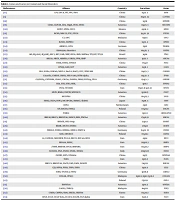
We searched the Google Scholar, ScienceDirect, IranDoc, PubMed, and Scopus databases. The keywords were cleft lip, cleft palate, variation, medical genetics, and non-syndromic cleft lip and palate. Of all the articles found, 600 articles with eligible criteria remained for data extraction. Also, 45 genes were collected, which were associated with molecular functions and pathways related to craniofacial malformations. Each of the genes plays a role in various processes, including the development of the face, tooth, and neck. Table 1 describes several genes and regions identified to cause this disorder.
Table 1.
Genes and Locies in Cranial and Facial Disorders
| References | Aliases | Country | Location | Gene |
|---|---|---|---|---|
| (17) | LPS, OFC6, PIT, PPS, VWS | China | 1q32. 2 | IRF6 |
| (3) | China | 19q13. 32 | CLPTM1 | |
| (18) | China | 1q36 | MTHFR | |
| (19) | CD111, CLPED1, ED4, HIgR, HV1S, HVEC | America | 11q23. 3 | NECTIN1 |
| (20) | HOX7, HYD1, OFC5 | Mexico | 4p16. 2 | MSX1 |
| (21) | BCNS, NBCCS, PTC, PTCH | China | 9q22. 32 | PTCH1 |
| (22) | CL; OFC | Malaysia | 6p24 | OFC1 |
| (23) | IGAN3, hSPRY2 | China | 1q32. 2 | SPRY2 |
| (24) | ARMC13, GITA | German | 2p21 | THADA |
| (24) | KIAA1598, shootin-1 | China | 10q25. 3 | SHTN1 |
| (25) | AIS, B(p51A), B(p51B), EEC3, KET, LMS, NBP, OFC8, RHS, SHFM4, TP53CP, TP53L | Brazil | 3q28 | TP63 |
| (26) | ABC10, ABCR, ARMD2, CORD3, FFM, RMP | America | 1p22. 1 | ABCA4 |
| (27) | SYM1, SYNS1, SYNS1A | China | 17q22 | NOG |
| (28) | CPSQ1, GAD, SCP | America | 2q31. 1 | GAD1 |
| (29) | BL2, IGSF4, IGSF4A, NECL2, Necl-2, RA175, ST17, SYNCAM | China | 11q23. 3 | CADM1 |
| (30) | C15orf13, CMD1Y, CMH3, HEL-S-265, HTM-alpha, | China | 15q22. 2 | TPM1 |
| (31) | C15DUPq, CKTSF1B1, CRAC1, CRCS4, DAND2, DRM, DUP15q, PIG2 | Germany | 15q13. 3 | GREM1 |
| (32) | EK4, ETK, ETK1, HEK, | China | 3p11.1 | EPHA3 |
| (33) | INT4; TETAMS | Iran | 17q21.31-q21.32 | WNT3 |
| (34) | HUP1; RMS2; PAX7B; MYOSCO | America | 1p36.13 | PAX7 |
| (35) | MCOPS11 | China | 10q25.3 | VAX1 |
| (36) | HHG1, HLP3, HPE3, MCOPCB5, SMMCI, ShhNC | Japan | 7q36. 3 | SHH |
| (37) | HPE2 | Netherlands | 2p21 | SIX3 |
| (38) | OF; BACH1; FANCJ | Poland | 17q23.2 | BACH1 |
| (39) | PARG1 | America | 1p22.1 | ARHGAP29 |
| (40) | BRCAI, BRCC1, BROVCA1, FANCS, IRIS, PNCA4 | America | 17q21.31 | BRCA1 |
| (41) | BHMT1, HEL-S-61p | China | 5q14.1 | BHMT |
| (26) | KRML; MCTO; DURS3 | America | 20q12 | MAFB |
| (42) | FKHL15, FOXE2, HFKH4, HFKL5, NMTC4 | Germany | 9q22. 33 | FOXE1 |
| (43) | AXIL; ODCRCS | Poland | 17q24.1 | AXIN2 |
| (44) | A1, CANVAS, MHCBFB, PO-GA, RECC1, RFC40, RFC1 | Iran | 4p14 | RFC1 |
| (45) | BDA2A, SSFSC, | Iran | 20p12.3 | BMP2 |
| (45) | ZYME; BMP2B; OFC11; BMP2B1; | Iran | 14q22.2 | BMP4 |
| (46) | SLUGH2, SNA, SNAH, SNAIL, SNAIL1 | Italy | 20q13.13 | SNAI1 |
| (47) | OODD, SSPS, STHAG4 | China | 2q35 | WNT10A |
| (45) | TGFA | Iran | 2p13.3 | TGFA |
| (40) | BRCC2, BROVCA2, FACD, FAD, FAD1, FANCD | America | 13q13.1 | BRCA2 |
| (48) | CJS, HPE9, PHS2, THP1, THP2 | China | 2q14.2 | GLI2 |
| (49) | SOM, TFCP2L4, VWS2 | Germany | 1p36.11 | GRHL3 |
| (50) | COLA1L, FP633 | Malaysia | 6p12.1; 6p12.3-p11.2 | COL21A1 |
| (43) | Poland | 17p13.1 | DVL2 | |
| (51) | hWNT5A | America | 3p14.3 | WNT5A |
| (50) | CAGF9, TNRC9 | Malaysia | 16q12.1 | TOX3 |
| (52) | CMD1, CMPD1, SRA1, SRXX2, SRXY10 | Korea | 17q24.3 | SOX9 |
| (53) | AFGF, ECGF, ECGF-beta, ECGFA, ECGFB, FGF-alpha | Iran | 5q31.3 | FGF1 |
Due to the strong results obtained from genome-wide association studies, meta-analyses, and other genetic studies related to genetic factors affecting CLP, it is necessary to perform these techniques to identify genomically susceptible regions, including multiple causative genes and common chromosomal locations responsible for the pathogenesis of oral fissures. CLP is one of the most common oral malformations, which is detectable before birth and is associated with a prevalence of one in 700 live births and an incidence of one in 2000 live births. Common problems and complications caused by CLP are speech problems, hearing problems, ear infections, dental problems, and nutritional problems (5).
The findings examined here give supporting evidence for the significant association of several genes with CLP, including IRF6 rs2235371 T allele in the Han Chinese population (17), MTHFR 677TT homozygote in China (3), SNP1-G/G genotype located near the MSX1 gene in the Mexican population (20), c. 1175C > T in PTCH1 in the Han Chinese population (21), c. 1037C > G in Tp63 in Brazil (25), rs540426 in ABCA4 in the United States (4), rs7950069 in CADM1 in the Han and Uyghur Chinese populations (29), rs7650466 in EPHA3 in the Han Chinese population (32), WNT3 rs3809857 GT in the Iranian population (33), VAX1 rs7078160 A allele in the Western Han Chinese population (35), rs3797546 in BHMT in the Chinese population (41), RFC1 (A80G) polymorphism in the Iranian population (44), BMP2 rs235768 A > T in the Iranian population (45), rs17563 TC in BMP4 in the Iranian population (45), the C392T variant in Wnt10a in the northeastern Chinese population (47), the TGFA BamHI variant (45), FGF1 rs34010 C/A in the Iranian population (53).
The findings supported the role of CLPTM1(3), NECTIN1 (19), OFC1 (22), SPRY2 (23), THADA (24), SHTN1 (54), NOGGIN (27), TPM1 (30), GREM1 (31), PAX7 (34), SHH (36), SIX3 (37), BRIP1(BACH1) (38), BRCA1 (40), MAFB (26), FOXE1 (42), AXIN2 (43), SNAI1 (46), BRCA2 (40), GLI2 (48), GRHL3 (49), COL21A1 (50), WNT5A (51), TOX3 (52), and SOX9 (52) in the development of a CL ± P malformative phenotype. The findings also revealed that GAD1 (28), ARHGAP29 (39), and DVL2 (43) were regulatory proteins essential for proper development of the face.
Here, we described several known genes playing a role in CLP development in the Asian population:
- IRF6 (interferon regulatory factor 6) is located on 1q32. 2 and plays a role in embryonic tissue development. It regulates bone differentiation and mineralization as well as an expansive spectrum of actions during embryonic and fetal development. IRF6 is expressed in osteocytes and hypertrophic chondrocytes of craniofacial tissues, and mutations in this gene are associated with a non-syndromic orofacial cleft (17).
- MTHFR (methylenetetrahydrofolate reductase) is located on 1q36 and is a major enzyme of folic acid metabolism. Different studies showed the role of MTHFR polymorphism in folate pathwayThe homozygosity pattern for rs1801133 polymorphism in MTHFR is associated with CLP. The homozygosity pattern for rs1801133 polymorphism in MTHFR is associated with CLP (18).
- BMP4 (bone morphogenetic protein 4) is located on 14q22. 2 and is an important regulatory molecule that plays an essential role in bone induction, tooth development, and facial development. BMP4 transforms growth factor molecules that have essential roles in embryonic development. The loss of function of BMP4 results in a cranial and facial malformation, including CLP (45).
- SHTN1 (shootin 1) is located on a 10q25. 3. It is a protein-coding gene expressed in the proximal maxillary location that plays a role in the development of craniofacial structures, is involved in neural polarization, and contributes to axon formation, growth, and morphogenesis. SHTN1 also playes an important role in cell migration and nervous system development and is associated with the risk of NSCL/P (54).
- NOG (noggin) is located on 17q22. NOG is expressed at multiple sites, including developing bones, acts as a BMP signaling modulator, and is essential for palate epithelial integrity and normal palate growth (27).
- TPM1 (tropomyosin alpha-1) is located on 15q22. 2. It is a member of the tropomyosin (Tm) family that regulates calcium during muscle contraction in smooth muscle and the cytoskeleton of non-muscle cells and fully protects the ubiquitous group of actin-binding proteins involved in muscle contraction and cytoskeletal organization. TPM1 is associated with the susceptibility of orofacial clefts (30).
- FGF1 (fibroblast growth factor 1) is located on 5q31. 3. Defects in this gene affect the development of several congenital diseases of the human musculoskeletal system. According to a study conducted by Rafiqdoost et al. (2014), the FGF1 rs34010 C/A polymorphism was associated with a decreased risk of NS-CL/P and might act as a protective factor against non-syndromic CLP predisposition (53).
- GLI2 (GLI family zinc finger 2) is located on 2q14. 2. In vertebrates, GLI2 is a specific transcription factor involved in intracellular signal transmission and acts as a transcription regulator in the hedgehog (Hh) pathway. A study conducted on Gli2 in 2019 among Chinese people found the mutation c. 2684C > T_p. Ala895Val plays a role in the pathogenesis of NSCL/P (48).
- TGFA (transforming growth factor-alpha) is located on 2p13. 3. It is one of the types of epidermal growth factors associated with some cleft lip/palate cases. The association of two important TGFA gene polymorphisms, BamHI (rs11466297) and RsaI (rs3732248), with CLP has been recently indicated, confirming the role of TGFA BamHI variation in developing NSCL/P in the Iranian population (45).
3. Conclusions
The complexity of factors causing non-syndromic CP is also expressed by a large number of genes and candidate loci. To conclude, although the cause of non-syndromic CLP is not yet well-understood, mutations in candidate genes have been identified in a few cases. Accordingly, controlling CLP is of importance, the prerequisite of which is to articulate the causes of these disorders. Early detection and screening surveys of individuals, especially those with a family history in clinical registries worldwide, are helpful in this regard.