
1. Background
Stressful environments, especially air temperature, have a significant effect on human physiological responses to physical activity (1). It has been reported that exercising in hot environments stimulates the accumulation of stress hormones (2). In addition, the heat stress caused by exercise in the warm environment increases hypothermia and strongly stimulates the central nervous system, the hypothalamus-pituitary-adrenal gland axis, and kidneys (2, 3). However, the activity of this axis is associated with increased plasma cortisol levels (4). The pre-cooling technique is a way to reduce the body and skin temperature, increase blood flow to muscles, increase body heat storage, reduce sweating, and prevent plasma and blood electrolytes from shrinking (4, 5). Previous studies have suggested that pre-cooling techniques can be helpful in maintaining homeostasis and preventing heat disorders (5). Pre-cooling is done in three ways: Being immersed in water, using an ice vest, and being in cold weather (6).
One of the consequences of exercise is the increase of metabolic heat compared to the rest time. Besides, research has proven that strenuous exercise raises the body temperature one to three minutes after the exercise (7). Pre-cooling reduces the central and peripheral body temperature before, during, and after activity and raises the body heat storage (how much heat it can take to reach a critical temperature, as well as prolonging the arrival time) (8). It also delays the onset of heat excretion mechanisms by prolonging the time to reach the threshold of perspiration (9). In a study, Tyler et al. (2011) assessed a pre-cooling technique in the neck area before and during the test (90-min running) in three sessions, including wearing a neck cooler from the beginning of the test until the end of the test, wearing it from the starting moment and switching in the 30th and 60th minutes, and without wearing the cooler in the last session. The results indicated that it had a significant effect on improved performance and pressure perception index, although it did not affect physiological responses (body temperature, blood lactate, pre- and post-test weight, and heart rate) and neurological responses (serotonin, dopamine, and cortisol) (10). In another study, Wegmann et al. (2012) examined the effect of wearing an ice vest during warm-up on long interval training in hot and humid weather (11). The results demonstrated that wearing an ice vest during warm-up effectively improved interval training (12-14).
A majority of previous studies have examined the effect of the pre-cooling technique on long-term exercise, proving that performance improves in such activities (15). Furthermore, some researchers have examined the effect of the pre-cooling technique in a period of intense activity, indicating that it can improve performance and can improve the record of performance (16). However, a few studies have examined the effect of the per-cooling technique on exercise performance in dehydrating activities, as well as hormonal levels (17). On the other hand, to compare the effects of the pre-cooling techniques like water immersion or using anice vest.
2. Objectives
Therefore, the current study aimed to investigate the effect of pre-cooling and per-cooling techniques during exercise on the physiological and neurological characteristics of female students. Indeed, it tried to seek the effect of pre-cooling and per-cooling techniques on physiological and neural characteristics during exercise to examine some of the mechanisms responsible for temperature regulation.
3. Methods
The statistical population of this study included 20 healthy active female students from the Faculty of Physical Education who were selected based on healthy and moderate activity (at least 150 min of moderate to vigorous physical activity per week). Besides, other effective criteria to choose the subjects included the non-use of cigarettes and alcohol, non-use of hormonal and drug therapies (especially nonsteroidal anti-inflammatory drugs such as ibuprofen, etc.), antioxidants, and supplements regularly, non-respiratory diseases, immune diseases, diabetes, kidney disease, liver disease, and lack of orthopedic problems (joint and musculoskeletal injuries, history of foot injuries). The subjects were called to the laboratory to measure their initial anthropometrics (age, height, weight, BMI, and fat percentage) three days before the first training session in a morning session. During the same session, an exhaustive test was conducted to reduce the learning effect. Thus, according to the research conditions, 12 of them were selected as the statistical sample. The subjects were tested in three separate sessions with intervals of three days between each session. All the subjects performed the Balke test in three groups either without an ice vest (control and pre-cooling) or with an ice vest (per-cooling) in each session, randomly. Pre-cooling was used with an ice vest for 30 min just before the test, and per-cooling was applied with an ice vest from the beginning to exhaustion. A Mechanical Column Scale Seca (made in Germany) was used to measure the height of the subjects, and a Beurer digital scale (made in Germany) to measure the weight of the subjects. Besides, Zeus Analyzer 9.9 was used to measure body composition and fat percentage (Table 1) (18). A Beurer FT-70 digital thermometer, polar-FT60 heart rate monitoring, Microlife blood pressure monitoring, and ELISA technique were used to measure the core body temperature, heart rate, blood pressure, dopamine, cortisol, and lactate dehydrogenase, respectively (18, 19). Subsequently, written and oral consent was obtained from the subjects. This study was conducted following the ethical principles in research based on the Helsinki Declaration.
Table 1.
Descriptive Characteristics of the Subjects
| Variables | Mean and Standard Deviation |
|---|---|
| Age (years) | 24.6 ± 1.4 |
| Height (cm) | 165.1 ± 5.91 |
| Weight (kg) | 55.46 ± 8.18 |
| Body Mass Index (kg/m2) | 20.3 ± 2.85 |
| Body fat (%) | 13.3 ± 4. 8 |
3.1. Training Protocol
The Balke test included 11 stages in which the speed was constant at 5 km/h, and the incline was increased by 2.5 degrees in each stage. The subject walked on a treadmill at a constant speed until she reached exhaustion as the slope increased. The test continued until she was too tired to continue walking. Then, the stage and the exhaustion time for the athlete were recorded (17, 18).
3.2. Statistical Analysis
Descriptive statistics, such as mean and standard deviation, were used to analyze the data. Two-way repeated-measures ANOVA was used to compare within-group and between-group differences. Bonferroni post hoc test was applied when the differences were significant, and a confidence interval of 95%was considered at all stages of the test. Statistical analysis was performed using SPSS-21 software.
4. Results
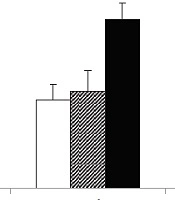
The findings showed that 30-min pre-cooling with an ice vest, before the Balk test, reduced the average pre-test temperature in this group and reached a temperature of 36.5ºC, while the temperatures were 36.7ºC and 36.8ºC in the per-cooling and control groups, respectively (Table 2). It was also found that 30-min pre-cooling and per-cooling with an ice vest had a significant effect on the heart rate during and after the exhaustive test, which was significant in the comparison between the groups and interaction groups (P < 0.05) (Figure 1). The percentage of blood hematocrit and lactate dehydrogenase at the end of the Balke test increased significantly in all groups (Table 2) (P < 0.05), which were higher in the pre-cooling and per-cooling groups, but these differences were not significant in between-group comparisons (P > 0.05) (Table 2). The results also revealed that pre-cooling and per-cooling increased the blood dopamine levels in the subjects. Moreover, comparing the effect of time and group interaction, these differences were significant (Table 2) (P < 0.05). However, these differences were not significant in between-group comparisons (P > 0.05) (Table 2). The differences in blood cortisol levels in the subjects were significant in comparing the effect of time although these differences were not significant in the comparison between group and interaction (P > 0.05) (Table 2). The time to reach exhaustion in the pre-cooling, per-cooling, and control groups was 15.53 ± 2, 16.6 ± 9, and 13.69 ± 2 min, respectively, in which performance improvement was significantly observed only in the per-cooling group (P < 0.05) (Table 2). The average time to exhaustion in the per-cooling group was about one minute longer than that in the pre-cooling group and about three minutes longer than that in the control group (P < 0.05) (Figure 2).

Figure 1.
Changes in the central body temperature of subjects in research groups. # Significantly different from pre-test (P < 0.05). † Significantly different from the control group (P < 0.05).

Figure 2.
Changes in subjects’ time spent in research groups. † Significantly different from control group (P < 0.05).
Table 2.
The Characteristics of Research Variables After Applying Pre-cooling and Per-cooling Protocols
| Variables | Pre-cooling (Pre-test, Warm-up, Post-test) | Per-cooling (Pre-test, Warm-up, Post-test) | Control (Pre-test, Warm-up, Post-test) |
|---|---|---|---|
| Temperature (ºC) | 36.5, 36.6, 37.4 | 36.7, 36.9, 37.2 | 36.8, 36.9, 37.8 |
| Heart Rate (b.min-1) | 74, 123a, 164ab | 77, 134a, 160ab | 76, 135a, 171a |
| Hematocrit (Percentage) | 40, - , 41a | 39, - , 42a | 39, - , 40a |
| Lactate dehydrogenase (IU.L-1) | 151, - , 170a | 163, - , 171 | 164, - , 168 |
| Dopamine (pg.L-1) | 28.2, -, 81.33a | 29.6, - , 85.33a | 29.45, - , 71.65a |
| Cortisol (µg.L-1) | 7.7, - , 30.18a | 8.48, -, 31.41a | 8.62, - , 29.6a |
| Time to exhaustion (min: sec) | 15:30 | 16:36b | 13:41 |
aSignificantly different from pre-test
bSignificantly different from the control group
5. Discussion
The findings revealed that the cooling process, before and during exercise, could significantly reduce the central body temperature at the end of the exhaustive test. Therefore, the effect of heat was less in this group than in other groups. Thus, the reason for the increased activity time in the exhaustive test in the per-cooling group may be attributed to the decreased temperature in this group (7). In this case, changing the blood flow from the depth of the body to the surface, fewer blood travels to the muscles, and other essential organs to perform the activity and causes a decrease in function (18). In this study, wearing an ice vest before and during the test, controlled the condition and prevented the body from overheating. On the other hand, it was found that 30-min pre-cooling and per-cooling with an ice vest had a significant effect on the heart rate in the exhaustive test in which, the result was significant in the comparison between group and interaction. Besides, it was shown that the decrease in the heart rate was significant in the pre-cooling and per-cooling groups compared to the control group. Pre-cooling causes blood vessels to constrict and reduce superficial blood flow, thereby lowering body temperature (19). Vascular contractions occur when the cold sends stimuli to adrenergic heat receptors in the skin, thus stimulating sympathetic fibers and creating stimulus reflex (20). In this regard, the results of research by Clark et al. (2011) and Tyler et al. (2012) are consistent with the findings of the present study (20, 21).
Furthermore, pre-cooling and per-cooling did not change the blood hematocrit values in between-group comparisons although these changes were significant in within groups comparison. There are a lot of electrolytes and plasma in human sweat, which play an essential role in the body’s metabolic processes. As the body temperature rises, sweating increases, leading to an increase in the number of electrolytes and excretory plasma. Therefore, pre-cooling prevents the excretion of fluids and blood electrolytes by reducing the amount of perspiration during activity and returning to the original state (3, 13). The results showed an increase in plasma lactate dehydrogenase levels in all three groups after the exhaustive test. Although the highest concentration of this enzyme was observed in the per-cooling group, this increased concentration was significant compared to the pre-test but not significant compared to the control group (10, 20, 22). One of the possible reasons for these results is that since the intensity of activity is higher and the time to reach exhaustion in the cooling and pre-cooling groups is longer, the metabolism shifts to the anaerobic pathway, and the amount of lactate dehydrogenase in the pre-cooling group increases (22).
On the other hand, the results showed that the plasma levels of dopamine and cortisol increased significantly from pretest to posttest although these changes were not significant in the comparison of groups with the control group. During exercise, the secretion of dopamine increases, which can suppress the effects of fatigue and increase the confidence and motivation of athletes. An increase in this hormone in the body leads to better transmission of neural messages and mood improvement. Moreover, the secretion of dopamine in the hippocampus plays an encouraging role which can increase dopamine. The cold may reduce body temperature by lowering the central body temperature, altering dopamine levels, and reducing heat disorders (8, 21, 23). In a study, Bridge et al. (2016) showed that reducing the ratio of serotonin to dopamine, on the one hand, and increasing the activity of dopaminergic pathways, on the other hand, could increase the tolerance of high temperatures in endurance activities (21, 23-25). Therefore, according to the results of this research, the reason for the increased activity time of the Balke test in the per-cooling group compared to other groups and the increased activity time in the pre-cooling group may be the prevention of the rapid increase in cortisol during activity, which prevents the rapid metabolism.
The average time to reach exhaustion in the per-cooling group was about one minute longer than that in the pre-cooling group and about three minutes longer than that in the control group, indicating that the effects of the per-cooling technique during exercise were longer than 30-min pre-cooling before exercise, which can have a positive effect on the performance of exhaustive activities. The results of this study are consistent with the research results by Tyler et al. (2011) and Siegel et al. (2010) (7, 9).
5.1. Conclusions
Overall, these results suggest that pre- and per-cooling can be used as beneficial ways to increase the efficiency of exercise performance by wearing ice vests before and during exercise due to lowering the temperature and heart rate and increasing the time to exhaustion.