
Annals of Military and Health Sciences Research

Image Credit:Annals of Military and Health Sciences Research

Effects of Aminoquinolines in COVID-19 Treatment: Hydroxychloroquine and Chloroquine

Author(s):
Abdullahi  IshaqAbdullahi Ishaq1, 2,*, Uwais AminuUwais Aminu1, 2, Faisal MuhammadFaisal MuhammadFaisal Muhammad ORCID1
1Department of Public Health, Faculty of Allied Health Sciences, Daffodil International University, Dhaka, Bangladesh
2Health Med Science Research Limited, Dhaka, Bangladesh
*Corresponding Author: Department of Public Health, Daffodil International University (DIU), 102 and 102/1 Shukrabad, Mirpur Road Dhanmondi, Dhaka, Bangladesh. Email: [email protected]

Annals of Military and Health Sciences Research:Vol. 18, issue 2; e106658
Published online:Aug 09, 2020
Article type:Letter
Received:Jul 16, 2020
Accepted:Jul 29, 2020
How to Cite:Ishaq A, Aminu U, Muhammad F. Effects of Aminoquinolines in COVID-19 Treatment: Hydroxychloroquine and Chloroquine. Ann Mil Health Sci Res. 2020;18(2):e106658. doi: https://doi.org/10.5812/amh.106658

Dear Editor,
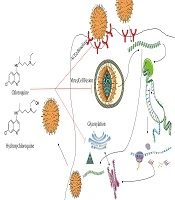
The novel coronavirus disease 2019 (COVID-19) continues to spread quickly across the globe. The COVID-19 infected people were reported from 216 countries across the world by June 11, 2020. To date, 7,145,385 people have been confirmed positive with COVID-19, leading to 408,025 deaths (1). Up to date, many clinical trials have been conducted to investigate an effective and sound therapeutic regimen for COVID-19. Chloroquine (CQ) therapy is among the accepted regimens (2). The aminoquinoline groups have been used for malaria treatment, and they showed to be effective against the COVID-19 virus in many trials (3). A significant role was observed for chloroquine phosphate in the management of SARS-CoV epidemics and the Zika virus. Chloroquine acts by playing a significant role in elevating the pH of intracellular vacuoles and adjusting the protein degradation pathways, which goes though the acidic hydrolases in the macromolecule and synthesis of lysosomes in the endosomes and post-translational protein modification in the Golgi apparatus. In some antigen-presenting cells and macrophages, CQ normally interferes with antigen processing, hence showing an antirheumatic action (4). Several studies have reported the efficacy of CQ in COVID-19 patients at different stages of severity (3, 5). In an in vitro study conducted in China among the results that were earlier obtained, more than 100 patients showed a high level of CQ efficacy and a great improvement compared to a control group based on the reduction of exacerbations of pneumonia, as well as the duration of symptoms and the delay of viral clearance (3, 5). Chloroquine phosphate demonstrated a marked efficacy and acceptable safety in treating COVID-19 in a clinical trial conducted in China (3).
Before the 2019 SARS-CoV-2 pandemic, several in vitro studies evaluated the effects of CQ on inhibiting the replication of SARS-CoV (6). According to some studies performed on SARS-CoV, it was also agreed that COVID-19 goes through cells by attaching and sticking to the angiotensin-converting enzyme 2 (ACE-2) receptor, and the CQ may prevent the virus from binding to the ACE-2 receptor by inhibiting terminal glycosylation (6). A recent review on the efficacy and safety of CQ for COVID-19 concluded that while there are sufficient safety data from the long-term use of chloroquine and its derivatives for a variety of indications, there is an ongoing need for further data on the use of chloroquine in COVID-19 (7). In the liver, both CQ and HCQ are metabolized with renal excretion of some metabolites; hence, renal and liver function must be taken into account when using these medications (8, 9). However, using aminoquinolines, chloroquine, and hydroxychloroquine, has shown greater activity to stop up viral entry into cells by inhibiting the proteolytic processing, glycosylation of host receptors, and endosomal acidification. To determine whether chloroquine and hydroxychloroquine are therapeutically safe and effective for the treatment of COVID-19, further research might be needed for both primary and secondary care.
Footnotes

  • Authors' Contribution: Manuscript drafting: Abdullahi Ishaq and Uwais Aminu. Manuscript editing: Faisal Muhammad.

  • Conflict of Interests: None.

  • Funding/Support: None.

References

Copyright

Copyright © 2020, Annals of Military and Health Sciences Research. This is an open-access article distributed under the terms of the Creative Commons Attribution-NonCommercial 4.0 International License (http://creativecommons.org/licenses/by-nc/4.0/) which permits copy and redistribute the material just in noncommercial usages, provided the original work is properly cited.

Similar Articles

11
Oct
2020
International Journal of Health and Life Sciences

What Is Efficacy of Chloroquine/Hydroxychloroquine in Clinical Cure of SARS-CoV-2? Evidence from an Iranian Population

Kiarash Ghazvini,
Masoud Keikha

Ghazvini K, Keikha M. What Is Efficacy of Chloroquine/Hydroxychloroquine in Clinical Cure of SARS-CoV-2? Evidence from an Iranian Population. J Health Rep Technol. 2021;7(1):e107362. doi: https://doi.org/10.5812/ijhls.107362

7
May
2020

Probable QT Prolongation Between Chloroquine/Hydroxychloroquine in Treatment of COVID-19 Infection and Other Medications

Mohammad Abbasinazari,
Homa Azizian

Abbasinazari M, Azizian H. Probable QT Prolongation Between Chloroquine/Hydroxychloroquine in Treatment of COVID-19 Infection and Other Medications. J Cell Mol Anesth. 2020;5(3):e149626. doi: https://doi.org/10.22037/jcma.v5i3.30319

28
Feb
2021

Impact of COVID-19 on Advanced Cancer Patients’ Pain Care: Warning About Chloroquine and Hydroxychloroquine

Reza Aminnejad,
Seyed Masoud Hashemi,
Saeid Safari,
Payman Dadkhah,
Ehsan Bastanhagh

Aminnejad R, Hashemi SM, Safari S, Dadkhah P, Bastanhagh E. Impact of COVID-19 on Advanced Cancer Patients’ Pain Care: Warning About Chloroquine and Hydroxychloroquine. Anesth Pain Med. 2021;11(1):e111641. doi: https://doi.org/10.5812/aapm.111641

15
Aug
2021

An Umbrella Review of Clinical Efficacy and Adverse Cardiac Events Associated with Hydroxychloroquine or Chloroquine with or Without Azithromycin in Patients with COVID-19

Kavous Shahsavarinia,
Morteza Ghojazadeh,
Amir Ghabousian,
Faezeh Hatefnia,
Maryam Soleimanpour,
Hassan Soleimanpour

Shahsavarinia K, Ghojazadeh M, Ghabousian A, Hatefnia F, Soleimanpour M, et al. An Umbrella Review of Clinical Efficacy and Adverse Cardiac Events Associated with Hydroxychloroquine or Chloroquine with or Without Azithromycin in Patients with COVID-19. Anesth Pain Med. 2021;11(4):e115827. doi: https://doi.org/10.5812/aapm.115827

18
Jul
2023

The Ignored Psychiatric Aspect of Chloroquine in the COVID-19 Outbreak Period: A Narrative Review Study

Mahsa Kamali,
Marzieh Azizi,
Forouzan Elyasi

Kamali M, Azizi M, Elyasi F. The Ignored Psychiatric Aspect of Chloroquine in the COVID-19 Outbreak Period: A Narrative Review Study. Iran J Psychiatry Behav Sci. 2023;17(3):e119013. doi: https://doi.org/10.5812/ijpbs-119013

Download PDF73.75 KB

Crossmark

Crossmark

Checking

Share on
Cited by
Metrics

Ordering Reprints

Articles are published under the Creative Commons license stated on each article. No permission or royalty fee is required for uses permitted by that license. CCC handles optional bulk and customized reprint orders. Any quotation covers production and delivery services only, not copyright permission. > Request Reprints from CCC 

Search Relations

Author(s):

Related Articles