
1. Background
Based on the World Health Organization, quality of life is the perception of individuals about the state of life in the context of the culture and value system in which they live, which is related to their goals, expectations, and criteria (1), and is one of the basic topics in the development of social policy (2). Quality of life is a pervasive concept that affects physical health, personal development, psychological status, level of independence, social relations, and relationships with prominent environmental institutions and is based on individual perceptions (3). Some studies mentioned that students' life quality, with a significant difference, was lower than their peers who were not students (4). Other studies also showed that in different aspects of quality of life, students' emotional health problems outweighed their physical health problems (5).
Psychological capital gives meaning to a person's life in an interactive and evaluative process, and the person continues to change in stressful situations (5). As one of the components of psychological capital, hope is the motivational state of perseverance, steadfastness, and reorientation of methods and strategies toward goals related to insistence on achieving goals and changing the path when necessary (6, 7). Self-efficacy is a personal insight, interpretation, and understanding of incidents and controlling them (8). Some studies showed that self-efficacy in students came alongside educational progress and self-esteem. Resilience is a dynamic process that provides a positive and remarkable adjustment to stressful conditions (9). Optimism is a method of attribution that interprets current or expected future events positively (10). Optimism means having positive expectations for results (11).
The mindfulness model emphasizes the quality of life by living in the moment and dealing with oneself in a non-judgmental way. By combining meditation and specific mental orientations toward an experience, mindfulness is a technique that encourages awareness of the present in a non-judgmental way by minimizing conflicts in thoughts and feelings (12). Through mindfulness-based exercises, people become aware of daily activities and the automatic functioning of their minds in the past and future. Mindfulness training aims to improve people's adaptability to themselves, others, and their environment. Studies that use mindfulness emphasize the interaction between physical, cognitive, and emotional processes (13). Studies have proved that mindfulness increases the quality of life, positive emotions, and joy of life and reduces anger in interpersonal relationships.
2. Objectives
In the current study, we tried to answer whether mindfulness and psychological capital training affect the quality of life.
3. Methods
Seventy-five medical students participated in this case-control study. The students were grouped into control (n = 25), psychological capital (n = 25), and mindfulness (n = 25) training groups to improve their quality of life. The psychological capital and mindfulness groups were trained for 90 minutes each week for six weeks, according to Tables 1 and 2, respectively. The control group had no training. A shortened version of the WHO Quality of Life-26 Questionnaire (WHOQO-26) was used (14-16). All students responded to the WHOQO-26 questionnaire before training, one and four months after the end of interventions. The area under the curve (AUC) was calculated from the responses at the three stages for each participant. The one-way ANOVA and Student Newman-Keuls as post hoc tests were used, and P < 0.05 was considered significant.
Table 1.
Protocol of Psychological Capital Training (PCI) Sessions (6)
| Week | The Content and Topics of Psychological Capital Training Sessions |
|---|---|
| First | Communicating, introducing members, expressing group rules, talking about issues, and being acquainted with the training course process, briefly introducing sessions, explaining group rules, and therapeutic commitment |
| Second | Discussing the definition and dimensions of hope, the necessity, and importance of hope, presenting practical examples and tasks, becoming acquainted with how to formulate goals and how to turn macro-goals into micro-goals |
| Third | Discussing the definition and dimensions of self-efficacy; the necessity and importance of self-efficacy; providing practical examples and tasks |
| Fourth | Discussing the definition of optimism and its dimensions, the necessity, and importance of optimism, presenting practical examples and tasks, expressing the concept of learned helplessness |
| Fifth | Discussing the definition of flexibility and its dimensions; the necessity and importance of flexibility; providing practical examples and tasks; getting familiar with asset-based, risk-based, and process-oriented strategies |
| Sixth | Reviewing and summarizing; practicing the taught therapy techniques, emphasizing their impact and the changes that have taken place; and determining the time to perform the relevant post-tests by sending questionnaires |
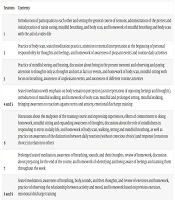
Table 2.
Mindfulness-based Cognitive Therapy Sessions Protocol (17)
| Week | The Content and Topics of Mindfulness-based Cognitive Therapy Sessions |
|---|---|
| First | Communicating, introducing members, articulating group rules, talking about issues, being acquainted with the treatment process, briefly introducing treatment sessions, explaining group rules, therapeutic commitments, and conversations |
| Second | Training and practicing mindfulness techniques, awareness of breathing and focusing on it to increase the capacity for attention and concentration, a 45-minute body scan meditation, 10-minute breathing with mindfulness and expressing the logic of each of these techniques, thinking about the exercises and feeling each of them, 3-minute breathing space and expressing their logic |
| Third | Performing muscle relaxation techniques, practicing conscious movement, keeping thoughts and mind open by following meditative exercises and focusing on conscious breathing and body parts, getting familiar with mindfulness, getting familiar with the treatment's logic, and a 3-minute breathing exercise |
| Fourth | Training and practicing mindful eating, a 45-minute sitting practice, and expressing its logic |
| Fifth | A 45-minute body examination, training, and practicing to discover reactions to normalized patterns and using potential mindfulness skills to facilitate reaction to present experiences, meditation training, and practicing |
| Sixth | Reviewing and summarizing; practicing the taught therapy techniques, emphasizing their impacts and the changes that have taken place; and determining the time to perform the relevant post-tests by sending questionnaires |
The Ethics Committee of Shahrekord Azad University confirmed this study (IR.IAU.SHK.REC.1400.033).
4. Results
The average age was 26.8, 21.8, and 22.8 years in the psychological capital, mindfulness, and control groups, respectively.
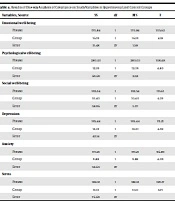
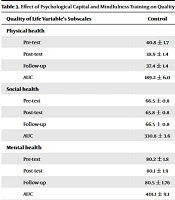
The effect of psychological capital and mindfulness training on quality of life components is shown in Table 3. There were significant differences between the groups in physical, social, environmental, and mental health. The AUC of physical health was significantly lower in the psychological capital and mindfulness groups than in the control group; it was also lower in the mindfulness group than in the psychological capital group.
The AUC of social and environmental health was significantly higher in the psychological capital and mindfulness groups than in the control group and also higher in the mindfulness group than in the psychological capital group. The AUC of mental health was higher in the mindfulness and psychological capital groups than in the control group, but there was no significant difference between the mindfulness and psychological capital groups.
| Quality of Life Variable's Subscales | Control | Psychological Capital | Mindfulness | F(2,72) | P-Value |
|---|---|---|---|---|---|
| Physical health | |||||
| Pre-test | 40.8 ± 1.7 | 41.1 ± 1.6 | 37.6 ± 1.0 | 1.717 | 0.187 |
| Post-test | 38.9 ± 1.4 | 24.9 ± 1.1A | 18.5 ± 0.3 AB | 75.640 | 0.000 |
| Follow-up | 37.4 ± 1.4 | 23.9 ± 1.2 A | 18.3 ± 0.4 AB | 80.530 | 0.000 |
| AUC | 189.2 ± 6.0 | 139.3 ± 5.5 A | 111.4 ± 1.6 AB | 67.048 | 0.000 |
| Social health | |||||
| Pre-test | 66.5 ± 0.8 | 67.2 ± 0.7 A | 62.1 ± 1.0 AB | 10.908 | 0.000 |
| Post-test | 65.8 ± 0.8 | 90.4 ± 1.3 A | 104.2 ± 2.1 AB | 172.122 | 0.000 |
| Follow-up | 66.5 ± 0.8 | 91.0 ± 1.2 A | 102.4 ± 2.0 AB | 165.878 | 0.000 |
| AUC | 330.8 ± 3.6 | 429.8 ± 4.9 A | 476.0 ± 8.0 AB | 163.371 | 0.000 |
| Mental health | |||||
| Pre-test | 80.2 ± 1.8 | 74.7 ± 1.5 A | 75.8 ± 1.4 | 3.301 | 0.043 |
| Post-test | 80.1 ± 1.9 | 105.5 ± 2.6 A | 109.2 ± 2.8 A | 41.784 | 0.000 |
| Follow-up | 80.5 ± 1.76 | 104.7 ± 2.7 A | 109.6 ± 2.8 A | 40.578 | 0.000 |
| AUC | 401.1 ± 9.1 | 495.6 ± 10.6 A | 513.1 ± 11.6 A | 33.166 | 0.000 |
| Environmental health | |||||
| Pre-test | 92.4 ± 0.9 | 93.8 ± 1.2 | 92.0 ± 1.2 | 0.769 | 0.467 |
| Post-test | 90.9 ± 0.6 | 131.4 ± 1.0 A | 126.6 ± 1.8 AB | 319.564 | 0.000 |
| Follow-up | 90.8 ± 0.9 | 131.3 ± 1.0 A | 126.4 ± 1.8 AB | 294.646 | 0.000 |
| AUC | 455.9 ± 3.2 | 619.4 ± 3.4 A | 598.0 ± 7.6 AB | 299.175 | 0.000 |
aThe data are expressed as Mean ±SEM and analyzed by one-way ANOVA and Student New Man-Keuls as a post hoc test.
bDifferent capital letters in superscript show significant difference between control and psychological capital groups, respectively (P < 0.05).
5. Discussion
Life in military environments is stressful and can affect the quality of life. Proper training can influence its improvement. This study investigated the effect of mindfulness and psychological capital training for six weeks on different aspects of the quality of life of medical students. The results showed that both mindfulness and psychological capital training improved students' quality of life, and mindfulness training was more effective than psychological capital training. The results agree with Ghadampour et al. (18) and Rahmani Fard et al. (19). It was concluded that psychological capital would improve people's quality of life through optimism and hope. Optimism is an attributive method used to define positive events based on personal sustainable, and pervasive reasons and negative events based on external temporary, and specific conditions (20). Sometimes optimism, like hope, is considered a psychological attribute but an explanatory method of optimism can be learned and expanded; also, its role in work performance has been approved by others in a practical (20, 21), Realistic (22), and flexible (23) mode. Optimism will equip organizational managers and workers to understand when they should use optimistic or pessimistic explanatory methods. They will also be able to adjust these methods to current situations in a realistic way, specifically in workplaces (24). Although hope can be considered a characteristic, it is known chiefly as an expandable state (24). Using practical approaches such as setting challenging goals, general goals of contingency, planning, and retargeting will raise the students' hopes. It increases physical, mental, social, and environmental health and improves the students' quality of life.
Carlson et al. (25) found remarkable changes in breast and prostate cancer patients' quality of life, stress signs, and sleep quality. These changes occurred after patients participated in mindfulness and stress-relieving programs. Focusing on past events was the cause of individuals' mental problems. In a mindfulness program, the individual will be aware of the mental gear and use more beneficent methods. Learning to take a neutral position toward experiences, reducing judgments, biases, and predictions, and having an initiative mind are the purposes of these programs. Having an initiative mind means envisioning things and affairs vividly; it is like seeing and experiencing them for the first time.
5.1. Conclusions
It could be concluded that both psychological capital and mindfulness training may effectively improve quality of life.