
1. Background
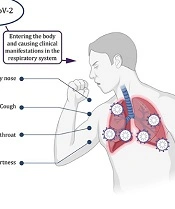
Coronavirus disease 2019 (COVID-19), a global crisis, is an infectious disease caused by the severe acute respiratory syndrome coronavirus type 2 (SARS-CoV-2) virus. It was first observed in Wuhan, China, in December 2019 and subsequently spread worldwide. Many individuals presented with typical symptoms, such as fever, cough, loss of appetite, diarrhea, lethargy, and a reduced sense of smell and taste; however, others experienced mild or asymptomatic forms of the disease. Some individuals developed severe manifestations, including acute respiratory distress syndrome (ARDS) and, tragically, death (1). According to the World Health Organization (WHO), as of September 24, 2022, a total of 614,514,327 individuals worldwide had been affected by COVID-19, with 6,535,446 deaths. In Iran, these numbers amounted to 7,546,276 infections and 144 367 deaths (2).
Although most individuals infected with COVID-19 recover from the acute phase of the illness, some continue to experience long-term consequences, leading to novel or even more severe health challenges after recovery (3, 4). Notably, COVID-related cognitive disorders (CDs) have emerged as a significant concern (5). Cognitive disorders, also known as neurocognitive disorders, are characterized by the brain’s inability to process, store, and utilize information for reasoning, judgment, perception, attention, comprehension, and memory (6).
Several studies have identified the existence of CDs among individuals who recovered from COVID-19, even long after their initial recuperation (7, 8). Various factors might contribute to COVID-related CDs. For instance, some studies have reported memory impairment, such as amnesia, among COVID-19 survivors, which could be linked to treatments, such as steroids and antibiotic therapy (9, 10). Additionally, other studies suggest that certain CDs, including issues with concentration, attention, executive function, and verbal fluency, might result from elevated levels of key cytokines, such as interleukin 6 (IL-6) and tumor necrosis factor-alpha (TNF-α) (11, 12). Conversely, some studies have found different outcomes, indicating that most individuals who recover from COVID-19 either maintain their cognitive function or experience recovery following temporary impairment during the acute phase (13-15). The variability in these findings might be attributed to diverse variables and initial disparities, with many researchers emphasizing the role of sociodemographic and health disparities in influencing the prevalence and severity of COVID-related CDs among survivors (16-19).
Although studies in this area have yielded varying conclusions, the prevalence of complaints related to impaired memory, concentration, attention, and executive functions among COVID-19 survivors (20, 21) underscores the importance of continued research in this specific domain. Moreover, the necessity for psychological screening of COVID-19 survivors is further underscored by the fact that these specific disorders typically go undiagnosed until they progress to severe functional impairments (3, 4). As suggested by The Lancet, the establishment of community-based mental health services aimed at screening and creating sustainable structures for delivering mental health care to COVID-19 survivors is crucial (22). Despite the aforementioned considerations and the numerous studies conducted in this field, research addressing the multidimensional and concurrent relationships between COVID-19, CDs, and other related disorders, factors, and variables remains limited.
2. Objectives
Therefore, the profound impact of post-COVID-related CDs on individuals’ lives, coupled with the persistence of these disorders and their subsequent limitations long after recovery, highlights the significance of assessing cognitive health in COVID-19 survivors. This assessment can facilitate the development of more effective community-based support programs. Therefore, the present study was conducted to ascertain the prevalence of and predictive factors for CDs among COVID-19 survivors in Iran using Bayesian analysis.
3. Methods
3.1. Study Design
The current study is a regional cross-sectional analytical research project conducted from June 2021 to August 2022. The study objective was to determine the prevalence of CDs and identify sociodemographic and health-related predictors of CDs among individuals who have recovered from COVID-19 in Iran using Bayesian analysis.
3.2. Participants
The research participants were individuals who had recovered from COVID-19 and had been discharged from hospitals affiliated with Shahid Beheshti University of Medical Sciences (SBMU), Tehran, Iran, or the emergency departments (ED) of these hospitals after their initial check-up. These participants had experienced various severities of COVID-19 (moderate, severe, and critical) and had a time elapsed between 12 weeks (3 months) and 60 weeks (18 months) from the onset of their COVID-19 acute symptoms. Initially, the study included 11,337 individuals based on their medical records. Subsequently, 2 117 individuals were randomly selected based on the research’s inclusion and exclusion criteria. After providing the necessary information, 1 103 participants gave their consent and met the research’s mandatory criteria. Finally, only 339 participants completed all the questionnaires. To ensure geographical diversity, 100 individuals were randomly chosen from each of the mentioned hospitals (a total of 300 participants).
3.3. Interventions and Procedures
The sample size was determined based on a pilot study and the assumption of the lowest probability of psycho-cognitive illness occurrence. Using the G-Power software (version 3.1), the sample size was calculated considering the smallest effect size (effect size = 0.3), the highest degree of freedom in primary outcomes (df = 8), and a significance level of P-value < 0.05. The software yielded a required sample size of 253 individuals.
Three hospitals were randomly selected by lottery from different regions of Tehran: One from the south, one from the center, and one from the north, to ensure geographical dispersion in the research areas. These hospitals were Loghman Hakim Hospital in the south (hospital A), Imam Hossein Hospital in the center (hospital B), and Shahid Taleghani Hospital in the north (hospital C). It is worth noting that Tehran’s northern, central, and southern regions differ socioeconomically. The northern region generally consists of more affluent residents; however, the southern region has a lower socioeconomic status. The participants from the central region are typically considered to have a middle socioeconomic position.
Random sampling was carried out within each hospital using a table of random numbers, and the participants were then assessed according to the inclusion and exclusion criteria. The sample size of 100 participants was achieved within each hospital by consistently applying the aforementioned methodology. The participants were required to meet the specific inclusion criteria, including being within the age range of 18-65 years, having a documented diagnosis of COVID-19 in their hospital or treatment center records, experiencing COVID-19 with moderate to critical severity (Table 1) (23), volunteering to participate in the study, having a time elapsed between 12 weeks (3 months) and 60 weeks (18 months) since the onset of symptoms, and not having severe physical or mental impairments or emotional grief. Conversely, the exclusion criteria included leaving more than 10% of the questionnaires unanswered and participants expressing a desire to withdraw from the study.
Table 1.
Classification of Coronavirus Disease 2019 (COVID-19) According to the Severity of Signs and Symptoms
| Severity | Signs and Symptoms |
|---|---|
| Asymptomatic | Positive COVID-19 test; Lack of clinical signs and symptoms ; Chest X-ray is normal |
| Mild | Mild general, respiratory, and gastrointestinal signs and symptoms such as fever, fatigue, myalgia, cough, sore throat, runny nose, sneezing, nausea, vomiting, abdominal pain, and diarrhea |
| Moderate | Pneumonia (without hypoxemia) ; The presence of lesions in the chest X-ray |
| Severe | Hypoxic pneumonia (SpO2 < 92%) |
| Critical | Acute respiratory distress syndrome, encephalopathy, myocardial injury, heart failure, coagulation disorders, and acute kidney injury |
Abbreviations: COVID-19, coronavirus disease 2019; SpO2, oxygen saturation.
The Clinical Demographic Information Questionnaire and the Montreal Cognitive Assessment (MOCA) were the utilized tools of the current research. The "Clinical Demographic Information Questionnaire," which was designed developed by the authors, collected information on participants’ gender, age, marital status, level of education, occupation, economic situation, birthplace, health status, history of diseases, history of medication, minimum arterial oxygen saturation (SaO2) during hospitalization, number of days of COVID-related hospitalization, and the number of days since recuperation from COVID-19. The validity of the Clinical Demographic Information Questionnaire was assessed using a qualitative content validity approach.
The Montreal Cognitive Assessment (MoCA), developed by neurologist Ziad Nasreddine in Montreal, Quebec, Canada, in 1996, was another tool utilized in the study. It consists of seven sections that rapidly assess cognitive abilities, including memory (5 scores), visuospatial (4 scores), executive functions (4 scores), attention (5 scores), language (4 scores), abstract reasoning (2 scores), and orientation (6 scores). The total score, representing the sum of scores from these sections, ranges from 0 to 30, with a total score of 26 or higher indicating optimal cognitive function. To establish the validity of this instrument, Spearman’s correlation coefficient of 0.73 was calculated when comparing the MoCA to the mini-mental state examination (MMSE). Additionally, internal consistency, assessed using Cronbach’s alpha coefficient, was observed to be 0.82, demonstrating the tool’s reliability (24).
Simultaneously, to assess the correlation and predictive power of stress, anxiety, depression, obsessive-compulsive disorder (OCD), sleep disorder, and Posttraumatic Stress Disorder (PTSD) variables, this study employed the Depression, Anxiety, and Stress Scale 21 (DASS-21), the Obsessive-Compulsive Inventory-Revised (OCI-R), the Pittsburgh sleep quality index (PSQI), and the Posttraumatic Stress Disorder Checklist for DSM-5 (PCL-5). These mentioned tools demonstrated acceptable reliability and validity (25-28).
The Ethics Committee of SBMU approved the research proposal, and the ethics code was obtained accordingly. Subsequently, the necessary permissions for access to the research sites were secured. A random number table was employed for sampling within each designated hospital based on participants’ medical records. Subsequently, the selected individuals were screened according to the study’s inclusion and exclusion criteria. After the final sample was determined, the participants were contacted by phone and provided with comprehensive information about the study and their rights. They received a digital version of the consent form via WhatsApp and provided their digital signature. Data collection for this study utilized self-report questionnaires, with brief phone interviews conducted as additional data collection tools. The questionnaires were developed as an online digital connection within the Porsa.Irandoc system. Links and additional information were sent to each participant via WhatsApp. The questionnaires were presented in a legible format, with each question displayed on a separate page. Finally, short telephone interviews were employed to complete the supplementary cognitive assessment.
3.4. Statistical Analysis
After gathering the data, they were analyzed using descriptive and inferential statistics with SPSS software (version 26), taking into consideration a significance level of 0.05 and test error. The analysis procedure aligned with the research objectives and the nature of the variables. Qualitative variables for participant frequency were expressed as relative frequencies; nevertheless, quantitative variables were presented as means with statistical standard deviations. Associations between sociodemographic and health inequalities and the subscales of CDs were examined using statistical values from analysis of variance (ANOVA) and Chi-square tests. Furthermore, Bayesian linear regression tests were employed to assess correlations and predictive relationships between CDs and sociodemographic and health inequalities. The Bayesian linear regression test provided a comprehensive understanding of the multidimensional relationships between COVID-19, CDs, and other factors and disorders simultaneously.
3.5. Ethical Considerations
This study received ethical approval from the Ethics Committee of SBMU (IR.SBMU.PHARMACY.REC.1400.068), aligning with the ethical standards essential for any research project. Authorization was also granted by the Vice Chancellor for Research Affairs of SBMU. The participants had the right to withdraw from the research at their discretion, adhering to ethical guidelines. The researcher was obligated to maintain the confidentiality of participants’ information and could not disclose it without prior notification to the participants unless required by exceptional circumstances. Contact information of the first author was provided to participants for any study-related inquiries. Ethical principles were upheld when utilizing other research sources. The study prioritized faithfulness and accuracy throughout the sampling, data collection, and analysis processes. Finally, the research methodologies and organizational framework were in accordance with the cultural and religious norms of the participants and society.
4. Results
4.1. Participants’ Sociodemographics and Health Characteristics
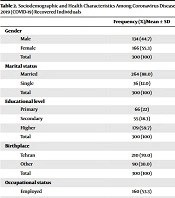
Among the 300 participants, the majority were female (55.3%), had higher levels of education (59.7%), were employed (53.3%), married (88%), and hospitalized (79.3%). Moreover, only 24 (8%) and 34 (11.3%) patients had previous experiences of intubation and admission to the intensive care unit (ICU), respectively. The participants had a mean age of 41.69 ± 9.06 years. Additionally, their mean duration of hospitalization was 5.33 ± 3.61 days, and their mean minimum SaO2 level was 78.99% ± 9.99% (Table 2).
Table 2.
Sociodemographic and Health Characteristics Among Coronavirus Disease 2019 (COVID-19) Recovered Individuals
| Frequency (%)/Mean ± SD | |
|---|---|
| Gender | |
| Male | 134 (44.7) |
| Female | 166 (55.3) |
| Total | 300 (100) |
| Marital status | |
| Married | 264 (88.0) |
| Single | 36 (12.0) |
| Total | 300 (100) |
| Educational level | |
| Primary | 66 (22) |
| Secondary | 55 (18.3) |
| Higher | 179 (59.7) |
| Total | 300 (100) |
| Birthplace | |
| Tehran | 210 (70.0) |
| Other | 90 (30.0) |
| Total | 300 (100) |
| Occupational status | |
| Employed | 160 (53.3) |
| Unemployed | 140 (46.7) |
| Total | 300 (100) |
| Hospitals | |
| A | 100 (33.3) |
| B | 100 (33.3) |
| C | 100 (33.3) |
| Total | 300 (100) |
| Intubation | |
| Yes | 24 (8.0) |
| No | 276 (92.0) |
| Total | 300 (100) |
| Admission to ICU | |
| Yes | 34 (11.3) |
| No | 266 (88.7) |
| Total | 300 (100) |
| Hospitalization | |
| Yes | 238 (79.3) |
| No | 62 (20.7) |
| Total | 300 (100) |
| Time elapsed since the onset of symptoms | |
| 3 to 6 mo | 100 (33.3) |
| 6 mo to 1 y | 100 (33.3) |
| 1 to 1.5 y | 100 (33.3) |
| Total | 300 (100) |
| Age (n = 300) | 41.69 ± 9.06 |
| Min. level of SaO2 (n = 300) | 78.99 ± 9.99 |
| Length of hospitalization (n = 300) | 5.33 ± 3.61 |
Abbreviations: COVID-19, coronavirus disease 2019; ICU, intensive care unit; SpO2, oxygen saturation; SD, standard deviation.
4.2. Prevalence and Severity of Cognitive Disorders
Based on statistics related to the MoCA, only 81 participants (27%) had CDs in the current study. Moreover, the mean MoCA overall rating among participants was 26.41 ± 2.81 (Table 3).
Table 3.
Mean and Frequency of Montreal Cognitive Assessment (MoCA)
| Mean ± SD/No. (%) | |
|---|---|
| MoCA total score | 26.41 ± 2.81 |
| Presence of cognitive disturbance (below 26) | 81 (27) |
| Normal cognitive status (26 and above) | 219 (73) |
Abbreviations: MoCA, Montreal Cognitive Assessment; SD, standard deviation
4.3. Sociodemographic and Health Disparities Between Participants with and Without Cognitive Disorders
Individuals with and without CDs demonstrated a variety of demographic variations. The variables’ significance varied additionally (Table 4). Furthermore, there was a notable difference in individuals’ mental health between those with and without CDs (Table 5).
Table 4.
Comparison of Sociodemographic and Health Disparities Among Recovered Coronavirus Disease 2019 (COVID-19) Recovered Individuals with and Without Cognitive Disorders (CDs)
| Variables | MoCA Level | Statistics | |
|---|---|---|---|
| Presence of Cognitive Disturbance (Below 26) | Normal Cognitive Status (26 and Above) | ||
| Mean ± SD | Mean ± SD | t (df), P-Value | |
| Age, y | 45.94 ± 7.52 | 40.12 ± 9.09 | t = 5.14 (298), P = 0.0001 a |
| Minimum level of SaO2 | 74.47 ± 11.16 | 80.66 ± 8.99 | t = -4.94 (298), P = 0.0001 a |
| Number of hospitalization days | 6.98 ± 4.13 | 4.72 ± 3.19 | t = 4.99 (298), P = 0.0001 a |
| No. (%) | No. (%) | χ2 (df), P-Value | |
| Gender | |||
| Male | 36 (26.86) | 98 (73.13) | χ2 = 0.002 (1), P = 0.96 |
| Female | 45 (27.10) | 121 (72.89) | |
| Birthplace | χ2 = 0.02 (1), P = 0.87 | ||
| Tehran | 78 (27.08) | 210 (72.91) | |
| Other cities | 3 (25) | 9 (75) | |
| Hospital | χ2 = 13.49 (2), P = 0.001 a | ||
| A | 38 (38) | 62 (62) | |
| B | 28 (28) | 72 (72) | |
| C | 15 (15) | 85 (85) | |
| ICU admission | χ2 = 47.61 (1), P = 0.0001 a | ||
| No | 55 (20.67) | 211 (79.32) | |
| Yes | 26 (76.47) | 8 (23.52) | |
| Marital status | χ2 = 12.17 (1), P = 0.0001 a | ||
| Married | 80 (30.30) | 184 (69.69) | |
| Single | 1 (2.77) | 35 (97.22) | |
| Intubation | χ2 = 42.01 (1), P = 0.0001 a | ||
| No | 61 (22.11) | 215 (77.89) | |
| Yes | 20 (83.33) | 4 (16.66) | |
| Time elapsed from onset, mo | χ2 = 1.92 (2), P = 0.38 | ||
| 3 to 6 | 24 (24) | 76 (76) | |
| 6 to 12 | 25 (25) | 75 (75) | |
| 12 to 18 | 32 (32) | 68 (68) | |
| Hospitalization | χ2 = 11.89 (1), P = 0.001 a | ||
| No | 75 (31.51) | 163 (68.48) | |
| Yes | 6 (9.67) | 56 (90.32) | |
Abbreviations: MoCA, Montreal Cognitive Assessment; SD, standard deviation; SaO2, arterial oxygen saturation; ICU, intensive care unit.
a P < 0.05
Table 5.
Comparison of Psychological Disparities Among Recovered Coronavirus Disease 2019 (COVID-19) Individuals with and Without Cognitive Disorders (CDs) a
| Variables | MoCA Level | Statistics, Tdf, P-Value | |
|---|---|---|---|
| Presence of CDs (Below 26), Mean ± SD | Normal CDs (26 and Above), Mean ± SD | ||
| PTSD | 38.52 ± 16.74 | 35.28 ± 18.97 | T298 = 0.29, P = 0.62 |
| OCD | 31.73 ± 16.16 | 30.15 ± 14.87 | T298 = 0.79, P = 0.42 |
| Depression | 8.65 ± 5.43 | 8.71 ± 5.31 | T298 = -0.07, P = 0.93 |
| Anxiety | 8.31 ± 5.09 | 8.23 ± 4.86 | T298 = 0.11, P = 0.91 |
| Stress | 9.02 ± 5.08 | 8.84 ± 5.04 | T298 = 0.26, P = 0.79 |
| Sleep disturbances | 5.59 ± 3.25 | 6.11 ± 3.12 | T298 = -1.23, P = 0.21 |
Abbreviations: MoCA, Montreal Cognitive Assessment; SD, standard deviation; CD, cognitive disorders; PTSD, Posttraumatic Stress Disorder; OCD, obsessive-compulsive disorder
a P < 0.05
4.4. Predictors of Cognitive Disorders Among Individuals Recovered from COVID-19
According to the Bayesian analysis, the most powerful predictors of CDs among the participants were PTSD, older age, hospital A, lower level of SaO2, and more days of hospitalization (BF < 0.05, P < 0.05) (Table 6). The predictive power increases as the Bayesian value approaches 0. The results demonstrated that the aforementioned predictors among individuals who recovered from COVID-19 have a strong predictive value for CDs as a responsive condition (Table 6).
Table 6.
Prediction of Cognitive Disorders (CDs) Among Recovered Coronavirus Disease 2019 (COVID-19) Individuals According to Linear Bayesian Regression
| Variable (Response) | Variables (Exploratory) | BF | P-Value |
|---|---|---|---|
| CDs | PTSD | 0.048 | 0.02 a |
| Age (older) | 0.0001 | 0.0001 a | |
| Hospital (A) | 0.035 | 0.001 a | |
| Minimum level of SaO2 (lower) | 0.01 | 0.0001 a | |
| Number of hospitalization days (more) | 0.001 | 0.0001 a |
Abbreviations: CD, cognitive disorders; PTSD, posttraumatic stress disorder; SaO2, arterial oxygen saturation
a P < 0.05
5. Discussion
The purpose of the current study was to utilize Bayesian analysis to determine the prevalence of COVID-related CDs and their sociodemographic and health inequality predictors among individuals who recovered from COVID-19. Based on the results of the present study, COVID-related CDs were observed in less than half (27%) of the COVID-19-recovered individuals. However, the frequency and severity of COVID-related CDs among the participants varied widely based on different factors and variables. A similar study was conducted by Miskowiak et al. in 2021 to investigate the frequency of COVID-related CDs after discharge from the hospital. The results were statistically different from the present study and indicated a frequency of 59 to 65% of CDs among the participants (29). Therefore, it can be concluded that the frequency of CDs was not consistent across all studies due to various methodological and demographic factors. In this context, a review study conducted by Daroische et al. in 2021 aimed to investigate the frequency of CDs even after COVID-19 recovery. The results indicated a prevalence of CDs ranging from 15 to 80% among COVID-19-recovered individuals (11). Therefore, the results of the proposed study can align with a wide spectrum of findings in the existing literature.
In the present study, individuals with post-COVID-related CDs were significantly older, had lower minimum levels of SaO2, and had more hospitalization days than those without CDs (P = 0.0001). In this regard, a study conducted by Sreevalsan-Nair et al. revealed that a longer length of in-hospital stay was correlated with a higher susceptibility to various COVID-related complications among COVID-19-recovered patients (P < 0.05) (30). Furthermore, another study conducted by Liu et al. in 2021 to evaluate post-infection CDs among elderly patients with COVID-19 indicated that older age and more severe COVID-related CDs were correlated with each other (P < 0.05) (31). Eventually, as stated by Su et al, “lower SaO2 is associated with a higher risk of CDs” (P < 0.05) (32). Therefore, the results of the aforementioned studies align with the findings of the current study.
Moreover, the variations in the prevalence of CDs among the individuals in the present research were considerable, likely due to the diversity of hospitals. As previously indicated, hospitals A, B, and C are located in Tehran’s three northern, central, and southern regions, respectively, and exhibit significant socioeconomic disparities. In other words, as one moves from Tehran’s northern to southern regions, socioeconomic status tends to deteriorate, making it harder for individuals in the southern regions to access healthcare. Consequently, these socioeconomic disparities can potentially impact their cognitive health. However, contrary to this expectation, the prevalence of CDs among individuals covered by hospital A (located in the northern region of Tehran) was surprisingly higher at 38% than the other hospitals (P = 0.001). Therefore, it can be concluded that other factors might be contributing to these conflicting results. For instance, as hospital A is a public hospital, most of the covered patients come from middle- or low-economic backgrounds, regardless of the regional economic conditions. Accordingly, based on a study by Alonso-Lana et al. in 2020, low socioeconomic status was associated with a higher vulnerability to CDs among individuals with COVID-19 (P < 0.05) (33).
Another significant finding was the higher prevalence of CDs among individuals for whom 12 to 18 months had elapsed since the onset of their COVID-19. According to the results of Avila-Villanueva et al.’s study in 2022, chronic psychological disturbances can trigger CDs (34). Therefore, it can be concluded that individuals in the groups with 3 to 6 months and 6 to 12 months since the onset of their COVID-19 have not had as much time as the third group (12 to 18 months) to be affected by the long-term consequences of COVID-related psychological disturbances that might lead to CDs.
In the present study, COVID-related CDs were correlated with PTSD, OCD, anxiety, and stress disorders. Coronavirus disease 2019-related CDs were more prevalent among individuals who were suffering from these mentioned disorders simultaneously, although the associations were not statistically significant (P > 0.05). However, based on Bayesian analysis, significant associations were observed between CDs and PTSD (BF = 0.04, P = 0.02), CDs and older age (BF = 0.0001, P = 0.0001), CDs and hospital A (BF = 0.03, P = 0.001), CDs and a lower level of SaO2 (BF = 0.01, P = 0.0001), and finally, CDs and more hospitalization days (BF = 0.001, P = 0.0001). These factors might significantly predict the development of CDs following a COVID-19 infection.
Moreover, Mattioli et al.’s study conducted in 2021, which investigated COVID-19-related neurological and cognitive sequelae 4 months after recovery, reported a significant correlation between the presence of CDs and depression (P = 0.007, r = 0.03), the presence of CDs and anxiety (P = 0.009, r = 0.04), and the presence of CDs and stress (P = 0.04, r = 0.02) (14). Additionally, according to Riaz et al.’s study in 2021, correlations between the presence of CDs and depression (P = 0.0001, r = 0.61), the presence of CDs and anxiety (P = 0.0001, r = 0.64), and the presence of CDs and stress (P = 0.0001, r = 0.55) were reported (35). Therefore, based on the results of these studies, despite differences in methodology (the absence of similar studies with Bayesian analysis), their primary reported results and correlations are approximately consistent with the findings of the present study.
5.1. Limitations
The present study, similar to any research, had several limitations. One notable limitation was the study’s limited sample size in each urban region. Additionally, only 339 out of the 1103 potential participants completed the entire questionnaire. It is reasonable to assume that more individuals might have developed symptoms of CDs as a consequence. The generalizability of the obtained data on COVID-19-recovered individuals was constrained by the aforementioned limitation, which was a result of the ethical rules governing voluntary participation in the study.
5.2. Conclusions
In conclusion, CDs were observed among less than half of the COVID-19-recovered individuals. The prevalence of CDs was higher among individuals who were older, had lower levels of SaO2, had 12 to 18 months elapsed since the onset of COVID-19, were covered by hospital A, had more hospitalization days, and had comorbid disorders, such as OCD, anxiety, and stress. Finally, there were significant associations and predictive relationships between CDs and PTSD, older age, hospitalization in hospital A, lower SaO2 levels, and more hospital days.