
1. Context
Trigeminal neuralgia (TN), often described as a “lightning bolt” to the face, is a chronic neuropathic pain disorder characterized by recurrent episodes of sudden, unilateral facial pain involving one or more divisions of the trigeminal nerve and causing substantial disability (1). The most common cause is vascular compression of the nerve root, usually by the superior cerebellar artery or other posterior fossa vessels (2, 3). Less common but recognized causes include compression by space-occupying lesions, such as meningiomas, acoustic neuromas, epidermoid cysts, arteriovenous malformations, and aneurysms, as well as demyelination associated with multiple sclerosis. The latter accounts for approximately 2% - 4% of symptomatic cases (4-6). Ephaptic transmission between demyelinated fibers is a proposed mechanism underlying the shock-like pain triggered by light tactile stimulation of trigger zones, which are generally located near the nasal, perioral, and midline areas (6). The annual incidence is approximately 4 - 13 per 100,000 and increases with age; the female-to-male ratio is approximately 1.5 - 1.7:1 (7).
Trigeminal neuralgia is usually unilateral, rarely occurs during sleep, and more commonly affects the right side (5). Chronic pain and the resulting muscle tension can lead to depression and social isolation (8, 9). Diagnosis is based primarily on clinical history and examination and is supported by magnetic resonance imaging or magnetic resonance angiography when available (10, 11). The clinical course varies: some patients experience remitting episodes lasting weeks to months, whereas others have persistent baseline pain with superimposed paroxysms (12). First-line treatment is pharmacological and primarily involves blockade of voltage-gated sodium channels; carbamazepine is the only drug specifically approved by the United States Food and Drug Administration (FDA) for TN. Second-line drugs include gabapentin, clonazepam, lamotrigine, phenytoin, and valproic acid. Eslicarbazepine acetate is FDA-approved for partial-onset seizures; its use for TN requires separate supporting evidence and further assessment of efficacy (13). Adverse effects, including drowsiness, dizziness, diplopia, and nausea, as well as inadequate responses, frequently limit long-term pharmacological management. Botulinum toxin type A has also been investigated as a nonsurgical option (14). Several invasive treatments are available for patients who do not respond to maximal medical management (15). Table 1 provides a comparative overview of microvascular decompression, radiofrequency thermocoagulation (RFT), balloon compression, glycerol rhizotomy, Gamma Knife radiosurgery, and repeated trigeminal nerve blocks (TNBs). Repeated TNB is a minimally invasive procedure that may provide diagnostic and therapeutic benefits by interrupting peripheral nociceptive transmission and attenuating neurogenic inflammation. Its effects may persist for several days to weeks, beyond the direct effects of the drug, although its effectiveness in chronic pain remains controversial (16). The technique, target level, imaging guidance, and injectate composition vary considerably across studies (17). Thermocoagulation of the Gasserian ganglion or peripheral trigeminal branches is usually performed for refractory disease (18, 19). Radiofrequency thermocoagulation of peripheral branches is effective for idiopathic TN but has a higher recurrence rate than Gasserian ganglion RFT (20). All these treatments may lose effectiveness over time. Although surgery can provide rapid relief, pain may recur, and procedure-specific risks include facial numbness and jaw weakness (21). Stereotactic radiosurgery, particularly the widely used and well-studied cobalt-60 Gamma Knife system, may be considered for patients who are poor surgical candidates. Pain relief may be delayed for weeks to months while the lesion develops (22).
Table 1.
Comparative Analysis of Treatment Modalities a
| Technique | Invasiveness | Pain Relief | Recurrence | Major Complications |
|---|---|---|---|---|
| Medical therapy | Low | Moderate | High | Sedation, dizziness, nausea |
| Repeated TNB | Low | Temporary | High | Hematoma, transient numbness |
| RFT | Moderate | Excellent | Moderate | Dysesthesia, hypoesthesia, anesthesia dolorosa |
| Balloon compression | Moderate | Excellent | Moderate | Weakness |
| Glycerol rhizotomy | Moderate | Good | High | Sensory loss |
| MVD | High | Excellent | Lowest | Neurosurgical risks |
| Gamma Knife | Low | Good | Moderate | Delayed response |
a Abbreviations: TNB, trigeminal nerve block; CRF, conventional radiofrequency; RFT, radiofrequency thermocoagulation; PRF, pulsed radiofrequency; MVD, microvascular decompression.
Several international guidelines and narrative reviews suggest that repeated TNB and radiofrequency (RF) procedures may reduce pain intensity, improve quality of life, and decrease analgesic requirements (23-26). No direct head-to-head randomized controlled trial comparing repeated TNB with RF procedures was identified. This review therefore aims to summarize evidence on their mechanisms of action, effectiveness, duration of analgesia, recurrence, complications, and practicality and to highlight the need for direct comparative trials, rather than to establish the superiority of either modality. The evidence is dominated by small, heterogeneous, mostly noncomparative studies that are unsuitable for formal quantitative pooling. Accordingly, we selected a narrative review design and followed the Scale for the Assessment of Narrative Review Articles, rather than the Preferred Reporting Items for Systematic Reviews and Meta-Analyses (PRISMA), which applies to systematic reviews (27).
2. Evidence Acquisition
This narrative review followed the recommendations of the Scale for the Assessment of Narrative Review Articles (27). The diversity of study designs and clinical situations, the repeated use of TNB and RF procedures, and the absence of head-to-head trials supported a narrative rather than systematic synthesis. No protocol was registered because this was a narrative review. All comparative statements are indirect and should be interpreted as hypothesis-generating rather than definitive.
PubMed, Scopus, and Web of Science were searched from database inception through May 15, 2026. The search strategy used controlled vocabulary, including Medical Subject Headings (MeSH) and Emtree terms, and free-text keywords related to TN, facial pain, repeated TNB (landmark-guided, fluoroscopy-guided, and ultrasound-guided), and RF procedures, including conventional RF and pulsed radiofrequency (PRF). Boolean operators (AND/OR) were used to optimize the search.
The inclusion criteria were: 1) adults aged ≥ 18 years with classical, idiopathic, or refractory TN, or facial pain considered related to TN; 2) interventions involving repeated TNB using landmark, fluoroscopic, or ultrasound guidance, or RF procedures using conventional radiofrequency (CRF)/RFT or PRF, at any target, including the Gasserian ganglion, peripheral branches, or foramen ovale, and with any injectate, including local anesthetic ± steroid ± clonidine; 3) studies with or without a comparator; 4) outcomes including pain intensity, duration of analgesia, recurrence, complications, quality of life, or medication reduction; 5) reviews, clinical trials, retrospective or prospective studies, case series, case reports, and relevant animal studies for mechanistic context only; 6) English-language publications; and 7) full-text availability.
The exclusion criteria were: 1) non-English-language articles; 2) unavailable full text; 3) articles not focused on TN or facial pain; 4) articles not focused on TNB or RF; 5) duplicate cohorts; and 6) conference abstracts with insufficient data.
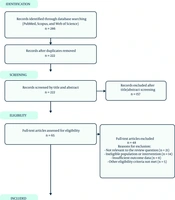
Two reviewers (M. R. A. and K. H.) screened the studies, and disagreements were resolved by consensus with a third reviewer (F. I.). A PRISMA-type flow diagram (Figure 1) illustrated the selection process. Records were exported using EndNote X9, and duplicates were removed manually and automatically. Reference lists of relevant articles were also searched manually to identify additional eligible studies.
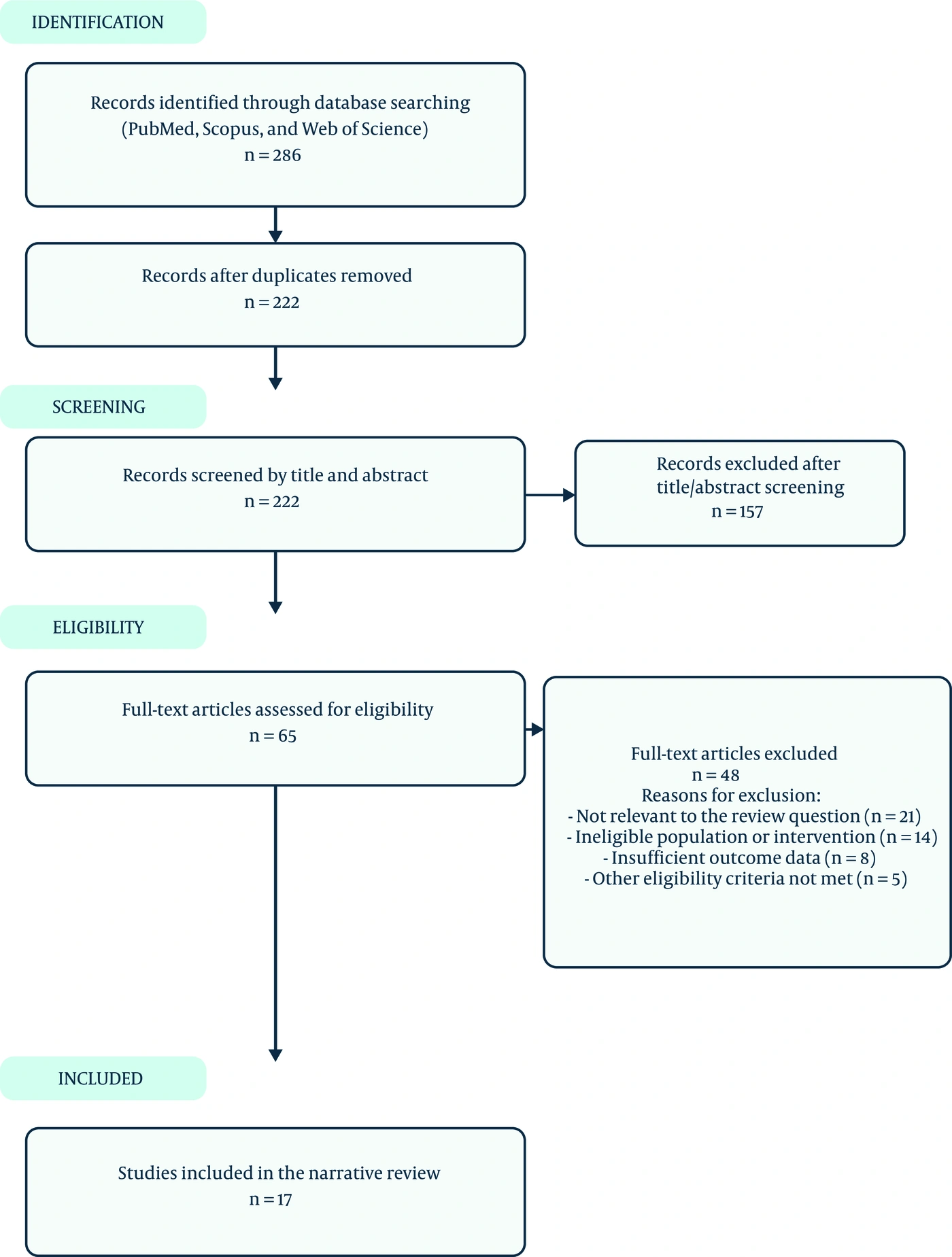
Figure 1.
Study selection flow diagram for the narrative review
Structured quality appraisal was performed using a modified Newcastle-Ottawa Scale for observational studies, the Cochrane Risk of Bias 2 (RoB 2) tool for randomized trials, AMSTAR-2 for systematic reviews and meta-analyses, and Joanna Briggs Institute Critical Appraisal Checklists for case reports and case series. Study-level quality ratings are presented in Table 2. Table 3 presents the certainty of evidence for each comparative statement, informed by the Grading of Recommendations Assessment, Development and Evaluation (GRADE) approach. Primary clinical studies, animal studies, meta-analyses, and reviews were synthesized separately to avoid overlapping results. English-language and full-text restrictions were recognized as potential sources of selection bias and are addressed in the Limitations section.
Table 2.
Characteristics of Studies Evaluating Repeated TNB and Radiofrequency Procedures in Trigeminal Neuralgia a
| Author | Year | Country | Study Design | Sample Size (N) | Mean Age (y) | Population | TN Type | Block Target | Injectate/Intervention | Guidance | Follow-up | Main Outcome | Duration of Analgesia | Complications | Quality Rating |
|---|---|---|---|---|---|---|---|---|---|---|---|---|---|---|---|
| Nader et al. (28) | 2013 | USA | Prospective case series | 15 | 64 ± 14 | Refractory TN and atypical facial pain | Mixed | Trigeminal nerve via pterygopalatine fossa | Local anesthetic + steroid | Ultrasound-guided | 15 months | Significant pain reduction in most patients; improved daily function | Several weeks to months | No major complications reported | Low |
| Perloff et al. (29) | 2018 | USA | Case series | 9 | NR | Refractory TN presenting to urgent care | Classical TN | Peripheral trigeminal branches | Bupivacaine ± steroid | Landmark-based | Short-term follow-up | Rapid pain relief and discharge without opioid escalation | Immediate to several days | No complications reported | Very Low |
| Nader et al. (30) | 2015 | USA | Case report | 1 | 66 | Refractory TN | Classical TN | Trigeminal ganglion/pterygopalatine fossa | Pulsed radiofrequency application with local anesthetic | Ultrasound-guided | 6 months | Marked reduction in pain intensity and analgesic requirement | Several months | No neurological complications reported | Low |
| Di Stani et al. (31) | 2015 | Italy | Pilot study | 13 | 61 ± 14 | Patients with TN receiving pharmacotherapy | Classical TN | Peripheral trigeminal branches | Lidocaine | Landmark-based | 6 months | Combination therapy improved pain control and reduced attack frequency | Weeks to months | Mild transient local discomfort | Low |
| Takechi et al. (32) | 2015 | Japan | Retrospective case series | 6 | NR | Patients with refractory TN | Infraorbital TN | Infraorbital nerve | High-concentration tetracaine dissolved in bupivacaine | Real-time ultrasound-guided | 2 weeks (reported assessment) | Immediate analgesia after 10 blocks in 6 patients | NR | Transient cheek hematomas in 2 patients; hypoesthesia at 2 weeks | Very Low |
| Cok et al. (33) | 2017 | Turkey | Case report | 1 | 48 | Isolated infraorbital neuralgia | Infraorbital neuralgia | Infraorbital nerve | Steroid + local anesthetic | Ultrasound-guided | 1 month | Significant reduction in pain severity | Several weeks | No significant adverse effects | Very Low |
| Villar-Quiles et al. (34) | 2018 | Spain | Prospective case series | 7 | 49.1 ± 17.9 (SD) | Infratrochlear neuralgia patients | Infratrochlear neuralgia | Infratrochlear nerve | Bupivacaine without added corticosteroid | Landmark-based | Mean 9 months | Sustained pain reduction in majority of patients | Months | Mild local pain at injection site | Low |
| Gornitsky et al. (35) | 2019 | Canada | Report of three cases | 3 | NR | V2 TN refractory to medication | V2 TN | Greater palatine nerve | Local anesthetic | Landmark-based | Several weeks | Successful control of maxillary TN pain | Several weeks | No complications reported | Very Low |
| Jacques et al. (36) | 2022 | France | Retrospective observational cohort | 21 | 62 ± 14 | Refractory TN | Mixed | Supraorbital, infraorbital, zygomatic branches | Levobupivacaine + corticosteroid + clonidine | Landmark | 15 days | SF-12 physical and mental scores improved in responders; reduction in analgesic use | 15 ± 59 days (range 1 - 90 days), as reported in the source | No severe adverse effects | Moderate |
| Taha et al. (37) | 1995 | USA | Prospective follow-up study | 154 | NR | Patients with medically refractory TN | Classical TN | Gasserian ganglion | Conventional RF | Fluoroscopy-guided | 15 years | Excellent pain relief in most patients | Months to years | Facial numbness, corneal anesthesia, dysesthesia | Moderate |
| Kanpolat et al. (38) | 2001 | Turkey | Retrospective cohort | 1600 | 57 ± 13 | Idiopathic TN | Classical TN | Gasserian ganglion | Conventional RF | Fluoroscopy-guided | Up to 25 years | High initial success and durable pain control | Years | Hypesthesia, dysesthesia, masticatory weakness | Moderate |
| Erdine et al. (39) | 2007 | Turkey | Randomized clinical trial | 40 | NR | Idiopathic TN | Classical TN | Gasserian ganglion | PRF versus CRF | Fluoroscopy-guided | 3 months before PRF-to-CRF crossover | CRF reduced pain; only 2 of 20 PRF patients initially improved; PRF group subsequently received CRF | PRF pain recurred by 3 months | NR | High |
| Chua et al. (40) | 2011 | Netherlands | Review article | NR | NR | Patients with neuropathic pain including TN | Mixed | Trigeminal ganglion | Pulsed RF | Fluoroscopy-guided | Variable | Favorable neuromodulatory effects and low complication rates | Months | Minimal neurological complications | Moderate |
| Fang et al. (41) | 2014 | China | Clinical study | 20 | NR | Primary TN | Classical TN | Gasserian ganglion | PRF; subsequent RFTC for patients with residual pain | CT-guided | 1 year | Favorable 1-year outcomes in 7 patients; 13 required RFTC after residual pain at 2 weeks | Favorable outcome at 1 year in 7 patients | Fewer complications with PRF than RFTC | Moderate |
| Liu et al. (19) | 2022 | China | Systematic review and meta-analysis | 1897 | NR | Primary TN | Classical TN | Foramen ovale/Gasserian ganglion | Conventional RF | Fluoroscopy- or CT-guided | Variable | High efficacy and reproducibility across studies | Long-term | Mainly sensory complications | High |
| Abduhamid et al. (20) | 2022 | Multiple countries | Systematic review and meta-analysis | NR | NR | Idiopathic TN | Classical TN | Peripheral branches and Gasserian ganglion | RF thermoablation | Fluoroscopy-guided | Variable | No difference in pain scores; nonsignificant trend toward higher recurrence after peripheral RFT | Long-term | Gasserian RFT: masticatory weakness; peripheral RFT: facial swelling and V2 numbness | High |
| McBenedict et al. (21) | 2024 | Multiple countries | Narrative review | NR | NR | Patients undergoing surgical interventions for TN | Mixed | Peripheral branches and Gasserian ganglion | CRF and PRF | Various | Variable | RF remained one of the most effective minimally invasive procedures | Months to years | Sensory deficits were the most common adverse events | Moderate |
a Abbreviations: TN, trigeminal neuralgia; TNB, trigeminal nerve block; RF, radiofrequency; CRF, conventional radiofrequency; PRF, pulsed radiofrequency; RFT, radiofrequency thermocoagulation; RFTC, radiofrequency thermocoagulation; NR, not reported; SF-12, 12-Item Short Form Health Survey; VAS, visual analog scale; CT, computed tomography; SD, standard deviation.
Table 3.
Comparison Between Repeated TNB and Radiofrequency Procedures a
| Variables | Repeated TNB | Radiofrequency (CRF) | Radiofrequency (PRF) | Predominant population studied | Certainty of Evidence |
|---|---|---|---|---|---|
| Mechanism | Temporary nerve conduction blockade | Thermocoagulation | Neuromodulation | TNB: mixed/branch; RF: classical TN | Moderate for complications |
| Pain relief onset | Immediate | Immediate to several days | Immediate to several days | - | Low (indirect) |
| Duration | Days to months | Months to years | Months | - | Low (indirect) |
| Recurrence | Higher | Lower | Moderate | - | Low (indirect) |
| Repeatability | Easy | Moderate | Moderate | - | Low (indirect) |
| Cost | Lower | Higher | Higher | - | Low (indirect) |
| Equipment | Simple | Specialized | Specialized | - | Low (indirect) |
| Complications | Minimal | Sensory loss, dysesthesia, anesthesia dolorosa | Transient numbness, needle-site pain | - | Moderate for complications |
| Suitable patients | Frail patients, diagnostic block | Refractory or recurrent TN | Younger patients | - | Low (indirect) |
a Abbreviations: TNB, trigeminal nerve block; RF, radiofrequency; CRF, conventional radiofrequency; PRF, pulsed radiofrequency; TN, trigeminal neuralgia. All comparisons between repeated TNB and radiofrequency procedures are indirect because no head-to-head trials were identified. Certainty of evidence was assessed using a Grading of Recommendations Assessment, Development and Evaluation approach. Low (indirect) indicates that the comparative statement is based on indirect evidence from heterogeneous studies and that further research is very likely to change the estimate of effect.
The variability in study designs, procedures, and clinical settings, together with the absence of head-to-head trials, favored narrative synthesis. No protocol was registered for this narrative review.
3. Results
3.1. Repeated Trigeminal Nerve Block
3.1.1. Techniques of Repeated Trigeminal Nerve Block
Repeated TNB is a minimally invasive treatment for drug-resistant TN that aims to inhibit peripheral pain transmission, reduce nerve sensitization, and improve quality of life. It can be performed at various sites, including the supraorbital, infraorbital, mental, maxillary, and mandibular nerves and the Gasserian ganglion. Techniques fall into three main categories according to the method of needle guidance (42).
3.1.1.1. Landmark-Guided Technique
The landmark-guided approach is the oldest and simplest technique for trigeminal nerve blockade. The needle insertion site is determined using palpable anatomical landmarks and bony foramina, such as the supraorbital, infraorbital, and mental foramina. Imaging equipment is not required, making this approach suitable for use in centers with limited resources (43).
Advantages include ease of performance, low cost, and suitability for outpatient use. However, dependence on operator experience, anatomical variation, and the inability to directly visualize neural and vascular structures increase the risks of inaccurate injection, bleeding, hematoma, and block failure. This approach is therefore more suitable for superficial trigeminal branches and has limitations when accessing deeper branches (44).
3.1.1.2. Fluoroscopy-Guided Technique
Fluoroscopy improves needle guidance and access to deep structures, including the Gasserian ganglion, the maxillary nerve in the pterygopalatine fossa, and the mandibular nerve at the foramen ovale. Needle position is monitored in real time with X-ray imaging, often with contrast material to confirm injectate distribution (45).
Fluoroscopy has long been regarded as a standard technique for trigeminal interventions because it accurately depicts bony structures. Its advantages include high success rates, access to deep branches, and reproducibility. Limitations include exposure of patients and clinicians to ionizing radiation, the need for specialized equipment, and higher costs (46).
3.1.1.3. Ultrasound-Guided Technique
Ultrasound guidance has increasingly been used as a safe and effective approach to TNB. It allows simultaneous visualization of the needle, peripheral nerves, muscles, soft tissues, and adjacent vessels, thereby reducing the risk of injury to vital structures (43).
Advantages include the absence of ionizing radiation, bedside availability, and real-time visualization of injectate spread. Ultrasound can guide supraorbital, infraorbital, mental, maxillary, and mandibular nerve blocks. However, image quality depends on operator experience, and direct visualization of deep structures, such as the Gasserian ganglion, can be difficult (47).
3.1.2. Injectates Used in Repeated Trigeminal Nerve Blocks
3.1.2.1. Lidocaine
Lidocaine is an amide local anesthetic that inhibits voltage-gated sodium channels, thereby preventing neuronal membrane depolarization and pain-signal transmission. It has a rapid onset of action of 1 - 5 minutes and a relatively short duration of action of 1 - 3 hours. It is commonly used at concentrations of 1% - 2% for short-term diagnostic and therapeutic blocks (48).
3.1.2.2. Bupivacaine
Bupivacaine is an amide local anesthetic with a slower onset and longer duration of action than lidocaine; its analgesic effect may last 6 - 12 hours. Its prolonged analgesic effect has supported its use in TN studies. However, at high doses, it carries greater risks of cardiotoxicity and neurotoxicity than lidocaine (49).
3.1.2.3. Corticosteroids
Corticosteroids, including triamcinolone, dexamethasone, and methylprednisolone, are commonly combined with local anesthetics. They prolong analgesia by inhibiting inflammatory cytokine production, reducing nerve edema, inhibiting phospholipase A2, and reducing peripheral and central sensitization. Several studies have reported that adding corticosteroids can extend pain relief from a few days to several weeks or months (50).
3.1.2.4. Clonidine
Clonidine is an α2-adrenergic receptor agonist used as an adjunct in some trigeminal blocks. It prolongs analgesia by inhibiting norepinephrine release, reducing neuronal excitability, and enhancing the effects of local anesthetics. It also has anti-inflammatory and analgesic properties, although hypotension and bradycardia are potential adverse effects (51).
3.1.3. Mechanisms of Action
Trigeminal nerve blockade acts primarily by inhibiting abnormal pain-signal transmission and reducing the hyperexcitability of demyelinated neurons. In TN, demyelination and nerve compression generate aberrant electrical discharges and ephaptic transmission between nerve fibers. Local anesthetics block voltage-gated sodium channels, thereby preventing action-potential propagation and reducing abnormal sensory neuronal activity (5).
Corticosteroids may prolong the therapeutic effect by reducing neuroinflammation, inflammatory mediator production, and peripheral and central sensitization. Some studies suggest that repeated blocks may produce sustained analgesia by altering central plasticity and reducing trigeminal ganglion neuronal excitability (5, 52).
3.1.4. Clinical Outcomes
Published studies suggest that repeated TNB can reduce pain intensity, attack frequency, and anticonvulsant requirements and improve quality of life. The duration of benefit varies according to the injectate, block location, and disease severity and ranges from a few days to several months (53).
Nader et al. reported reduced pain and improved daily functioning after ultrasound-guided TNB via the pterygopalatine fossa, with follow-up extending to 15 months (28). Jacques et al. also reported improvements in quality-of-life measures and reduced analgesic use among patients with refractory TN (36).
3.1.5. Advantages and Limitations
Advantages of repeated TNB include its minimally invasive nature, feasibility in the outpatient setting, rapid onset of analgesia, reduced need for systemic medication, repeatability, and lower cost than surgical and RF procedures. It may be suitable for older patients and those with multiple comorbidities and generally has few serious complications and a favorable safety profile. However, its effects are often temporary, and recurrence is relatively frequent. Outcomes vary because of differences in block technique, injection site, injectate, and guidance method. Evidence is derived largely from observational studies, case series, and case reports; large randomized controlled trials remain necessary. Adverse effects include injection pain, bleeding, hematoma, temporary sensory loss, and, rarely, nerve injury (42).
3.2. Radiofrequency Procedures
Radiofrequency is a minimally invasive treatment for drug-resistant TN that selectively modulates or destroys nerve fibers involved in pain transmission using a high-frequency electromagnetic current. It has been used as an interventional treatment for TN since the 1970s. The two main approaches, CRF and PRF, differ in their mechanisms of action, degree of neural injury, duration of pain relief, and neurological complications (5, 54).
3.2.1. Conventional Radiofrequency
Conventional radiofrequency, also termed RFT, is the most common ablative approach for TN. A high-frequency alternating current, usually 300 - 500 kHz, is delivered through an electrode to heat localized tissue to 60 - 90 °C. This causes protein denaturation, myelin destruction, and controlled lesions in pain-transmitting fibers, particularly Aδ and C fibers, thereby inhibiting pain transmission (54).
Conventional radiofrequency is usually performed under fluoroscopic or computed tomography (CT) guidance, with access to the Gasserian ganglion through the foramen ovale. Sensory and motor stimulation are used to confirm electrode position before lesion formation. Temperatures of 65 - 75 °C are commonly used to balance pain relief against sensory adverse effects. Reported initial success rates range from 80% to 98%, and many patients experience relief for several years. However, neurodestruction can cause hypoesthesia, paresthesia, painful dysesthesia, masticatory muscle weakness, decreased corneal reflexes, and, in severe cases, anesthesia dolorosa (55).
3.2.2. Pulsed Radiofrequency
Pulsed radiofrequency was introduced in the late 1990s as a nondestructive neuromodulatory technique. It delivers short, intermittent electrical pulses while maintaining tissue temperature at or below 42 °C, thereby limiting significant thermal nerve injury. The pulses generate electromagnetic fields around the nerve that may modulate nociceptive neuronal activity, reduce excitability, and inhibit abnormal pain transmission. Preservation of nerve structure is associated with a lower likelihood of permanent sensory complications than CRF. Clinical studies have reported reduced pain intensity and improved quality of life, although analgesia is usually shorter-lasting than with CRF. Applications have expanded to the Gasserian ganglion and peripheral trigeminal branches using ultrasound or fluoroscopic guidance (56). Nader et al. described ultrasound-guided PRF via the pterygopalatine fossa in a 66-year-old man with refractory TN and reported reduced pain intensity and analgesic requirements after six months of follow-up (30). This report is classified under PRF rather than repeated TNB.
3.2.3. Mechanisms of Action
The analgesic mechanisms of RF in TN are not fully understood but involve structural, electrophysiological, and molecular changes. Conventional radiofrequency produces high temperatures that selectively injure pain-transmitting fibers, resulting in Wallerian degeneration, interruption of aberrant impulses associated with demyelination, and inhibition of ephaptic transmission. Partial destruction of the Gasserian ganglion also reduces hyperexcitable neuronal activity. In contrast, PRF acts mainly through neuromodulation. Electromagnetic fields around the electrode may alter pain-related gene expression, reduce microglial activity, inhibit inflammatory cytokines such as tumor necrosis factor-α and interleukin-6, decrease c-Fos and ATF-3 expression, and modulate neurons in the spinal dorsal horn and trigeminal nucleus. Experimental studies also suggest that PRF reduces peripheral and central sensitization by inhibiting voltage-gated sodium and calcium channels and reducing glutamate release (57).
3.2.4. Clinical Outcomes
Available evidence suggests that RF is an effective interventional treatment for refractory TN. Initial CRF success rates are commonly reported to exceed 90%, with pain relief lasting 1 - 5 years in many patients. Recurrence increases over time, and some patients require repeat procedures. Studies have also reported that PRF reduces visual analog scale pain scores, attack frequency, and carbamazepine requirements and improves quality of life. Although pain reduction is often less pronounced than with CRF, its favorable safety profile has supported its consideration in younger patients and those unable to tolerate neurological complications. Comparative studies suggest that combined PRF and CRF or high-voltage PRF may balance efficacy and safety.
3.2.5. Advantages and Limitations
Advantages of RF include high initial success rates, prolonged pain relief, reduced anticonvulsant use, and repeatability after recurrence. Compared with open surgery, it is less invasive, requires shorter hospitalization, and allows faster recovery. It may be suitable for older patients, those at high surgical risk, and those with drug-resistant disease. For PRF, preservation of nerve structure and a lower likelihood of permanent sensory complications are additional advantages (58).
Limitations include specialized equipment requirements, dependence on operator skill, and the need for fluoroscopic or CT guidance. Major CRF complications include hypoesthesia, paresthesia, painful dysesthesia, masticatory muscle weakness, decreased corneal reflexes, neurotrophic keratitis, and anesthesia dolorosa. These risks increase with higher lesion temperatures and repeated interventions. Pulsed radiofrequency has a more favorable safety profile, with complications generally limited to transient needle-site pain or temporary numbness. However, analgesia may be shorter-lasting and require repeat treatment. Selection between CRF and PRF should account for age, disease severity, tolerance of sensory complications, comorbidities, and treatment-center experience, with individualized decision-making (5, 59).
3.3. Evidence From Clinical Studies
The characteristics of the selected studies are summarized in Table 2. In a prospective case series, Nader et al. treated 15 patients with refractory mixed TN and atypical facial pain, with a mean age of approximately 64 years, using ultrasound-guided TNB via the pterygopalatine fossa with local anesthetic and corticosteroid. Most patients experienced significant pain reduction and improved daily functioning during 15 months of follow-up (28). Their later single-patient report described ultrasound-guided PRF via the pterygopalatine fossa in a 66-year-old man with refractory TN and reported reduced pain intensity and analgesic requirements after six months (30).
Perloff et al. reported a case series of nine patients with refractory classical TN who presented to urgent care. Landmark-based peripheral trigeminal branch blocks with bupivacaine and corticosteroid provided rapid pain relief and allowed the patients to be discharged without opioid escalation (29). In an Italian pilot study, Di Stani et al. evaluated 13 patients with classical TN who were receiving pharmacotherapy. The addition of landmark-guided peripheral trigeminal branch blocks with lidocaine improved pain control and reduced attack frequency; mild, transient local discomfort was reported (31).
Takechi et al. retrospectively evaluated six patients with refractory infraorbital TN who received ten real-time ultrasound-guided infraorbital blocks with high-concentration tetracaine dissolved in bupivacaine. The blocks provided immediate analgesia. Two patients developed small cheek hematomas that resolved within a week, and hypoesthesia was observed at two weeks (32). Cok et al. reported a case of a 48-year-old man with isolated infraorbital neuralgia who experienced substantial pain reduction for several weeks after an ultrasound-guided infraorbital block combining corticosteroid and local anesthetic (33).
Villar-Quiles et al. prospectively evaluated seven patients with infratrochlear neuralgia; their mean age was 49.1 years (SD 17.9). Landmark-guided infratrochlear blocks with bupivacaine, without added corticosteroid, provided sustained pain reduction in most patients (34). Gornitsky et al. reported three cases of medication-refractory V2 TN treated with landmark-guided greater palatine nerve blocks using local anesthetic; pain control was successful for several weeks (35).
In a retrospective observational cohort, Jacques et al. evaluated 21 patients with refractory TN who received landmark-guided supraorbital, infraorbital, and zygomatic branch blocks with levobupivacaine, corticosteroid, and clonidine. Responders had improved physical and mental scores on the 12-Item Short Form Health Survey (SF-12) and reduced analgesic use. The mean duration of analgesia was 15 ± 59 days, as reported in the source, with a range of 1 - 90 days (36).
Radiofrequency rhizotomy has been reported to provide effective long-term pain relief in patients with TN (60). In a large retrospective cohort of 1070 patients with maxillary TN, Zhao et al. reported sustained relief after percutaneous Gasserian ganglion RFT, with pain-free rates of 89.9% at one year, 83.8% at two years, and 70.2% at ten years (61). In a prospective randomized study of 40 patients with idiopathic TN, Erdine et al. compared CRF with PRF. Pain scores decreased significantly in the CRF group, whereas only two of 20 patients initially improved with PRF. Pain recurred by three months, and patients in the PRF group subsequently underwent CRF because of persistent pain (39). In their narrative review, McBenedict et al. concluded that CRF and PRF applied to peripheral branches or the Gasserian ganglion provided pain relief and that RF remained among the effective minimally invasive approaches for TN (21).
Chua et al. reviewed PRF for neuropathic pain, including TN, and described favorable neuromodulatory effects and low complication rates after fluoroscopy-guided treatment targeting the trigeminal ganglion; neurological complications were minimal (40). Fang et al. evaluated CT-guided PRF in 20 patients with TN. Seven patients had favorable outcomes at one year, whereas the remaining 13 had residual pain after two weeks and subsequently required RFT (41). Liu et al.'s systematic review and meta-analysis reported favorable efficacy and reproducibility for fluoroscopy- or CT-guided conventional RF targeting the foramen ovale/Gasserian ganglion in primary classical TN (19). Abduhamid et al.'s systematic review and meta-analysis found no difference in pain scores between peripheral-branch and Gasserian ganglion RFT. Peripheral treatment showed a nonsignificant trend toward higher recurrence, whereas complications differed: Gasserian treatment was associated with masticatory weakness, and peripheral treatment with facial swelling and V2 numbness (20). McBenedict et al. likewise concluded that conventional and pulsed RF targeting peripheral branches or the Gasserian ganglion could relieve TN pain and remained effective minimally invasive treatment options (21).
All comparisons between repeated TNB and RF procedures in Table 3 are indirect and are based on studies that differ in syndrome, design, technique, and outcome definitions. They should therefore be regarded as hypothesis-generating. This evidence does not establish superiority in the onset or duration of pain relief, recurrence, repeatability, cost, or safety. The apparent durability and lower recurrence associated with RF must be weighed against its neurodestructive potential and the fact that it has been studied predominantly in classical TN. Similarly, the apparent safety and repeatability of repeated TNB must be weighed against its often temporary effects and the fact that it has been studied in more heterogeneous and frequently less severe facial pain populations. Patients should be informed of these uncertainties, and shared decision-making should consider TN subtype, comorbidities, previous treatment, preferences, and local expertise.
3.4. Limitations
This review has several limitations. First, no head-to-head randomized controlled trials comparing repeated TNB with RF were identified, making all comparative statements indirect. Second, heterogeneity in study design, population, technique, injectate, guidance method, and outcomes precluded formal quantitative pooling. Third, the evidence was dominated by small, uncontrolled observational studies, case series, and case reports, with substantial potential for selection and reporting bias. Fourth, English-language and full-text restrictions may have introduced selection bias. Fifth, certainty was low for most comparative statements, and further research is very likely to change the estimates of effect. Prospective randomized controlled trials using standardized protocols and outcome measures are needed to determine whether differences in efficacy, duration of analgesia, recurrence, and complications exist between these modalities. Until such evidence is available, definitive recommendations favoring one approach cannot be made, and treatment should remain individualized according to patient characteristics, comorbidities, and available expertise.
4. Conclusions
This comparative narrative review examined articles on repeated TNB and RF procedures for refractory trigeminal pain conditions published through May 2026. No direct head-to-head trials comparing repeated TNB with RF were identified; therefore, all comparative statements are indirect and require cautious interpretation. Repeated TNB may provide rapid, minimally invasive pain relief with a favorable safety profile, although its effects are often temporary. Conventional radiofrequency may offer longer-lasting analgesia and lower recurrence rates, based only on indirect comparisons. Pulsed radiofrequency may provide a favorable safety profile and a lower risk of sensory complications through neuromodulation without significant neural destruction. However, the available evidence does not establish the superiority of either modality. Treatment should be individualized according to patient characteristics, comorbidities, and available expertise. Future prospective randomized controlled trials should directly compare repeated TNB with RF using standardized protocols and outcome measures.