
1. Background
Acute bronchiolitis is one of the most common acute lower respiratory infections in infants. Bronchiolitis is a common presentation to emergency departments, following a seasonal pattern. It is common under the age of two years, with most outbreaks seen at 2 - 8 months (1). Acute bronchiolitis is a viral disease caused by the respiratory syncytial virus (RSV) in more than 50% of cases (1, 2). According to statistics, about 50,000 - 80,000 infants younger than one year old are hospitalized due to RSV infection in America, and the mortality rate for this disease has been reported at about 200 - 500 children per year (2). Acute bronchiolitis is seen more in male infants, non-breast-fed infants, and infants living in crowded areas. Although the disease often has a good prognosis in most cases, 1 - 2% of cases need hospitalization. According to some reports, risk factors for the severity of the disease can include conditions such as an age younger than three months, underlying diseases such as cardiopulmonary diseases, immunosuppression, bronchopulmonary dysplasia, and also prematurity (1-3).
The question we pose is whether vitamin D deficiency is a risk factor for acute bronchiolitis. Reports are inconsistent on the role of vitamin D in lower respiratory tract infections (4, 5). Some believe that such a deficiency increases the risk of lower respiratory infections (4), while others disagree (5). The most important source of vitamin D is skin epithelial cells, related to the change of 7-dehydrochlesterol to vitamin D3 by the ultraviolet radiation of the sun. Vitamin D can also be obtained from many foods such as liver oil, fish, and foods that are fortified with vitamin D. In addition to adjusting bone metabolism, vitamin D has antimicrobial and antioxidant properties and modulates the immune system (6). Given the different views on the role of vitamin D in lower respiratory tract infections, this study was conducted to determine the relationship between 25 (OH) D serum levels and acute bronchiolitis in young infants.
2. Objectives
The main objectives of the present study were to determine the relationship between serum levels of 25 (OH) D and acute bronchiolitis in young infants.
3. Methods
In this case-control study, 57 infants with acute bronchiolitis (case group) were compared with 57 healthy infants (control group) in terms of serum 25 (OH) D levels. The age of the children in the case and control groups was between 1 and 24 months. This study was conducted in the Qazvin Children’s hospital affiliated to the Qazvin University of Medical Sciences, Qazvin, Iran. This hospital is the only teaching and pediatric referral hospital in Qazvin province. This study was performed from September 2012 to March 2013. The sample size was determined according to the following: Mean0 = 29, 1 nmol/L, SD = 9.4 (the mean and standard deviation of serum vitamin D in the case group); Mean1 = 39, 1 nmol/L, SD = 17.2 (the mean and standard deviation of serum vitamin D in the control group), α = 1% (type I error), 1-α = 99% β = 10% (type II error), 1-β = 90% (power) d = 10 (5). Sampling was repeated until the sample reached the target size.
Children with a first-time episode of wheezing after viral infections of the upper respiratory tract were considered to have acute bronchiolitis (2, 3, 5, 7, 8). Inclusion criteria for the case group included the following: 1) an age between 1 and 24 months, 2) the first wheezing attack, 3) a disease duration of less than two weeks, 4) evidence of viral upper respiratory infection (such as rhinorrhea, coryza, cough, and fever), 5) the existence of wheezing with or without crackles, 6) increased respiratory effort, including tachypnea, intercostal retraction, and nostril flaring, 7) and a lack of consolidation on CXR. Tachypnea was defined as 60 breaths per minute or more for infants less than two months old, 50 breaths per minute or more for children greater than 2 months to 12 months of age, and 40 breaths per minute or more for children aged 13 to 24 months (3, 5, 7, 8).
Patients were divided into three groups in terms of disease severity: mild, moderate, and severe. Mild meant being completely alert, continuing feeding at an amount of more than 50% of normal, having mild respiratory distress (tachypnea, working ala nasi, intercostal retraction, and subcostal retraction) and arterial oxygen saturation (SaO2) equal to or more than 94%, not being high-risk, and being an age of more than six weeks. Moderate meant being lethargic, the reduction of infant feeding to less than 50%, severe respiratory distress (tachypnea, working ala nasi, intercostal retraction, and subcostal retraction with accompanying grunting), dehydration, an arterial oxygen saturation of less than 94%, and being a high-risk patient. Severe meant the previously mentioned symptoms along with an increased need for oxygen and CO2 retention and apnea attacks (1).
Children with comorbidities and underlying conditions such as diarrhea, congenital heart disease, malnutrition, pneumonia, prematurity, and low birth weight were excluded. The control group was selected by group matching from healthy children who attended the hospital health center for vaccination. These children did not have a history of hospitalization due to acute lower respiratory infection. The children in both groups were residents of Qazvin and were monitored by health centers. The two groups were matched in terms of gender, age, weight, height, head circumference, adequate breastfeeding (for at least six months), socioeconomic status (the ratio of the number of family members to bedrooms was used as a measure of socioeconomic status) (7, 9), average income, family size, use of kindergarten, and exposure to smokers. The ethics committee of the research department in the Qazvin University of Medical Sciences approved the study (project No.: 295). Information regarding the research method was provided to all parents in simple language. The children were included in the study after their parents agreed and signed the informed consent form.
First, 3 mL of blood was obtained from the children to measure 25 (OH) D serum levels. Serum samples were isolated after centrifugation and were kept at -20 °C until testing. The serum 25 (OH) D levels were measured using the ELISA method (Euroimmun kit, Medizinische Labordiagnostika AG, Germany, EQ 6411-9601). The children were divided into four groups depending on their serum 25 (OH) D levels: less than 5 ng/mL (very severe vitamin D deficiency), 5 - 10 ng/mL (severe vitamin D deficiency), 10 - 20 ng/mL (vitamin D deficiency), 20 - 30 ng/mL (suboptimal vitamin D provision), 30 - 50 ng/mL (optimal vitamin D level), and 50 - 70 ng/mL (upper normal) (10). All tests were performed in the Pars laboratory in Qazvin by a doctor of medical laboratory sciences. Tests were performed two times to increase the accuracy of the results. The results were presented in the form of statistical tables and numeric indicators. A chi-square test, t-test, and nonparametric test (Mann-Whitney U test) were used to analyze the data. Variable values were expressed as frequency, mean ± SD, and median ± IQR. Vitamin levels were expressed as mean ± SD. Statistical calculations were performed using SPSS version 16 (SPSS Inc., Chicago, IL, USA). A P value < 5% was considered significant.
4. Results
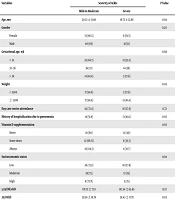
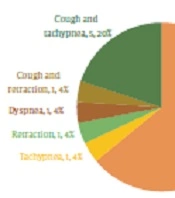
Of the 57 children with acute bronchiolitis, 38 children (66.6%) were male and 19 (33.4%) female. These values in the control group number were 36 (63.1%) and 21 (26.9%), respectively (P = 0.84). The minimum and maximum ages of children in the case and control groups were 1 and 24 months, respectively. The mean and standard deviation of age in the case and control groups were 8.1 ± 4.7 and 8.8 ± 4.7 months, respectively (P = 0.4). There was no significant difference between the two groups in terms of gender, age, weight, height, head circumference, duration of breastfeeding, family size, socioeconomic status, income, use of kindergarten, or exposure to smoking in the family (P > 0.05) (Table 1). The minimum, maximum, and mean ± SD of the serum levels of 25 (OH) D in the case group were 9.8 ng/mL, 47 ng/mL, and 26 ± 9.5 ng/mL, respectively. These values in the control group were 6.5 ng/mL, 49 ng/mL, and 23.3 ± 8.3 ng/mL, respectively. There were no significant differences between the groups in terms of 25 (OH) D serum levels (P = 0.11) or the frequency of vitamin D deficiency (Table 2) (P = 0.29). Of 57 children with acute bronchiolitis, 53 patients had mild bronchiolitis, and 4 children had moderate bronchiolitis. No case of the severe form was observed. The mean and standard deviation of 25 (OH) D in the mild and moderate groups were 25.7 ± 9.4 ng/mL and 29.4 ± 11.8 ng/mL, respectively (P = 0.46). The most common symptoms in patients with acute bronchiolitis were wheezing, coryza, sneezing, cough, and fever.
Table 1.
Comparison of Variables Between Case and Control Groups
| Variables | Case Group | Control Group | P |
|---|---|---|---|
| Sex, male/femalea | 38/19 | 36.21 | 0.84 |
| Age, mob | 8.1 ± 4 | 8.8 ± 4.7 | 0.40 |
| Weight, kgc | 7.8 ± 2.6 | 8 ± 2.8 | 0.72 |
| Height, cmb | 67.6 ± 8.1 | 68.5 ± 7.9 | 0.57 |
| Head circumference, cmb | 43.6 ± 2.5 | 43.6 ± 2.6 | 0.92 |
| Breast feeding, mob | 7.9 ± 4.6 | 8.8 ± 4.6 | 0.32 |
| Exposure to smokers at house, yes/noa | 12/45 | 12/45 | 0.99 |
| Family sizec | 4 ± 2 | 3 ± 1 | 0.62 |
| Bedroom/Family sizec | 3 ± 1.2 | 3 ± 1 | 0.10 |
| Income, Tomamc | 400 ± 200 | 450 ± 135 | 0.06 |
| Use of kindergarten, yes/noa | 1/56 | 1/56 | 0.99 |
aFrequency, Chi-square test.
bMean ± SD, T-Test.
cMedian ± IQR, Mann-Whitney U test.
Table 2.
Severity of 25-Hydroxy Vitamin D Deficiency in Case and Control Groupsa
| Serum 25-hydroxy vitamin D, ng/mL | Case, No. (%) | Control, No. (%) | P |
|---|---|---|---|
| < 5 | 0 | 0 | |
| 5 - 10 | 2 (3.5) | 2 (3.5) | 1 |
| 10 - 20 | 17 (29.8) | 20 (35) | 0.62 |
| 20 - 30 | 18 (31.5) | 24 (42.1) | 0.35 |
| > 30 | 20 (35) | 11 (19.3) | 0.1 |
| Total | 57 (100) | 57 (100) |
aP = 0.29
5. Discussion
This study showed that there is no significant difference between children with acute bronchiolitis and healthy children in terms of 25 (OH) D serum levels. The role of vitamin D in the lower respiratory tract diseases, especially acute bronchiolitis, is controversial. A study conducted on 25 infants aged 1 - 18 months with lower respiratory infections and on 25 healthy children showed that 25 (OH) D serum levels were significantly lower in the case group than in the control group (4). The researchers concluded that vitamin D deficiency is a risk factor for lower respiratory tract infection. They suggested that interventional studies should be conducted to discover the deterministic effect of vitamin D on the improvement of lower respiratory diseases (4). Karatekin’s study on 25 infants with lower respiratory tract infection and on 15 healthy infants showed that infants with subclinical vitamin D deficiency developed more lower respiratory tract infection than healthy infants (11). Another study conducted on 50 children on 55 and 50 children with bronchiolitis and pneumonia and 92 healthy children revealed no significant difference between the patients and the control group in terms of 25 (OH) D serum levels, but the serum levels in patients who were hospitalized in the PICU were lower than those in patients who were hospitalized in the pediatrics ward and were also lower than those of the control group. The researchers concluded that vitamin D deficiency can exacerbate lower respiratory infections (7).
A study in India showed that vitamin D deficiency exacerbated lower respiratory infection in the first four months of life (12). These authors reported that an increase in the mother’s 25 (OH) D levels during maternity was associated with a decrease in adolescent wheezing by about 50% compared with low maternal 25 (OH) D levels. These authors determined that newborns with 25 (OH) D levels less than 10 ng/mL were twice as prone to develop respiratory tract infections compared with those with levels of 30 ng/mL or greater (12). It is known that every 4 ng/mL increase in cord blood 25 (OH) D levels lowers the cumulative risk of wheezing by age 5 (13). It is also reported that vitamin D is a risk factor for lower respiratory infection in children (12, 14, 15). It is believed that 1α-hydroxylase is expressed by the airway epithelium, the alveolar macrophages, the dendritic cells, and the lymphocytes, and thus, it is accepted that active vitamin D can be produce locally in the respiratory tract system. Vitamin D produced in organs such as the respiratory tract system and the urinary tract system is responsible for many of the immunomodulatory actions of vitamin D. The results of vitamin D function in respiratory apparatus include an increase in antimicrobial peptide cathelicidin secretion, a decline in chemokine production, a restraint of dendritic cell activation, and a modification of T cell activation. These functions are vital for host responses against invasive agents (16).
Unlike the abovementioned studies, other studies indicate that vitamin D deficiency is not a risk factor for lower respiratory infections in children. A study by Roth et al. on 64 infants with acute bronchiolitis and 65 healthy infants of 1 - 25 months revealed no significant difference between the case and control groups in terms of 25 (OH) D serum levels (5). Another study that was conducted on 145 infants younger than one year who were hospitalized due to acute bronchiolitis caused by RSV revealed no relationship between vitamin D serum levels and disease severity (17). Greiller et al. found that vitamin D metabolites do not affect replication or inhibition of RSV. These researchers recommended further studies in this area (18). Our results are consistent with the findings of Roth et al. The differences in the results of the various studies may be due to factors such as the epidemiology of lower respiratory infections in different parts of the world, the disease severity, the time of sampling for vitamin D, the sample size and its calculation, the use of supplemental vitamins, the method of measuring 25 (OH) D (ELISA, RIA, etc.), and the defined level of vitamin D deficiency. Although the present study does not show any correlation between 25 (OH) vitamin D and acute bronchiolitis, we recommend further studies in this area. Our limitation was the lack of viral investigation.