

Full Text
Full text is available in PDF
Archives of Clinical Infectious Diseases
Infectious Diseases and Tropical Medicine Research Center, SBUMS
Authors
Infections caused by Shigella are a major cause of diarrheal disease in the developing and developed countries. The present study was conducted to apply and evaluate arbitrarily primed PCR (AP-PCR) for investigation of genetic relatedness among the strains of Shigella sonnei isolated from cases of acute diarrhea in Tehran.
Totally, 60 S. sonnei strains isolated from children hospitalized due to enteritis at five hospitals in Tehran during 2003 and two sporadic isolates recovered in 1984 were investigated. Molecular typing was performed by APPCR. Depending on the number and size of amplified DNA bands, the strains were clustered into APPCR profiles.
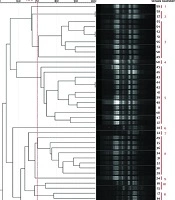
All strains of S. sonnei were typeable with this approach. APPCR generated nine indistinguishable bands ranged from 0.35 to 2.5 kbp in all studied strains. Only a single AP-PCR pattern was observed among the S. sonnei strains recovered in 2003. Two sporadic isolates recovered in 1984 showed different AP-PCR patterns compared to recent clinical isolates.
Results suggest that a very homogeneous AP-PCR cluster types might be responsible for shigellosis caused by S. sonnei in Tehran in 2003. Further molecular analysis conducted on a larger selection of isolates could confirm our findings.
© 2009, Author(s). This open-access article is available under the Creative Commons Attribution 4.0 (CC BY 4.0) International License (https://creativecommons.org/licenses/by/4.0/), which allows for unrestricted use, distribution, and reproduction in any medium, provided that the original work is properly cited.

Farshad S, Ranjbar R, Hosseini M. Molecular Genotyping of Shigella sonnei Strains Isolated From Children With Bloody Diarrhea Using Pulsed Field Gel Electrophoresis on the Total Genome and PCR-RFLP of IpaH and IpaBCD Genes. Jundishapur J Microbiol. 2015;8(1):e14004. doi: https://doi.org/10.5812/jjm.14004
Nazari Z, Tabatabaee Bafroee AS, Ahmadi Z, Rahbar M, Eslami P. Comparative Evaluation of PCR-Based Genotyping Methods for Clinical Shigella Isolates. Jundishapur J Microbiol. 2026;19(1):e158754. doi: https://doi.org/10.5812/jjm-158754

Talebreza A, Memariani M, Memariani H, Shirazi MH, Eghbali Shamsabad P, et al. Prevalence and Antibiotic Susceptibility of Shigella Species Isolated From Pediatric Patients in Tehran. Arch Pediatr Infect Dis. 2016;4(1):e32395. doi: https://doi.org/10.5812/pedinfect.32395

Ranjbar R, Pourshafie MR, Soltan Dallal MM, Rahbar M, Parvaneh N, et al. Fatality Due to Shigellosis with Special Reference to Molecular Analysis of Shigella Sonnei Strains Isolated from the Fatal Cases. Arch Clin Infect Dis. 2010;5(1):. doi:
Tahmasbi S, Tabatabaee Bafroee AS, Pakbin B. Phenotypic and Genotypic Antibiotic Resistance Patterns of Clinical Shigella Isolates from Tehran, Iran. Jundishapur J Microbiol. 2024;17(4):e145649. doi: https://doi.org/10.5812/jjm-145649
Last Update: 1 month ago
Last Update: 1 month ago
Last Update: 1 month ago
Last Update: 6 days ago
Last Update: 3 hours ago
Last Update: 3 days ago