1. Context
Top-rated athletes are increasingly faced with high physiological activities and contest loads involving repeated mechanical stresses and impacts (1, 2). Although these interactions are different in sports, it is understood that sports activities, especially top ones, are associated with a rise in the risk of acute and chronic musculoskeletal injury (3, 4). Prevention of injuries and keeping athletes safe and healthy are the main principles for world federations (5, 6). Many studies explain top athletes' patterns of injury seasonally (7). Overall data about injury patterns among a top-rated athlete's whole sporting career is limited. A lower morbidity risk and higher self-reported health is reported by the top-rated athletes in the later years compared with the overall population (8-10). Developing our perception of the causes of injury and features experienced by top athletes along their careers will assist in the creation of strategies (11). We want to organize (1) the frequency of athlete's career-related injuries; (2) athletes' self-report of injury-related residual symptoms; and (3) general management. The majority of studies have explained that too little and too much activity is inadvisable for spinal health (12, 13). The association between sports and spinal health has not been appropriately explained. It is well known that sports activities influence health in a good way overall (14).
2. Methods
A systematic survey of the literature was done to find topics that explain the relationship between sports activities and following spine changes. Keywords including sport, injury, demographic, correlates, limit, prevent, restrict, difficult, drop-out, lumbar, thoracic, cervical, treatment, and surgery were searched.
3. Results
3.1. Sign and Symptoms
In Aasa et al.’s study in 2022, the aim was to assess the variability of spine alignment in different loads. Alignment in the beginning, angles of the spine, and complete ROM were the three main outcomes (15). Cervical symptoms such as pain, reduced ROM, paresthesia, and gate disorder have an effect on activity. To evaluate root involvement, myelopathy, and exclude other disorders, a history assessment and physical examination are needed (16). Cervical disc herniation in athletes is common. Pain or stiffness without any arm or radicular symptoms is the usual starting symptom. Exercises that increase discomfort must be stopped in the first 7 - 14 days of the primary phase to reduce the probability of disc herniation. NSAIDs are the choice of treatment for reducing pain (17). If forward flexion, sitting, or coughing/sneezing produce pain, it is indicative of disc-related injury. If standing or walking make the pain intolerable and the pain decreases by bending, spinal stenosis is more likely. Extension and/or rotation-related pain represent spondylolysis. The lateral calf pain is related to the L5 nerve root16. A significant group of athletes experienced a significant injury in their careers. The knee, lumbar spine, shoulder, and clavicle were the most frequently injured anatomical parts. Thirty-three percent of Olympians complained of current pain and functional limitations from Olympic-career injury (2).
3.2. Risk Factors
3.3. Diagnostics
Different views of lumbar radiographs are essential. MRI is the best modality to evaluate soft tissue changes and pars and pedicle injuries. Sairyo revealed that MRI is efficient in evaluating spondylolysis. If the patient does not respond to non-surgical treatment, then a CT and bone scan with lumbar SPECT is reasonable (26).
3.4. Treatment
The main aspect of rehabilitation is to correct back pains and discomforts. Sciatica and leg muscles, for example, are important factors in a pitcher: Pitching motion problems will place the arm, shoulder, and elbow in jeopardy. An increase in intra-abdominal pressure can result in a great amount of dysfunction in the throwing motion. Stability is essential, and the presence of pain that may lead to cramping, which can result in a tragic event. A pitcher needs a steady trunk to throw without risk of injury to him/her extremities (27).
Trunk steadiness programs are begun immediately. NSAIDs can be consumed to reduce discomfort in order to launch rehabilitation plans. Orthosis usage is not recommended. Exercise to retain spinal steadiness and improve muscle strength is recommended. Strength with steadiness, and power, will be required (28).
Education, ergonomic adjustment, exercise, and shoe insoles are the main parts of the back pain prevention program (29).
The primary treatment for back pain secondary to disc pathology is resting. In the first week, exercise is not recommended. After one week, some programs will be used for physical therapy. Different types of corticosteroids can be used. The goal is to improve the weakness of muscles to achieve steadiness and balance. Different physical therapy regimes can be used to achieve steadiness. Similar to other people, if conservative treatment is not working, surgical intervention will be recommended (17).
There are few studies regarding artificial disc replacement following pathologies affecting the disc of the lumbar region in sport activities. It seems that the majority of patients who require a lumbar disc replacement will play again, and their activity will be more efficient compared to patients who do not undergo surgery. In high-contact sports, more time (4 - 6 months) will be needed compared to low-contact activities (12 weeks) to return to usual activity after surgery (30).
4. Discussion
This study assessed self-reported injuries by top-rated athletes. The goal was to evaluate the frequency and mechanism of disabling injuries following sports activities, including discomforting symptoms and feeling healthy, across sports careers. The main findings were: (1) a significant number of athletes limited their activities because of pain and discomfort following injury; (2) mood changes and especially depression frequently happens in athletes with significant injuries; (3) the spine and especially the lumbar region is one of the most injured areas (2).
Osteoarthritis is one of the adverse outcomes after disabling injuries and is a common finding in football players (31, 32). It seems there is a significant connection between pain and discomfort and joint injuries that may lead to osteoarthritis (33).
It can be helpful to compare osteoarthritis in athletes and the general population to see if there is a significant difference in prevalence. Until today these studies have been limited to specific groups, and more general studies with appropriate control groups are needed (32).
Joint injuries correlate with higher age, severity of injury, and female sex (34).
It is an important issue whether weight and height in every athlete and, in other words, body mass index is important in future injury outcome, and changes in this parameter can affect injury outcome or not.
Back pain and discomfort may lead to disabling problems in any other aspects of an athlete's life, not just his/her professional life.
One of the main questions in this study is to find in which sport, spinal changes, and following pain episodes are more common. Evidence and research gap mean that health workers faced with athletes have limited evidence to manage prevention and treatment plans. Data from observational studies and also randomized clinical trials is building the foundation for sports injury prevention programs (35, 36).
It is, therefore, important to predict plans to prevent significant injuries at first because it is a non-modifiable risk factor for future disabilities. Back pain was frequent with high-pressure training.
There are studies that confirm the connection of high-intensity training, which is repeated continuously with back pain and discomfort (37), although this relation is not continuous. It may also be justified by a lack of balance in an activity-rest proportion that is connected with problems among different sports, which supports the risk associated with workload peaks (38).
Back pain is a common complaint in athletes. Our study points out that it is feasible that a U- shaped association between the pressure of training programs and exercises in athletes and the risk of developing back pain episodes does exist. Risk factors for back pain in athletes are equivalent to the non-athlete community, but it is likely that appropriate management of training pressure may affect the risk of a back pain episode (14, 29).
Inherent cervical instability is considered the cause of the high frequency of neck and cervical spine injuries in sports (39).
Blunt cervical spine injuries in children are not common. The age of the child is a significant factor in predicting the pattern of injury. Severe neurologic deficits in survivors are rare and have no association with cord level, and rarely is complete (40).
More studies and work are required to see if there is a relationship between lumbosacral injuries and high-pressure training programs. New developing instruments and technology can help assess whole aspects of these matters in a more valid manner (41).
Athletes receive continuous high-intensity impacts, which are transmitted to the spine. A balance between lower extremities and pelvis, and trunk is crucial to tolerate and resolve these forces.
Hip and pelvis joint limitations and muscle weakness accompanied by reduced tolerance of muscles of the trunk can cause an imbalance in the whole spine, which is common and frequently experienced in athletes who suffer from pain and discomfort (42).
A rehabilitation plan that considers the imbalance base primarily and then begins to strengthen the pelvis and hip muscles and movement control in a specific program can result in pain improvement, skill development, and a safe return to activity (42).
Studies related to cervical spine injuries are not enough. Limitations in present studies are the low number of patients examined and also that they are limited to top-level athletes (39).
This study suggests an agreement among caregivers for considering athletes with normal MRI and complete relief of pain to return to even high-pressure sports. Athletes with cervical stenosis or continuous symptoms consider being a problem in management (43).
Cervical spine injuries are minor in most cases. More complex injuries are rare but disabling. Considering all sports in both males and females, most of the injuries were new and happened during the in-season contest. The majority of the athletes returned to activity within 24 hours of injury (44).
After the primary injury, the majority of athletes will ask how many days they need to rest.
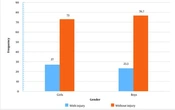
A majority of athletes with spine injuries, especially in the cervical area, can play again within one day after the accident. However, 25% did not return for up to six days, but just about five percent did not return for more than three weeks. Overall, about 90% of injuries are not old accidents. In the demographic view, over 90% of injuries in both males and females were new46.
5.1. Limitations
We involved studies in our review that were written in English. No blinding was done.
Also, low sensitivity is expected to determine all aspects which affect study quality. Pediatric professional athletes are not considered in this review. We found that back pain is common in adult sports. The inclusion of a study requires that the back pain that was explained was a consequence of sports training. Because of the complex presentation of back pains, it is hard to validate that sports activities are the main cause of problems. Back pain and low back pain may have been used as the same concept in different studies.
5.2. Conclusions
Spinal injury management in professional athletes needs a proper diagnosis, work-up, and complex rehabilitation plans if an operation is warranted or not. Similar actions used in the general population are also used for athletes. The higher concern will be considered, and scrutiny will be firmer. It is understood that we need faster and more efficient ways for athletes in addition to keeping them safe from future poor outcomes regarding their career injuries.