
1. Background
Fitness athletes typically engage in intense physical activity that may induce physiological and biochemical changes. These include alterations in interleukin 6 (IL-6), a proinflammatory marker, and brain-derived neurotrophic factor (BDNF), a marker of neural health and neuroplasticity (1). Moreover, long-term intense physical activity and high stress levels may predispose fitness athletes to stress-related health problems and mental and physical harm.
Stress can adversely affect athletes’ cognitive function and overall performance (2). Mental pressure can impair performance and, if sustained over time, may lead to physical and psychological burnout (3). Under stressful conditions, athletes often experience reduced cognitive function and may lose decision-making capacity. In addition, stressed athletes may have comorbid anxiety and depression. Consequently, performance declines, and susceptibility to injury increases (4).
Acute stress disorder is a psychological condition that can occur after a traumatic event. This condition may affect the body’s inflammatory status (5). When an athlete experiences acute stress, the immune system and inflammatory responses are activated. These changes may lead to cardiovascular and nervous system alterations via inflammatory mediators (6). However, changes in inflammatory mediators during acute stress disorder in athletes remain poorly understood.
Furthermore, controversies remain regarding fitness athletes with acute stress disorder. For example, sport is a well-established tool for coping with stress. Regular physical activity is known to increase endorphins, a feel-good hormone, and decrease anxiety and depression (7). In addition, regular physical activity may influence inflammatory status through immune system-mediated responses (8). However, how inflammatory cytokines change during muscle activity in fitness athletes with acute stress disorder remains unknown.
2. Objectives
At present, little information is available on the relationship between acute stress disorder and IL-6 and BDNF levels in fitness athletes. The role of physical exercise in altering serum IL-6 and BDNF levels remains unknown. Therefore, this study may represent a first step toward elucidating the complex relationships among acute stress disorder, IL-6, and BDNF, as well as the role of physical exercise in these associations in fitness athletes, and toward developing programs to reduce the risk of acute stress disorder in professional athletes and improve their health. Accordingly, we aimed to investigate the relationship between acute stress disorder and levels of the inflammatory indicator IL-6 and BDNF in male fitness athletes before and after physical exercise in a case-control study.
3. Methods
3.1. Study Design
This correlational study used a case-control design and aimed to determine BDNF and IL-6 levels in male fitness athletes and their association with stress before and after muscular training, compared with a control group. After providing informed consent, participants underwent a diagnostic psychological interview based on DSM-5 criteria. Participants were divided into 2 groups based on the clinical psychologist’s diagnosis: those with acute stress disorder (case group) and those without acute stress disorder (control group). In addition, to adjust for anxiety and depression, all participants completed the Depression, Anxiety, and Stress Scales-21 (DASS-21) questionnaire. Athletes’ height and weight were measured under standardized conditions, and Body Mass Index (BMI) was calculated. Blood samples were collected from all participants by a laboratory technician and analyzed using the ELISA method with BDNF and IL-6 kits. Inflammatory markers were measured before and after muscular training in both the stress and nonstress groups and compared between groups.
3.2. Setting
The study was conducted in fitness gyms located in Rey between May 2024 and March 2025.
3.3. Participants
Participants were male fitness athletes who signed informed consent forms to participate in this study.
3.3.1. Inclusion Criteria
Male fitness athletes aged 20 to 45 years who had engaged in professional sports activities for more than 6 months were eligible. All volunteers underwent an interview conducted by a trained clinical psychologist based on DSM-5 criteria. The inclusion criterion for the case group was a diagnosis of acute stress disorder, and the entry criterion for the control group was no diagnosis of acute stress disorder, both based on the DSM-5 interview conducted by the same clinical psychologist to reduce selection bias.
3.3.2. Exclusion Criteria
Participants were free to withdraw from the study at any time if they did not wish to continue. Participants could also be withdrawn if they completed the questionnaires incompletely or invalidly.
3.4. Study Tools
3.4.1. Depression, Anxiety, and Stress Scales-21 Questionnaire
The DASS-21 is a self-report instrument designed to measure negative affective states in depression, anxiety, and stress and to determine symptom severity. This valid scale is used to measure the severity of the main symptoms of depression, anxiety, and stress (9).
3.4.2. Clinical Diagnostic Interview
A clinical diagnostic interview to categorize participants as having acute stress disorder or not having acute stress disorder was conducted by a clinical psychologist using DSM-5 criteria.
3.4.3. IL-6 Kit
We used the Human IL-6 ELISA Kit (ZellBio, Germany).
3.4.4. BDNF Kit
We used the Human Brain-Derived Neurotrophic Factor ELISA Kit (BDNF; ZellBio, Germany).
3.5. Sample Size
We calculated the sample size based on an OR of 7.46 for inflammatory markers in anxiety disorder, with a type I error of 0.05, power of 80%, and a case-to-control ratio of 1. We calculated that at least 37 participants in each group would be sufficient to test the study hypotheses.
3.6. Statistical Analysis
To analyze the data collected in this study, we used descriptive and inferential statistical methods. We used SPSS version 24 to analyze the data. Descriptive statistics were used to calculate the mean and standard deviation of the research variables and to present frequencies and related graphs. To test the hypotheses, population normality was first assessed, and the assumptions of the statistical tests were met. We used the chi-square test to compare qualitative variables such as BMI categories, the independent-samples t-test to compare quantitative variables between 2 independent groups, the paired t-test to compare inflammatory indices before and after muscular training, and binary logistic regression to examine the relationship between stress and each of the IL-6 or BDNF variables after controlling for the effects of other confounding variables.
3.7. Ethical Considerations
Participants signed informed consent forms before entering the study. They were allowed to leave the study for any reason without negative consequences. Ethical approval was obtained from the institutional ethics board: IR.TUMS.MEDICINE.REC.1402.037.
4. Results
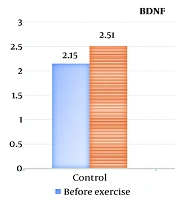
Ninety fitness athletes aged 21 to 44 years (mean age ± SD: 30.31 ± 4.94 years) provided informed consent to participate in this study. Figure 1 presents the study flow diagram. The case group comprised 51 athletes with acute stress disorder, and the control group comprised 39 athletes without stress. The demographic characteristics of participants in each group are presented in Table 1. Mean differences in IL-6 and BDNF levels between cases (fitness athletes with stress) and controls (fitness athletes without stress) at each time point (before and after muscular exercise), assessed using independent-samples t tests, are shown in Table 2. Mean changes in IL-6 and BDNF levels before and after muscular exercise in fitness athletes with acute stress disorder (case group) and fitness athletes without stress (control group) are shown in Figures 2 and 3, respectively. To analyze the relationships of IL-6 and BDNF with acute stress disorder at 2 time points, we performed binary logistic regression. The assumptions for binary logistic regression were met, and analyses were performed after controlling for depression and anxiety as covariates. Table 3 shows the relationship between IL-6 and BDNF and acute stress disorder before exercise using binary logistic regression. The overall model was significant, and model goodness of fit was confirmed by the Hosmer-Lemeshow test (P = 0.617). The proportion of variance explained by the model was 0.381, as indicated by the Nagelkerke R2 value. Table 4 shows the relationship between IL-6 and BDNF and acute stress disorder after exercise using binary logistic regression. The overall model was significant, and model goodness of fit was confirmed by the Hosmer-Lemeshow test (P = 0.013). The proportion of variance explained by the model was 0.44, as indicated by the Nagelkerke R2 value.
Table 1.
Characteristics of Participants, Subjects with Acute Stress Disorder (Cases) Compared with Subjects Without Stress (Controls) a
| Variables | Case Group (n = 51) | Control Group (n = 39) | P-Value |
|---|---|---|---|
| Age (y) | 31.17 ± 5.20 | 29.17 ± 4.39 | 0.057 |
| Weight | 79.80 ± 11.46 | 80.76 ± 9.05 | 0.667 |
| BMI | 24.85 ± 3.24 | 25.14 ± 2.39 | 0.620 |
| Depression | 14.82 ± 7.48 | 10.10 ± 6.96 | 0.003 |
| Anxiety | 17.41 ± 7.56 | 10.76 ± 7.37 | ≤ 0.001 |
| Stress | 28.72 ± 5.03 | 14.15 ± 6.67 | ≤ 0.001 |
a Case group: fitness athletes with acute stress disorder; control group: fitness athletes without acute stress disorder.
Table 2.
Comparison of the Mean Differences in IL-6 and BDNF Levels Between Cases and Controls at Each Time Point Using Independent-Samples T Tests a
| Variables and Time points | Case Group | Control Group | P-Value | Cohen d |
|---|---|---|---|---|
| IL-6 | ||||
| Before muscular exercise | 212.44 ± 59.77 | 165.71 ± 59.69 | ≤ 0.001 | -0.78 |
| After muscular exercise | 155.56 ± 44.03 | 192.20 ± 56.20 | 0.001 | 0.30 |
| BDNF | ||||
| Before muscular exercise | 2.35 ± 0.35 | 2.15 ± 0.37 | 0.011 | -0.97 |
| After muscular exercise | 2.68 ± 0.33 | 2.51 ± 0.34 | 0.018 | -0.93 |
a Values are expressed as mean ± SD. Case group: fitness athletes with acute stress disorder; control group: fitness athletes without acute stress disorder.
Table 3.
Binary Logistic Regression Model for the Association of IL-6 and BDNF with Acute Stress Disorder Before Muscular Exercise in Fitness Athletes After Controlling for Depression and Anxiety
| Variables | B | SE | Wald | df | Significance | OR (95% CI) |
|---|---|---|---|---|---|---|
| IL-6 | 0.013 | 0.005 | 7.227 | 1 | 0.007 | 1.013 (1.003 to 1.022) |
| BDNF | 0.189 | 0.707 | 0.071 | 1 | 0.789 | 1.208 (0.302 to 4.833) |
| Depression | 0.057 | 0.040 | 2.055 | 1 | 0.152 | 1.059 (0.979 to 1.145) |
| Anxiety | 0.110 | 0.041 | 7.280 | 1 | 0.007 | 1.116 (1.031 to 1.209) |
| Constant | -4.736 | 1.582 | 8.963 | 1 | 0.003 | 0.009 |
Table 4.
Binary Logistic Regression Model for the Association of IL-6 and BDNF with Acute Stress Disorder After Muscular Exercise in Fitness Athletes After Controlling for Depression and Anxiety
| Variables | B | SE | Wald | df | Significance | OR (95% CI) |
|---|---|---|---|---|---|---|
| IL-6 | -0.025 | 0.008 | 10.647 | 1 | 0.001 | 0.975 (0.961 to 0.990) |
| BDNF | 2.335 | 0.956 | 5.959 | 1 | 0.015 | 10.328 (1.585 to 67.318) |
| Depression | 0.058 | 0.040 | 2.149 | 1 | 0.143 | 1.060 (0.981 to 1.146) |
| Anxiety | 0.067 | 0.039 | 3.008 | 1 | 0.083 | 1.069 (0.991 to 1.153) |
| Constant | -3.163 | 1.971 | 2.576 | 1 | 0.109 | 0.042 |
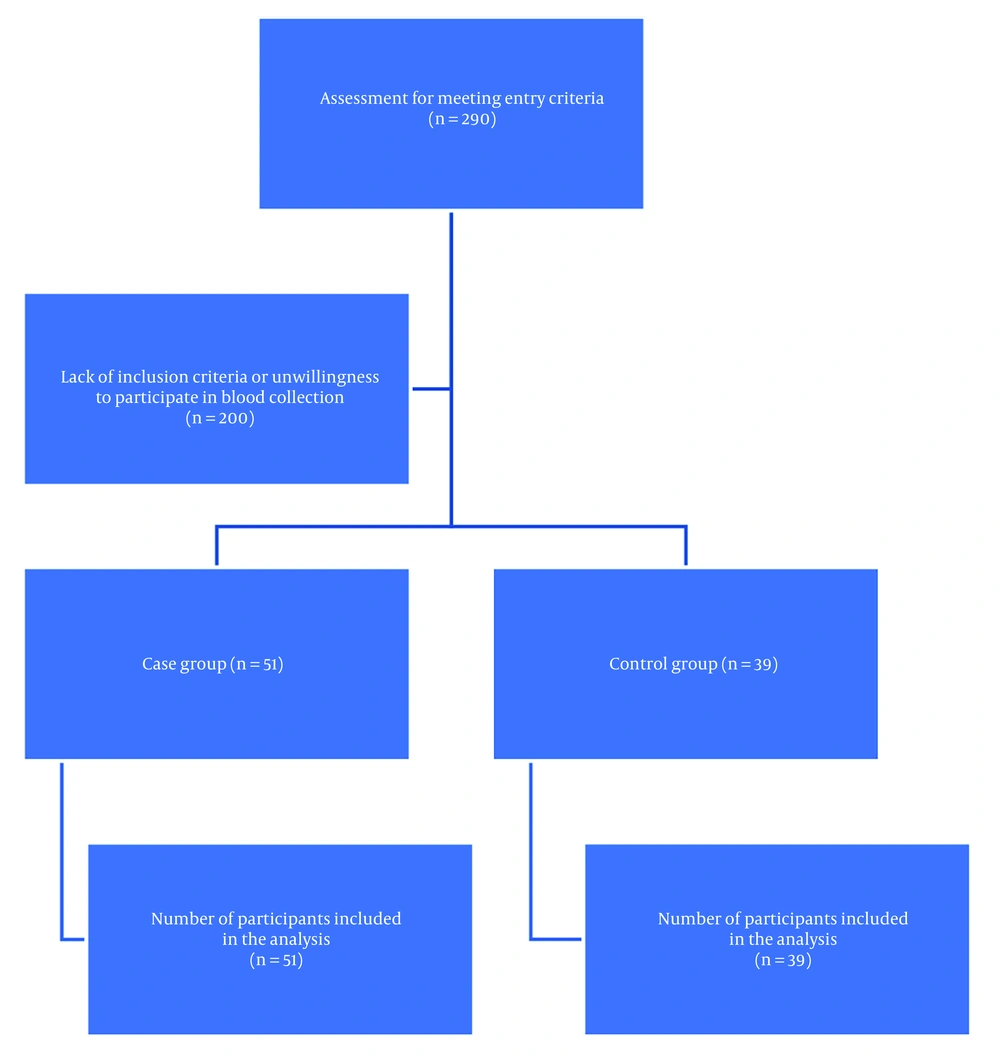
Figure 1.
The flow diagram of the study
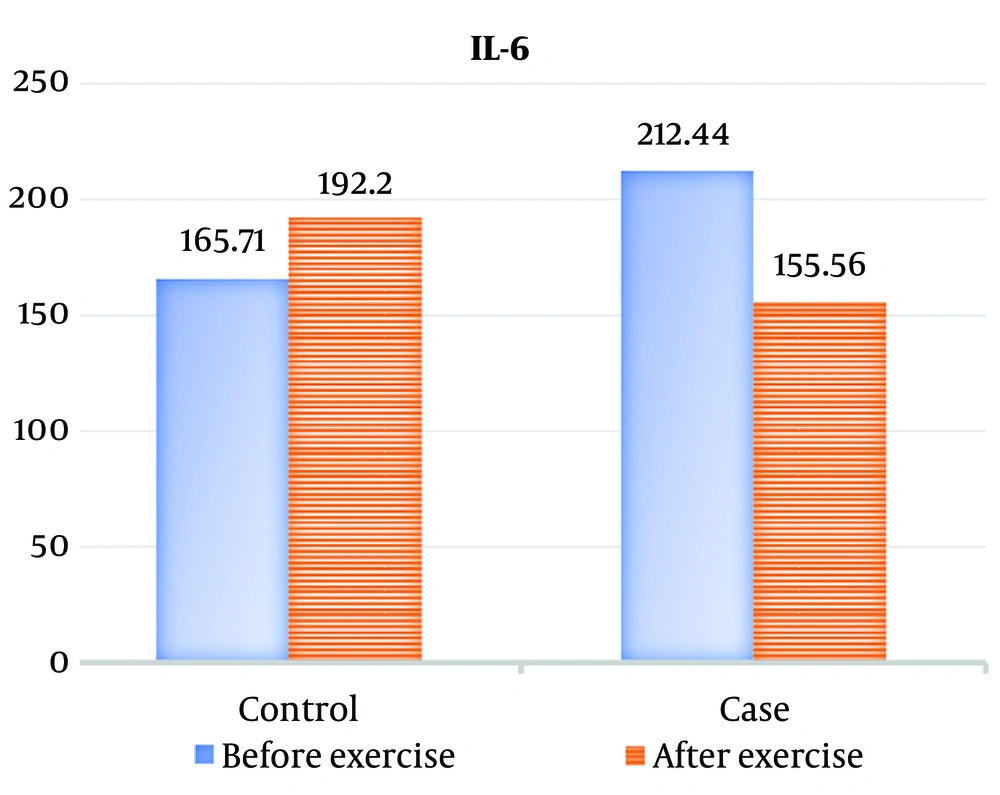
Figure 2.
Mean change in IL-6 before and after muscular exercise in fitness athletes with acute stress disorder (case group) and fitness athletes without stress (control group).
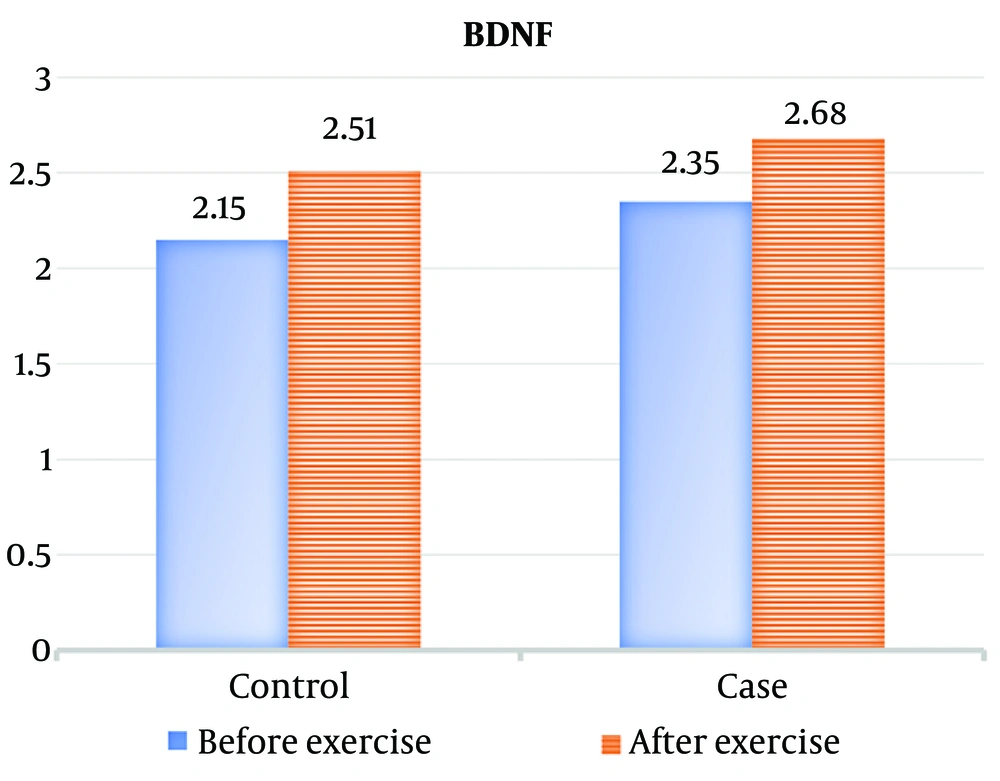
Figure 3.
Mean change in BDNF before and after muscular exercise in fitness athletes with acute stress disorder (case group) and fitness athletes without stress (control group).
5. Discussion
At baseline, we found that the inflammatory marker IL-6 was higher in fitness athletes with acute stress disorder than in athletes without acute stress disorder. This finding is consistent with previous reports that acute psychological stress increases circulating IL-6 (5). Carpenter et al. linked the adult acute stress-induced rise in IL-6 to childhood abuse (10). Niraula et al. reported that an increase in IL-6 due to social stress can amplify the inflammatory cascade related to the IL-1 pathway in the brain and lead to anxiety (11). Collectively, these findings indicate a role of acute stress disorder in inflammatory markers; therefore, when discussing the role of acute stress in athletes, we should also address its detrimental effects on athletic performance (2).
We found that, in the control group, IL-6 levels increased as a result of muscular exercise. This finding is consistent with previous reports on the effects of physical exercise on muscular stress and inflammatory markers. Studies show that IL-6 increases locally due to contracting skeletal muscles and may increase up to 100-fold in serum levels in some athletes (12). IL-6 has predominantly been recognized for its role in inflammation during acute-phase responses, such as injuries and acute pain. IL-6 also serves as a crucial signaling molecule during exercise and is released from active muscle fibers in response to muscular exercise and muscle glycogen depletion. Higher-strength muscular exercise of longer duration is associated with greater release of IL-6 into the bloodstream (13). These findings indicate that athletes may be more susceptible to inflammation than the general population and that acute stress disorder may amplify the biological effects of stress, including inflammatory responses.
In our study, BDNF levels were higher in cases than in controls. This contrasts with previous findings reporting an inverse association between BDNF and perceived stress. Shkundin et al., in a study of treatment-resistant patients with bipolar disorder, reported a protective role of BDNF in stress (14). Our cases differed, as we recruited athletes with acute stress disorder, whereas Shkundin et al.'s cases were bipolar patients exposed to chronic stress. One possible explanation is a differential BDNF response to acute versus chronic stress. Acute stress may temporarily increase circulating BDNF levels in an adaptive manner (15). BDNF facilitates short-term neural plasticity, which may help athletes cope with stress and enhance cognitive function. In contrast, chronic stress is linked to a reduction in serum BDNF levels (16). Long-term exposure to stress may cause neuroinflammation and downregulate BDNF synthesis, which may predispose patients to conditions such as depression, anxiety, and impaired cognitive function. In our study, BDNF increased similarly in both groups after muscular training, indicating the positive effects of exercise on BDNF independent of stress. Improvements in BDNF levels are associated with the beneficial effects of exercise on the brain. Sleiman et al. described endogenous production of β-hydroxybutyrate, a ketone body, during physical exercise as the cause of upregulation of BDNF in the brain (17). Ospina and Cadavid-Ruiz, in a study of aerobic athletes, reported an increase in BDNF levels after acute exercise (18).
Binary logistic regression, after controlling for depression and anxiety, revealed a significant negative association of IL-6 with acute stress disorder after muscular fitness exercise. This finding is controversial because, based on previous findings, stress alone and muscular exercise alone each have the potential to increase IL-6 levels. However, we found that IL-6 levels, which were higher in the case group at baseline, decreased after muscular exercise. Furthermore, we found a significant and strong association of BDNF with acute stress disorder after muscular fitness exercise (OR = 10.328; 95% CI, 1.585 to 67.318). Szuhany et al. also reported an increasing effect of exercise on BDNF levels, especially among male athletes (19).
5.1. Conclusions
These findings suggest a fundamental relationship between acute stress disorder, the inflammatory marker IL-6, and BDNF, particularly in fitness athletes who engage in high-performance muscular exercise. Elevated IL-6 levels in fitness athletes with acute stress disorder at baseline and decreased IL-6 levels after muscular exercise indicate a beneficial role of exercise in decreasing inflammation in those with acute stress disorder. Hence, recommending exercise to decrease the inflammatory response in persons with acute stress could be supported by our evidence. Furthermore, our findings indicate a positive and strong role of muscular exercise in increasing BDNF levels in athletes with acute stress disorder after controlling for depression and anxiety. These findings indicate that fitness exercise shifts the IL-6/BDNF balance from inflammation to repair, promoting both mental and physical well-being in athletes with acute stress disorder.
5.2. Limitations
Sampling was limited to a specific population of male fitness athletes.