
1. Background
The quadriceps muscle is widely studied due to its important dynamic stabilization role at the knee joint complex (1). Belonging to this group, the vastus medialis oblique and vastus lateralis oblique provide dynamic stability to the patellofemoral joint (2), while the vastus lateralis longus and rectus femoris contribute to the stability of the tibiofemoral joint (3). In order to improve quadriceps functionality, new treatments have been presented; among them is the use of the Kinesio tape (KT) (4-6).
The KT was created in the earlier 1970s, but gained greater notoriety in the 2008 Olympics (7), when it was used by athletes from varying event categories. Since then, the use of KT has been growing exponentially (8), with the purpose of improving circulation and lymphatic drainage, inhibiting pain and increasing muscle strength, among others purposes (9).
However, the evidence on the magnitude of the clinical effect of KT in muscle performance is still under discussion in the scientific literature. The results of both immediate and long-term effects (10, 11) are controversial, highlighting the need for further studies. In addition, the benefits of KT reported by users on a day-to-day technical application is unknown and without scientific and clinical evidence, raising the question of a possible “placebo effect” (12).
Knowledge regarding the effectiveness of interventions used to improve muscle performance, prevent injury and speed up rehabilitation is extremely valuable considering the large number of people engaged in physical exercises and recreational sports or high performance programs (13-15). The effectiveness of KT on knee muscles should be determined by tests that provide objective, reliable, and reproducible measures. In this context, the isokinetic dynamometry represents the current state-of-the-art technique for assessing muscle dysfunction (16, 17). To date, however, no study has evaluated the full set of variables provided by knee isokinetic dynamometry to determine the effect of KT. We hypothesize that isokinetic parameters can be modified by KT, including peak torque (PT), maximum repetition of the total work (MRTW), work fatigue, agonist/antagonist ratio, deceleration time and the time to reach the PT.
2. Objectives
To apply the KT on the vastus medialis oblique, vastus lateralis oblique and vastus lateralis longus muscles for 24 hours, to evaluate the effect on the isokinetic parameters of physically active, healthy women. The hypothesis is that after 24 hours of KT application, improvements will be observed in parameters related to the extensor torque of the knee joint.
3. Methods
3.1. Type of Study and Sample
A clinical randomized crossover and blind trial, involving 22 women, was conducted. All participants underwent a functional assessment and were enrolled in the study considering the following criteria: absence of at least two signs indicating lower limb misalignment (e.g. increased Q angle, excessive subtalar pronation, excessive valgus of the knee joint and muscle shortening at the lower limb) (18); no history of knee pain during functional activities, such as climbing and descending stairs, within the last month and practice of regular exercise at least three times a week. The exclusion criteria were: allergy to the KT; inability to perform the movement during the isokinetic testing day; history of trauma or surgery in the musculoskeletal system of the lumbar spine, sacroiliac joint and lower limb; and presence of any neurological, rheumatologic or cardiovascular disease.
The protocol was approved by the research ethics committee of the Augusto Motta University center under number CAAE-27117914.6.0000.5235 and complied with the provisions of the declaration of Helsinki. All subjects signed an informed consent form.
3.2. Assessment of the Level of Physical Activity
The international physical activity questionnaire (ipaq) short form was used to assess physical activity. It estimates the time spent performing several levels of physical activity during the previous week. Energy expenditure is calculated by determining the number of minutes per week spent in each activity and estimated as a metabolic equivalent of task (MET). The IPAQ Short Form is composed of four domains, and each domain is divided into two items. The results of all items are summed to provide a total physical activity score. According to the IPAQ, the subjects are categorized as sedentary, irregularly active or active (19, 20).
3.3. Application of the Kinesio Tape (KT)
The allocation of the individuals into a KT or placebo treatment group was conducted randomly, using sealed envelopes, by the researcher responsible for applying the tape. The tape contained the activation technique (KT) or placebo, which was blinded to the participant and the researcher responsible for operating the isokinetic dynamometer.
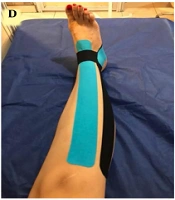
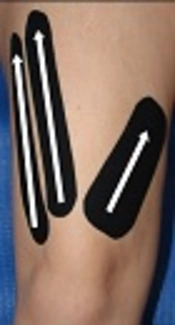
The treated skin area was duly cleaned with alcohol 70 GL and shaved. The application was carried out with the participants sitting on a bed, with knees flexed at 90°, for better visualization of the muscles (Figure 1). For the application of the KT in the vastus medialis oblique, vastus lateralis oblique and vastus lateralis longus muscles, the tape (Kinesio-Tex Gold®, Kinesio Holding Corporation, Albuquerque, NM, USA) was measured, cut and deformed at exactly 30% of the initial size of the initial cut (14). General application guidelines consistent with the procedures described by Kase et al. (6) were followed by using the facilitation technique (origin to insertion). KT with 5-cm width and 20-cm length was applied using 3 strips of KT, with the first 2 strips comprising the first KT application. The first 2 strips of tape was applied to the skin over the vastus lateralis muscles and extended from 10 cm distal to the greater trochanter to the lateral edge of the patella. For the vastus medialis muscle, another strip of KT was applied over its central third, from the medial region of the thigh to the medial edge of the patella. The application occurred from the proximal insertion to its distal insertion (21).
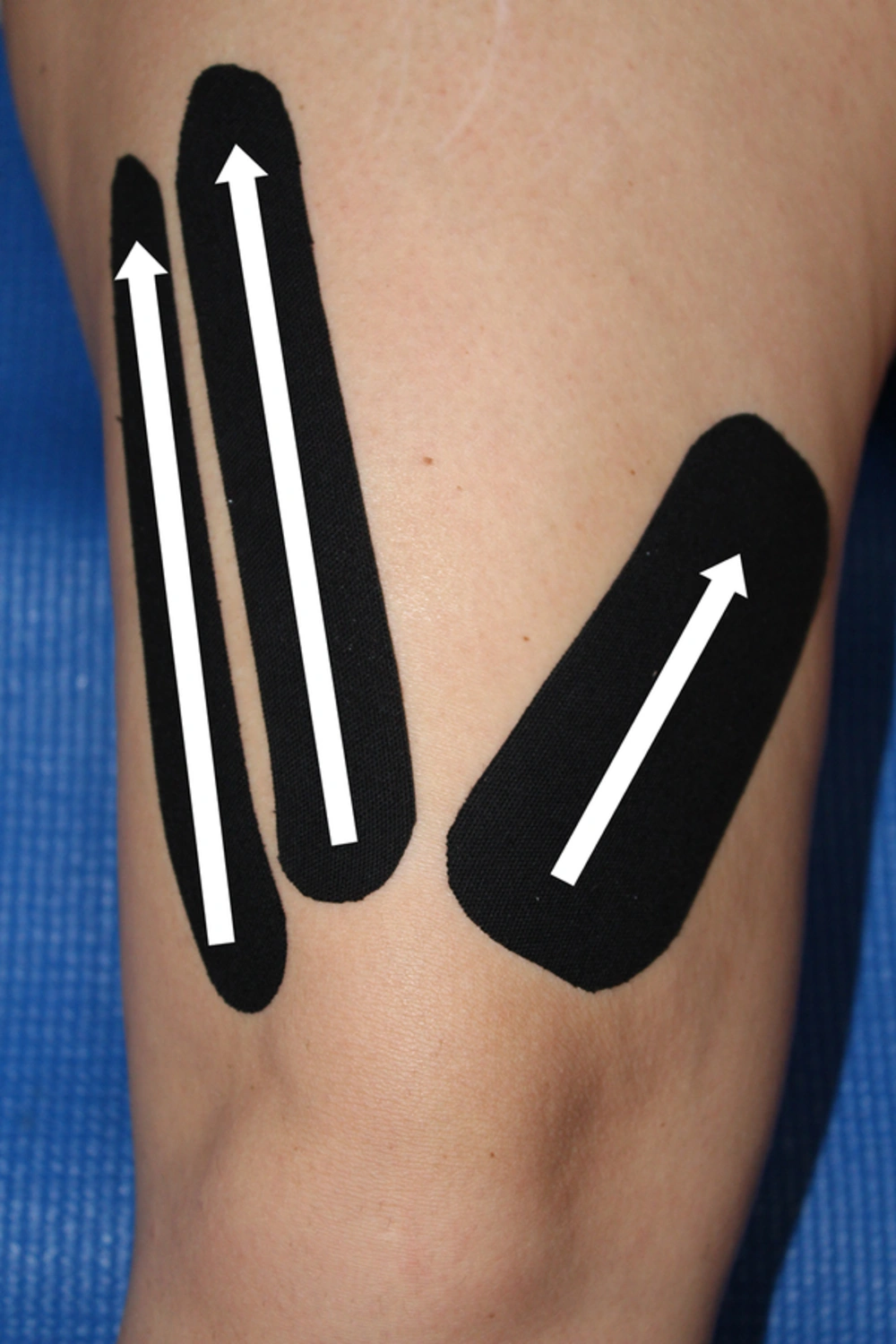
Figure 1.
Position and Direction (arrows) of the Bandage Deformation during the Technical Application of the Kinesio Tape
The KT was applied by a single athletic trainer, who had received certified training from Kinesio Taping Association. He provided all taping interventions in a consistent manner. The application of the KT as a placebo followed the same procedures, but the tape was positioned without any tension over the skin. The participants were asked to keep the KT applied for 24 hours, and the tape was removed prior to the isokinetic test.
3.4. Isokinetic Test
The isokinetic dynamometer tests were carried out on the Biodex System 4 PRO dynamometer (Biodex Medical System, Inc., Shirley, NY, USA). The protocol involved flexion and extension of the knee in a concentric-concentric contraction, with a range of motion of 90° in flexion to 0º in extension, and conducted on the dominant leg (15, 18). The angular velocity of 60°/s was established for the quantification of muscle strength performance (22). The participants were placed in a sitting position, with the torso upright and the back of the chair tilted at an 80° angle (13). The rotational axis of the knee was aligned with the rotational axis of the equipment with the lateral epicondyle of the femur used as a reference frame. To improve the stability of the participants, restraint belts were placed over the chest and thigh. Distally another stabilization was placed 2 cm above the lateral malleolus. Prior to the test, each subject performed a 10-minute warm-up on a stationary bike (23), with three repetitions in submaximal effort, to allow for familiarization. Then, three sets of five repetitions with an interval of 120 seconds between each set were conducted.
Each participant performed four tests on the isokinetic dynamometer with a one-week interval between them. The first two were performed without placing the KT to assess the reliability of the measurements. Twenty-four hours prior to the third and fourth tests, the KT was applied according to the randomization results. The tape was removed during the tests (Figure 2). During all tests, verbal support was given to encourage the participants to move the lever with as much strength and speed as possible.
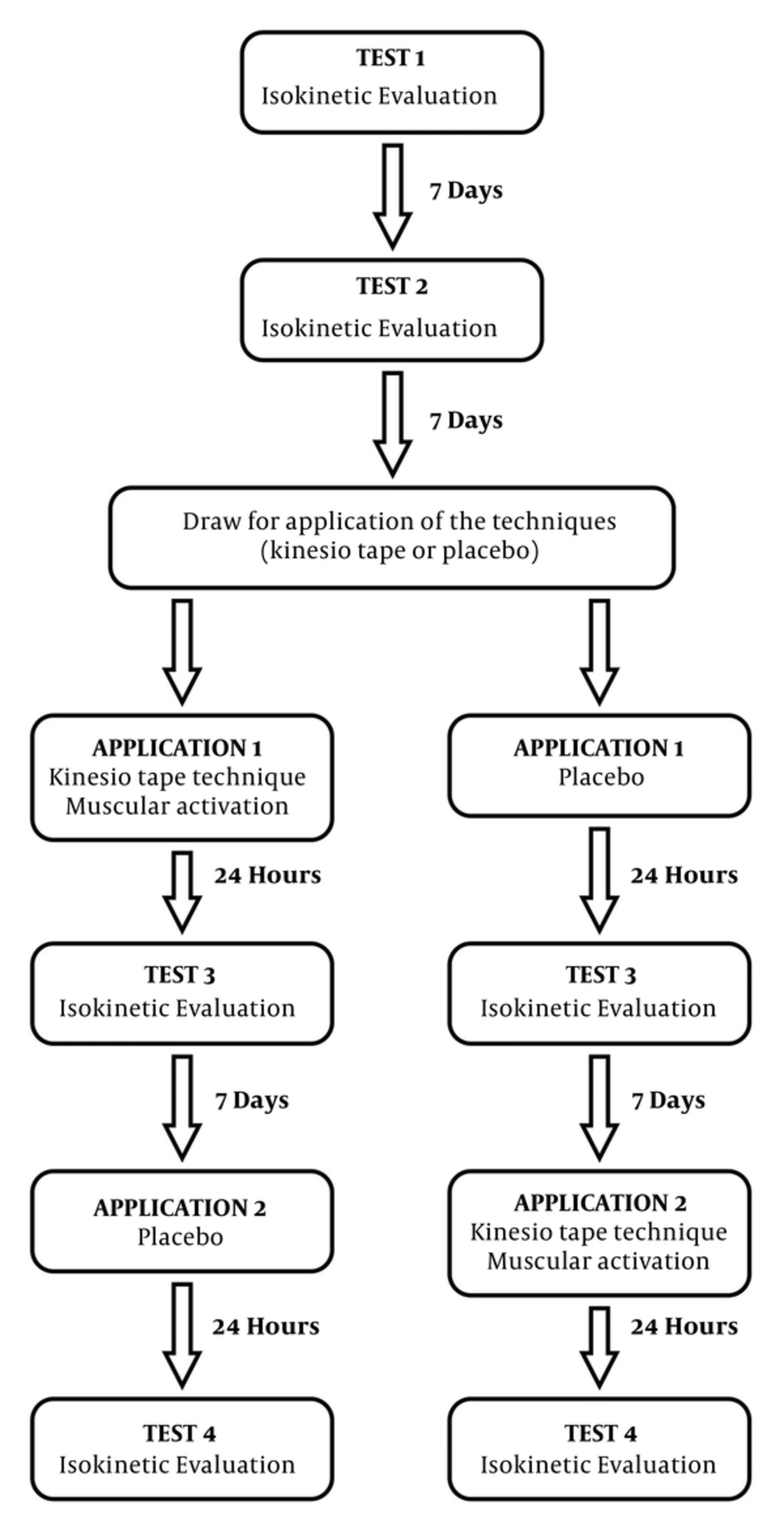
Figure 2.
Study Flow Chart
The variables analyzed were: PT (Nm), MRTW (J), work fatigue (%), antagonist/agonist ratio (%), deceleration time (Msec) and the time to reach PT (Msec). On each test day using the isokinetic dynamometer, the participants were submitted to three sets of five repetitions each. Measures for data analysis were selected based on the best performance obtained at the PT (24, 25).
3.5. Statistical Analysis
For the test-retest reliability analysis, a two-way random effects intraclass correlation coefficient (ICC2,1) was calculated using the absolute concordance and confidence interval of 95% (95% CI = estimate ± 1.96SE) (26). The classification of the reliability test was described qualitatively as follows: excellent if > 0.75, good if > 0.40 - 0.75 and poor if ≤ 0.40. Reliability values of at least 0.40 were compared statistically. Exploratory data analysis was presented as mean ± standard deviation [minimum; maximum] for numeric variables, and relative frequency (%) for nominal variables. To test the distribution pattern of the variables, the Kolmogorov-Smirnov test was applied. Considering the parametric distribution of the variables, the comparison of the KT values versus the placebo values was achieved by applying the paired Student’s t-test. Statistical significance was defined for all tests at P < 0.05, and the analyses were conducted with the SPSS 13.0 for Windows (IBM Inc., USA).
4. Results
Of the 22 volunteers initially evaluated (age = 31.5 ± 5.6 years, body mass = 66.2 ± 11.0 kg and height = 165.3 ± 6.5 cm), six failed to complete the study. The reasons were: medical advice (n = 1); inability to properly execute the test (n = 2); and abandonment (n = 3). According to the IPAQ Short Form, all women were considered to be physically active, although none of them were athletes.
All variables investigated showed good to excellent test-retest reliability, with ICC2,1 ranging between 0.575 and 0.888. Excellent reliability was found for the variables MRTW (ICC2,1 = 0.888) and PT (ICC2,1 = 0.852), while work fatigue (ICC2,1 = 0.660), agonist/antagonist ratio (ICC2,1 = 0.611), deceleration time (ICC2,1 = 0.596) and time to reach PT (ICC2,1 = 0.575) showed good reliability.
Table 1 shows the values related to the isokinetic dynamometer tests, according to the application of KT and the placebo. No statistically significant differences and no clinically relevant differences were observed when the KT and placebo groups were compared for all variables investigated.
To provide a context for interpreting the accuracy of the nonsignificant results, a post hoc power calculation was done based on the actual sample size (n = 16) and the comparison of the KT values versus the placebo values achieved by applying the paired Student’s t-test. For alpha = 0.05 and effect size = 0.8, the power obtained was 84.8%, showing the adequacy of the studied sample size to get significant results (26).
Table 1.
Isokinetic Variables According to the Application of the Kinesio Tape and Placeboa
| Variables | Kinesio Tape | Placebo | P Valueb,c |
|---|---|---|---|
| Maximum Repetition of the Total Work, J | 160.7 ± 35.2 | 160.3 ± 35.3 | 0.906 |
| [114.4; 237.1] | [110; 229.2] | ||
| Peak Torque, Nm | 160.4 ± 30.9 | 157.3 ± 32.9 | 0.437 |
| [117.0; 226.3] | [104.4; 217.7] | ||
| Work Fatigue, % | 20.0 ± 7.4 | 19.7 ± 4.5 | 0.817 |
| [7.7; 35.2] | [13.6; 27.4] | ||
| Agonist/Antagonist Ratio, % | 61.2 ± 6.8 | 61.8 ± 7.9 | 0.720 |
| [50.3; 72.8] | [51.2; 77.3] | ||
| Deceleration Time, Msec | 118.2 ± 77.7 | 138.1 ± 73.0 | 0.362 |
| [30.0; 310.0] | [50.0; 330.0] | ||
| Time to Reach the Peak Torque, Msec | 589.4 ± 94.9 | 581.9 ± 94.5 | 0.789 |
| [380.0; 700.0] | [440.0; 760.0] |
aValues expressed as mean ± standard deviation [values minimum; maximum].
bPaired Student’s t-test.
cStatistical significance P < 0.05.
5. Discussion
Despite an increase of supporters of the application of KT, the actual effects on different outcomes, including muscle performance, are yet to be justified. The present study aimed to evaluate the effect of the application of KT in physically active women. The results found countered our initial hypothesis, since no statistically significant differences or clinically relevant differences were observed in all the variables studied. To our knowledge, this is the first study that used different parameters provided by knee isokinetic dynamometry to evaluate the effect of KT after 24 hours of its application. Considering that isokinetic dynamometry represents the gold standard technique for assessing muscle dysfunction, our study points out that new methods that can improve the performance of the quadriceps should be sought. However, we believe that KT can be further investigated in other populations or clinical conditions using the various parameters given by the isokinetic test.
Supporting our findings, Fu et al. (27) found no improvement in muscle performance of the flexors and knee extensors in healthy non-injured young athletes assessed by isokinetic dynamometer after a 12-hour application of the KT. Similar results were described by Serra et al. (28) who used an isometric dynamometer to test leg extension. After 24 hours of KT application in 34 professional soccer players, male (n = 20) and female athletes (n = 14), the authors found no difference in the muscle force, including PT and the time to reach the PT. On the contrary, after a 24-hour application of the KT, Slupik et al. (29) observed an increase in the PT reflected by an increased recruitment of motor units. In addition, the effect was maintained for 48 hours after removal of the tape. When evaluating the immediate effects of the KT, Aktas and Baltaci (30) observed that the technique was more effective in increasing knee extensor torque and jumping performance in healthy individuals with no history of lower limb injury.
Kase and Wallis (31) justified the possible effects of KT by the activation of mechanoreceptors through the initial tactile stimulation, which would produce an increase in the activation of motor units recruited during muscle contraction and therefore, an increase in torque production of the muscle. However, to the authors' knowledge, studies supporting such physiological effects are lacking. In contrast, Vithoulka et al. (32) evaluated the quadriceps extensor torque after applying KT, after applying a placebo and after applying no tape to a group of healthy non-athletic women, with the isokinetic dynamometer at the angular velocities of 60°/s and 240°/s. The authors failed to observe any improvement in muscle strength during the concentric assessment, corroborating with our findings. However, for the tests at the angular velocity of 60°/s, held in eccentric mode, an increase in the extensor torque was observed. Nevertheless, our study did not carry out testing in the eccentric mode since this mode has low reliability.
Some methodological aspects should be considered to explain the differences between the results. The first is related to the level of tension in the application of the KT. In our study 30% was used, however there are studies in the literature with a strain variable. Another aspect is the instrument used to assess muscle strength. Several studies used the isometric dynamometer (33) that captures only maximal isometric contraction on a predetermined angle and does not represent the muscle performance throughout the range of motion, as observed with the isokinetic dynamometer (34). Moreover, as previously discussed, the application period appears to influence the effects generated by the KT (35, 36). Thus, the lack of standardization of this parameter may influence the effects attributed to the KT.
The effect of KT on the condition of the subject being athletic or non-athletic should be highlighted. In line with our findings, the majority of the previous studies conducted in this field have showed that KT cannot increase quadriceps PT in healthy individuals (30, 32, 37, 38). On the contrary, some benefits have been shown in studies evaluating athletes (39, 40). Since healthy individuals do not have any muscle pain or impairment, the increase in quadriceps strength in athletes may be attributed at least in part to pain relief induced by KT, if any. It is believed that the reduction of pain can generate a greater activity of the quadriceps (41). It is also worth mentioning that the application of KT on the quadriceps of athletes generally aims to improve some osteomyoarticular lesion resulting from sports practice, such as patellofemoral dysfunction (42). In these cases, the application of KT might promote physiological benefits including the improvement of strength, tendon function and lymphatic drainage (43). Future studies are warranted to compare the extent to which KT promotes different subjective (pain relief) and objective (increased muscle strength) between healthy subjects and athletes.
The limitations of this study are: [1] the sample size; [2] the measurements conducted only at the angular velocity of 60°/s; and [3] measurements taken only in the dominant member. However, the positive aspects were the use of a gold standard method to evaluate the extensor torque and the double-blind characteristic of the study that reduced the possibility of bias by the participants and assessors. Another aspect to be considered is that the knee isokinetic dynamometry was performed immediately after KT removal (not during its use), which could have affected our results. However, Slupik et al. (29) observed an increased recruitment of the muscle's motor units after 24 hours of KT and the continuation of this effect for another 48 hours following removal of the KT. Moreover, it should be emphasized that our data are in agreement with other studies (27, 28, 32).
In conclusion, the results of this study showed that the 24-hour application of the Kinesio tape on the vastus medialis oblique, vastus lateralis oblique and vastus lateralis longus muscles failed to improve the knee extensor torque in physically active women. It is important to highlight that new studies involving different periods of KT application, in a different group of people, including athletes and patients in physical therapy rehabilitation programs, are desirable for a better understanding of the Kinesio tape effects on muscle performance.
Implication for practice: Techniques that improve quadriceps muscle activity are often used in physiotherapy programs. However, the application of Kinesio tape for 24 hours is insufficient to improve the knee extensor torque in physically active women.