Fulltext
Full text is available in PDF
Asian Journal of Sports Medicine
Sports Medicine Research Center, TUMS
Authors
It seems that there is an association between the anterior cruciate ligament (ACL) and stability of the knee. This study aimed to evaluate the balance condition of the injured and non-injured sides of the coper and non-coper ACL-D (deficient) subjects during single and bilateral standing conditions.
This case-control study was carried out on 10 coper and 5 non-coper ACL-D knee subjects and 15 sex-age matched healthy subjects. A Zebris platform pedobarograph tool was used in this study. The subjects were tested barefoot during single and bilateral leg stance conditions. The outcome measurements included measurement of the center of pressure (COP) path line length, confidence ellipse area and sway velocity.
In double leg stance, data analysis revealed that the COP path line length, confidence ellipse area and sway velocity all showed a significant increase in the injured leg of the non-coper ACL-D subjects when compared to the injured leg of the coper ACL-D and healthy subjects (P=0.002). During single leg stance, all of the parameters showed significant increase in the injured leg of both coper and non-copers of the ACL-D subjects relative to the healthy subjects (P<0.05).
This study confirmed a balance deficiency in the injured and apparently healthy leg of the non-coper and coper ACL-D knee subjects. Increased COP path line length, sway velocity and the coinfidence ellipse area clearly showed an impaired body balance. The reduced postural control of the non-coper ACL-D knee subjects in bilateral standing could be more evidence of their poor knee stability status.
© 2014, Author(s). This open-access article is available under the Creative Commons Attribution 4.0 (CC BY 4.0) International License (https://creativecommons.org/licenses/by/4.0/), which allows for unrestricted use, distribution, and reproduction in any medium, provided that the original work is properly cited.
Salehi R, Goharpey S, Tayebi A, Negahban H, Shaterzadeh MJ. The Effects of Functional Knee Brace on Postural Control in Patients Who Underwent Anterior Cruciate Ligament Reconstruction. Jentashapir J Cell Mol Biol. 2016;7(5):e35435. doi: https://doi.org/10.17795/jjhr-35435
Faraji E, Daneshmandi H, Atri AE, Onvani V, Namjoo FR. Effects of Prefabricated Ankle Orthoses on Postural Stability in Basketball Players with Chronic Ankle Instability. Asian J Sports Med. 2012;3(4):34551. doi: https://doi.org/10.5812/asjsm.34551
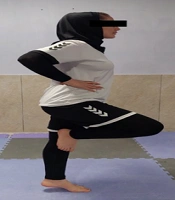
Hosseinimehr SH, Mazhari Z. The Endurance Ratio of Core Stability Global Muscles and Postural Control in Female Athletes with and Without Chronic Ankle Instability. J Motor Control Learn. 2024;6(3):e149985. doi: https://doi.org/10.5812/jmcl-149985
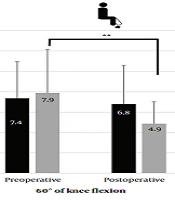
Kanchanomai S, Rueangthong C, Chernchujit B, Kitsuksan T, Suttanon P, et al. Importance of Lower Extremity Muscle Performance and Knee Proprioception During First 60 Degrees of Knee Flexion at Three Months After Anterior Cruciate Ligament Reconstruction. Asian J Sports Med. 2022;13(3):e120211. doi: https://doi.org/10.5812/asjsm-120211
Jamebozorgi A, Rahimi A, Daryabor A, Kazemi SM, Jamebozorgi F. The Effects of Transcranial Direct Current Stimulation (tDCS) and Biofeedback on Proprioception and Functional Balance in Athletes with ACL-deficiency. Middle East J Rehabil Health Stud. 2023;10(1):e130364. doi: https://doi.org/10.5812/mejrh-130364
Last Update: 1 week ago
Last Update: 1 week ago
Last Update: 1 week ago
Last Update: 9 hours ago
Last Update: 12 hours ago
Last Update: 5 days ago