
1. Background
Ankle sprain is one of the most common injuries among athletes. Mechanisms of injury usually include a combination of sudden excessive inversion of the ankle, and internal rotation with and without plantarflexion of the ankle, which puts these ligaments under a lot of pressure (1). If the ankle sprain is not treated, the damage can become chronic. Chronic ankle instability (CAI) is defined as patients who (1) have experienced the first sprain more than a year ago; (2) show a tendency to repeat ankle sprains; (3) understand frequently experience ankle displacement; (4) suffer from frequent pain, swelling, reduced range of motion, weakness and reduced daily performance (2). Previous studies have shown that the increase in ankle joint laxity and proprioceptive deficits as a result of sprains are related to balance and postural control deficits (3). Maintaining stability or postural control is one of the essential components of most sports (4). An essential factor in maintaining balance and body movement is sufficient strength and endurance in the core stability muscles (4). This area includes abdominal muscles, muscles around the spine and gluteal area, diaphragm, and pelvic floor muscles. It seems that the weakness in the muscles of core stability leads to the loss of the correct alignment of the lumbar-pelvic region, and as a result, the muscles of the lower limbs that are connected to this region, due to the change in the length-tension relationship, suffer from a decrease in efficiency and are prone to injury. It has been proven that balance training is an effective method in the rehabilitation and prevention of frequent sprains in CAI. People with CAI mainly show disorders in postural control and functional deficits in postural control (5). Results showed that core stability muscle strengthening exercises increased dynamic balance and endurance in young field hockey players (6). Also, muscle activity and movement patterns of proximal parts in people with CAI are different from healthy people. These differences are compensatory strategies for situational stability. These strategies may not satisfy the body's need to maintain and postural control in new environments or during complex activities (7).
Considering that lateral ankle sprain is one of the most common sports injuries and has the highest rate of recurrence among all musculoskeletal injuries of the lower limb, and also 40% of people suffer again after the initial ankle sprains (8). Focus of most previous research has been on evaluating the strength of core stability muscles in athletes with and without CAI. Also, few studies have been conducted in the field of endurance of the core stability muscles, and on the other hand the studies conducted have only examined the endurance of different muscle groups.
2. Objectives
In this research, we intend to compare the endurance ratio of core stability muscles and postural control in female athletes with and without CAI.
We assumed there is a significant difference in the ratio of core stability muscle endurance and static and dynamic posture control between female athletes with and without CAI.
3. Methods
3.1. Subjects
The current research was the quasi-experimental method. The statistical population was female athletes from Kermanshah city of Iran who had at least 3 years of experience in club sports such as volleyball, basketball, and futsal. Sixty female athletes in two groups (30 healthy and 30 with CAI) were selected by simple random method. Because of these three sports have fundamental differences we put 10 athletes from each sport in each group. To ensure the consent of the subjects to participate in this research project, a written consent form was provided to them and after completing the form, the forms were collected by the subjects.
Inclusion criteria were: (1) Age range 18 - 25 years; (2) having at least three years of club experience in one of the sports fields of basketball, volleyball, and futsal; (3) having CAI in the dominant ankle; (4) cumberland tool score ≤ 24 for the CAI group and ≥ 29 for the healthy group (8); (5) all participants didn’t have any injury in the last 6 months in the lower extremities. Exclousion criteria were: (1) Failure to perform tests correctly; (2) lack of maximum effort of the subject in doing the tests.
3.2. Apparatus and Task
3.2.1. Trunk Endurance Evaluation Tests
McGill tests were used to evaluate the endurance of the core stability muscles of the body. Trunk muscle tests, which include the trunk flexors (lying down and keeping the trunk at an angle of 60 degrees from the ground (Figure 1), the trunk extensors (maintaining neutral trunk and pelvic alignment in the sagittal plane for as long as possible in prone position (Figure 2) and the right or left lateral flexors (on the left or right side on the ground with the elbow at 90 degrees and placed under the shoulder to bear weight (Figure 3). Participants were encouraged to fully maintain the isometric postures taught by the examiner for each test position as long as possible, and they performed the test twice with a one-minute rest interval. The average time they could hold the correct position for each condition was recorded for analysis (9). In this research, the endurance ratio of trunk flexors to trunk extensors and also the endurance ratio of dominant lateral flexors /the non-dominant side were used for analysis. Previous studies showed the McGill tests had good validity for evaluation of the endurance of the core stability muscles (10).
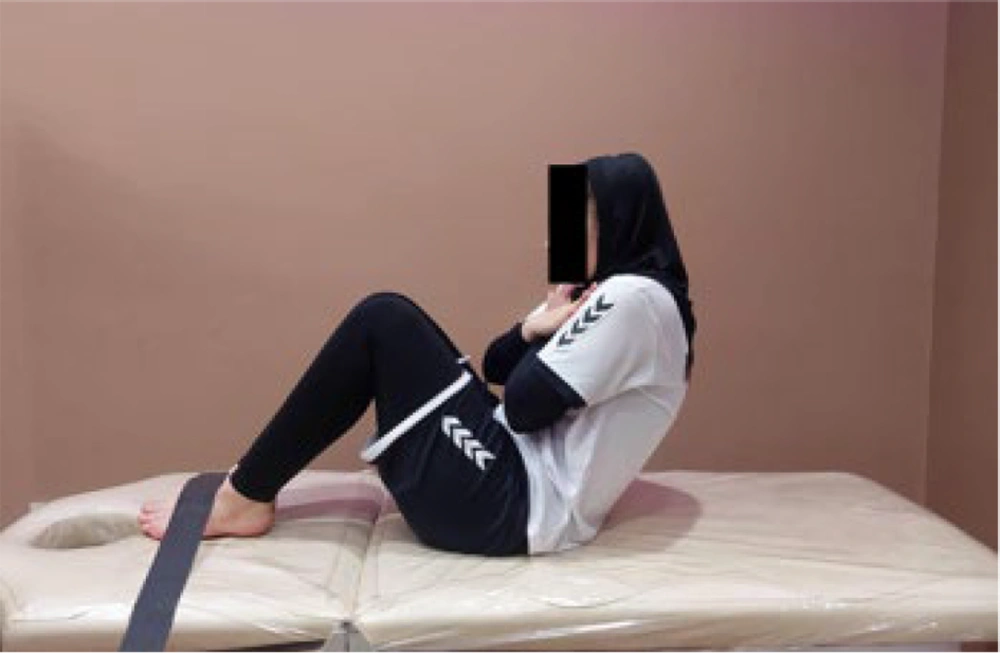
Figure 1.
Subject performing the flexors muscle endurance test.
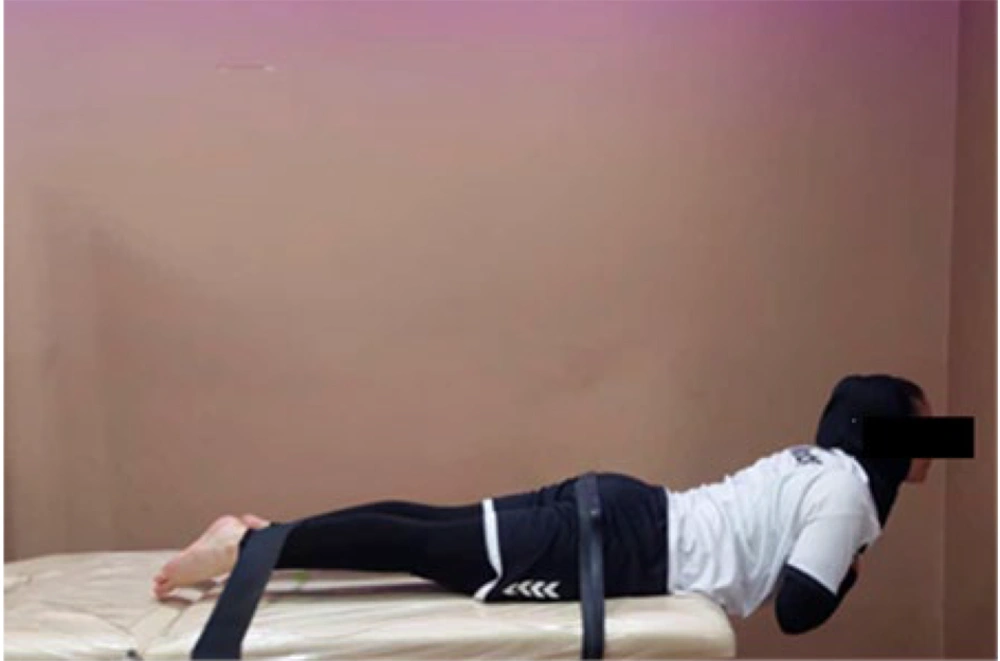
Figure 2.
Subject performing the extensor muscle endurance test.
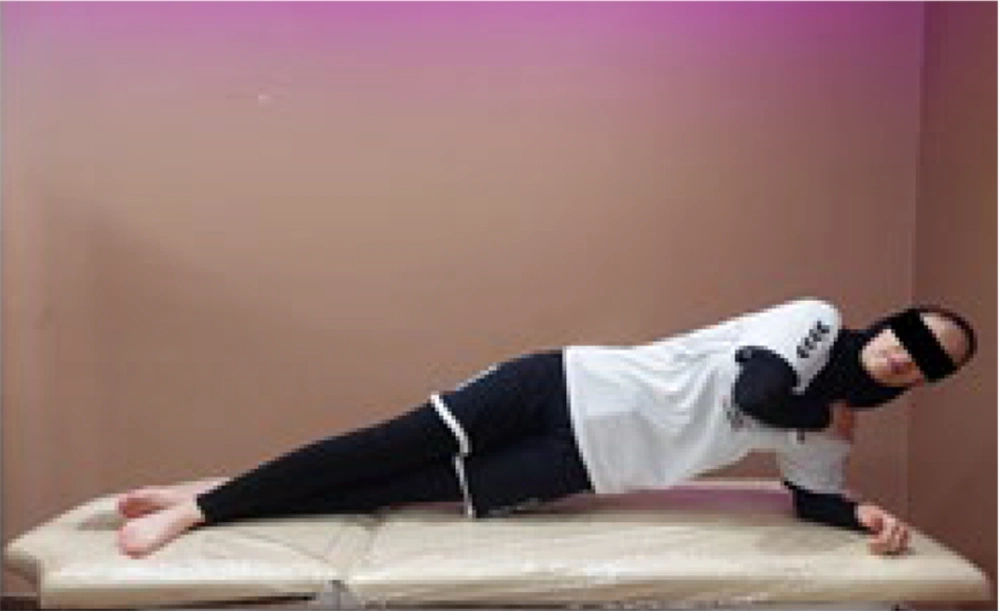
Figure 3.
Subject performing the endurance test of the lateral flexor muscles.
3.2.2.Y Balance Test
This test was used to evaluate dynamic postural control (11). In this test, the strips are placed at an angle of 90-135-135 degrees in the anterior, posteromedial, and posterolateral directions. To perform the test correctly and to normalize the obtained information, we must obtain the actual length of the subject's legs. In this case, we measure from the anterior superior iliac spine to the medial malleolus with a tape measure. We divide the obtained number by the reach distance during the test and multiply it by 100. When performing the test, it is very important to pay attention to the following points: First, we will explain how to perform the test, then we ask each subject to practice the test in 6 repetitions so that she is completely familiar with the method of performing the test. Before starting the test, the dominant leg of the subject must be determined. After the full explanation and the experiment, the subject is placed on one leg (dominant leg) and performs the reach distance with the other leg. The subject repeated each direction twice and the average of the repetitions was recorded as the result (Figure 4).
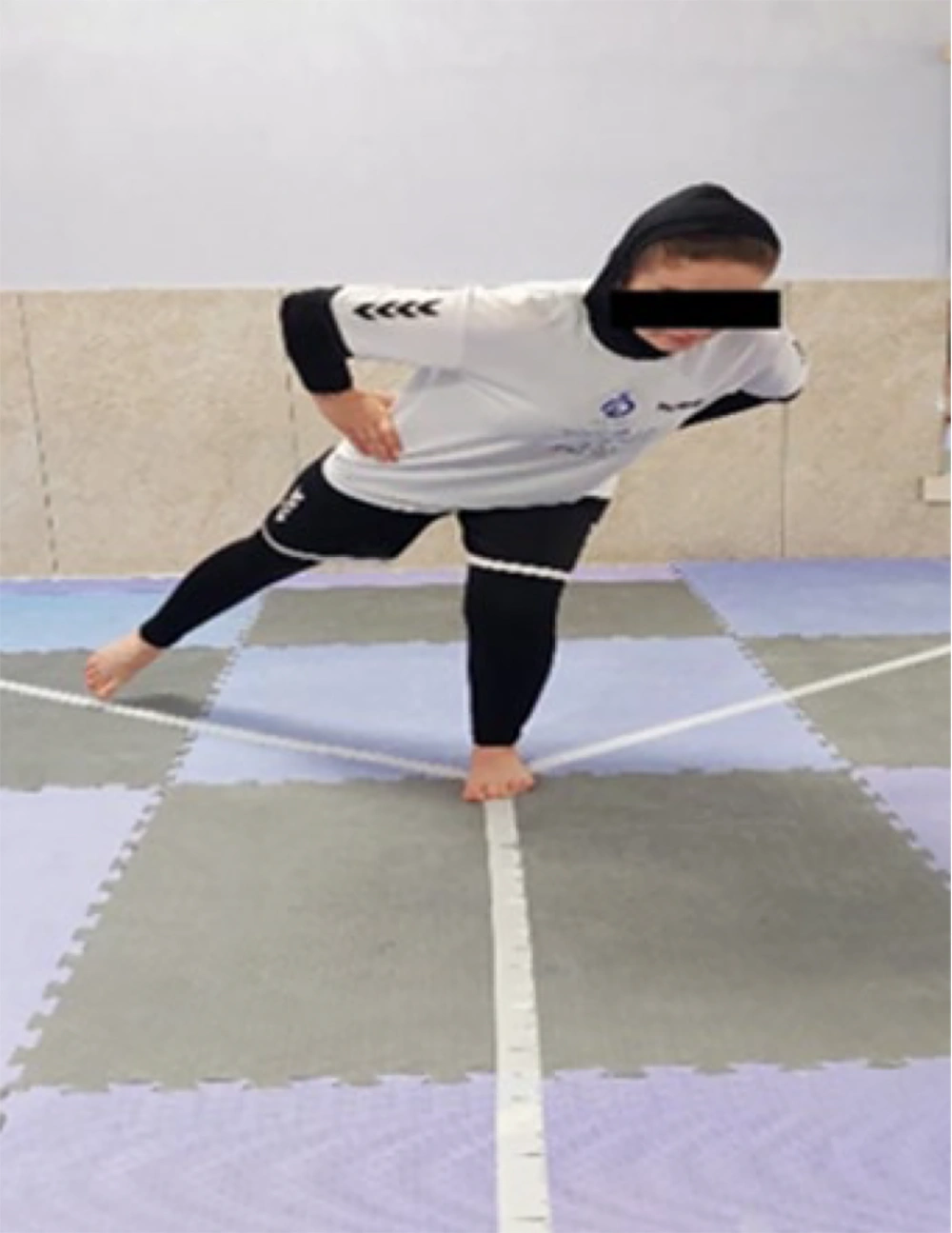
Figure 4.
Subject performing the balance test Y.
3.2.3. Stork Test
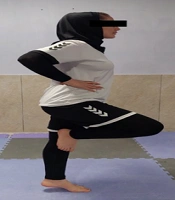
This test was used to evaluate static postural control (12). In this test, the subject stands with bare feet on a completely flat surface, hands are placed beside the body on the hip joint. To perform this test, the dominant leg is on the ground and acts as a support, then the other leg is lifted and placed next to the non-dominant knee. The subject lifts the heel and stands on the chest of the foot to balance. When the heel is lifted off the ground and placed on the chest of the foot, the time is calculated using a stopwatch. The test time ends with the first error slip. The slips and errors made during the test include the following: If any of the hands are removed from the hip joint, if the subject uses the hand to maintain balance, or if the support leg is shaking when the non-dominant leg is separated from the knee and the heel of the support leg reaches the ground. The subject repeated the exercise twice and the average of the repetitions was used for analysis (Figure 5).
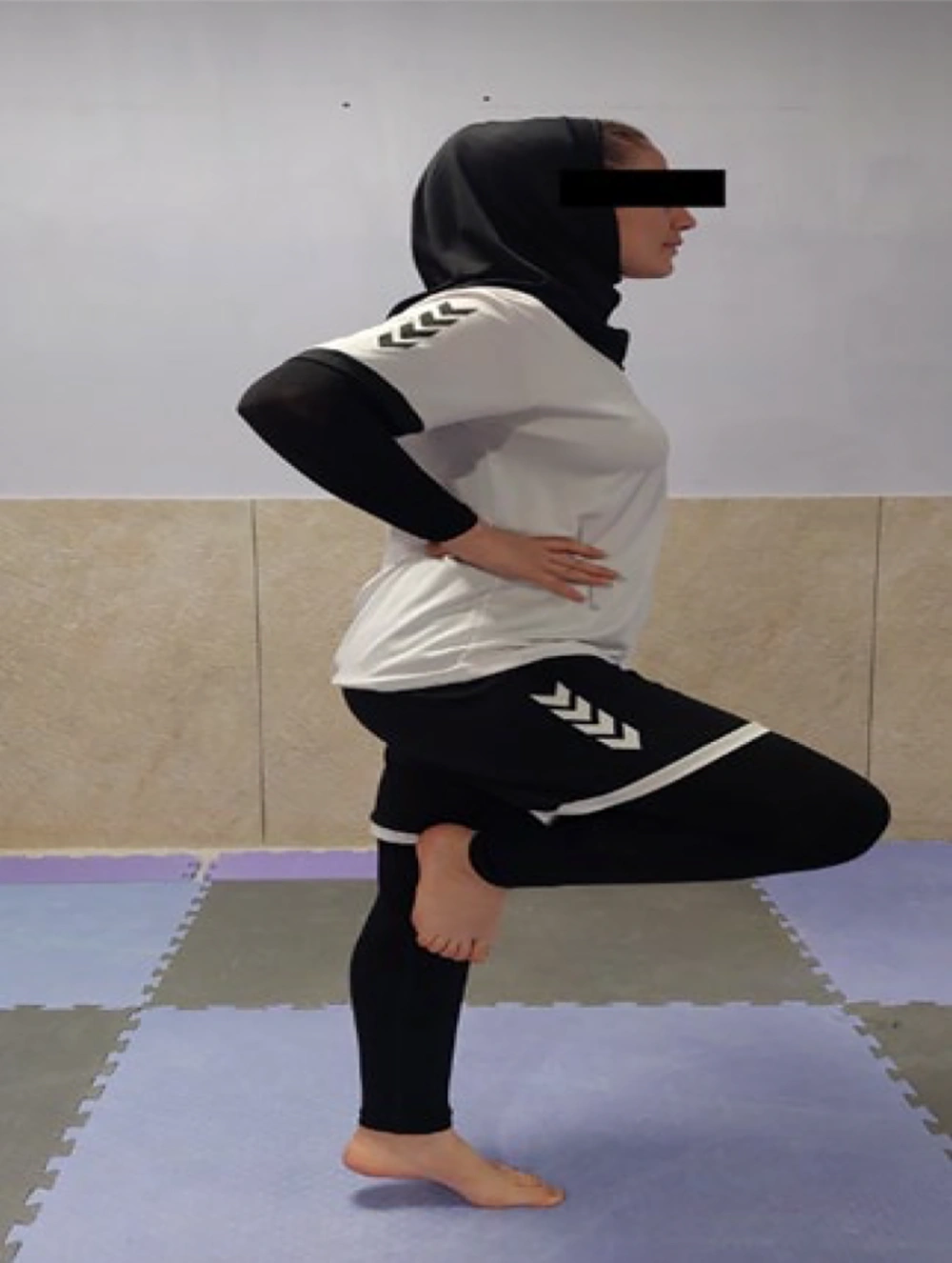
Figure 5.
Subject performing the stork test.
3.3. Data Analysis
SPSS statistical software (version 18.0, SPSS Inc., Chicago, IL) was employed for all statistical analyses. The Shapiro-Wilk test was used to determine the normality of the research data. Based on this test, the distribution of data in different variables (the ratio of core muscles endurance, static and dynamic balance) was normal. Independent sample t-test was used to investigate different factors between the two groups. The statistical significance was set at P ≤ 0.05.
4. Results
The demographic information of the research subjects is given in Table 1. Also, Table 2 shows the mean and standard deviation of research variables in two groups. Findings of independent sample t-test indicated there was a significant difference between the two groups in flexor/extensor muscles endurance ratio (P = 0.01) and the endurance ratio of the lateral flexor muscles of the dominant to the non-dominant side (P = 0.001). In static postural control, there was a significant difference between the two groups (P = 0.001). In dynamic postural control, there was no significant difference between the groups in the anterior direction (P = 0.27) and the posteromedial direction (P = 0.48), but there was a significant difference in the posterolateral direction (P = 0.001).
Table 1.
Demographic Characteristics of Subjects
| Groups | Age (y) | Mass (kg) | Height (cm) | Sport Experience |
|---|---|---|---|---|
| Health | 2.6 ± 22.06 | 5.9 ± 61.6 | 5.2 ± 166.8 | 1.2 ± 3.8 |
| CAI | 3.5 ± 20.2 | 5.8± 65.6 | 3.8 ± 168.8 | 2.2 ± 3.9 |
Table 2.
Mean and Standard Deviation of Research Variables in Two Groups
| Variables and Groups | Mean ± SD |
|---|---|
| Extensors endurance (sec) | |
| Health | 68.14 ± 9.3 |
| CAI | 63.25 ± 9.59 |
| Flexors endurance (sec) | |
| Health | 64.23 ± 5.34 |
| CAI | 44.28 ± 7.08 |
| Dominant lateral flexors endurance (sec) | |
| Health | 43.4 ± 6.3 |
| CAI | 26.14 ± 3.34 |
| Non-dominant lateral flexors endurance (sec) | |
| Health | 9.2 ± 1.7 |
| CAI | 5.39 ± 1.34 |
| Static postural control (sec) | |
| Health | 9.2 ± 1.7 |
| CAI | 5.39 ± 1.34 |
| Dynamic postural control in anterior direction (cm) | |
| Health | 92.6 ± 6.22 |
| CAI | 89.83 ± 7.33 |
| Dynamic postural control in posteromedial direction (cm) | |
| Health | 99.97± 99.97 |
| CAI | 92.74 ± 2.47 |
| Dynamic postural control in posterolateral direction (cm) | |
| Health | 93.67 ± 2.69 |
| CAI | 84.68 ± 3.95 |
5. Discussion
This study aimed to investigate the ratio of core stability muscle endurance and postural control in female athletes with and without CAI. Studies have shown that the rate of muscle contraction is an effective factor in muscle damage. The longer the muscles contract, the less chance of injury will occur (9). The results of endurance tests in the present study showed that athletes with CAI had a lower endurance ratio than healthy athletes. Many evidences show that people with CAI use their proximal muscles more to overcome neuromuscular disorders and defects created in the distal limb. Also, the results of posture control indicate that people with greater endurance capacity have less body sway. One of the most important factors in maintaining balance is how the core stability muscles work. Studies show that the activity of the trunk muscles begins before the activity of the muscles of the limbs (13). It can be said that stability and movement are determined by the coordination of all the muscles around the core area and the endurance of the trunk and the creation of efficient movement are necessary. So the weakness and inefficiency in the coordination of the core stability can lead to a reduction of efficient and effective movements, and then create a pattern of compensatory movements and finally lead to injury. Therefore, core stability muscle endurance evaluations can be helpful as a possible influencing factor in the prevention and treatment of patients with CAI. In the present study, the endurance ratio of flexor/extensor muscles showed a significant difference between the two groups and the CAI group had less ratio than the healthy group. Limited research has been done in the field of comparing the endurance ratio of the core stability muscles. In a study on 32 rowers at Hong Kong University, researchers concluded that the endurance of flexor muscles is about 35% more than extensor muscles, but this ratio was different in non-rowers in previous studies (14). This study shows the importance of flexor muscle endurance, which was not consistent with the present research. The reason for the contradiction of the results may be related to the type of sport and the gender of the research subjects because the subjects of this research were only female. Also, considering that the rate of loss and recovery of balance function is important in sports activities, therefore, objective measurement of balance function disorders related to CAI is necessary.
Poor balance performance in patients with CAI may be related to proprioception deficits, which are related to mechanoreceptor disorders in the joints and soft tissues of the ankle area. The reduction of joint movement and sense of position is partially due to insufficient signals from damaged mechanical receptors. In general, the assessment of static and dynamic postural control provides the therapist with an analysis of the patient's ability to maintain balance while combining movement. Still, it can also determine the effectiveness of physical therapy methods in CAI (15, 16). Since the treatment strategies of CAI patients are different based on their functional deficits, therapists evaluate the results of the patients and identify the deficits to make appropriate treatment decisions. Current standards of clinical practice to determine loss and recovery of balance function in CAI rely on self-report questionnaires or non-instrumented clinical tests for clinicians and researchers. Although these tools have proven to be useful, they have some limitations regarding the mentality and apprehension of the patient (17, 18). A strong and stable trunk provides a good foundation for the moments created in the limbs. Because the core stability is the center of the movement chain of most sports activities. Controlling the strength, balance, and movement of the core stability increases the performance of the motor chain of the upper and lower limbs. Coordinated activation of muscles is very important to create stability and functional efficiency, which requires control of strength, balance, and movement of core stability muscles.
The results of the present study in the field of dynamic postural control showed a significant difference between the posterolateral direction between the two groups. Moradi et al. (19) showed that the displacement of the center of pressure in the medial and lateral direction was higher in the injured group than in the healthy group. In addition, Knapp et al. (20) showed that the displacement of the center of pressure in the medial and lateral directions is the same in the control group. A pathomechanical model has been presented by Fuller, according to which the cause of lateral ankle sprains is due to the increase of the internal rotating force in the metatarsal joint. The increase of the internal rotating force is influenced by the intensity and position of the vertical force of the ground at the moment the foot contacts the ground. Fuller explained his theory in this way if the displacement of the center of pressure of the foot is on the inside of the axis of the subtalar joint, compared to the case where the displacement of the center of pressure is on the outside of the subtalar joint, the internal rotating force from the vertical force of the ground reaction is larger. This state leads to the increase of the internal rotation of the posterolateral part of the foot in the close kinetic chain. Therefore, the potential for damage to lateral ligaments should be increased (21). Based on the presented model, this issue can be the reason for the difference in the degree of posterolateral orientation of the Y balance test between the two groups.
One of the limitations of the present research is the gender of the research subjects, all of whom were female, and the research subjects were from different sports fields, so future researchers are suggested to conduct research with subjects from both genders and different sports fields.
According to findings, female athletes with CAI have a lower endurance ratio in the core stability muscles and weaker posture control compared to healthy athletes. According to the results of the research, it is suggested that female athletes with CAI pay more attention to these factors and design special exercises to prevent re-injury in these people.