
1. Introduction
Liver transplantation is considered one of the most complex and critical therapeutic interventions in modern medicine, and in recent years, remarkable advances have occurred in surgical techniques, anesthesia, intensive care, and pharmacological treatments (1-3). Over the past decade, liver transplantation activity has increased substantially worldwide, reflecting advances in surgical techniques, donor utilization, and perioperative care. In the United States alone, liver transplant volume increased by approximately 65% between 2013 and 2023, with record annual transplant activity reported in recent years. The increasing use of donation-after-circulatory-death grafts and expanded donor criteria has further contributed to the growing complexity of transplant management (4). This process not only requires highly technical skills in the operating room but also demands close, coordinated collaboration among multiple teams across medical and paramedical disciplines at all stages, from initial patient assessment to long-term posttransplant follow-up (5). The multifaceted nature of liver transplantation necessitates the synergistic involvement of specialists from diverse fields, including hepatobiliary surgery, anesthesiology, gastroenterology, infectious diseases, radiology, intensive care, nursing, nutrition, and social work (6, 7). These interdisciplinary collaborations, typically structured as multidisciplinary teams, contribute substantially to reducing complications, improving patient survival, and enhancing posttransplant quality of life (8). Studies have shown that effective coordination among team members, particularly in critical areas such as surgical scheduling, immunosuppressive drug management, infection monitoring, and patient education, can lead to more favorable clinical outcomes (9).
Nevertheless, challenges such as conflicting decisions, ineffective communication among specialties, divergent therapeutic goals, and weak organizational structures can hinder the full realization of collaborative effectiveness (10). Accordingly, strategies such as improving intrateam communication, promoting interdisciplinary education, and implementing integrated treatment protocols have been proposed to enhance transplant team performance (11, 12).
The importance of interdisciplinary collaboration becomes even more pronounced during the postoperative phase, when managing complications, adjusting immunosuppressive drug dosages, assessing graft function, and providing rehabilitative interventions require continuous coordination among various professionals (13). Moreover, transplant patients often face psychological, social, and nutritional challenges that cannot be effectively addressed without the involvement of support teams, such as psychiatrists, social workers, and nutritionists (14). The need for integrated decision-making is especially critical when patients present with multisystem complications that require adaptive, consistent, and long-term care strategies (15-17). Given these clinical and organizational challenges, a broader synthesis of interdisciplinary collaboration models in liver transplantation is warranted. This scoping review aims to systematically explore the various dimensions of interdisciplinary collaboration in liver transplant surgery. The primary focus of the paper is to elucidate the roles of different specialties across the phases of transplantation, to inform the structuring of effective treatment teams, to identify current challenges in interprofessional interactions, and to extract successful models from leading transplant centers. In addition, the review addresses topics such as the importance of interdisciplinary training, the standardization of procedures, the use of advanced communication tools, and the active participation of patients and their families in the care process. The findings of this review are expected to provide a valuable foundation for improving the clinical and managerial performance of liver transplant teams and to offer practical strategies for health systems, particularly in developing countries.
2. Methods
2.1. Study Design
This study was conducted as a scoping review to comprehensively explore the dimensions of interdisciplinary collaboration in liver transplantation, from preoperative planning to long-term postoperative follow-up. A scoping review provides a broad and flexible approach to examining the multifaceted, team-based nature of liver transplantation, without the rigid constraints of a systematic review. The objective was to map and synthesize existing evidence on interdisciplinary collaboration throughout the liver transplantation process, from pretransplant planning to postoperative follow-up. Specifically, this review addressed the following question: What is the current evidence regarding the roles, components, challenges, and outcomes of interdisciplinary collaboration across the different phases of liver transplantation care?
2.2. Search Strategy
A comprehensive literature search was conducted in 5 electronic databases, including PubMed, Scopus, Web of Science, Embase, and the Cochrane Library, to identify relevant studies published between January 2015 and March 2025. The search strategy combined Medical Subject Headings (MeSH), where applicable, with free-text keywords related to liver transplantation and interdisciplinary collaboration. The following keywords were used: liver transplantation, interdisciplinary collaboration, multidisciplinary team, surgical team, postoperative care, patient management, and teamwork in transplantation. Boolean operators (AND and OR) were used to combine search terms and optimize retrieval. The complete search strategy used in PubMed was as follows: (“Liver Transplantation”[MeSH] OR “Liver Transplant”) AND (“Interdisciplinary” OR “Multidisciplinary”) AND (“Surgical Planning” OR “Postoperative Care” OR "Patient Follow-up"). The search strategies for the other databases were adapted to the indexing systems and search syntax of each database while maintaining the same combination of search concepts. The complete search strategy for each database is presented in Table 1.
Table 1.
Search Strategy Used for the Electronic Databases Included in the Scoping Review
| Database | Search Strategy |
|---|---|
| PubMed | ("Liver Transplantation"[MeSH] OR "Liver Transplant") AND ("Interdisciplinary" OR "Multidisciplinary") AND ("Surgical Planning" OR "Postoperative Care" OR "Patient Follow-up") |
| Scopus | ("Liver Transplantation" OR "Liver Transplant") AND ("Interdisciplinary" OR "Multidisciplinary") AND ("Surgical Planning" OR "Postoperative Care" OR "Patient Follow-up") |
| Web of Science | ("Liver Transplantation" OR "Liver Transplant") AND ("Interdisciplinary" OR "Multidisciplinary") AND ("Surgical Planning" OR "Postoperative Care" OR "Patient Follow-up") |
| Embase | ("Liver Transplantation" OR "Liver Transplant") AND ("Interdisciplinary" OR "Multidisciplinary") AND ("Surgical Planning" OR "Postoperative Care" OR "Patient Follow-up") |
| Cochrane Library | ("Liver Transplantation" OR "Liver Transplant") AND ("Interdisciplinary" OR "Multidisciplinary") AND ("Surgical Planning" OR "Postoperative Care" OR "Patient Follow-up") |
2.3. Inclusion and Exclusion Criteria
The inclusion criteria were articles published in English; human studies; studies addressing interdisciplinary or multidisciplinary collaboration in liver transplantation; and reviews, original studies, clinical guidelines, and scientific consensus documents. The exclusion criteria were case reports and opinion articles lacking evidence-based approaches, studies focusing solely on surgical techniques without reference to team structures, and animal or laboratory studies.
2.4. Study Selection Process
All records identified through the electronic database search were imported into EndNote X9 reference management software, and duplicates were removed before screening. Two reviewers independently screened the titles and abstracts of all retrieved records according to the predefined eligibility criteria. Studies that met the inclusion criteria or required further assessment were retrieved for full-text review. The same two reviewers independently evaluated the full-text articles to determine final eligibility for inclusion. Disagreements between the reviewers during either title/abstract screening or full-text assessment were resolved through discussion. If consensus could not be reached, a third reviewer was consulted to make the final decision. The number of studies excluded at each stage of the screening process, along with the reasons for full-text exclusion, is presented in the PRISMA-ScR flow diagram (Figure 1). A total of 1,385 records were initially identified through database searching and other sources. After removing 315 duplicate records, 1,070 records remained for title and abstract screening. At this stage, 920 records were excluded because they were irrelevant to the study topic. Subsequently, 150 full-text articles were assessed for eligibility. Of these, 105 articles were excluded for the following reasons: not meeting the inclusion criteria (n = 58), poor methodological quality (n = 27), and lack of full-text availability (n = 20). Finally, 45 studies were included in the qualitative synthesis.
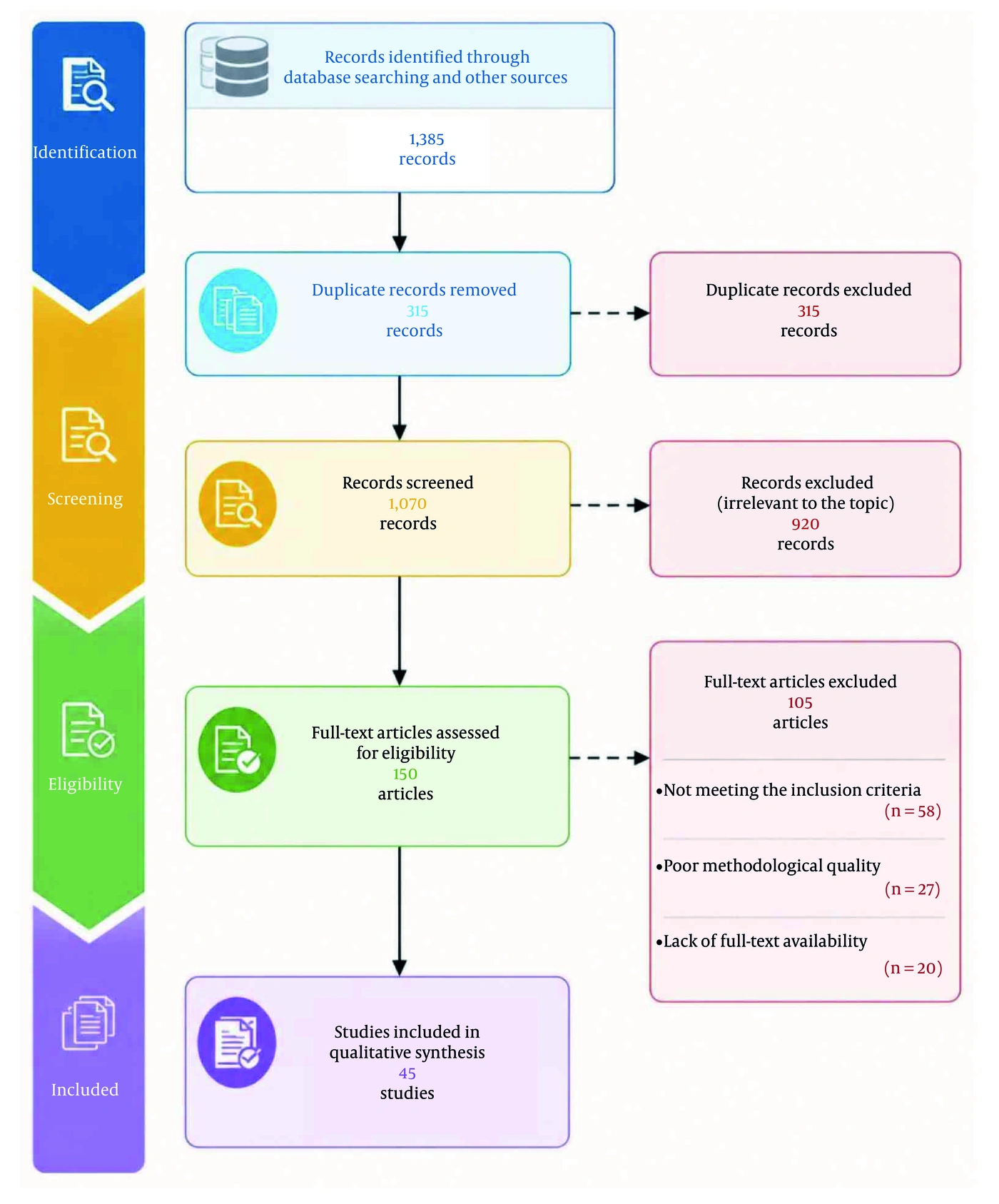
Figure 1.
PRISMA flow diagram of the study selection process
2.5. Data Extraction
A structured data extraction form was developed to collect the following information: authors and year of publication; study type and location; type of liver transplantation (adult, pediatric, living donor, etc.); description of interdisciplinary collaboration (roles, team structure, and communication methods); reported outcomes or benefits of collaboration; and identified challenges and proposed solutions. Data were extracted independently by 2 reviewers. Discrepancies were resolved through discussion or adjudication by a third reviewer.
2.6. Data Synthesis
Extracted data were synthesized using thematic analysis to identify and organize key themes across the included studies. Following data extraction, the findings were reviewed repeatedly to identify recurring concepts and patterns related to interdisciplinary collaboration in liver transplantation. Similar findings were grouped into preliminary categories, which were subsequently refined into broader themes through an iterative process. The identified themes were reviewed and discussed by the research team until consensus was reached, ensuring that they accurately reflected the evidence extracted from the included studies. To enhance methodological rigor, thematic qualitative analysis was conducted using an iterative, multi-step process. First, extracted data from eligible studies were reviewed independently by two reviewers and subjected to open coding to identify recurrent concepts related to interdisciplinary collaboration. Second, similar codes were grouped into broader categories, which were subsequently organized into overarching themes corresponding to the three major phases of liver transplantation: preoperative planning, intraoperative collaboration, and postoperative follow-up. In addition, cross-cutting themes related to barriers, facilitators, and innovative organizational models were identified through constant comparison across studies. Disagreements in coding or theme development were resolved through discussion and, when needed, consultation with a third reviewer. This approach improved the consistency, transparency, and reproducibility of the thematic synthesis.
Thematic qualitative analysis was used to synthesize the data. Key themes were categorized into three main phases: preoperative planning, intraoperative team structure, and postoperative care and long-term follow-up. In addition, barriers and facilitators of collaboration, as well as successful organizational models and frameworks, were synthesized and presented in integrated tables and conceptual diagrams.
2.7. Quality Assessment
Although formal risk-of-bias assessment is not mandatory in scoping reviews, methodological rigor was supported using CASP (Critical Appraisal Skills Programme) criteria for qualitative studies and AMSTAR guidance for review articles. These appraisal frameworks informed study selection and interpretation and supported the inclusion of methodologically credible evidence. The tools were applied as structured guides for quality assurance rather than as formal scoring instruments.
2.8. Ethical Considerations
As this study was based on a literature review and did not involve human participants or identifiable data, ethics approval was not required. Nevertheless, principles of scientific integrity, proper citation, and transparent reporting were strictly followed.
3. Results
3.1. Preoperative Planning
Findings indicate that recipient evaluation and selection rely heavily on multidisciplinary collaboration (18-20). Evidence suggests that the use of structured, team-based algorithms at this stage improves the accurate identification of patients who are most likely to benefit from transplantation (16, 18, 19). For example, studies have shown that preoperative multidisciplinary team meetings involving gastroenterologists, surgeons, psychiatrists, and social workers can improve patient management by identifying psychological and social risk factors before surgery (19, 21, 22). This collaboration has led to improved decision-making regarding patient acceptance or rejection (18-20).
Other articles highlight the role of preoperative nutritional counseling, in which collaboration with dietitians reduces the risk of postoperative complications (23-25). Several studies have emphasized preoperative nutritional optimization as a key component of interdisciplinary transplant planning (2, 23, 24, 26). For example, Plank et al. conducted a pilot prospective study demonstrating that structured nutritional support administered before and after liver transplantation was associated with improved clinical outcomes and reduced postoperative complications (23). Additionally, comprehensive preoperative assessment, including cardiovascular, renal, pulmonary, and anesthetic evaluation performed by multidisciplinary specialists, plays an important role in reducing perioperative complications and optimizing transplant outcomes (2, 16, 27). In countries such as the Netherlands and Australia, formal structures known as “Liver Transplant Boards” include more than six fixed specialties (18-20). Research has demonstrated that the presence of such boards is associated with improved 1-year patient survival rates following liver transplantation (18, 19).
3.2. Intraoperative Phase
During transplant surgery, surgical team success depends directly on coordination and real-time communication among team members (27-29). A liver transplantation-specific surgical safety checklist was developed and content-validated using a Delphi process (29). This checklist was used by the surgeon, anesthesiologist, and circulating nurse to jointly review the surgical process (29).
Stelzl et al. (28) reported that teams with a greater history of performing surgeries together had shorter operative times, less bleeding, and fewer acute-phase complications than ad hoc teams.
Moreover, effective coordination among transplant surgeons, anesthesiologists, perfusion teams, and operating room nurses has been identified as a critical factor in managing intraoperative complications and ensuring procedural safety (27, 28). The anesthesia team must align fluid volumes, liver cooling processes, and rewarming phases with the surgical team in advance. Shared protocols between these teams reduced the risk of ischemia and hepatic thrombosis (27, 30).
3.3. Postoperative Care and Follow-Up
Postoperatively, patient management requires continuous, specialized monitoring. Intensive care unit (ICU) nurses, gastroenterologists, clinical pharmacists, and psychologists all play key roles in transplant success (25, 31, 32). Clinical pharmacists are crucial for the precise adjustment of immunosuppressive drug dosages and monitoring of serum levels (33 - 35). Several studies have identified medication errors in the first week after transplantation as a major cause of hospital readmissions; these were markedly reduced by the presence of clinical pharmacists (35-37). The role of clinical pharmacists in transplant teams has also been increasingly recognized (33, 34, 38). In addition, observational data from transplant centers indicate that pharmacist involvement is associated with improved medication management and reduced drug-related errors (35, 36, 39).
Psychological counseling and family education are also vital at this stage (25, 40, 41). A study found that transplant recipients who received multidisciplinary psychological support demonstrated better quality of life and psychological adaptation after transplantation (18, 25, 41). Additionally, social workers contribute by assessing patients’ social support, financial resources, and psychosocial stability, thereby facilitating long-term adherence to transplantation programs (18, 19). Some follow-up models combine in-person visits with telephone or online follow-up by multidisciplinary teams, resulting in fewer unnecessary hospital visits and increased patient adherence to treatment (42-45). Telemedicine has also facilitated early identification of posttransplant complications and strengthened communication between transplant recipients and multidisciplinary health care teams (42, 44, 46).
Multidisciplinary transplant evaluation meetings have been shown to improve the identification of psychosocial and behavioral risk factors before transplantation by integrating input from hepatologists, surgeons, mental health professionals, and social workers (18, 19, 41). These teams used shared electronic medical records and monthly follow-up meetings to provide integrated, conflict-free treatment plans. Integrated electronic medical records and regular multidisciplinary follow-up meetings facilitate coordinated decision-making, reduce communication errors, and support individualized posttransplant care plans (37, 42, 43).
3.4. Innovative Team Structures and Supporting Technologies
Recent studies emphasize the role of advanced digital health technologies, including integrated electronic medical records, clinical decision support systems, and telemedicine, in enhancing interdisciplinary collaboration (21, 42, 43). These platforms enable real-time access to patient data, medication management, and clinical updates, thereby facilitating coordinated decision-making among health care professionals (38, 42, 43). Recent evidence has further demonstrated that telemedicine-supported transplant evaluation and digital coordination platforms may improve continuity of care, expand access, and reduce avoidable utilization in transplant populations (42-45). Telemedicine also facilitates earlier transplant evaluation, shortens the interval from referral to specialist assessment, and improves coordination between transplant centers and referring hospitals (21, 42).
Moreover, dedicated transplant coordinators, nurse practitioners, and transition coordinators serve as communication hubs between patients and multidisciplinary health care teams, thereby improving continuity of care, facilitating communication, and enhancing patient satisfaction (22, 31). Several studies also reported that integrating advanced practice providers and transplant coordinators into multidisciplinary care pathways reduced communication gaps, improved adherence to follow-up schedules, and optimized long-term posttransplant management (31, 41). A summary of key included studies is presented in Table 2. The thematic synthesis is summarized in Table 3.
Table 2.
Summary of Key Included Studies
| Author, Year (Reference) | Study Design | Population | Focus Area | Phase | Key Findings |
|---|---|---|---|---|---|
| Adam et al., 2012 (2) | Retrospective registry-based observational study | 93,634 liver transplantations from 145 European centers | Liver transplantation outcomes and evolution | N/A | Improved survival over time due to advances in patient selection, surgery, and postoperative management. |
| Xi et al., 2025 (25) | Randomized Controlled Trial (RCT) | 80 liver transplant recipients (40 intervention, 40 control) | Nurse-led comprehensive postoperative care including psychological support, pain management, lifestyle guidance, and rehabilitation | Post-transplant | A comprehensive nursing intervention significantly reduced anxiety, depression, and insomnia scores compared with routine nursing care (P < 0.05). Improvements were sustained throughout the 12-month follow-up, supporting the effectiveness of multidisciplinary nursing in enhancing psychological recovery and quality of life after liver transplantation. |
| Ko et al., 2023 (42) | Mixed Methods Study (Cross-sectional survey + qualitative interviews/focus groups) | 252 adult solid organ transplant recipients (liver, kidney, and simultaneous liver–kidney transplant); 15 participants completed interviews/focus groups | Telehealth experience, satisfaction, perceived benefits and barriers | Post-transplant follow-up | Approximately 70% of recipients had used telehealth for transplant care. Overall satisfaction was high, particularly regarding convenience and effectiveness, while satisfaction with the reliability of telehealth systems was lower. Qualitative findings showed that telehealth was less suitable for recipients who were clinically or socially vulnerable, required urgent care, or had privacy concerns. The authors concluded that telehealth should be personalized according to individual patient needs and preferences in transplant follow-up. |
| Dolanbay & Ozkan, 2025 (40) | RCT | 90 adult liver transplant recipients (2 months–2 years posttransplant) | Web-based education, symptom management, immunosuppressive medication adherence | Post-transplant follow-up | Patients in the intervention group received 1 month of web-based education. Compared with the control group, they showed a significant reduction in the occurrence and distress of immunosuppressant-related symptoms and a significant improvement in adherence to immunosuppressive medications (P < 0.05). The study concluded that web-based educational interventions effectively improve medication adherence and reduce treatment-related symptom burden in liver transplant recipients. |
| Tutino et al., 2025 (65) | Multisite randomized controlled trial (Intervention development paper) | Adolescents and young adults after liver transplantation identified as non-adherent across multiple transplant centers | Telehealth behavioral intervention (iMALT), medication adherence, biomarker-guided intervention | Long-term posttransplant follow-up | The iMALT program developed a fully remote telehealth intervention to improve immunosuppressive medication adherence. It uniquely used the Medication Level Variability Index, derived from electronic health records, as a biomarker to identify non-adherent patients and dynamically adjust intervention intensity over time. The intervention incorporated behavioral theory, personalized coaching, and remote delivery to enhance engagement, reduce attrition, and minimize patient burden. The study demonstrates the feasibility of personalized, biomarker-driven telehealth interventions for improving long-term adherence in adolescent and young adult liver transplant recipients. |
| Zwarenstein et al., 2009 (11) | Cochrane systematic review | Five interprofessional intervention studies | Interprofessional collaboration | All phases | Interprofessional collaboration (IPC) interventions may improve health care processes and professional practice. |
| Yoshiga et al., 2025 (39) | Prospective descriptive single-group implementation study | 17 adult liver transplant recipients | Pharmacist-led post-discharge pharmaceutical consultation, medication adherence assessment, telehealth/in-person follow-up, and identification of medication-related problems (MRPs) | Post-transplant (Transition of Care / Post-discharge Follow-up) | A pharmacist-led post-discharge consultation program was feasible and effectively identified medication-related problems early. Most patients preferred telehealth (70.6%) and demonstrated high medication adherence (92.5%). The most common MRP was medication access (37.0%), and patients with unresolved MRPs received continued pharmacotherapeutic follow-up. The findings highlight the essential role of clinical pharmacists in ensuring safe transitions of care, improving medication management, and strengthening continuity of multidisciplinary posttransplant care. |
| Martin et al., 2014 (16) | Clinical Practice Guideline | Adult liver transplant candidates | Evaluation for liver transplantation | Pre-transplant | Recommends multidisciplinary evaluation before listing. |
| Jandovitz et al., 2018 (38) | Retrospective implementation study | 46 solid organ transplant patients (32 transplant recipients and 14 living donors) at a metropolitan academic medical center | Implementation of telemedicine pharmacy services, including medication reconciliation, medication education, pharmacotherapy review, adherence assessment, vaccination review, and referral to other providers | Post-transplant (Transition of Care / Early Follow-up) | A telemedicine pharmacy service was successfully implemented and improved access to transplant pharmacists during the transition from hospital to home. Medication reconciliation identified discrepancies requiring correction in 25% of patients, medication records were updated, adherence was assessed during all visits, and telemedicine facilitated multidisciplinary communication and continuity of care. The study demonstrated that pharmacist-led telemedicine is a feasible model for improving medication management and posttransplant follow-up. |
| Volk et al., 2011 (19) | Multicenter qualitative observational study | Four liver transplant centers | Selection committee decision-making | Pre-transplant | Multidisciplinary committees improve candidate evaluation but require clearer policies. |
| Vernooij et al., 2021 (66) | Retrospective observational study | 120 high-risk surgical patients | Multidisciplinary team (MDT) decision-making | Preoperative | MDT discussions changed perioperative management and reduced prolonged hospitalization. |
| Vernooij et al., 2023 (67) | Stepped-wedge cluster RCT protocol | 14 Dutch hospitals | MDT effectiveness | Preoperative | Evaluates effectiveness and cost-effectiveness of structured MDT meetings. |
| Plank et al., 2005 (23) | Pilot prospective study | 32 liver transplant patients | Immunonutrition | Pre- & Post-transplant | Nutritional intervention improved nutritional recovery and reduced infectious complications. |
| Boyer et al., 2011 (24) | Secondary analysis of RCT cohort | 99 hepatorenal syndrome (HRS) type-1 patients | Liver transplantation outcomes | Pre- & Post-transplant | Liver transplantation markedly improved survival regardless of pretransplant therapy. |
| Musgrave et al., 2013 (35) | Prospective observational study | Solid organ transplant recipients | Pharmacist medication reconciliation | Postoperative Follow-up | Pharmacist involvement significantly reduced medication errors after discharge. |
| Mulder et al., 2022 (33) | Observational cohort study | 291 liver transplant recipients | Clinical pharmacist consultation | Postoperative Follow-up | Pharmacist-led consultations reduced medication-related problems and unnecessary medications. |
| Ruiz et al., 2006 (54) | Retrospective case series | 98 combined liver-kidney transplant patients | Combined transplantation | Pre- & Post-transplant | Multidisciplinary management improved outcomes in complex dual-organ transplant patients. |
| Reeves et al., 2017 (62) | Cochrane systematic review | 9 RCTs (6540 participants) | Interprofessional collaboration | All phases | IPC interventions improve adherence to clinical practice and health care processes. |
| Saragih et al., 2024 (63) | Systematic review & meta-analysis | 10 RCTs (766 health care professionals) | Simulation-based interprofessional education | All phases | Simulation-based education improved interprofessional knowledge and teamwork. |
| Espindola et al., 2020 (29) | Methodological study (checklist development and Delphi content validation) | Expert panel (5 liver transplantation specialists); no patient participants | Development and content validation of a liver transplantation–specific surgical safety checklist based on the WHO Safe Surgery Checklist | Perioperative (Intraoperative / Surgical Safety) | A liver transplantation–specific surgical safety checklist was developed and validated using a two-round Delphi process. The final checklist contained 76 items across four surgical phases and achieved a Content Validity Index (CVI) of 0.87. The checklist was considered appropriate for improving patient safety, standardizing multidisciplinary communication, and reducing perioperative errors during liver transplantation |
| Mulder et al., 2021 (34) | Retrospective observational cohort study | 64 liver transplant recipients attending an outpatient clinic | Medication-related problems and clinical pharmacist interventions | Postoperative Follow-up | A clinical pharmacist identified 98 MRPs and 96 medication discrepancies among liver transplant recipients. The most common issues were adverse drug reactions, nonadherence, unnecessary medications, and undertreatment. Pharmacist-led interventions—including medication optimization, adherence counseling, and discontinuation of unnecessary drugs—were widely accepted by physicians and patients, resulting in sustained improvements in medication safety and adherence after one year. |
| Lichvar et al., 2023 (68) | Narrative review / Expert consensus | Solid organ transplant programs and transplant pharmacists | Expanded role of the transplant pharmacist in multidisciplinary transplant care | All phases (Pre-, Peri-, and Post-transplant) | This review highlights the evolving role of transplant pharmacists as integral members of the multidisciplinary transplant team. Pharmacists contribute to candidate evaluation, immunosuppressive therapy optimization, medication reconciliation, patient education, adverse drug reaction monitoring, adherence promotion, and long-term follow-up. The review emphasizes that expanding pharmacy services improves medication safety, clinical outcomes, and continuity of care throughout the transplant process. |
| Taber et al., 2015 (69) | National cross-sectional survey | 176 transplant pharmacists from 113 accredited U.S. solid organ transplant centers | Workforce and role of transplant pharmacists in multidisciplinary care | All phases (Pre-, Peri-, and Post-transplant) | The survey demonstrated that transplant pharmacists are integral members of multidisciplinary transplant teams. Their primary responsibilities include medication review, laboratory monitoring, medication therapy management, bedside rounds, patient education, documentation, and discharge medication coordination. Pharmacist involvement spans all phases of transplantation, although the level of participation varies among transplant centers. |
| Annunziato et al., 2013 (22) | Pilot comparative cohort study | 20 pediatric liver transplant recipients transitioning from pediatric to adult care | Role of a transition coordinator in continuity of care | Postoperative Follow-up (Transition to Adult Care) | The use of a dedicated transition coordinator improved medication adherence during the transfer from pediatric to adult transplant services, maintained psychosocial stability, and achieved high patient acceptance. The findings highlight the importance of coordinated multidisciplinary transition programs in ensuring continuity of posttransplant care. |
| Charriere et al., 2017 (18) | Retrospective cohort study | 387 patients with newly diagnosed hepatocellular carcinoma discussed in a dedicated multidisciplinary team meeting | Impact of MDT decision-making on treatment outcomes | Pre-transplant Planning | Patients whose treatment followed multidisciplinary team recommendations had significantly better overall survival than those who did not follow MDT decisions. The study demonstrates that structured MDT meetings optimize treatment selection, including liver transplantation, and improve clinical outcomes in patients with HCC. |
| Zhang et al., 2025 (20) | Retrospective cohort study | 393 patients with HCC undergoing liver transplantation | Impact of Multidisciplinary Tumor Board on survival after liver transplantation | Pre-transplant Planning & Peri-transplant Decision-making | Patients managed through a multidisciplinary tumor board demonstrated significantly improved overall survival and disease-free survival, particularly those exceeding the UCSF criteria. MDTB involvement optimized candidate selection, bridging therapies, perioperative management, and individualized treatment strategies, supporting the integration of multidisciplinary decision-making into liver transplantation programs. |
| Mulder et al., 2021 (34) | Retrospective observational cohort study | 64 adult liver transplant recipients attending an outpatient clinic | Medication-related problems and clinical pharmacist interventions | Postoperative Follow-up | A clinical pharmacist identified 98 MRPs and 96 medication discrepancies among liver transplant recipients. The most frequent MRPs were adverse drug reactions, medication nonadherence, unnecessary medications, and undertreatment. Pharmacist-led interventions—including medication optimization, adherence counseling, and discontinuation of unnecessary drugs—were widely accepted by physicians and patients, resulting in improved medication adherence and safer medication use after one year. |
| Stelzl et al., 2025 (28) | Prospective observational cohort study | 8,546 operations performed by 1,109 surgeon–assistant dyads across 14 surgical departments in 4 university hospitals | Perioperative (Operating room teamwork) | Greater familiarity between the attending surgeon and assistant surgeon was significantly associated with fewer major adverse events, including major surgical complications and unplanned reoperations. Stable surgical teams improved coordination and patient safety, supporting continuity of multidisciplinary operating room teams. | |
| Cardillo et al., 2006 (27) | Comparative retrospective cohort study (North Italian Transplant Program) | - | 1,449 liver transplant recipients across 7 transplant centers (1,126 whole liver transplant; 323 split liver transplant) | Perioperative / Transplant program | Split liver transplantation achieved overall patient and graft survival comparable to whole liver transplantation. The organized multicenter transplant program increased pediatric transplantation, reduced waiting-list mortality in children, and decreased adult waiting-list dropout, highlighting the importance of coordinated multidisciplinary transplant teams and structured transplant programs. |
| Deng et al., 2026 (55) | Narrative review with single-center implementation experience | - | Literature review on liver transplantation and implementation of an Integrated Care Management model at a liver transplant center | Post-transplant (Long-term follow-up) | The authors propose an ICM model to address gaps in long-term liver transplant care. The model emphasizes coordinated multidisciplinary follow-up involving transplant surgeons, hepatologists, pharmacists, nurses, nutritionists, rehabilitation specialists, and psychosocial support teams. Comprehensive management of immunosuppression, graft monitoring, infection prevention, metabolic complications, and patient education is recommended to improve long-term graft survival, quality of life, and overall clinical outcomes. |
| Tian et al., 2021 (43) | Prospective cohort study | 110 adult liver transplant recipients randomized to telemedicine-assisted follow-up (n = 52) or usual follow-up (n = 50) after discharge. Of the 110 participants, 60 were eligible for telemedicine and 50 for usual care. In the telemedicine group, 6 were excluded because they lacked a home wireless network and 2 did not start the program because they could not use the system; the full analysis set therefore comprised 52 telemedicine and 50 usual-care participants (102 total). | Post-transplant (Follow-up) | Telemedicine-based multidisciplinary follow-up significantly reduced initial hospitalization duration, health care costs, and 30-day readmission rates compared with usual care. Daily remote monitoring by transplant specialists improved early detection of complications, medication adherence, self-management, rehabilitation, and health-related quality of life, while maintaining similar 12-month survival. | |
| Xu-Stettner et al., 2023 (44) | Single-center comparative observational study | 28 adult liver transplant recipients with 182 transplant pharmacist encounters (85 in-clinic, 42 telehealth, 55 asynchronous visits) | Post-transplant (Follow-up/Telehealth) | Telehealth consultations by transplant pharmacists resulted in treatment decisions comparable in number and clinical importance to in-person clinic visits. The findings support telehealth as an effective approach for pharmacist-led posttransplant medication management, enabling continuous multidisciplinary follow-up without compromising quality of care. | |
| Mulder et al., 2022 (33) | Observational cohort study | 291 liver transplant recipients | Outpatient medication consultation by a clinical pharmacist | Patients receiving pharmacist consultation had significantly fewer MRPs, fewer unnecessary medications, fewer untreated indications, and fewer dosing errors. Medication adherence remained high. | Integration of a clinical pharmacist into posttransplant multidisciplinary care improves medication safety and reduces MRPs. |
| Xu-Stettner et al., 2023 (44) | Single-center comparative study | 28 liver transplant recipients | Telehealth vs. in-clinic transplant pharmacist visits | No significant difference in the number or importance of pharmacist treatment decisions between telehealth and face-to-face visits. | Telehealth enables transplant pharmacists to provide clinical care comparable to traditional clinic visits. |
| Koc et al., 2022 (45) | Prospective cohort study | 115 liver transplant recipients | Telemedicine-based Remote Monitoring Program | Remote monitoring increased tacrolimus monitoring, maintained lower tacrolimus levels safely, and did not increase rejection or hospitalization. | Telemedicine is feasible and safe for long-term follow-up of stable liver transplant recipients. |
| Tian et al., 2021 (43) | Cohort study | 110 liver transplant recipients. The full analysis set included 102 participants (52 telemedicine and 50 usual care) after 8 telemedicine participants were excluded or did not start the program. | Telemedicine follow-up using daily remote monitoring by transplant specialists | Reduced initial hospital stay, lower hospitalization costs, significantly fewer 30-day readmissions, and improved medication adherence and self-management. | Telemedicine enhances postoperative recovery and follow-up outcomes after liver transplantation. |
| Park et al., 2021 (46) | Retrospective observational study | 157 transplant recipients (385 virtual pharmacist visits) | Virtual ambulatory transplant pharmacist service during COVID-19 | Pharmacists identified 778 medication discrepancies and performed 891 interventions. Over 60% of visits detected medication-related errors. | Virtual transplant pharmacist services improve medication management and continuity of multidisciplinary transplant care. |
| Khalil et al., 2024 (70) | Cross-sectional survey | 45 transplant pharmacists | Telehealth experience among transplant pharmacists during COVID-19 | Telehealth utilization increased dramatically during the pandemic; 91% wished to continue telehealth after COVID-19. | Telehealth is a valuable component of multidisciplinary transplant pharmacy practice and should continue beyond the pandemic. |
| Deng et al., 2026 (55) | Narrative review and single-center implementation experience | Literature review + institutional experience | ICM model for liver transplantation | Comprehensive multidisciplinary management addressing perioperative care, immunosuppression, complications, long-term follow-up, and patient education may improve long-term outcomes after transplantation. | An integrated multidisciplinary care model is recommended to optimize long-term outcomes in liver transplant recipients. |
| Salerno et al. (30) | Before–after cohort study | 125 liver transplant recipients | Multidisciplinary Fast-Track (Enhanced Recovery) protocol involving transplant surgeons, anesthesiologists, hepatologists, nurses, pharmacists, dietitians, physical therapists, and patient education. The protocol included reduced corticosteroid exposure, early extubation, multimodal analgesia, early drain removal, early nutrition, early mobilization, and standardized discharge planning. | Hospital length of stay, delirium, ICU length of stay, acute rejection, 30-day readmission | Following implementation of the Fast-Track protocol, the median hospital length of stay decreased from 12 to 10 days (P = 0.025), while the incidence of posttransplant delirium decreased from 25.8% to 8.6% (P = 0.013). No significant increase was observed in acute rejection, ICU stay, or 30-day readmission, indicating that a standardized multidisciplinary enhanced recovery pathway is both safe and effective for improving postoperative outcomes after liver transplantation. |
| Mahmud et al., 2019 (37) | Retrospective cohort study | 362 liver transplant recipients at a tertiary referral transplant center | Nurse practitioner (NP)-based multidisciplinary posttransplant care program, including dedicated weekend inpatient NP coordinators, expanded outpatient NP clinic availability, post-discharge care coordination, patient education, and close follow-up in collaboration with the transplant team. | 30-day and 90-day hospital readmission rates, risk factors for readmission | Implementation of the NP-based care program was associated with a significant reduction in 30-day readmissions (HR = 0.60, 95% CI 0.39 - 0.90; P = 0.02) and 90-day readmissions (HR = 0.49, 95% CI 0.34 - 0.71; P < 0.001). Peri-transplant dialysis and retransplantation increased the risk of readmission. The findings demonstrate that expanding the role of advanced practice nurses within the multidisciplinary transplant team improves continuity of care, reduces hospital readmissions, and enhances the efficiency of post-liver transplantation management. |
| Serper et al., 2015 (21) | Multicenter observational study | 105 liver transplant recipients from two US transplant centers | Multidisciplinary posttransplant medication management, including assessment of medication knowledge, regimen use, and adherence by the transplant care team through structured interviews and medical record review. The intervention emphasized patient education, medication counseling, and monitoring of immunosuppressive therapy. | Medication adherence, treatment knowledge, demonstrated regimen use, rehospitalization, clinical outcomes | Thirty-two percent of recipients were classified as nonadherent based on tacrolimus blood levels. Higher treatment knowledge and correct medication regimen use were independently associated with a 15% reduction (IRR = 0.85) and 13% reduction (IRR = 0.87) in posttransplant rehospitalizations, respectively. Lower health literacy, lower income, polypharmacy, and shorter time since transplantation were associated with poorer medication knowledge and greater nonadherence. These findings highlight that patient education, continuous medication management, and multidisciplinary follow-up are essential for improving adherence and reducing adverse clinical outcomes after liver transplantation. |
| Chaney et al., 2016 (31) | Retrospective observational study | Adult recipients undergoing deceased-donor liver transplantation at a single transplant center | NPs and physician assistants (PAs) were integrated into the multidisciplinary liver transplant program, participating in perioperative management, inpatient and outpatient care, care coordination, patient education, and resident/fellow training. | Length of hospital stay, warm ischemia time, patient survival, graft survival, transplant program efficiency | Despite treating patients with higher MELD scores and longer waiting times, incorporation of NPs and PAs into the multidisciplinary transplant team did not increase hospital length of stay or warm ischemia time. Patient and graft survival improved and remained at or above expected benchmarks. In addition, NPs and PAs enhanced continuity of care and contributed substantially to the education of surgical residents and transplant fellows. These findings support the essential role of advanced practice providers in improving the quality, efficiency, and outcomes of liver transplantation programs. |
| Lichvar et al., 2023 (68) | Expert review / Position paper | Evidence synthesized from published studies on solid organ transplantation (no direct patient cohort) | Transplant pharmacist as an integral member of the multidisciplinary transplant team across all phases of transplantation, including pretransplant evaluation, perioperative care, posttransplant management, long-term follow-up, immunosuppressive therapy optimization, medication safety, patient education, and therapeutic drug monitoring. | Evolution of the transplant pharmacist's role, medication safety, multidisciplinary collaboration, clinical outcomes, professional development | |
| Güzel Karahan et al., 2025 (36) | Prospective observational study | 373 hospitalized liver transplant recipients (ward and ICU) | Clinical pharmacist-led medication review using the PCNE v9.1 classification to identify MRPs, evaluate causes, and provide pharmacist interventions in collaboration with the transplant team. | MRPs, acceptance of pharmacist interventions, causes of MRPs, risk factors for MRPs |
Table 3.
Thematic Summary of Interdisciplinary Collaboration in Liver Transplantation
| Main Theme | Sub-theme | Category / Description | Supporting Evidence |
|---|---|---|---|
| Clinical Care Coordination | Multidisciplinary care pathways | Integration of hepatologists, transplant surgeons, nurses, pharmacists, dietitians, psychologists, physiotherapists, and coordinators throughout the transplant continuum to improve continuity of care. | Multiple cohort, observational, and review studies consistently reported improved coordination, reduced complications, and enhanced continuity of care. |
| Medication Management | Pharmacist-led interventions | Medication reconciliation, immunosuppressant optimization, medication review, identification of medication-related problems, adherence monitoring, and patient education. | Pharmacist interventions reduced medication-related problems, optimized immunosuppressive therapy, improved medication adherence, and increased medication safety across several observational and cohort studies. |
| Telehealth and Digital Health | Remote monitoring and virtual follow-up | Telemedicine consultations, web-based education, remote monitoring platforms, virtual pharmacist services, and telehealth-supported multidisciplinary care. | Telehealth interventions improved accessibility, patient satisfaction, medication adherence, early complication detection, and reduced hospital readmissions without compromising clinical outcomes. |
| Patient Education and Self-management | Education and behavioral support | Structured educational programs, web-based education, discharge counseling, lifestyle modification, and self-management support. | Educational interventions significantly improved medication adherence, symptom control, health literacy, and patient engagement after liver transplantation. |
| Psychosocial Support | Psychological and emotional care | Anxiety, depression, sleep management, coping strategies, family support, and psychosocial counseling integrated into multidisciplinary care. | Nursing and multidisciplinary psychosocial interventions reduced anxiety, depression, insomnia, and improved quality of life in liver transplant recipients. |
| Enhanced Recovery After Transplantation | Fast-track and ERAS-based protocols | Early extubation, multimodal analgesia, rehabilitation, nutrition, early mobilization, standardized postoperative pathways, and coordinated multidisciplinary management. | Fast-track multidisciplinary protocols reduced hospital length of stay and postoperative delirium while maintaining patient safety and graft outcomes. |
| Advanced Nursing Practice | Nurse practitioner and transplant coordinator roles | Nurse practitioner–led follow-up, discharge coordination, outpatient management, care navigation, and longitudinal monitoring. | Expanded nursing roles reduced 30- and 90-day readmissions, improved continuity of care, and supported long-term patient management. |
| Quality and Safety Improvement | Clinical outcome optimization | Prevention of adverse drug events, early complication recognition, reduction of readmissions, optimization of immunosuppressive therapy, and patient safety initiatives. | Multidisciplinary collaboration consistently contributed to safer care, fewer medication errors, improved graft monitoring, and better overall clinical outcomes. |
| Patient-centered Care | Individualized care planning | Personalized follow-up based on patient risk profile, clinical condition, social needs, and preferences. | Studies emphasized individualized multidisciplinary interventions as essential for improving long-term transplant outcomes and patient satisfaction. |
| Long-term Follow-up | Sustainable multidisciplinary management | Continuous outpatient monitoring, chronic disease management, adherence surveillance, and long-term coordination among health care professionals. | Longitudinal multidisciplinary follow-up improved long-term adherence, graft surveillance, quality of life, and health care utilization. |
4. Discussion
The findings of this scoping review indicate that interdisciplinary collaboration plays a key role in improving clinical outcomes, reducing medical errors, and enhancing the quality of care in liver transplantation surgeries. Unlike conventional surgeries, success in liver transplantation is highly dependent on cohesive coordination among medical, nursing, psychological, pharmaceutical, nutritional, and social support teams (41, 47, 48). Interdisciplinary collaboration in liver transplantation entails clearly defined roles for multiple health care professionals across all phases of care. Hepatologists/gastroenterologists play a central role in candidate evaluation, listing, and long-term disease management, as outlined in established clinical practice guidelines (16). Dietitians contribute to preoperative nutritional optimization and postoperative recovery, and evidence demonstrates that nutritional support can improve clinical outcomes in liver transplant patients (23, 49).
In the preoperative phase, collaboration among hepatologists, psychiatrists, social workers, nutritionists, and nurses provides an integrated framework for decision-making regarding patient eligibility. This multidisciplinary evaluation framework encompasses not only physical status but also patients’ psychological and social dimensions (16, 47, 50-52). Transplant committees, commonly held in many academic centers, serve as crucial platforms for such structured collaboration. Beyond preoperative planning, interdisciplinary collaboration remains equally critical during the operative phase (24, 50-52). Several studies have highlighted the importance of preoperative nutritional optimization as part of interdisciplinary transplant planning. For example, Shepherd et al. conducted a randomized controlled trial demonstrating that structured nutritional support before and after liver transplantation was associated with improved clinical outcomes and reduced postoperative complications (53). In addition, Iacob et al. emphasized the roles of frailty and malnutrition in transplant candidates, highlighting the importance of multidisciplinary nutritional assessment in improving outcomes (49).
During surgery, communication and coordination among surgeons, anesthesiologists, nurses, and technicians are vital for surgical success. The use of standardized checklists and preoperative briefings has reduced errors and improved patient safety (28, 29, 51, 54). Moreover, teams with established cooperative histories have been associated with fewer acute complications and more effective crisis management. Following surgery, the importance of collaboration extends to long-term multidisciplinary postoperative management (33).
In the postoperative phase, interdisciplinary care is essential for managing complications, adjusting immunosuppressive medications, providing psychological support, and educating patients on self-care. The roles of transplant coordinators, clinical pharmacists, and clinical psychologists are particularly significant, with demonstrated impacts on reducing readmissions and increasing patient satisfaction (35, 48, 55). In addition to traditional team structures, emerging digital technologies have further strengthened collaborative care models.
In recent years, the application of advanced digital health technologies, such as integrated electronic health record systems, care management apps, and virtual team meetings, has strengthened interdisciplinary team cohesion. Studies have shown that these technologies reduce unnecessary hospital visits by 25% and improve clinical indicators in transplant patients (56-59). From an organizational perspective, the existence of formal interaction structures, such as performance guidelines, regular team meetings, and shared reporting systems, fosters a culture of collaboration (60). Recent evidence has highlighted the growing role of telemedicine in transplant care. For example, a recent scoping review by Gao et al. demonstrated that telehealth-based follow-up improves continuity of care and facilitates access to multidisciplinary services in liver transplant recipients (61).
Additionally, interprofessional training through skill workshops and practical simulations has improved team performance and reduced inadvertent errors (62). More recent evidence has also shown that simulation-based interprofessional training improves teamwork behaviors, communication quality, and patient safety outcomes, further supporting structured interdisciplinary training approaches (63, 64). In summary, interdisciplinary collaboration is not merely advantageous but a structural necessity in liver transplantation. This approach is most effective when team members understand and respect each other’s roles and work together toward the shared goal of preserving patient life and enhancing quality of life.
4.1. Limitations
One limitation of this study was the lack of access to some unpublished studies or non-English articles, which might have presented differing findings. Furthermore, the focus on sources from countries with advanced health care systems may limit the generalizability of some results to resource-constrained settings. In addition, because a formal risk-of-bias assessment or quantitative quality scoring was beyond the scope of this scoping review, the findings should be interpreted with appropriate caution. Future studies should specifically explore how interdisciplinary transplant models can be adapted and implemented in low- and middle-income health care settings.
4.2. Conclusions
Although much of the included evidence originated from high-income countries with advanced transplant infrastructure, several principles of interdisciplinary collaboration may be adapted to resource-constrained settings. Strategies such as task-sharing among available professionals, simplified multidisciplinary meetings, protocol-based coordination, and low-cost telecommunication tools may help translate collaborative models into settings with limited specialist availability. In such contexts, strengthening role definition and communication pathways may be more feasible and impactful than replicating highly specialized organizational models from large transplant centers. The review of existing evidence demonstrates that liver transplantation is a multidimensional procedure requiring broad, structured coordination among diverse health care teams at every stage. From recipient selection and evaluation to surgery and postoperative follow-up, each phase benefits from the active involvement of multiple specialties. The establishment of formal team meeting structures, use of advanced communication technologies, and clear role definitions among team members have been identified as successful strategies in liver transplant management.
Given increasing patient complexity and challenges in health care systems, it is imperative for health policymakers and hospital administrators to review and adapt successful multidisciplinary models. Enhancing team training, facilitating data exchange, and institutionalizing team-based care can pave the way for improved clinical outcomes, higher patient satisfaction, and greater efficiency in transplant programs.