
Psychosomatic Strange Reactions in Pregnant Women Following Spinal Anesthesia for Cesarean Section

Authors

Banafsheh MashakBanafsheh Mashak ORCID1, Atefeh Zandifar2, Sepideh Azizi3, Marjan GhaemiMarjan Ghaemi ORCID4,*
1Kamali Hospital, Alborz University of Medical Sciences, Karaj, Iran
2Alborz University of Medical Sciences, Karaj, Iran
3Shahid Akbarabadi Clinical Research Development Unit, Iran University of Medical Sciences, Tehran, Iran
4Vali-E-Asr Reproductive Health Research Center, Family Health Research Institute, Tehran University of Medical Sciences, Tehran, Iran
*Corresponding Author: Vali-E-Asr Reproductive Health Research Center, Family Health Research Institute, Tehran University of Medical Sciences, Tehran, Iran. Email: [email protected]

Fertility, Gynecology and Andrology:Vol. 2, issue 1; e128881
Published online:Jul 19, 2022
Article type:Letter
Received:Jun 10, 2022
Accepted:Jul 03, 2022
How to Cite:Mashak B, Zandifar A, Azizi S, Ghaemi M. Psychosomatic Strange Reactions in Pregnant Women Following Spinal Anesthesia for Cesarean Section. Fertil Gynecol Androl. 2022;2(1):e128881. doi: https://doi.org/10.5812/fga-128881

Dear Editor,
The perioperative period is not only physically traumatic but also a source of significant fear and anxiety for patients (1) with a rate of 60 - 80% in patients scheduled for surgery and influences surgery, anesthesia, and consequently postoperative healing (2). Cultural background, previous anesthesia experiences, and preoperative information are the main factors affecting women’s anxiety levels (3). Although spinal anesthesia is a safe and reliable method for cesarean section, more or less complications, such as headache (4) and transient neurological symptoms (5), are reported. Furthermore, because patients under regional anesthesia are alert, their anxiety can be a critical problem for themselves or the fetus (6).
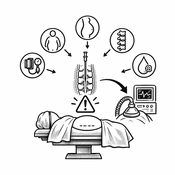
This study aimed to report the strange reactions shortly after spinal anesthesia in pregnant women candidates for cesarean section with severe leg pain or unbearable foot numbness and using some terms, such as “I have lost my legs” or “I do not feel my legs”. In severe cases, the subjects try to stand up or throw themselves out of bed. It is usually accompanied by severe anxiety, delusion, and even screaming. Therefore, anesthesiologists sometimes have to turn to general anesthesia.
In none of the cases there was a significant drop in blood pressure or bradycardia and difficulty in breathing. Since this manifestation was not associated with cardiovascular or neurological complications, it can be categorized as a psychosomatic complication. This is the first time this phenomenon has been reported in the literature. The agitation following the above-mentioned complications makes it impossible for anesthesiologists to monitor the patient, which might pose potential risks for the mother and fetus.
There was no proven history of underlying mental illness in these patients, and it was impossible to justify these symptoms with anything other than the patient’s stress. For the reduction of anxiety, it is suggested that the frequency of patient visits should be increased in the preoperative period, and patients should be informed in detail if they are planned for regional anesthesia. Moreover, patients’ questions should be answered intimately, and above all, patients should be inspired to have confidence (7).
In conclusion, to avoid surgical and/or anesthetic problems in patients during operations, anxiety levels should be reduced through nonpharmacological methods during preoperative patient visits considering the fact that patients are pregnant.
Footnotes

  • Authors' Contribution: B.M. and A.Z.: Developing concept and design; M.G.: Drafting; S.A.: Editing.

  • Conflict of Interests: The authors declare no conflict of interest.

  • Funding/Support: This study received no funding/support.

References

  • 1.
    Moerman N, van Dam FS, Muller MJ, Oosting H. The Amsterdam Preoperative Anxiety and Information Scale (APAIS). Anesth Analg. 1996;82(3):445-51. [PubMed ID: 8623940]. https://doi.org/10.1097/00000539-199603000-00002.
  • 2.
    Norris W, Baird WL. Pre-operative anxiety: a study of the incidence and aetiology. Br J Anaesth. 1967;39(6):503-9. [PubMed ID: 6027959]. https://doi.org/10.1093/bja/39.6.503.
  • 3.
    Carvalho B, Cohen SE, Lipman SS, Fuller A, Mathusamy AD, Macario A. Patient preferences for anesthesia outcomes associated with cesarean delivery. Anesth Analg. 2005;101(4):1182-7. [PubMed ID: 16192541]. https://doi.org/10.1213/01.ane.0000167774.36833.99.
  • 4.
    Jabbari A, Alijanpour E, Mir M, Bani Hashem N, Rabiea SM, Rupani MA. Post spinal puncture headache, an old problem and new concepts: review of articles about predisposing factors. Caspian J Intern Med. 2013;4(1):595-602. [PubMed ID: 24009943]. [PubMed Central ID: PMC3762227].
  • 5.
    Sankar A, Behboudi M, Abdallah FW, Macfarlane A, Brull R. Transient Neurologic Symptoms following Spinal Anesthesia with Isobaric Mepivacaine: A Decade of Experience at Toronto Western Hospital. Anesthesiol Res Pract. 2018;2018:1901426. [PubMed ID: 29849608]. [PubMed Central ID: PMC5937612]. https://doi.org/10.1155/2018/1901426.
  • 6.
    Maheshwari D, Ismail S. Preoperative anxiety in patients selecting either general or regional anesthesia for elective cesarean section. J Anaesthesiol Clin Pharmacol. 2015;31(2):196-200. [PubMed ID: 25948900]. [PubMed Central ID: PMC4411833]. https://doi.org/10.4103/0970-9185.155148.
  • 7.
    Akildiz M, Aksoy Y, Kaydu A, Kacar CK, Sahin OF, Yildirim ZB. Effect of Anaesthesia Method on Preoperative Anxiety Level in Elective Caesarean Section Surgeries. Turk J Anaesthesiol Reanim. 2017;45(1):36-40. [PubMed ID: 28377838]. [PubMed Central ID: PMC5367723]. https://doi.org/10.5152/TJAR.2017.58966.

Copyright

Copyright © 2022, Fertility, Gynecology and Andrology. This is an open-access article distributed under the terms of the Creative Commons Attribution-NonCommercial 4.0 International License (http://creativecommons.org/licenses/by-nc/4.0/) which permits copy and redistribute the material just in noncommercial usages, provided the original work is properly cited.

Similar Articles

1
Jul
2022

Pre-operation and post-operation anxiety in cesarean candidates

Firoozeh Niazvand,
Masoomeh Asadi,
Marjan Kashefi,
Fatemeh Maghsoodi

Niazvand F, Asadi M, Kashefi M, Maghsoodi F. Pre-operation and post-operation anxiety in cesarean candidates. Compr Health Biomed Stud. 2022;1(1):e142855. doi: https://doi.org/10.22034/hmrj.2021.139749

3
Jun
2025
The Efficacy and Safety of Pre-operative Bolus Intravenous Lidocaine for Intraoperative Awareness in Cesarean Section: A Randomized Clinical Trial

The Efficacy and Safety of Pre-operative Bolus Intravenous Lidocaine for Intraoperative Awareness in Cesarean Section: A Randomized Clinical Trial

Sara Farzadi,
Fatemeh Hosseinzadeh,
Soheil Soltanipour,
Adele Isanazar,
Fatemeh Montazeri,
Ali Pourramzani
,et al.

Farzadi S, Hosseinzadeh F, Soltanipour S, Isanazar A, Montazeri F, et al. The Efficacy and Safety of Pre-operative Bolus Intravenous Lidocaine for Intraoperative Awareness in Cesarean Section: A Randomized Clinical Trial. J Clin Res Paramed Sci. 2025;14(1):e161408. doi: https://doi.org/10.5812/jcrps-161408

31
Dec
2006

Prevalence of awareness during anesthesia induced by three different techniques for cesarean section

MB Khezri

Khezri M. Prevalence of awareness during anesthesia induced by three different techniques for cesarean section. J Inflamm Dis. 2024;10(3):e155232. doi:

20
Oct
2024
Effect of Anesthesia Type on Pain and Hemodynamic Parameters in Cesarean Section Surgery: Randomized Controlled Trial

Effect of Anesthesia Type on Pain and Hemodynamic Parameters in Cesarean Section Surgery: Randomized Controlled Trial

Serveh Mohammadi,
Behzad Imani,
Sina Ghasemi,
Behzad Shalmashi

Mohammadi S, Imani B, Ghasemi S, Shalmashi B. Effect of Anesthesia Type on Pain and Hemodynamic Parameters in Cesarean Section Surgery: Randomized Controlled Trial. Zahedan J Res Med Sci. 2024;26(4):e148490. doi: https://doi.org/10.5812/zjrms-148490

13
Oct
2004

The effect of Indomethacin suppositories on pain relief after cesarean delivery with general anesthesia

Fatemeh Keikha,
Masoomeh Mirteimoori,
Z Sayadi

Keikha F, Mirteimoori M, Sayadi Z. The effect of Indomethacin suppositories on pain relief after cesarean delivery with general anesthesia. Zahedan J Res Med Sci. 2004;6(4):e94988. doi:

More by these authors

Banafsheh MashakPubMedScholar
Atefeh ZandifarPubMedScholar
Sepideh AziziPubMedScholar
Marjan GhaemiPubMedScholar
Share
Cited by
Metrics