
1. Background
Breast cancer (BC) is the most common cancer and the first cause of death from cancer in women. This malignancy makes up 33% of cancers among women (1). Studies have shown that Iranian women with BC are younger than patients in Europe (2). Furthermore, BC is a complex and multifactorial disease that involves various genetic and environmental factors. The role of hereditary and genetics as susceptibility factors in BC has been confirmed. The risk of this cancer increases by four times in people, who have a first degree relative with BC. So far, various genes have been identified, which determine the histological characteristics and severity of invasion in breast tumor (3).
One of the studied genes in this regard is the IL-17 gene, which suggests that its polymorphism is associated with the risk of BC (4). The main role of IL-17 is response to inflammation, yet it also plays a role in the early stages of tumorigenesis and early formation of tumor (5). Several studies have shown that the expression of IL-17 increased in various tumor tissues, including myeloma, ovarian cancer, cervical cancer, gastric cancer, and BC (6, 7). Studies have shown that the IL-17 gene polymorphism is associated with a wide range of inflammatory diseases, although the mechanism is not completely clear (8, 9).
Interleukin-17 is a pro-inflammatory cytokine, which is produced by T helper 17 (Th17) cells, as well as other cells, such as natural killer (NK) and macrophages (10). This cytokine is well conserved in all mammals, and 88% to 62% of its amino acids are common between humans and mice (11). The IL-17 cytokine family consists of six members (IL-17A to IL-17F) and five receptors (IL-17RA to IL-17RD or SEF-similar expression to FGF). In this family, IL-17A and IL-17F are the most important members and located on the same chromosome region (6q12) (11, 12). Both IL-17A and IL-17F are involved in the pathogenic activity of Th17 cells (13), and bind to the same receptor and have similar function (14). So far, many single nucleotide polymorphisms (SNPs) have been identified in IL-17, which may effect the expression of IL-17. The SNPs in IL-17 may affect its expression and activity and increase susceptibility to cancer (2).
Previous studies showed that IL-17A (rs2275913) and IL-17F (rs763780) polymorphisms were associated with a wide group of autoimmune, inflammatory or cancer diseases (15, 16). Therefore, the aim of this study was to investigate the relationship between rs763780T>C IL-17F and rs2275913G>A IL-17A polymorphisms and risk of BC in East Azerbaijan region. According to the author’s knowledge, in this study evaluation of the association of rs763780T>C IL-17F and rs2275913G>A IL-17A polymorphisms with BC risk was performed for the second time in the world.
2. Methods
2.1. Study Subjects
In the current case-control study, association of BC with rs763780T>C IL-17F and rs2275913G>A IL-17A polymorphisms was investigated. Overall, 80 women with BC (40 to 55 years old) were randomly and consecutively selected as the case group from East Azerbaijan hospitals, during years 2016 to 2017, diagnosed by a clinical pathologist. Also, 80 women without cancer (40 to 55 years old) were consecutively selected from East Azerbaijan as the control group. Controls were matched with cases by gender and age. In the current study, women with cardiovascular, metabolic, liver, kidney, and systemic disease were excluded. Written informed consent was obtained and demographic characteristics were collected by a questionnaire.
2.2. DNA Extraction and Genotyping
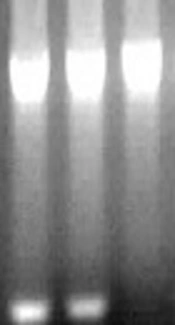
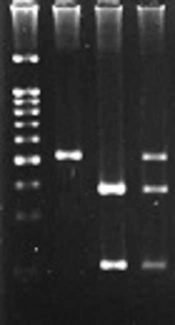
Genomic DNA was extracted from peripheral blood samples (5 mL) with the salting out method. The researchers used the polymerase chain reaction-restriction fragment length polymorphism (PCR-RFLP) method to genotype the rs763780T>C and rs2275913G>A polymorphisms. The forward and reverse primers for rs763780T>C IL-17F were 5’-GTTCCCATCCAGCAAGAGAC-3’ and 5’-AGCTGGGAATGCAAACAAAC-3’, respectively (17). Also, the forward and reverse primers for rs2275913G>A IL-17A were 5’-GCAGCTCTGCTCAGCTTCTAA-3’ and 5’-TTCAGGGGTGACACCATTTT-3’, respectively (18). The product sizes for rs763780T>C and rs2275913G>A were 412 bp and 155 bp, respectively. The obtained PCR products of rs763780T>C and rs2275913G>A were digested with the NlaII and BstENI enzymes, respectively. In the rs2275913G>A IL-17A polymorphism, after digestion, the PCR product (155 bp) remains intact if A allele is present and yields two fragments (87 bp and 68 bp) for the polymorphic G allele (Figure 1A). Also, in rs763780T>C IL-17F polymorphism after digestion, the PCR product (412 bp) remained intact if the C allele was present and yielded two fragments (288 bp and 124 bp) for the polymorphic T allele (Figure 1B). The PCR reaction was as follows: A cycle for initial denaturation (94ºC for five minutes), 30 cycles for denaturation (94ºC for one minute), annealing (58ºC-rs763780 and 57ºC-rs2275913 for one minute), extension (72ºC for two minutes), and a cycle for final extension (72ºC for five minutes). Finally, amplified products were investigated by electrophoresis on the 2% agarose gel, stained by ethidium bromide.

Figure 1.
The electrophoresis of PCR products of rs2275913 (A) and rs763780 (B) polymorphisms on 2% agarose gel
2.3. Statistical Analysis
The χ2 or Fisher test were used to analyze genotype and allele frequencies between case and control groups. Also, the Hardy-Weinberg equilibrium (HWE) were analyzed using χ2 or Fisher’s Exact test. The demographic variables were analyzed using the T-test (SPSS software version 17.0) and P < 0.05 was considered as statistically significant.
3. Results
In the current study, 80 women with BC and 80 healthy controls were selected for study of rs763780T>C IL-17F and rs2275913G>A IL-17A polymorphisms in the East Azerbaijan population.
The demographic and clinical difference between patients and healthy controls are shown in Table 1. The statistical analysis showed that there was no significant difference between case and control groups in terms of demographic and clinical variables. However, body mass index (BMI) in patients (24.17 ± 3.17) was non-significantly more than controls (23.11 ± 3.11).
Table 1.
Demographic and Clinical Characteristics of Patients and Healthy Womena
| Variables | Patients | Controls | P Value |
|---|---|---|---|
| Age (y) | 51.61 ± 17.41 | 51.45 ± 16.30 | 0.83 |
| BMI (kg/m2) | 24.17 ± 3.17 | 23.11 ± 3.11 | 0.23 |
| Alcohol drinking | |||
| Never | 72 (91.25) | 73 (90.00) | |
| Ever | 8 (10.00) | 7 (8.75) | 0.98 |
| Tobacco smoking | |||
| Never | 71 (88.75) | 72 (90.00) | |
| Ever | 9 (11.25) | 8 (10.00) | 0.82 |
| Age at first delivery (y) | 23.17 ± 2.14 | 24.64 ± 2.14 | 0.41 |
| Breastfeeding | |||
| Never | 11 (13.75) | 8 (10.00) | |
| Ever | 69 (86.25) | 72 (90.00) | 0.31 |
| Family history of cancer | |||
| Yes | 21 (26.25) | 29 (36.25) | |
| No | 59 (73.75) | 51 (63.75) | 0.16 |
Abbreviation: BMI, body mass index.
a Values are expressed as mean ± SD or No. (%).
The researchers showed typical electrophoresis results for rs2275913G>A IL-17A and rs763780T>C IL-17F genotyping in Figure 1. The genotype and allele frequencies of rs2275913G>A IL-17A and rs763780T>C IL-17F polymorphisms are shown in Table 2. The statistical analysis showed that difference of genotype and allele frequencies was not significant between case and control groups. However, genotype and allele frequencies were not in agreement with HWE in case and control groups.
Table 2.
| Inheritance Model | Patients (n = 80) | Controls (n = 80) | P Value | OR (95% CI) |
|---|---|---|---|---|
| IL-17A (rs2275913) | ||||
| Co-dominant | ||||
| GG | 19 (23.75) | 23 (28.75) | Ref | Ref = 1 |
| GA | 50 (62.50) | 45 (56.25) | 0.28 | 1.424 (0.473 - 3.288) |
| AA | 11 (13.75) | 12 (15.00) | 0.79 | 1.374 (0.848 - 6.588) |
| Dominant | ||||
| GG | 19 (23.75) | 23 (28.75) | Ref | Ref = 1 |
| GA + AA | 61 (76.25) | 57 (71.25) | 0.44 | 0.99 (0.98 - 1.70) |
| Recessive | ||||
| AA | 11 (13.75) | 12 (15.00) | Ref | Ref = 1 |
| GG + GA | 69 (86.25) | 68 (85.00) | 0.89 | 1.45 (0.90 - 1.30) |
| Over-dominant | ||||
| AG | 50 (62.50) | 45 (56.25) | Ref | Ref = 1 |
| GG + AA | 29 (36.25%) | 35 (43.75) | 0.35 | 1.15 (0.88 - 1.80) |
| Allel | ||||
| G | 88 (55.00) | 91 (56.88) | Ref | Ref = 1 |
| A | 72 (45.00) | 69 (43.12) | 0.89 | 1.333 (0.451 - 6.374) |
| IL-17F (rs763780) | ||||
| Co-dominant | ||||
| TT | 58 (72.50) | 63 (78.75) | Ref | Ref = 1 |
| TC | 16 (20.00) | 13 (16.25) | 0.69 | 1.242 (0.531 - 3.370) |
| CC | 6 (7.50) | 4 (5.00) | 0.76 | 1.735 (0.893 - 5.635) |
| Dominant | ||||
| TT | 58 (72.50) | 63 (78.75) | Ref | Ref = 1 |
| TC + CC | 22 (27.50) | 17 (21.25) | 0.27 | 0.87 (0.36 - 1.49) |
| Recessive | ||||
| CC | 6 (7.50) | 4 (5.00) | Ref | Ref = 1 |
| TT + TC | 74 (92.50) | 76 (95.00) | 0.76 | 1.20 (0.70 - 1.88) |
| Over-dominant | ||||
| TC | 16 (20.00) | 13 (16.25) | Ref | Ref = 1 |
| TT + CC | 64 (80.00) | 67 (83.75) | 0.32 | 1.10 (0.34 - 1.54) |
| Allel | ||||
| T | 132 (82.50) | 139 (86.88) | Ref | Ref = 1 |
| C | 28 (17.50) | 21 (13.12) | 0.56 | 1.446 (0.383 - 4.475) |
Abbreviations: CI, confidence interval; OR, odds ratio.
a Statistically significant P < 0.05.
b Values are expressed as No. (%).
4. Discussion
Previous studies showed that chronic inflammation plays an important role in BC (19, 20). The IL-17A and IL-17F produced by Th17 cells were involved in coordinating local tissue inflammation. It seems that polymorphisms in IL-17 may alter production of IL-17, and therefore lead to change in protein function and increase cancer risk (21). Previous studies reported that IL-17 polymorphisms are associated with colorectal (22), cervical (18), leukemia (23), bladder (24), and thyroid (25) cancers. For example, in a study by Nemati et al. (26), it was reported that the IL-17 gene polymorphisms play an important role in susceptibility to colorectal cancer. In another study, Xu et al. (18) showed that there is an association between IL-17 gene polymorphisms and cervical cancer. In a similar study, Wrobel et al. (23) reported that the IL-17 polymorphisms are associated with susceptibility to acute myeloid leukemia. Zhou et al. (24) showed that IL-17 gene polymorphisms were associated with development of bladder cancer. Also, Lee et al. (25) showed that the IL-17 polymorphisms play a critical role in development of thyroid cancer.
However, the association of IL-17A and IL-17F polymorphisms is unclear in susceptibility to BC. Also, there are very few reports about the association of IL-17 polymorphisms with BC around the world. Therefore, in this study, the researchers investigated the association of rs763780T>C IL-17F and rs2275913G>A IL-17A polymorphisms with BC. The results indicated that there were no significant associations between rs763780T>C IL-17F and rs2275913G>A IL-17A polymorphisms and BC in East Azerbaijan population. Also, this research did not find any significant difference between patients and healthy controls in terms of demographic and clinical characteristics.
Wang et al. (27) showed that the rs2275913G>A polymorphism of IL-17A gene was associated with BC in Chinese Han women. Their results showed that the frequency of AA genotype was significantly higher in patients than healthy controls and may increase BC risk. Also, in the current study, the frequency of the AA genotype was lower in patients than healthy women, yet this difference was insignificant (13.75% versus 15.00%; P: 0.799; OR: 0.848 to 6.588). In the study of Wang et al. (27), association of rs763780T>C IL-17F polymorphism with BC was investigated. They reported no significant association between rs763780T>C IL-17F polymorphism and BC in Chinese Han women. These results are in agreement with the current results. The study showed no significant difference between case and control groups for rs763780T>C IL-17F polymorphism. Differences in the results of different studies can be due to effects of other genes and environmental factors, and differences in geographic region, sample size, race, and ethnicity (28, 29).
In conclusion, the current results showed that rs763780T>C IL-17F and rs2275913G>A IL-17A polymorphisms were not associated with BC risk in women of East Azerbaijan, Iran. However, the small size of the studied population and evaluation of one ethnicity are limitations of this study. Therefore, to define roles and functions of IL-17A and IL-17F polymorphisms in BC, the researchers suggested to repeat and design studies with larger sample sizes and different ethnicities.