
1. Background
Pharmaceuticals and personal care products (PPCPs) are major emerging aquatic contaminants released into water bodies at concentrations ranging from ng/L to mg/L because of inefficient wastewater treatment. These persistent compounds pose environmental hazards and threaten the food pyramid. Among PPCPs, nonsteroidal anti-inflammatory drugs (NSAIDs) are widely consumed and continuously discharged into aquatic environments via human excretion, while resisting conventional wastewater treatment. As a prominent NSAID, naproxen (NPX) is primarily excreted in urine, with only 30 - 40% removed during treatment processes (1-3). Consequently, substantial amounts of NPX enter water resources, endangering human health and ecosystems, which makes its removal from aqueous solutions highly critical (4).
In recent years, several methods, including adsorption, ion exchange, membrane filtration, coagulation, and flocculation, have been used to remove pharmaceuticals from water. However, these methods often face practical limitations, including high energy demand, limited efficiency, membrane fouling, transfer of contaminants between phases, and the production of secondary waste (5). In contrast, advanced oxidation processes (AOPs), such as photocatalysis, Fenton, and electro-Fenton, have emerged as effective alternatives for the removal of PPCPs because of their ability to rapidly degrade and mineralize pollutants through highly reactive •OH (6, 7). More recently, sulfate radical-based AOPs have received increasing attention because SO4•- offers several advantages over •OH, including higher redox potential, longer lifetime, greater selectivity, and effectiveness over a wider pH range (8, 9). Persulfate can be activated by heat, UV, ultrasound, or transition metals, among which cobalt is widely used because of its rapid activation efficiency, low energy requirement, and operational simplicity (10).
Nevertheless, the use of the Co/PS process in purification procedures has certain drawbacks, including cobalt toxicity and the difficulty of separating it from the solution (11). Efforts to address this problem have recently intensified, with considerable focus on developing composites comprising metal oxides containing two or more metals to optimize pollutant removal. Among these metal oxides, ferrite, denoted by the general formula MFe2O4, where M represents a divalent metal (e.g., Cu, Mn, Co, and Ni), has been widely applied because of its recyclability, electronic and magnetic properties, and reasonable cost (12, 13). As a heterogeneous catalyst, cobalt ferrite (CoFe2O4) has exhibited notable catalytic activity in the PS decomposition of numerous contaminants, owing to its high specific surface area, stable crystal structure, and low solubility. However, magnetic CoFe2O4 nanoparticles readily aggregate and therefore adversely affect degradation efficiency (14). To mitigate these drawbacks, researchers have recommended loading CoFe2O4 onto the surfaces of materials such as activated carbon, graphene, titanate nanotubes, kaolin, and bentonite (15).
In contrast to the support materials described above, carbon nanotubes (CNTs) have been favored as adsorbents and catalyst supports, owing to their high chemical stability, high specific surface area, and nanostructured, hollow, and layered morphology (16). A nanocomposite catalyst of CuFe2O4/MWCNTs was synthesized by Zhang et al. to degrade diethyl phthalate using PS catalysis (17). In another study, an MWCNTs-CoFe2O4 nanocatalyst was prepared by Ashrafi et al. for the degradation of reactive black 5 dye (18). Both studies indicated the superior ability of the prepared nanocatalysts to activate PS.
2. Objectives
This study aimed to load CoFe2O4 nanoparticles onto MWC via the co-precipitation method to fabricate an efficient catalyst for PS activation and to systematically evaluate the catalytic performance of the synthesized nanocomposite by examining operational parameters, coexisting ions, and catalyst stability, thereby assessing its efficiency and practical applicability.
3. Methods
3.1. Materials
MWCNTs with an outer diameter of 20 - 30 nm and a specific surface area (SSA) exceeding 110 m2/g were obtained from an Iranian nanomaterials company. All analytical-grade chemicals were purchased from Merck and Sigma-Aldrich and used without further treatment.
3.2. Synthesis and Characterization of MWCCF
As shown schematically in Figure 1, 1 g of MWC was dispersed in 100 mL of HNO3 solution using an ultrasonic bath for 30 min. After HNO3 treatment, the MWC was washed thoroughly with deionized water several times until the filtrate reached neutral pH and was then used for the subsequent synthesis procedure. The washed MWC was added to deionized water containing 1 g of ferric nitrate and 0.5 g of cobalt nitrate. The solution pH was adjusted to 10 - 12 using 5 M NaOH. The resulting suspension was stirred at 90 °C using a magnetic stirrer at 100 rpm for 2 h. Finally, the particles were collected by filtration and dried in an oven at 60 °C for 24 h (18).
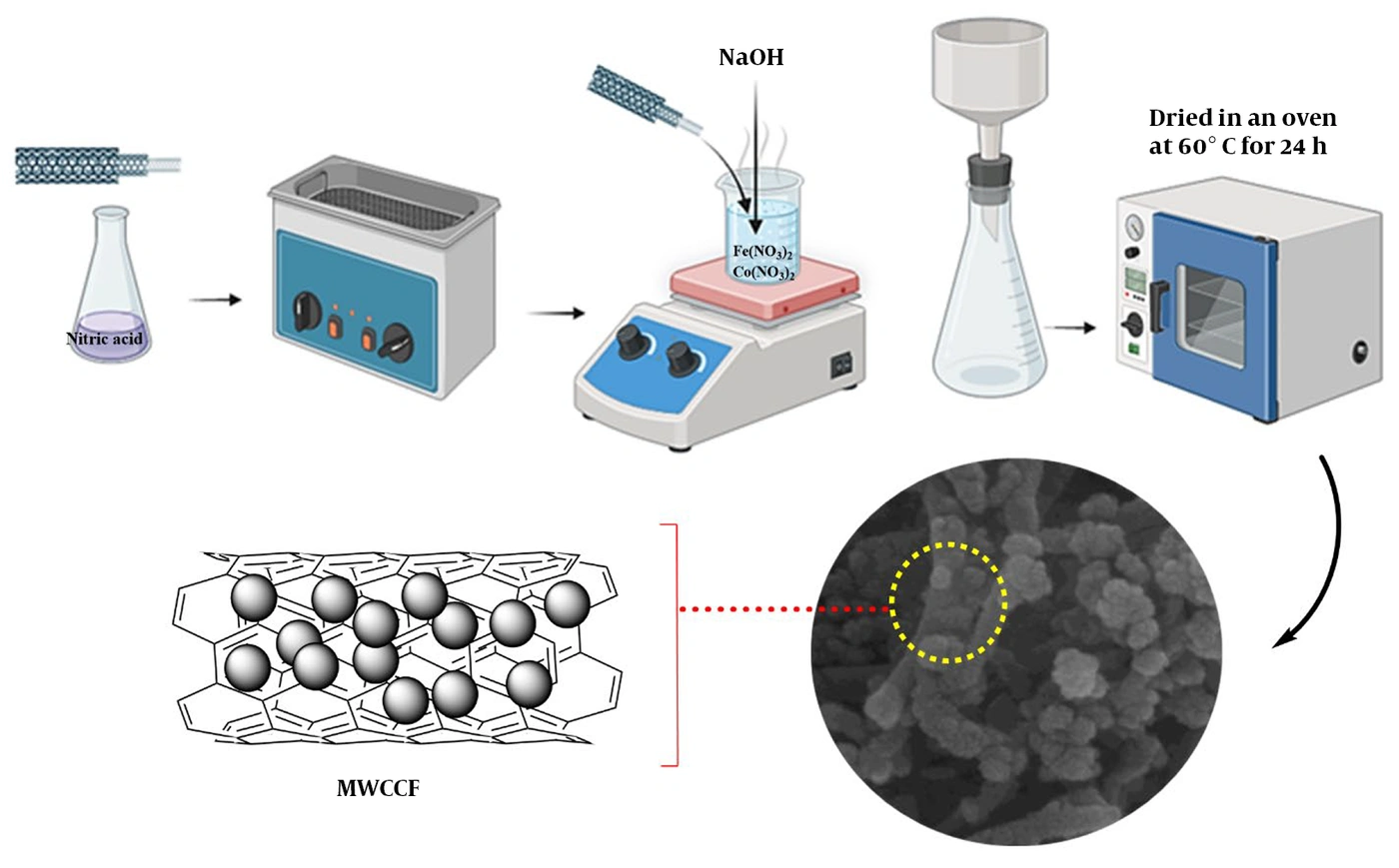
Figure 1.
Schematic of the synthesis method of MWCCF (created with BioRender.com).
The physical and structural characteristics of the catalyst were determined using diagnostic techniques. Fourier transform infrared spectroscopy (FTIR) was used to identify functional groups, whereas scanning electron microscopy (SEM, TESCAN mira3: Czech Republic) and transmission electron microscopy (TEM, Philips CM30, Netherlands) were used to obtain particle-size information and catalyst micrographs. X-ray diffraction (XRD, Xpert PRO MPD model, Northland) was used to determine the crystalline structure.
3.3. Catalytic Experiment
NPX removal via PS activation using MWCCF was evaluated in a 250-mL Erlenmeyer flask at room temperature. The effect of each variable was investigated using a one-variable-at-a-time approach. The solution pH was adjusted at room temperature using NaOH and H2SO4. To initiate the experiments, a specified amount of MWCCF was added to 10 mg/L NPX, and pollutant adsorption was evaluated for 60 min. After saturation of the catalyst adsorption sites, 1 mM PS was introduced into the reaction medium, and the catalyst efficiency for PS activation and NPX degradation was monitored. At various reaction times, 1 mL of the treated solution was collected to measure residual NPX using GC-MS. Process feasibility was assessed by evaluating initial pH 3 - 11, catalyst dosage 0.05 - 1 g/L, PS dosage 0.25 - 6 mM, NPX concentration 1 - 40 mg/L, and solution temperature 10 - 45 °C. All experiments were performed in triplicate, and the results are presented as mean values.
The effects of common interfering substances, including chloride, nitrate, and bicarbonate, were evaluated under the optimal conditions obtained from the parameter experiments. Catalyst stability was assessed after separation, washing, drying, and reuse.
3.4. Analytical Methods
The initial and final concentrations of NPX were determined using GC-MS (Agilent 7890A, USA) equipped with a mass spectrometry detector (Agilent 5975C MSD). Prior to GC-MS analysis, samples were extracted and concentrated using the DLLME method. For DLLME, 5 mL of the sample solution was placed in a 15 mL Falcon tube. The sample pH was lowered to 1 by adding 1 M hydrochloric acid. Using a 2 mL syringe, 1 mL of acetone containing 80 µL of chloroform was rapidly injected into the sample solution. After centrifugation at 5000 rpm for 5 min, the sedimented phase was collected using a 50 µL syringe and evaporated under a gentle stream of nitrogen. The dried sample was derivatized by adding 20 µL of MSTFA.
The activation energy of MWCCF was quantified using the kinetic and Arrhenius equations (Equations 1 and 2). In these equations, k, A, Ea, R, and T represent the kinetic rate (min-1), pre-exponential factor (s-1), activation energy (kJ/mol), universal gas constant (8.314 J/mol·K), and absolute temperature (K), respectively.
Equation 1.
Equation 2.
4. Results
4.1. Characteristics of MWCCF
The characteristics of the synthesized MWCCF nanocomposite were evaluated using diagnostic analyses. SEM and TEM images of the MWCCF nanocomposite (Figure 2A–D) showed the presence of CF particles on the MWC surface and within its structure. The EDS spectrum (Figure 2E) confirmed the presence of C, O, Fe, and Co, with weight percentages of 61.54%, 25.16%, 11.13%, and 2.17%, respectively. Elemental mapping (Figure 2F) showed the distribution of Fe and Co throughout the nanocomposite. The FTIR spectra (Figure 3) exhibited characteristic bands at approximately 550, 850, 1150, 1500, 1630, and 3400 cm-1. XRD analysis (Figure 4) showed the characteristic diffraction peaks of the MWC, Fe2O3, and CF phases. The main peaks of MWC appeared at 2θ = 26° and 43°, whereas those of Fe2O3 were observed at 24.15°, 33.18°, 35.61°, 40.77°, 49.45°, 54.08°, 56.42°, 63°, and 65°. For CF and MWCCF, diffraction peaks were observed at 2θ = 18°, 35.81°, 43°, 54.15°, 57.79°, 62.62°, and 74°.
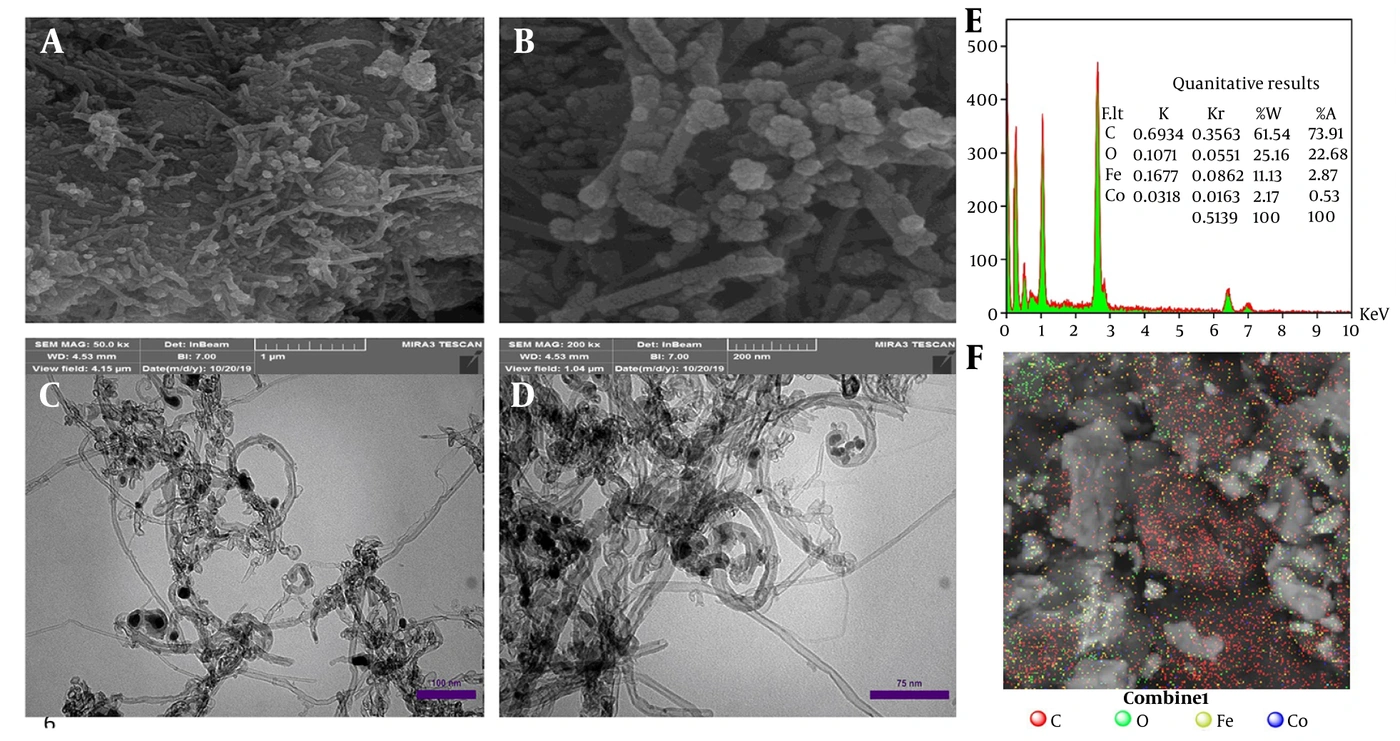
Figure 2.
A and B, SEM; C and D, TEM; and E and F, EDC-mapping images of MWCCF
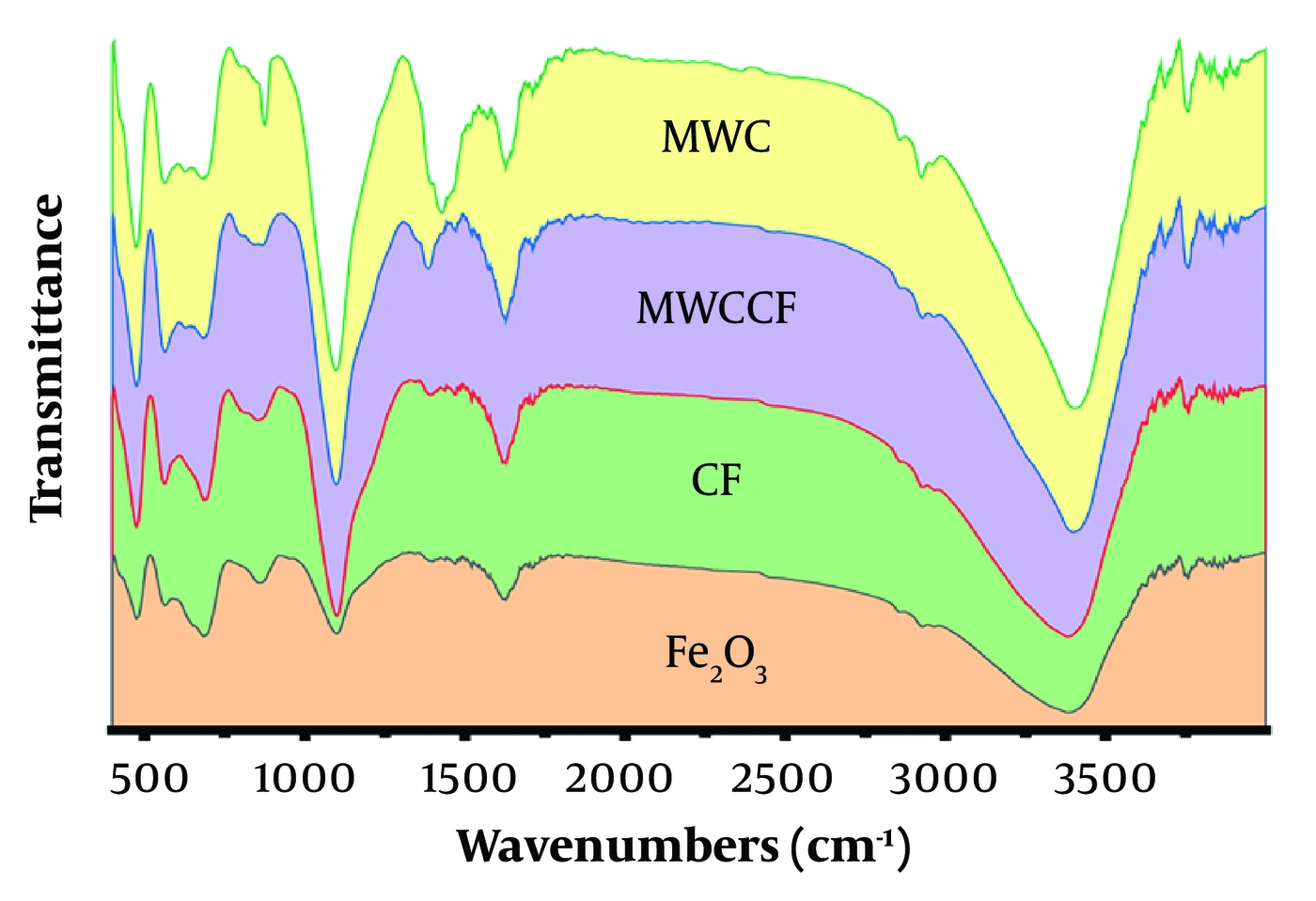
Figure 3.
FTIR spectra of samples
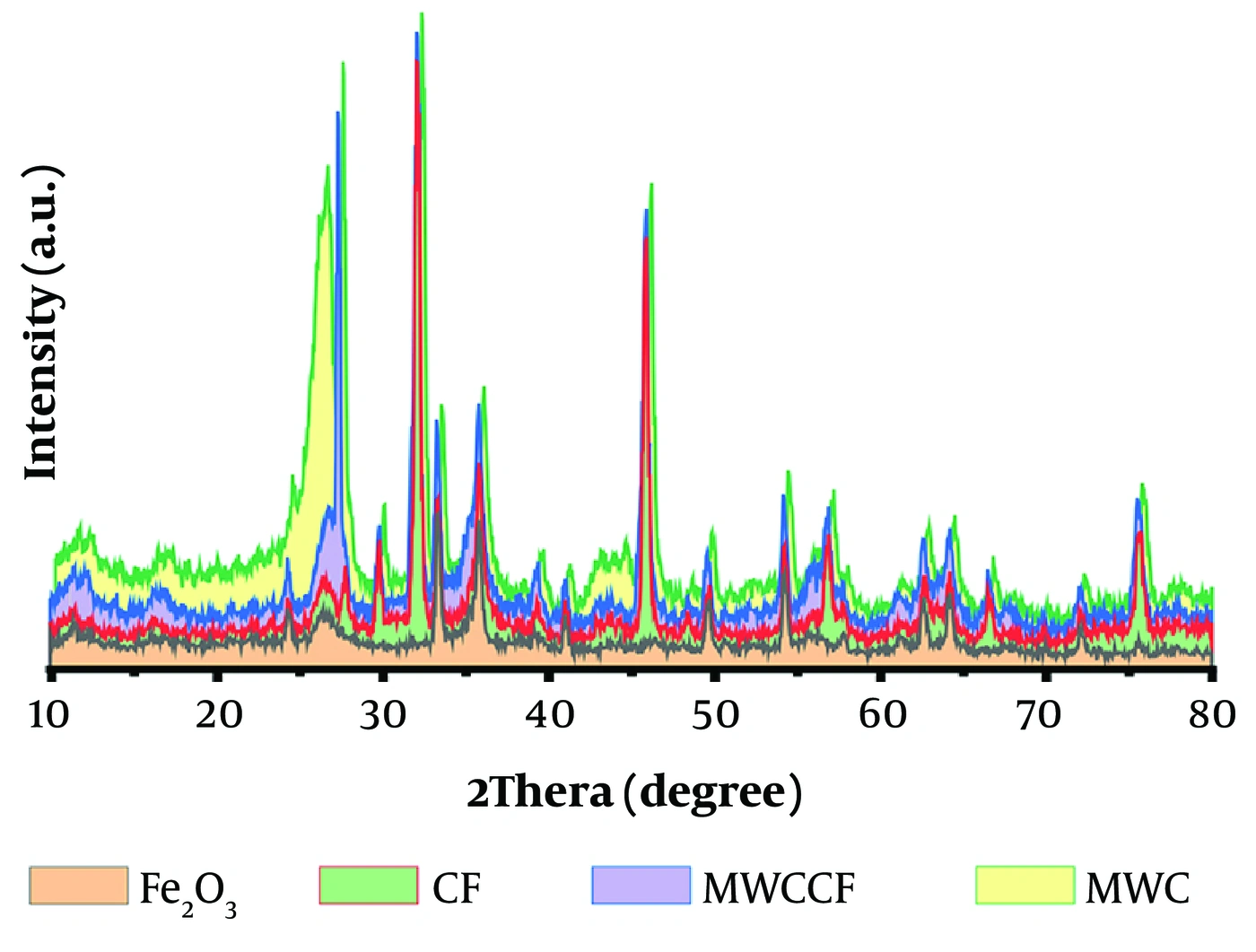
Figure 4.
XRD pattern of samples
4.2. Effect of Operational Parameters
Figure 5 shows the effect of operational parameters on NPX degradation by the MWCCF/PS process. As shown in Figure 5A, the highest removal efficiency (99%) and kinetic rate constant (0.105 min-1) were achieved at pH 7. The corresponding kinetic rate constants at pH 3, 5, 9, and 11 were 0.039, 0.078, 0.040, and 0.021 min-1, respectively. Figure 5B illustrates the effect of catalyst dosage on NPX degradation. Increasing the MWCCF dosage enhanced the removal efficiency from 79.62% to 100%. As shown in Figure 5C, increasing the PS concentration up to 4 mM improved both degradation efficiency and reaction kinetics, whereas a further increase resulted in a decline in process performance. Figure 5D presents the effect of the initial NPX concentration. The removal efficiency increased up to an NPX concentration of 10 mg/L and then decreased at higher concentrations. Figure 5E shows the effect of temperature on NPX degradation. The removal efficiency increased from 59.98% to 100% as the temperature increased from 10 to 45 °C. The corresponding kinetic rate constants were 0.030, 0.095, 0.114, and 0.114 min-1, respectively. Based on the Arrhenius plot, the activation energy (Ea) of the MWCCF/PS process was calculated to be 32.56 kJ/mol.
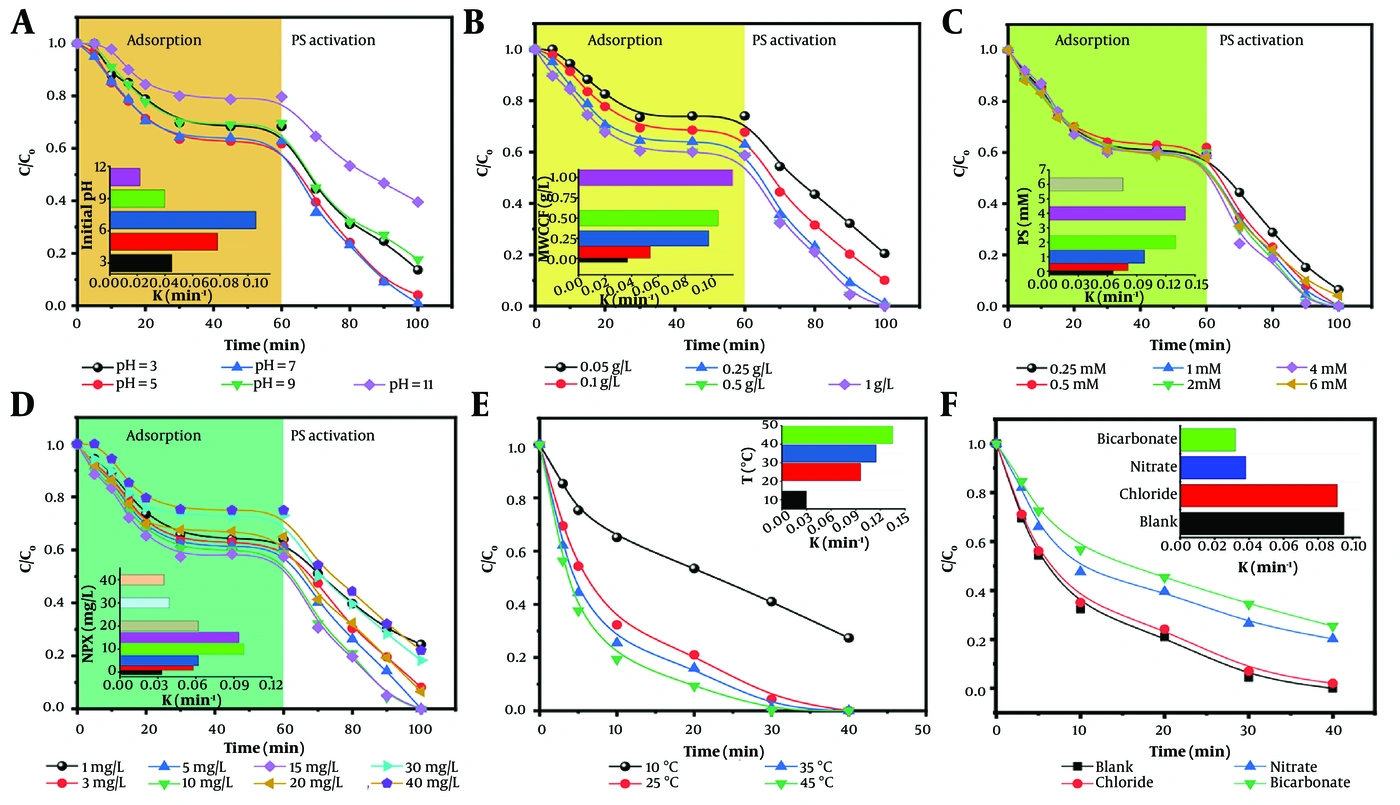
Figure 5.
Effect of operational parameters on the catalytic decomposition of NPX by the MWCCF/PS system.
4.3. Effect of Interfering Substances
The effects of selected water parameters on catalytic performance were evaluated at pH 7, a MWCCF dosage of 0.25 g/L, and a PS concentration of 1 mM. As shown in Figure 5F, the presence of 5 mM chloride slightly decreased NPX removal from 100% to 98% after 40 min. In contrast, nitrate and bicarbonate caused a more pronounced decrease in degradation performance, with the kinetic rate constant decreasing from 0.095 min-1 to 0.038 and 0.0324 min-1, respectively.
4.4. Reusability
Figure 6A shows the reusability of the MWCCF catalyst over five consecutive reaction cycles. The NPX degradation efficiency remained above 98% during the first four cycles and decreased to 74.62% in the fifth cycle.
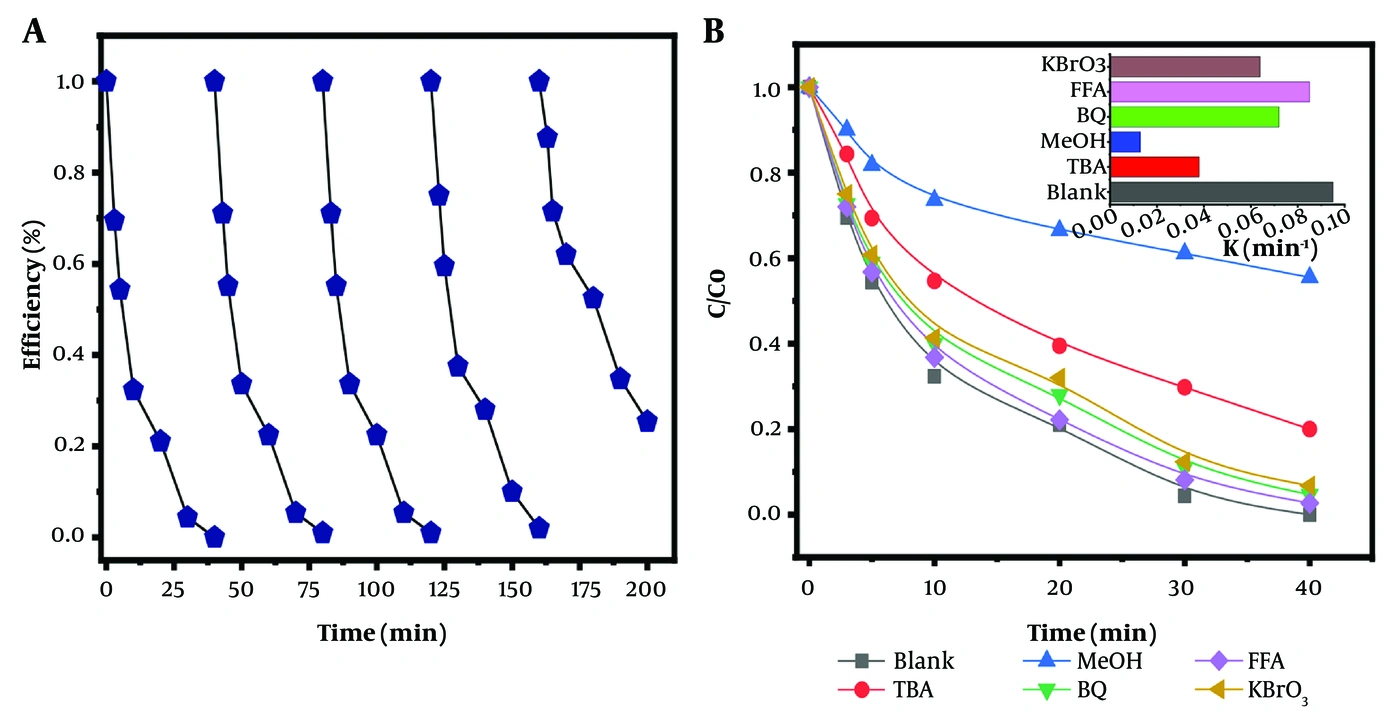
Figure 6.
Catalyst stability over successive reaction cycles (A) and changes in process efficiency in the presence of different scavengers (B).
4.5. Degradation Mechanism
Figure 6B shows the effect of different radical scavengers on NPX degradation. The addition of TBA decreased the removal efficiency from 100% to 80%, whereas MeOH reduced it to 44.50%. The presence of BQ and FFA resulted in removal efficiencies of 95.36% and 97.35%, respectively. The addition of KBrO3 decreased the removal efficiency to 93.25%. First-order kinetic analysis (Figure 6B) also showed a decrease in the rate constant in the presence of the scavengers.
4.6. Probable Degradation Pathway
Figure 7 presents the probable degradation pathways of NPX based on byproducts identified by GC-MS coupled with DLLME. The identified compounds and their molecular characteristics are summarized in Figure 8.
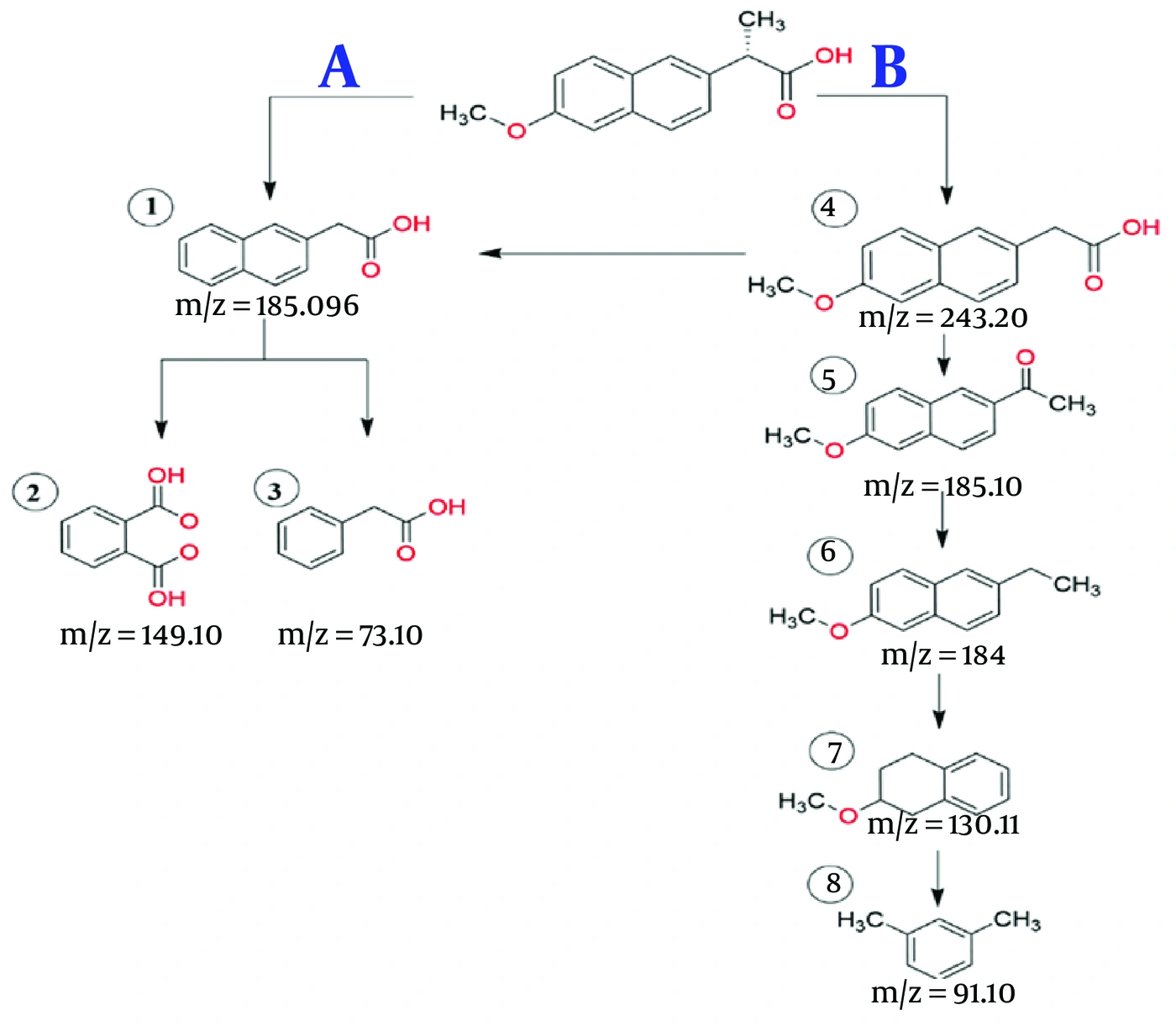
Figure 7.
Possible pathway of NPX degradation through PS activation by MWCCF.
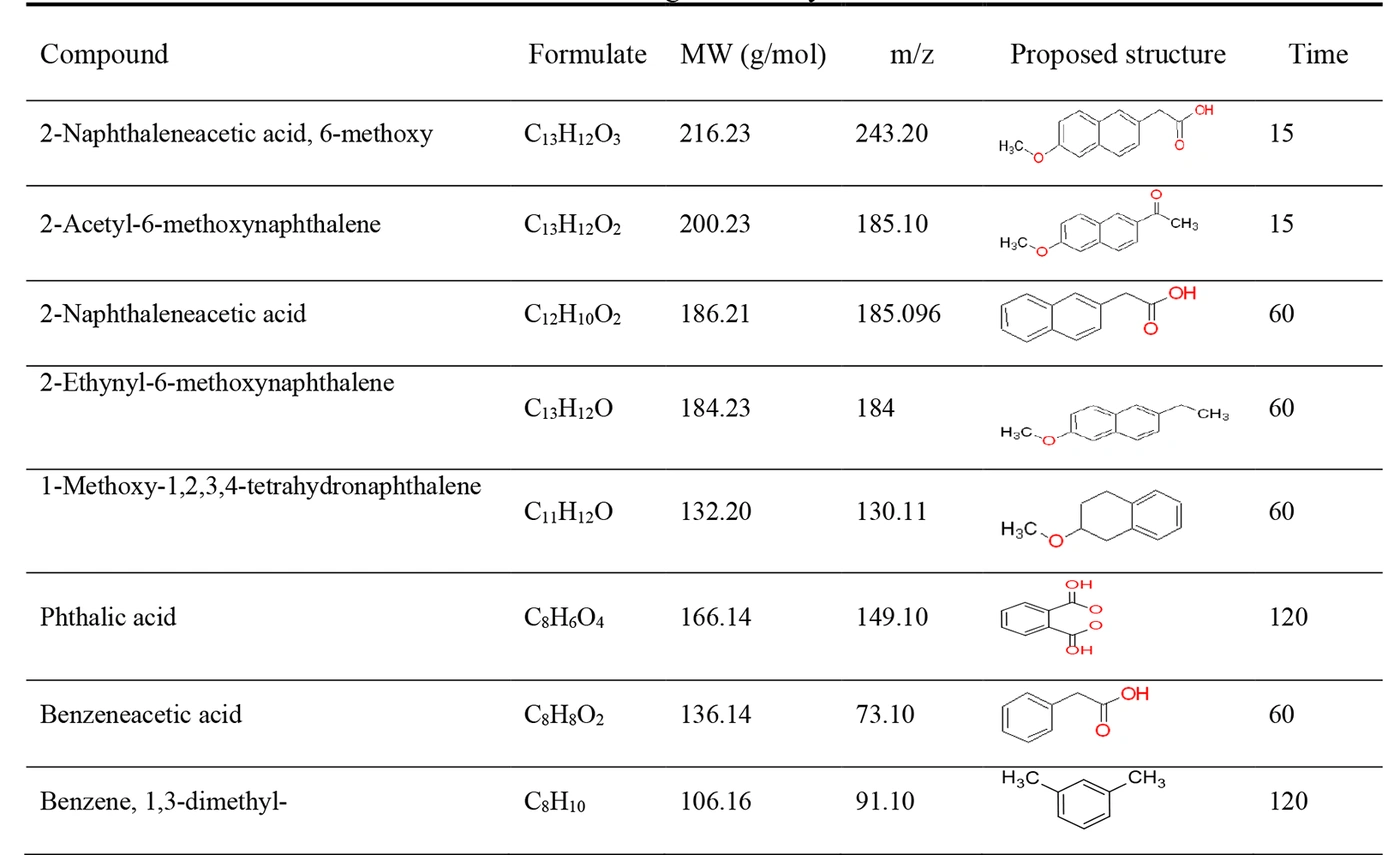
Figure 8.
Intermediates detected from NPX degradation by MWCCF/PS.
4.7. Toxicity Test
Figure 9A shows the effects of raw and treated solutions on mung bean root growth after 7 days. Pollutant removal was associated with reduced phytotoxicity and improved root growth (Figure 9B). Root growth was higher in the clean water and treated-water samples than in the untreated water and in solutions containing PS and MWCCF. Root growth in treated water was approximately 2 - 3 times greater than that observed in polluted water.
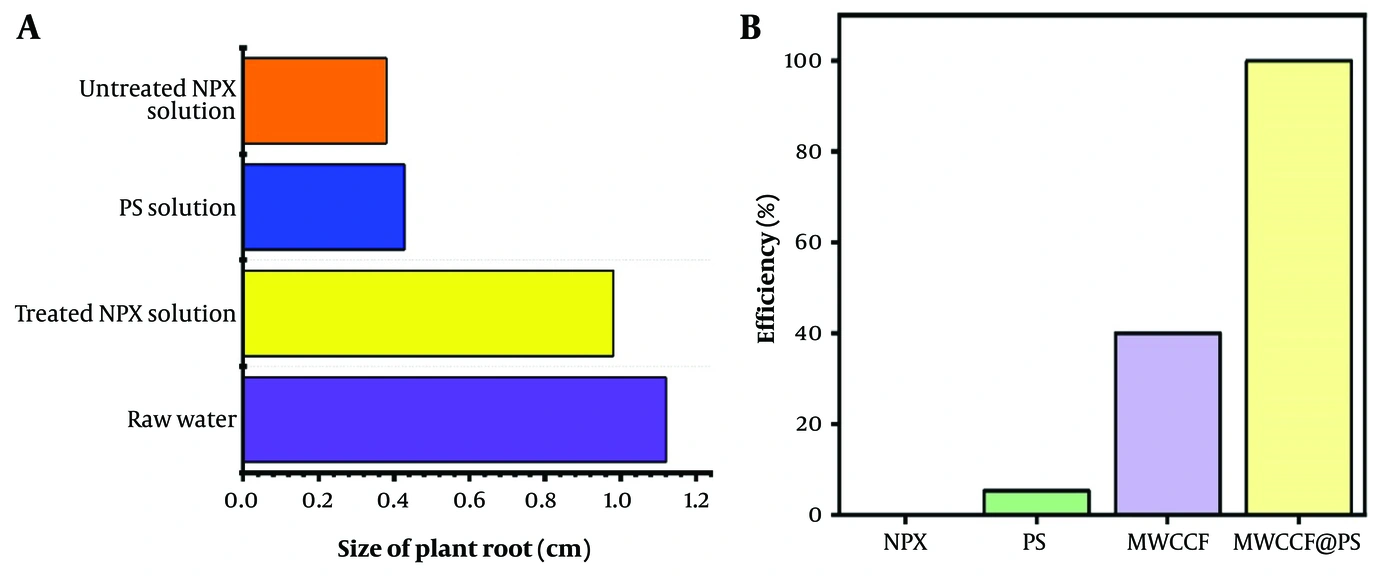
Figure 9.
Average growth rate of plant roots in the water matrix (A) and control experiments for NPX removal under different reaction conditions (B).
5. Discussion
5.1. Characteristics of MWCCF
In this study, SEM and TEM observations confirmed the formation of the MWCCF nanocomposite via the deposition and incorporation of CF particles onto and within the MWC structure. The distribution of dark particles in the TEM images is consistent with the presence of ferrite particles on the nanotube surface. The EDS results further support the successful incorporation of CF into the MWC support by confirming the presence of Fe and Co. Moreover, elemental mapping indicated a relatively uniform distribution of these elements throughout the nanocomposite, suggesting homogeneous dispersion of the CF phase.
The FTIR results provide further evidence of the chemical groups present in the synthesized composites. The absorption band around 550 cm-1 can be attributed to Fe–O vibrations, while the bands observed around 850, 1150, 1630, and 3400 cm-1 are associated with different functional groups and molecular vibrations. The additional band around 1500 cm-1 in the MWC-based composites may be related to carboxylate groups, consistent with previous reports (19). The XRD patterns provide evidence of the crystalline phases present in the synthesized materials. The diffraction peaks observed for MWC at 2θ = 26° and 43° correspond to the graphite 002 and nanotube 100 planes, respectively. The diffraction peaks of Fe2O3 are consistent with the reported crystal planes of α-Fe2O3, including 012, 104, 110, 113, 024, 116, 018, 214, and 300, as reported in previous studies (20, 21). The diffraction peaks observed for CF and MWCCF are assigned to the 111, 220, 311, 400, 422, 511, 440, and 533 planes of CF and are consistent with JCPDS Card No. 22 - 1086 (22). Overall, the XRD results confirm the presence of the expected crystalline phases in the MWCCF nanocomposite.
5.2. Impact of Operational Parameters
The degradation performance of the MWCCF/PS system was strongly affected by operational parameters, with pH, MWCCF dosage, PS concentration, NPX concentration, and temperature governing the availability and reactivity of active sites and reactive species. The pH-dependent performance of the MWCCF/PS system can be explained by the surface charge of the catalyst and the ionization state of NPX. According to a previous study (23), the pHPZC of MWCCF is approximately 7.2, while the pKa of NPX is 4.15. Thus, the catalyst surface becomes positively charged below pHPZC and negatively charged above this value, whereas NPX is predominantly deprotonated at pH > 4.15. Therefore, favorable electrostatic interactions between NPX and MWCCF can occur within an intermediate pH range, which is consistent with the higher degradation performance observed around neutral pH. The adsorption results obtained at contact times below 60 min further support this interpretation. Similar pH-dependent behavior has been reported for PS activation in NPX degradation (24). The lower degradation efficiency under alkaline conditions can be attributed to several factors. At pH > 7, SO4•- can be converted to •OH (Equation 3), which has a lower oxidation potential (1.8 V) (25). In addition, the accumulation of hydroxyl and sulfate ions on the MWCCF surface may inhibit the conversion of sulfate ions to SO4•- (26). The formation of a metal-oxide layer at high pH may also limit PS activation (27). Under strongly acidic conditions, the consumption and self-quenching of reactive species by H+ can decrease the availability of effective radicals for NPX degradation (Equations 4 and 5).
Increasing the MWCCF dosage enhanced NPX removal, which can be attributed to the greater availability of catalytic active sites and metal species for PS activation. However, increasing the PS concentration beyond the optimum level decreased the degradation performance, most likely because of radical self-quenching reactions (Equation 4). Similar behavior has been reported in previous studies (27-29). The decline in degradation efficiency at higher NPX concentrations can also be associated with the limited availability of active sites and reactive radicals, as well as the possible occupation of catalyst sites by degradation intermediates (29). Temperature had a positive effect on NPX degradation, which can be attributed to accelerated reactions between NPX and reactive species and enhanced PS activation through O–O bond cleavage. Increased temperature may also promote the generation of Fe2+ species involved in catalytic PS activation (30). The calculated activation energy of 32.56 kJ/mol indicates that the MWCCF/PS process can effectively activate PS for NPX degradation and is lower than values reported for several other PS-based degradation systems (31, 32).
Equation 3.
Equation 4.
Equation 5.
5.3. Effect of Interfering Substances
The different effects of the investigated anions can be attributed to their interactions with the reactive species generated during PS activation. Chloride can react with SO4•- and •OH, producing reactive chlorine species through a series of reactions (Equations 6 - 10) (33). The formation of Cl• and Cl2•- may partially compensate for the consumption of the primary radicals, explaining the relatively minor effect of chloride on NPX degradation. In contrast, nitrate and bicarbonate had a stronger inhibitory effect. Their reactions with the generated radicals can produce secondary species such as CO3•-, HCO3•, and NO3• with lower oxidation potential (Equations 11 - 14), thereby reducing the overall oxidative capacity of the system. In addition, anions may occupy active sites on carbon-based catalysts and alter radical and nonradical degradation pathways (34). Similar inhibitory effects of inorganic anions have been reported in other carbon-based catalytic systems (34).
Equation 6.
Equation 7.
Equation 8.
Equation 9.
Equation 10.
Equation 11.
Equation 12.
Equation 13.
Equation 14.
5.4. Reusability
In this study, the high degradation efficiency maintained over four consecutive cycles indicates good stability and reusability of the MWCCF catalyst. The decline in performance during the fifth cycle may be associated with catalyst loss during recovery, partial structural deterioration during repeated use, and the occupation of active sites by degradation byproducts.
5.5. Degradation Mechanism
The scavenger experiments indicate the involvement of several reactive species in NPX degradation. The pronounced decrease in removal efficiency in the presence of TBA confirms the important contribution of •OH radicals. The stronger inhibition observed with MeOH, which can scavenge both •OH and SO4•-, indicates the simultaneous involvement of these two primary radicals. In contrast, the relatively small effects of BQ and FFA suggest that O2•- and 1O2 play minor roles, although their formation in the MWCCF/PS system cannot be excluded. The decrease in degradation efficiency in the presence of KBrO3 also suggests the contribution of electron-transfer pathways to PS activation. Similar electron-transfer mechanisms have been reported for PS-based catalytic systems (35, 36).
Based on these results, a possible degradation mechanism is proposed in Figure 10. NPX can initially interact with the active sites of MWCCF, while the activation of S2O82- generates different reactive oxygen species through the reactions presented in Equations 15 - 21. In parallel, electron transfer from NPX to PS through the MWCCF catalyst can contribute to the formation of additional reactive species. The regeneration of Fe2+ and Co2+ by S2O82- may further facilitate continuous PS activation and radical generation. Overall, NPX degradation appears to proceed through the combined contributions of adsorption, radical reactions, and electron-transfer pathways.
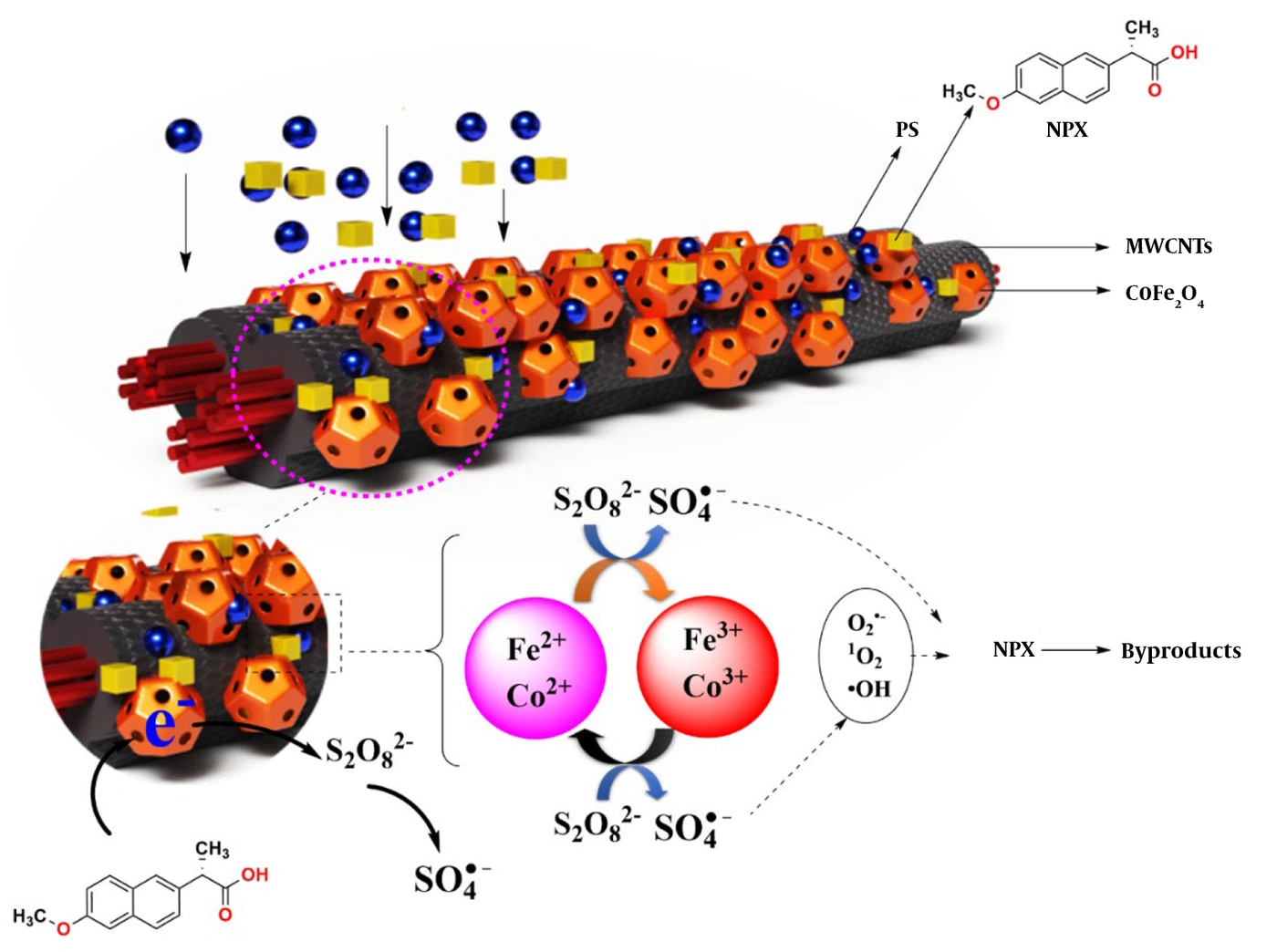
Figure 10.
Schematic of a possible mechanism of NPX degradation by MWCCF/PS.
Equation 15.
Equation 16.
Equation 17.
Equation 18.
Equation 19.
Equation 20.
Equation 21.
5.6. Probable Degradation Pathway
Based on the identified intermediates, two probable degradation pathways are proposed in Figure 7. In pathway A, NPX can initially be transformed into 2-naphthaleneacetic acid (P1) through demethylation and elimination of the methoxy group by reactive species. With continued oxidation, P1 may undergo C–C bond cleavage, resulting in the formation of benzeneacetic acid and phthalic acid. In pathway B, NPX is initially converted to 2-naphthaleneacetic acid, 6-methoxy (P4) through demethylation. Subsequent demethylation and dehydroxylation reactions can transform P4 into P1 and P5. With increasing oxidation time, further transformation of P5–P8 may occur through reactions such as decarboxylation, methylation, deoxygenation, demethylation, hydrogenation, and C–C bond cleavage. The occurrence of similar intermediates in heterogeneous electro-Fenton, CuFe2O4/PMS, and UV/catalyst/PS systems supports the plausibility of the proposed degradation pathways (37, 38).
5.7. Toxicity Test
In this study, greater root growth in the treated-water samples than in the untreated solution suggests reduced toxicity of the NPX-containing water following MWCCF/PS treatment. This improvement may be associated with the degradation of NPX into less toxic transformation products through the reactive species generated during PS activation. These findings indicate that the MWCCF/PS process can not only reduce NPX concentration but may also improve the biological quality of the treated water.
5.8. Conclusions
The MWCCF catalyst was synthesized as a PS activator for degrading NPX in aqueous environments. The findings demonstrated the high potential of MWCCF for catalytic NPX degradation under laboratory conditions. The presence of anions negatively affected reactor efficiency in the following order: bicarbonate > nitrate > chloride. Trapping experiments confirmed the involvement of radical species, including •OH, SO4•-, O2•-, and 1O2, in the degradation of the target pollutant. GC-MS analysis of the MWCCF/PS-treated solution revealed the formation of low-molecular-weight products during NPX degradation. Mung bean root growth increased 2- to 3-fold in the treated solution compared with the untreated solution, indicating that the products identified by GC-MS had low toxicity. Based on catalyst stability, complete pollutant degradation, and the low toxicity of the treated effluent, the MWCCF/PS process may be considered for NPX degradation in aqueous solutions.