
1. Background
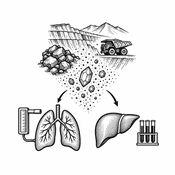
Mining is considered one of the most hazardous occupational sectors, with workers experiencing a greater burden of work-related injuries and illnesses than workers in many other industries (1, 2). Iron ore mining complexes, such as Gol-e-Gohar in Sirjan, Iran, contribute substantially to economic development by providing essential raw materials and employment opportunities. However, extraction, crushing, and dry grinding generate considerable airborne particulate matter, exposing workers to multiple occupational hazards (3).
Among these hazards, exposure to respirable crystalline silica (RCS) is of particular concern because it can penetrate deep into the respiratory tract and induce persistent inflammatory responses (4, 5). The pulmonary toxicity of RCS is well established. Occupational exposure is associated with silicosis and impaired respiratory function through mechanisms involving macrophage activation, oxidative stress, and chronic inflammation (6, 7).
In recent years, attention has expanded to the potential systemic effects of inhaled silica. Experimental and toxicological studies have demonstrated that silica particles may translocate beyond the lungs to extrapulmonary organs, including the liver and kidneys, where they may contribute to oxidative stress, immune activation, and tissue injury (8-11). Recent biodistribution studies have further supported the possibility of silica migration to distant organs (12). Epidemiological studies have also suggested an association between cumulative silica exposure and adverse renal outcomes, including chronic kidney disease and end-stage renal disease (13).
Compared with its renal effects, the hepatic consequences of occupational silica exposure remain less clearly understood. The liver, which plays a central role in xenobiotic metabolism and detoxification, may be particularly vulnerable to occupational exposures through mechanisms involving oxidative stress and metabolic disturbances. For example, liver function abnormalities have been reported among Indonesian male mining workers, with obesity, hypertriglyceridemia, and job-related factors identified as potential contributors (9, 14). These findings highlight the need to investigate the potential contribution of specific occupational hazards, including RCS exposure, to hepatic alterations among miners. Experimental studies have also provided biological plausibility for silica-related hepatic alterations by demonstrating oxidative stress, metabolic disturbances, inflammatory responses, and molecular changes in hepatic tissue following silica exposure (15).
Although the respiratory effects of RCS are well recognized, the potential hepatic implications of occupational silica exposure remain insufficiently characterized. Few studies have simultaneously evaluated personal silica exposure, pulmonary function, and liver-related biochemical markers among miners. This knowledge gap is particularly relevant to large-scale mining complexes such as the Gol-e-Gohar iron ore mine, one of Iran’s major mining operations, where a large workforce is routinely exposed to silica-containing dust during extraction and processing. Accordingly, this study aimed to investigate the associations of occupational exposure to respirable dust and crystalline silica with pulmonary function and liver-related biochemical parameters among workers at the Gol-e-Gohar iron ore mining complex.
2. Objectives
This study assessed the associations of occupational exposure to respirable dust and crystalline silica with pulmonary function and liver-related biochemical parameters among workers at the Gol-e-Gohar iron ore mine using personal exposure monitoring, spirometry, and plasma biochemical analysis. The biochemical parameters were aspartate aminotransferase (AST), alanine aminotransferase (ALT), alkaline phosphatase (ALP), triglycerides, and total cholesterol.
3. Methods
This cross-sectional study was conducted between 2019 and 2020 at the Gol-e-Gohar iron ore mining complex in Sirjan, southeastern Iran. A total of 211 workers were selected using simple random sampling: 140 production workers from the concentrator and pelletizing plants (exposure group) and 71 administrative employees with no occupational exposure to respirable dust or crystalline silica (control group). Eligible participants had at least 1 year of work experience, were in good general health, had no history of hereditary, hepatic, or cardiovascular diseases, diabetes mellitus, or hypertension, and reported no use of medications or tobacco products. The required sample size was estimated based on previous studies using Equation (1), with an additional allowance for potential participant attrition. Written informed consent was obtained from all participants before enrollment. Demographic data were obtained from the site’s Health Unit.
Equation 1.
where α = type I error; β = type II error; Z1-α/2 and Z1-β = standard normal percentiles; S1 = standard deviation of the variable in the control group; S2 = standard deviation of the variable in the exposure group; µ1 = mean of the variable in the control group; µ2 = mean of the variable in the exposure group; and K = the ratio of the exposure-group sample size to the control-group sample size.
Sampling for respirable dust and crystalline silica was conducted according to National Institute for Occupational Safety and Health (NIOSH) Method 0600 and an optimized NIOSH Method 7602 protocol, respectively. Personal exposure monitoring was conducted using SKC portable pumps operated at a flow rate of 1.7 L/min and cyclone samplers fitted with 25-mm mixed cellulose ester filters (pore size, 0.8 µm; SKC, USA). The sampling duration was selected based on the analytical requirements and the recommended air volume specified in the NIOSH protocols. A 2-hour sampling period was considered representative of routine exposure conditions because no substantial variations in work processes, operational activities, or pollutant generation rates were observed during monitoring.
Environmental parameters, including temperature, relative humidity, and atmospheric pressure, were monitored using a wet-bulb globe temperature meter (Tenmars, Taiwan). Filters were desiccated for 48 hours before gravimetric analysis with an electronic balance (Sartorius TE124S; accuracy, 10−5 g). Crystalline silica concentrations were quantified using Fourier-transform infrared spectroscopy (WQF-510A, China) after the filters were ashed at 600 °C for 4 hours. The ash residue was ground with 200 mg of potassium bromide (KBr) and pressed into pellets at 20 MPa. Absorbance in the range of 710 - 825 cm-1 was used to quantify crystalline silica (2). Fourier-transform infrared measurements were repeated three times for each pellet to ensure analytical reliability. However, personal exposure measurements were not repeated on different workdays. Therefore, the measured concentrations represent exposure during the sampling period and may not fully capture day-to-day variability.
Fasting venous blood samples were collected in heparinized tubes for biochemical analysis. Plasma levels of AST, ALT, ALP, triglycerides, and cholesterol were measured using commercial kits (Pars Azmun Co., Iran) and a DxC 600 automated analyzer (Beckman Coulter, USA). Pulmonary function was assessed using a calibrated spirometer (Cardiotouch 3000; BIONET, Korea) to measure forced vital capacity (FVC), forced expiratory volume in 1 second (FEV1), FEV1/FVC, forced expiratory flow at 25% - 75% of FVC (FEF25 - 75), and peak expiratory flow rate. Testing was performed by a trained, certified technician according to American Thoracic Society/European Respiratory Society (ATS/ERS) recommendations (16). Participants received standardized instructions before performing forced expiratory maneuvers. Acceptable, repeatable measurements were obtained according to ATS/ERS criteria, with a difference of ≤ 150 mL between the two largest FVC and FEV1 values. The highest acceptable values were recorded, and results were expressed as absolute values and percentages of predicted values based on the reference equations used by the spirometer software.
Statistical analyses were performed using SPSS V21 (α = 0.05). The Mann–Whitney U test was used to compare exposure concentrations and pulmonary and hepatic indices between groups. Spearman’s rank correlation was used to assess associations between crystalline silica or dust concentrations and physiological parameters. Multiple linear regression models assessed the independent associations of occupational exposure to respirable dust and RCS with pulmonary and hepatic outcomes, adjusting for age, Body Mass Index (BMI), and work experience.
4. Results
Demographic and occupational characteristics, including body mass index (BMI), age, and work experience, did not differ significantly between the exposure and control groups (Mann–Whitney U test, P > 0.05; Table 1). The optimized NIOSH Method 7602 demonstrated greater accuracy in measuring crystalline silica than the conventional NIOSH Method 7602 (17).
Table 1.
Demographic and Occupational Characteristics of the Study Population a
| Variables | Control Group (n = 71), Mean | Exposure Group (n = 140), Mean |
|---|---|---|
| Age (y) | 31 | 31 |
| Work experience (y) | 5 | 6 |
| BMI (kg/m2) | 25 | 25 |
a Abbreviations: BMI, Body Mass Index.
Table 2 presents the mean concentrations of respirable dust and crystalline silica, liver-related biochemical parameters, and pulmonary function indices. Workers in the exposure group had significantly higher concentrations of respirable dust and crystalline silica than those in the control group (P < 0.05). Occupational exposure exceeded the American Conference of Governmental Industrial Hygienists threshold limit values in 96.6% of workers for respirable dust and 52.3% for RCS.
Table 2.
Mean Exposure Concentrations and Health Parameters in the Study Population a
| Variables | Control Group (n = 71) | Exposure Group (n = 140) | Reference Level |
|---|---|---|---|
| Airborne pollutant concentrations (mg/m3) | |||
| Respirable dust | 0.59 | 24.8 | 3 |
| Respirable crystalline silica | 0.003 | 0.026 | 0.025 |
| Liver-related biochemical parameters | |||
| ALT (U/L) | 30 | 27 | < 49 |
| AST (U/L) | 22 | 24 | < 46 |
| ALP (U/L) | 160 | 176.5 | 80 - 306 |
| Triglycerides (mg/dL) | 120 | 138 | 60 - 165 |
| Cholesterol (mg/dL) | 177 | 173.5 | < 200 |
| Pulmonary function indices (%) | |||
| FVC | 102.5 | 86 | 80 - 120 |
| FEV1 | 95.6 | 88.5 | 80 - 120 |
| FEV1/FVC | 93.4 | 101 | 80 - 120 |
| FEF25 - 75 | 75.5 | 85.5 | ≥ 60 |
| PEF | 92.6 | 91 | 80 - 100 |
a Abbreviations: ALT, alanine aminotransferase; AST, aspartate aminotransferase; ALP, alkaline phosphatase; FVC, forced vital capacity; FEV1, forced expiratory volume in 1 second; FEF25 - 75, forced expiratory flow at 25% - 75% of FVC; PEF, peak expiratory flow rate.
The exposure group had significantly lower %FVC and %FEV1 (P < 0.001) but significantly higher %FEV1/FVC (P < 0.001) and %FEF25 - 75 (P = 0.027) than controls. Peak expiratory flow did not differ significantly between groups (P = 0.168). Although the mean %FVC, %FEV1, and %FEV1/FVC values in both groups were within the ATS standard range of 80% - 120%, 34.3% of exposed participants and 15.5% of controls had values below this range (Table 3). Among exposed participants with abnormal spirometry, 10.4% had moderately severe or severe pulmonary dysfunction, whereas pulmonary impairment among controls was predominantly mild (Table 4). The reductions in %FVC and %FEV1, accompanied by an elevated %FEV1/FVC ratio, were consistent with a possible restrictive ventilatory pattern. However, without total lung capacity measurements, spirometry alone cannot definitively confirm a restrictive ventilatory defect.
Table 3.
Frequency of Spirometric Patterns in the Study Population a
| Spirometric Pattern | Control Group (n = 71) | Exposure Group (n = 140) | Criteria (18) |
|---|---|---|---|
| Normal | 60 (84.5) | 92 (65.7) | FVC ≥ 80; FEV1 ≥ 80; FVC/FEV1 ≥ 80 |
| Obstructive | 5 (7) | 6 (4.3) | FVC ≥ 80; FEV1 < 80; FVC/FEV1 < 80 |
| Restrictive | 6 (8.5) | 40 (28.6) | FVC < 80; FEV1 > 80; FVC/FEV1 > 80 |
| Mixed | 0 | 2 (1.4) | FVC < 80; FEV1 < 80; FVC/FEV1 < 80 |
a Values are expressed as No. (%). Abbreviations: FVC, forced vital capacity; FEV1, forced expiratory volume in 1 second.
Table 4.
Severity of Pulmonary Dysfunction in the Study Population a
| Severity | Control Group | Exposure Group | ATS criteria (19) |
|---|---|---|---|
| Mild | 90.9 | 75 | FEV1 ≥ 70 |
| Moderate | 9.1 | 14.6 | 60 ≤ FEV1 ≤ 69 |
| Moderately severe | 0 | 6.2 | 50 ≤ FEV1 ≤ 59 |
| Severe≤ | 0 | 4.2 | FEV1 ≤ 49 |
a Values are expressed as No. (%). Percentages are among participants with abnormal spirometry. Abbreviations: ATS, American Thoracic Society; FEV1, forced expiratory volume in 1 second.
Correlation analysis showed no significant association between work experience and pulmonary function (P > 0.05), whereas age was negatively correlated with %FVC (r = −0.21, P = 0.02). In the exposure group, higher BMI was significantly associated with lower %FEV1, %FEV1/FVC, and %FEF25 - 75 (P < 0.05). Respirable dust concentrations were not significantly correlated with pulmonary indices. However, RCS exposure was significantly and negatively correlated with %FVC (r = −0.40, P = 0.01), %FEV1 (r = −0.45, P = 0.024), and %FEF25 - 75 (r = −0.46, P = 0.02). No significant correlation was detected between RCS exposure and %FEV1/FVC. After adjustment for age, BMI, and work experience, silica exposure remained independently associated only with %FVC (B = -50.58, P = 0.018); all other adjusted associations were nonsignificant (P > 0.10). Table 5 summarizes the percentages of participants in each group whose liver-related biochemical parameters exceeded clinical reference values.
Table 5.
Percentage of Participants with Non-Normal Liver-Related Biochemical Parameters a
| Liver-Related Biochemical Parameter | Control Group | Exposure Group | Reference Level |
|---|---|---|---|
| ALT (U/L) | 30.8 | 20 | < 49 |
| AST (U/L) | 12.8 | 7.2 | < 46 |
| ALP (U/L) | 0 | 3.6 | 80 - 306 |
| Triglycerides (mg/dL) | 41 | 36.8 | 60 - 165 |
| Total cholesterol (mg/dL) | 23.1 | 29 | < 200 |
a Values are expressed as No. (%). Abbreviations: ALT, alanine aminotransferase; AST, aspartate aminotransferase; ALP, alkaline phosphatase.
The mean ALP level was significantly higher in the exposure group than in controls (P = 0.007). Mann–Whitney U tests showed no significant between-group differences in the other liver-related biochemical markers (Table 2). Spearman analysis showed a significant inverse correlation between triglyceride levels and respirable dust exposure (r = -0.23, P = 0.01), but this association was no longer significant after adjustment (Table 6). No other liver-related biochemical parameters were significantly correlated with respirable dust or crystalline silica exposure.
Table 6.
Correlations of Respirable Dust and Crystalline Silica Exposure with Liver-Related Biochemical Parameters a
| Liver-Related Biochemical Parameter | Respirable Dust, r (P Value) | Respirable Crystalline Silica, r (P Value) |
|---|---|---|
| ALT | 0.007 (P = 0.9) | 0.09 (P = 0.43) |
| AST | 0.05 (P = 0.5) | 0.06 (P = 0.58) |
| ALP | 0.1 (P = 0.4) | -0.09 (P = 0.6) |
| Triglycerides | -0.23 (P = 0.01) | -0.01 (P = 0.9) |
| Total cholesterol | 0.01 (P = 0.9) | 0.02 (P = 0.88) |
a Abbreviations: ALT, alanine aminotransferase; AST, aspartate aminotransferase; ALP, alkaline phosphatase.
Age and work experience were positively correlated with triglyceride concentrations (age: r = 0.20, P = 0.025; work experience: r = 0.26, P = 0.004), and age was positively correlated with cholesterol concentrations (r = 0.28, P < 0.001). In the exposure group, BMI was positively correlated with triglyceride levels (r = 0.35, P ≤ 0.001) and ALT activity (r = 0.30, P = 0.001). No significant associations were observed between the other liver-related parameters and demographic factors (P > 0.05). In the control group, liver-related biochemical markers were not significantly correlated with demographic variables (P > 0.05).
5. Discussion
Mining contributes substantially to socioeconomic development by providing essential raw materials and employment opportunities, particularly in developing countries (20). However, extraction, crushing, and mineral processing generate airborne contaminants that may adversely affect workers’ health. This study evaluated pulmonary and liver-related outcomes among workers at the Gol-e-Gohar iron ore mining complex, one of Iran’s major mining operations, where workers routinely perform tasks with potential exposure to silica-containing dust. RCS, rather than total respirable dust, was associated with altered pulmonary function, and exposed workers had higher ALP levels than administrative workers. Although most liver-related biochemical parameters remained within clinical reference ranges, these findings may indicate early subclinical biological responses that warrant further investigation.
The respiratory findings are consistent with previous evidence of the pulmonary toxicity of crystalline silica. Exposed workers had a higher frequency of abnormal spirometric patterns than controls, predominantly suggesting a restrictive ventilatory pattern. Similar respiratory alterations have been reported among silica-exposed workers. Onder et al. observed restrictive or mixed ventilatory impairments among dust-exposed miners (21). Other studies have also reported restrictive changes associated with occupational exposure to silica-containing dust (22). The biological basis of these effects is primarily attributed to persistent pulmonary inflammation, activation and impairment of alveolar macrophages, and progressive fibrotic changes that reduce lung compliance and impair pulmonary expansion (23). The association of RCS with pulmonary function was stronger than that of total respirable dust, supporting assessment of the specific silica fraction rather than reliance solely on total dust concentrations, because silica content is a major determinant of toxicological potency (24).
Although crystalline silica is primarily recognized as a respiratory hazard, accumulating evidence indicates that its biological effects may extend beyond the lungs. Experimental and toxicological studies have demonstrated that inhaled silica particles can induce systemic inflammatory responses, oxidative stress, and extrapulmonary distribution, including potential accumulation in the liver and kidneys (10, 12). The Mine Safety and Health Administration proposed rule on RCS also emphasized that silica exposure may contribute to systemic biological responses through inflammatory and oxidative pathways, although evidence regarding occupational hepatic outcomes remains less conclusive than evidence regarding respiratory effects (13). A previous investigation among workers at the Gol-e-Gohar iron ore mine is particularly relevant: higher malondialdehyde (MDA) levels were reported among dust-exposed workers, indicating greater oxidative stress in the same occupational environment (3). Although oxidative stress biomarkers were not measured in this study, the previous findings provide biological plausibility for considering oxidative mechanisms when interpreting biochemical alterations among exposed workers.
The liver may be a target organ for systemic responses to inhaled silica because of its central roles in metabolism, detoxification, and inflammatory regulation. In this study, the isolated elevation of ALP among exposed workers, without significant differences in ALT or AST, may represent an early or subclinical hepatic response rather than established hepatocellular injury. Experimental studies support this possibility. Abulikemu et al. demonstrated that silica nanoparticles can aggravate metabolic-associated fatty liver disease through inflammatory activation and hepatic injury pathways (25). Similarly, inhalation exposure to silica nanoparticles in ApoE-knockout mice resulted in hepatic proteomic alterations associated with microvesicular steatosis, mitochondrial dysfunction, and endoplasmic reticulum stress (15). However, these findings are derived mainly from experimental models, and their direct application to occupationally exposed workers requires caution.
Human evidence regarding silica-related hepatic effects remains limited and inconsistent. Previous occupational studies have reported alterations in liver-related parameters among workers exposed to mineral dusts and industrial aerosols (26, 27). Zawilla et al. reported immunological and extracellular matrix-related changes associated with silica exposure among Egyptian workers (26). Chen et al. suggested that silica may act as an immunogenic agent capable of inducing systemic inflammatory responses and multiorgan involvement (28). A study of Indonesian male workers reported an increased risk of liver function abnormalities among mining workers, with obesity, hypertriglyceridemia, and occupational characteristics identified as contributing factors (9). Differences between previous studies and the current findings may reflect variations in exposure intensity, exposure duration, dust mineral composition, lifestyle characteristics, and the hepatic biomarkers assessed. The relatively mild biochemical alterations observed here should therefore be interpreted as potential early changes rather than definitive evidence of silica-induced liver disease.
The associations of demographic and metabolic factors with biochemical outcomes underscore the complexity of evaluating hepatic indicators in occupational populations. Age and work experience were correlated with triglyceride levels, and age was associated with cholesterol concentrations. BMI was also correlated with ALT and triglyceride levels among exposed workers. These findings are consistent with previous evidence that obesity, dyslipidemia, and increasing age may independently influence liver-related biomarkers among workers (9). Metabolic characteristics should therefore be considered alongside occupational exposures when interpreting biochemical alterations in silica-exposed populations.
Despite significant correlations of BMI and age with liver-related biochemical markers, no significant adjusted associations between these markers and respirable dust or crystalline silica exposure remained. The unadjusted inverse association between triglyceride levels and respirable dust exposure was no longer significant after adjustment. The absence of significant adjusted associations may reflect exposure duration, individual variability, or the study design, although the findings remain consistent with evidence of silica-induced hepatic oxidative stress over time (9, 26).
The selection of the control group should also be considered when interpreting the findings. Controls were administrative employees who worked in air-conditioned offices approximately 1 kilometer from the mining site. Although both groups worked in the same industrial setting and shared similar work schedules and occupational health surveillance systems, differences in physical activity, lifestyle factors, and unmeasured environmental exposures may have existed. Therefore, residual confounding cannot be completely excluded.
Several limitations should be acknowledged. First, the cross-sectional design limits the ability to establish temporal relationships or infer causality between silica exposure and the observed biochemical changes. Second, exposure assessment was based on personal measurements obtained during the study period and may not fully capture long-term variability in occupational exposure. Third, hepatic evaluation was limited to routine biochemical markers; liver imaging, a broader panel of hepatic biomarkers, and longitudinal follow-up were unavailable. Prospective studies incorporating repeated exposure measurements, advanced hepatic assessment, and mechanistic biomarkers are needed to clarify the potential systemic effects of occupational crystalline silica exposure.
Addressing occupational health challenges in mining requires medical monitoring and advanced safety management systems to minimize hazardous exposures. Recent studies have demonstrated the effectiveness of Hierarchical Task Analysis in identifying critical hazards and improving the use of personal protective equipment in industrial operations (29). This approach provides a potentially transferable model for mitigating exposure risks in mining and mineral processing.