
1. Background
Scientific journals play a central role in disseminating research findings and reporting the achievements of original studies conducted by academics and experts across a wide range of disciplines (1). Bibliometric analysis is widely used to quantitatively examine publication output, authorship patterns, citation performance, and the structure of scholarly communication within a field or journal (2, 3). Complementary content analysis enables the systematic classification of study characteristics, methodological approaches, and thematic areas, thereby providing insight into research trends and gaps in the literature (4). When used together, bibliometric and content-analysis approaches provide robust evidence to support journal evaluation, editorial planning, and the identification of future research priorities (4, 5).
Previous journal-level studies have used bibliometric and content-analysis methods to examine publication characteristics and research trends. In Iran, Tahamtan et al. analyzed 763 articles published in six nursing journals, examining subject areas, authorship, institutional affiliations, study designs, and sampling methods (6). In a more recent study, Dehghani et al. conducted a bibliometric and science-mapping analysis of 350 articles published in the International Archives of Health Sciences between 2014 and 2024, assessing publication trends, citation indicators, author and institutional contributions, thematic patterns, and underrepresented research areas (7). International journal-level evaluations have similarly assessed publication trends, citation performance, author collaboration, and thematic evolution in journals such as the Journal of Religion and Health and the Journal of Medical Internet Research (8, 9). In addition, bibliometric studies of public health literature have examined document types, authorship dynamics, institutional productivity, international collaboration, journal distribution, and citation patterns, demonstrating the utility of these indicators for assessing research capacity and global visibility (10). Topic-based bibliometric analyses have further applied bibliographic indicators and keyword-network mapping to identify influential contributors, research hotspots, collaboration patterns, and emerging themes across the health sciences (11). However, prior investigations have generally focused on selected bibliometric indicators, science-mapping outputs, or a narrow set of content characteristics. A more integrated assessment is required for multidisciplinary health journals that combines publication and citation metrics with detailed full-text evaluation of study design, research setting, target population, data-collection and analysis methods, thematic domains, explicitly reported research gaps, funding sources, and alignment with the Sustainable Development Goals (SDGs) (6-11).
Health Scope is a peer-reviewed, open-access journal published by Brieflands in collaboration with the Health Promotion Research Center at Zahedan University of Medical Sciences (ZAUMS). The journal provides a multidisciplinary platform for research in public health, health promotion, environmental health, occupational health, health policy, and related fields. It is currently indexed in Scopus and the Emerging Sources Citation Index (ESCI) of the Web of Science (12). Although the journal has established international visibility through indexing in Scopus and the Web of Science, substantial potential remains to strengthen its scientific impact, international reach, and citation performance.
2. Objectives
Accordingly, this descriptive bibliometric and content-analysis study evaluated the publication output, authorship patterns, methodological characteristics, thematic coverage, funding profile, citation metrics, and SDG alignment of articles published in Health Scope from 2012 through January 2026. Specifically, the study aimed to: 1) identify the key characteristics of authors, published articles, and research methods; 2) assess the extent to which published content aligns with the journal’s stated aims and scope; and 3) contextualize these findings in relation to trends reported for comparable health science journals.
3. Methods
3.1. Study Design and Sample Selection
This descriptive bibliometric and content-analysis study was conducted in 2026. The study evaluated the publication, authorship, methodological, thematic, funding, and citation characteristics of articles published in Health Scope from 2012 through January 2026. Content analysis was used to systematically classify article characteristics into predefined coding categories and summarize their distributions using descriptive statistics. Content analysis is widely applied to health-related scholarly publications and provides a robust framework for identifying research trends, knowledge gaps, and future academic directions (4). These analytical approaches can be used to profile journal content, benchmark against similar periodicals, trace disciplinary trends, and inform strategic development for both the journal and its broader field (5).
A total of 625 records published in Health Scope between 2012 and January 2026 were identified from the official journal archive. One retracted article was excluded, yielding 624 records for Phase I bibliometric and citation analyses. Publication/study-type classification and funding analyses covered all 624 records. In Phase II, 513 original research articles were included in the comprehensive content analysis, and 111 non-original research items were excluded. Phase II included original research articles and excluded editorials, letters to the editor, book reviews, meeting abstracts, announcements, review articles, case reports, and commentaries. A census approach was used to include all eligible publications within the specified timeframe. The record-selection process is illustrated in Figure 1.
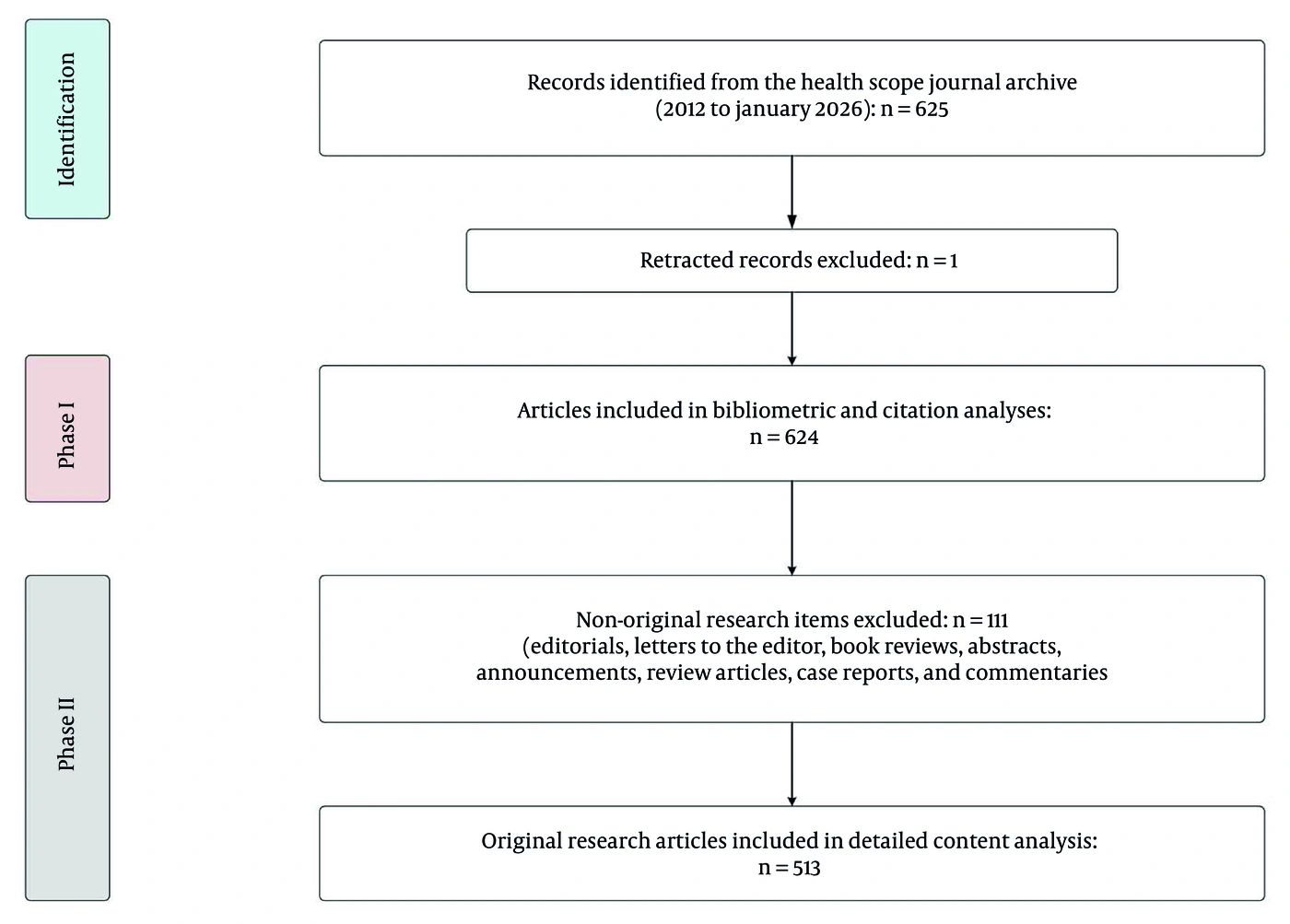
Figure 1.
Flow of record identification, screening, eligibility assessment, and inclusion in the bibliometric and content analyses of Health Scope (2012 - 2026)
3.2. Data Extraction Instrument
A structured data-extraction checklist was developed for this study, guided by the study objectives and informed by established bibliometric and journal content-analysis methodologies (4, 5). The checklist captured bibliographic characteristics, authorship parameters, study designs, research settings, target populations, sampling strategies, data-collection and analysis methods, thematic domains, explicitly reported research gaps, funding sources, citation metrics, and SDG alignment. Coding categories were adapted to reflect the stated aims and scope of Health Scope.
The face and content validity of the instrument were evaluated qualitatively by an expert panel comprising five specialists: three in health information management, one in health services management, and one in health policy. In addition, the initial thematic categorization framework was reviewed by two subject-matter experts (health services management and health policy), and discrepancies were resolved through discussion and consensus.
3.3. Data Collection and Extraction Procedures
All publications in Health Scope from 2012 through January 2026 were downloaded from the journal website. Records and full texts were organized in Mendeley, and bibliographic data were exported in RIS format. Key metadata—including article titles, authors, publication years, volume and issue numbers, document types, author affiliations, and corresponding-author details—were manually verified against the journal archives and full texts. Two researchers independently screened all records against predefined eligibility criteria; disagreements were resolved by consensus, with unresolved cases adjudicated by a third investigator.
For the Phase II content analysis, study designs, settings, populations, sampling approaches, sample sizes, data-collection methods, analytical techniques, and thematic domains were extracted from the title, abstract, keywords, and Methods section of each eligible original research article, with the full text consulted when necessary. Publication/study-type classification, funding declarations, and SDG alignment were assessed across the 624 included records. Explicitly reported research gaps were also extracted. Citation metrics were retrieved from the Web of Science and Scopus on February 20, 2026. Data entry, coding, cleaning, and descriptive analyses were performed using Microsoft Excel.
3.4. Coding Categories and Operational Definitions
Bibliographic information: Publication year, volume/issue, and page numbers.
Author characteristics: Institutional affiliation (academic vs. non-academic), author count, country of affiliation, and corresponding-author attributes. For teams with multiple corresponding authors, gender composition was coded as male, female, or mixed-gender.
Author gender classification: Gender was determined by manual assessment of first names and verified through public institutional directories, ORCID records, and verified profiles. Gender was recorded as male, female, or mixed-gender. Cases with insufficient or contradictory information were classified as "not determinable," although no such cases occurred in the final cohort.
Publication and study types: Records were categorized as cross-sectional, experimental, qualitative, mixed-methods, case-control, cohort, quasi-experimental, randomized controlled trial, systematic review, scoping review, narrative review, case report, editorial/commentary, letter to the editor, or other document types.
Data-collection methods: Classified as laboratory or instrumental measurement, questionnaires or standardized scales, interviews or qualitative discussions, medical records or secondary data, observation or clinical assessment, or not reported.
Data-analysis approaches: Coded as descriptive, inferential, unspecified quantitative, qualitative, predictive, diagnostic, spatial, mixed, other, or not reported.
Thematic classification and keyword harmonization: The primary thematic focus was assigned based on the core research objective, exposure, or outcome. Medical Subject Headings (MeSH) (13) were used solely as a reference framework for terminology standardization and keyword harmonization, rather than as an overarching thematic classification system. The thematic domains were researcher-defined categories established to reflect the multidisciplinary scope of Health Scope. Each article was mapped to one primary domain based on consensus review: COVID-19, Environmental Health, Occupational Health, Public Health, Epidemiology, Health Care Management, Health Economics, Health Education, Health Information Technology, Health Policy, Mental Health, Nutrition, or Other.
Reported research gaps: Explicit gaps stated in the Introduction or Discussion were coded as empirical, population, methodological, theoretical, knowledge, practical knowledge, or evidence gaps (multiple codes permitted per article).
SDG alignment: Alignment was evaluated for all included records (n = 624) against the United Nations 2030 Agenda framework, comprising 17 SDGs and 169 targets (14). Two researchers independently mapped each publication based on its objectives, exposures, and outcomes. An SDG was assigned only when an article exhibited a substantive, direct relationship with that goal or its targets, rather than general keyword overlap. Multiple SDG assignments were permitted when distinct outcomes addressed more than one goal.
A detailed coding manual containing operational definitions, guidelines, and illustrative examples for each variable was developed to ensure consistent and reliable extraction.
3.5. Coding Process and Quality Control
Two investigators independently coded a pilot sample of articles to identify potential ambiguities and calibrate the coding manual. Coding discrepancies during the main extraction phase were resolved by consensus, with consultation from a third senior reviewer when required. The consolidated dataset was audited for completeness and logical consistency before analysis. Although formal quantitative inter-rater reliability coefficients were not computed, multistage independent screening and consensus protocols served as structured quality-control safeguards.
3.6. Statistical Analysis
Data were compiled, validated, and analyzed descriptively using Microsoft Excel. Categorical variables were summarized as frequencies and percentages, and continuous variables were expressed as means and ranges. Publication trends were illustrated descriptively over time. Consistent with the descriptive scope of the study, no inferential hypothesis testing or formal mathematical trend modeling was performed.
3.7. Ethical Considerations
The study protocol was reviewed and approved by the Ethics Committee of Zahedan University of Medical Sciences (ethical code: IR.ZAUMS.REC.1404.249).
4. Results
4.1. Publication Volume and Temporal Distribution
A total of 625 records were identified in Health Scope between 2012 and January 2026, spanning 60 issues across 15 volumes. After the exclusion of one retracted paper, 624 non-retracted articles were included in the bibliometric analysis. The annual distribution of published articles is shown in Figure 2, with publication output peaking in 2018 (n = 69).
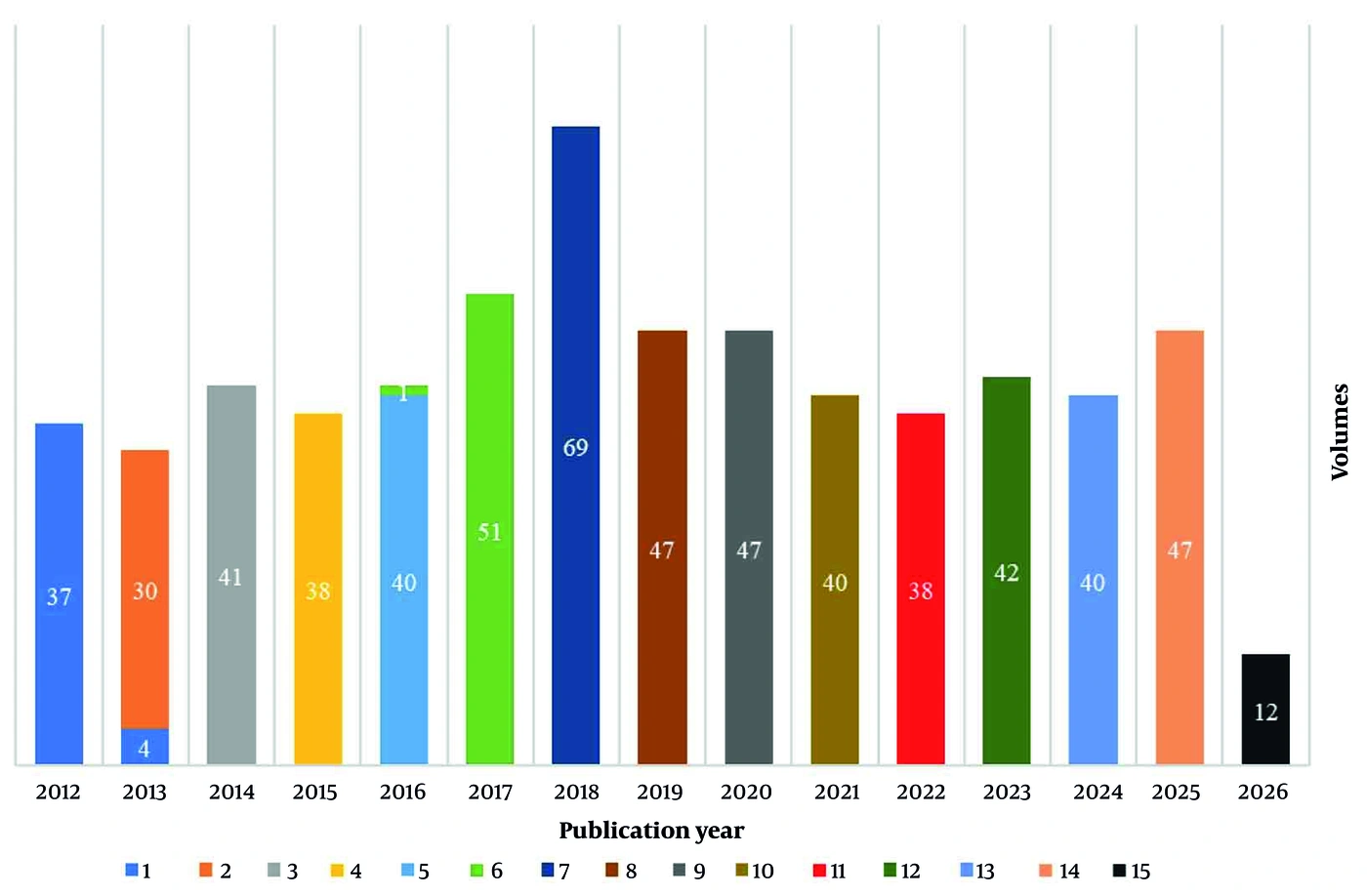
Figure 2.
Annual distribution of articles published in Health Scope (2012 - 2026)
4.2. Authorship Patterns
In total, 2,703 authors contributed to the 624 analyzed articles. Articles with four authors were the most common (n = 154, 24.7%), followed by three-author publications (n = 133, 21.3%). Single-authored works accounted for 28 articles (4.5%). Overall, 15 articles (2.4%) involved 10 or more contributors, including two exceptional publications with 16 and 25 authors. Across the dataset, the mean number of authors per article was 4.3 (Table 1).
Table 1.
Distribution of Articles by Number of Authors and Publication Year in Health Scope, 2012 - 2026
| Year | 1 | 2 | 3 | 4 | 5 | 6 | 7 | 8 | 9 | 10 | 11 | 12 | 13 | 16 | 25 | Total |
|---|---|---|---|---|---|---|---|---|---|---|---|---|---|---|---|---|
| 2012 | 6 | 11 | 7 | 4 | 5 | 2 | 1 | 1 | 37 | |||||||
| 2013 | 1 | 5 | 11 | 6 | 7 | 4 | 34 | |||||||||
| 2014 | 3 | 6 | 12 | 11 | 6 | 3 | 41 | |||||||||
| 2015 | 1 | 3 | 7 | 13 | 8 | 3 | 1 | 1 | 1 | 38 | ||||||
| 2016 | 2 | 10 | 8 | 9 | 1 | 5 | 4 | 2 | 41 | |||||||
| 2017 | 3 | 10 | 22 | 6 | 5 | 2 | 1 | 1 | 1 | 51 | ||||||
| 2018 | 4 | 2 | 11 | 19 | 19 | 8 | 4 | 1 | 1 | 69 | ||||||
| 2019 | 1 | 2 | 9 | 8 | 11 | 8 | 4 | 1 | 2 | 1 | 47 | |||||
| 2020 | 2 | 10 | 14 | 11 | 6 | 2 | 1 | 1 | 47 | |||||||
| 2021 | 3 | 2 | 5 | 10 | 11 | 4 | 2 | 3 | 40 | |||||||
| 2022 | 2 | 2 | 10 | 9 | 7 | 3 | 2 | 2 | 1 | 38 | ||||||
| 2023 | 3 | 9 | 8 | 10 | 1 | 1 | 2 | 2 | 2 | 1 | 1 | 1 | 1 | 42 | ||
| 2024 | 3 | 7 | 7 | 14 | 3 | 1 | 2 | 1 | 1 | 1 | 40 | |||||
| 2025 | 3 | 2 | 11 | 13 | 6 | 6 | 3 | 1 | 1 | 1 | 47 | |||||
| 2026 | 2 | 4 | 3 | 2 | 1 | 12 | ||||||||||
| Total | 28 | 64 | 133 | 154 | 120 | 57 | 26 | 15 | 12 | 7 | 4 | 1 | 1 | 1 | 1 | 624 |
4.3. Corresponding Author Gender
Male researchers served as corresponding authors in 429 (68.8%) articles, whereas female researchers accounted for 183 (29.3%) articles; 12 (1.9%) publications had mixed-gender co-corresponding author teams. Over the study period, the male-to-female corresponding author ratio shifted from 29:8 in 2012 to 22:18 in 2021, indicating an increasing representation of female corresponding authors over time (Figure 3).
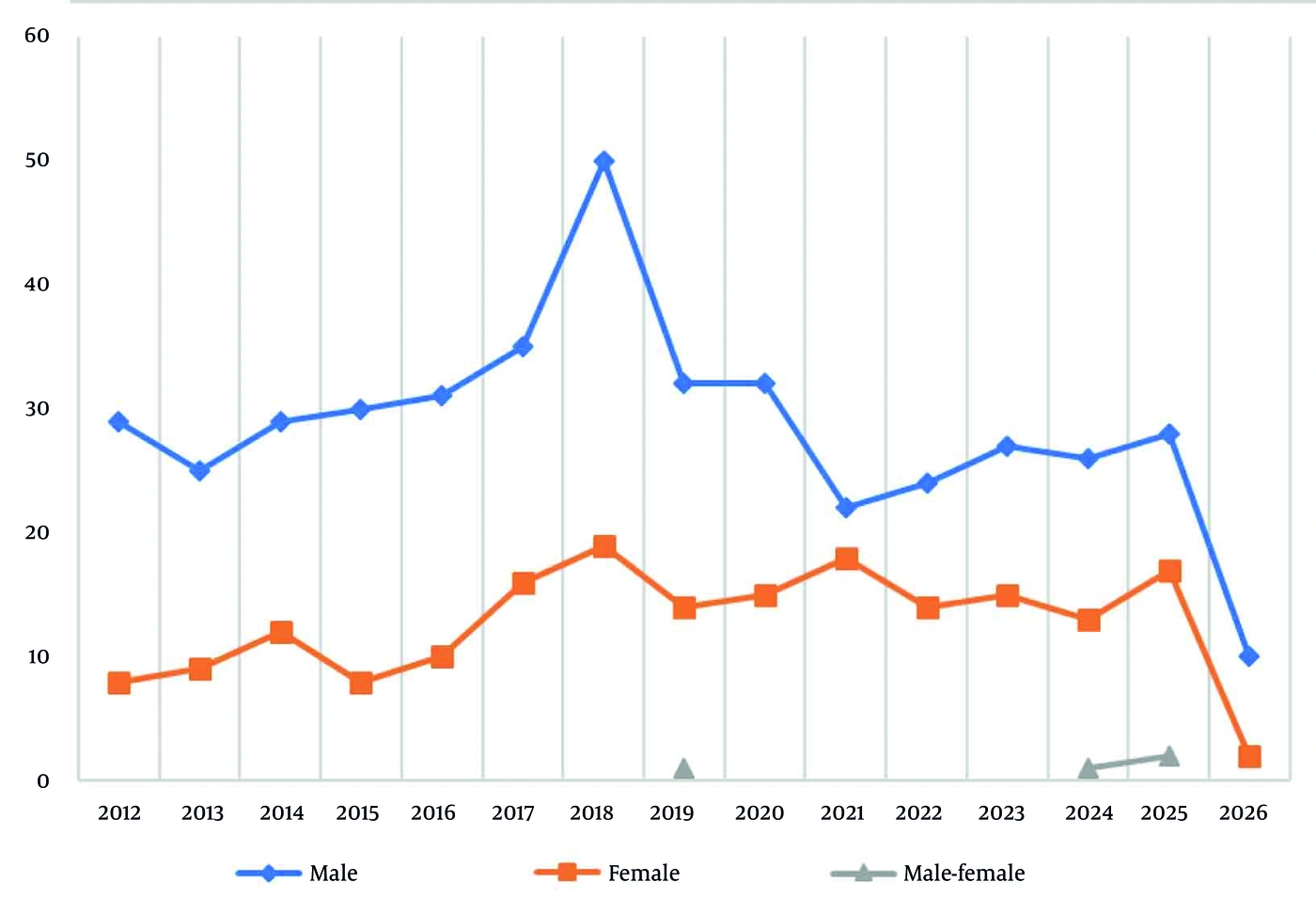
Figure 3.
Annual Distribution of Corresponding Author Gender in Articles Published in Health Scope (2012 - 2026).
Note: Mixed-gender co-corresponding authors refers to articles with two or more corresponding authors, including at least one male and one female corresponding author.
4.4. Geographic Distribution
Authors affiliated with institutions in 41 countries contributed to Health Scope between 2012 and 2026. Iranian-affiliated researchers produced the vast majority of publications (567 articles, 90.9%). Authors from the United States and Australia accounted for the highest international contributions (n = 12 and n = 11, respectively). Other contributing countries included India, Saudi Arabia, Pakistan, Sweden, the United Kingdom, China, Turkey, Canada, Brazil, Malaysia, Mexico, Spain, and Thailand.
4.5. First Author Affiliation
First authors affiliated with ZAUMS contributed the largest share of publications (102 articles, 16.3%), followed by Shiraz University of Medical Sciences (SUMS) with 35 articles (5.6%). Tehran University of Medical Sciences (TUMS) ranked third with 34 articles (5.4%), closely followed by Shahid Beheshti University of Medical Sciences (SBUMS) with 33 articles (5.3%). TBZMED and Tarbiat Modares University each accounted for 29 publications (4.6%).
4.6. Study Design
Cross-sectional investigations were the most prevalent study design, accounting for 212 articles (34.0%). Experimental studies were the second most common design (n = 105, 16.8%), followed by qualitative studies (n = 44, 7.1%). Moderately represented publication and study types included letters to the editor (5.0%), systematic reviews (4.8%), descriptive studies (4.5%), and quasi-experimental studies (3.8%). Cohort studies and systematic reviews with meta-analyses were relatively infrequent, identified in only seven (1.1%) and five (0.8%) articles, respectively. Several other study designs were documented as single instances (0.2% each; Appendix Table 1 in the Supplementary File).
4.7. Thematic Scope
Among the analyzed articles, Environmental Health was the most prevalent subject area, accounting for approximately one-fifth of the sample (n = 131, 21.0%). Occupational Health and Public Health were also highly represented, comprising 90 (14.4%) and 86 (13.8%) articles, respectively (Table 2).
Table 2.
Distribution of Articles Published in Health Scope by Subject Area and Year, 2012 - 2026
| Domains | 2012 | 2013 | 2014 | 2015 | 2016 | 2017 | 2018 | 2019 | 2020 | 2021 | 2022 | 2023 | 2024 | 2025 | 2026 | Total |
|---|---|---|---|---|---|---|---|---|---|---|---|---|---|---|---|---|
| Environmental Health | 10 | 11 | 13 | 15 | 15 | 17 | 19 | 7 | 8 | 2 | 2 | 4 | 4 | 4 | 131 | |
| Occupational Health | 7 | 6 | 4 | 8 | 6 | 6 | 14 | 14 | 5 | 2 | 5 | 3 | 4 | 5 | 1 | 90 |
| Public Health | 2 | 5 | 6 | 2 | 10 | 9 | 6 | 6 | 4 | 8 | 4 | 9 | 8 | 5 | 2 | 86 |
| COVID-19 | 3 | 4 | 4 | 1 | 1 | 1 | 14 | |||||||||
| Epidemiology | 3 | 1 | 2 | 2 | 2 | 5 | 1 | 3 | 3 | 5 | 4 | 2 | 4 | 3 | 40 | |
| Health Care Management | 1 | 2 | 2 | 6 | 8 | 3 | 5 | 8 | 9 | 4 | 7 | 5 | 2 | 62 | ||
| Mental Health | 1 | 3 | 4 | 2 | 2 | 1 | 2 | 3 | 5 | 3 | 5 | 1 | 4 | 36 | ||
| Health Education | 5 | 2 | 1 | 3 | 4 | 3 | 3 | 2 | 3 | 1 | 1 | 4 | 3 | 35 | ||
| Health Economics | 1 | 1 | 1 | 2 | 2 | 5 | 5 | 3 | 2 | 3 | 2 | 3 | 3 | 33 | ||
| Health Policy | 2 | 1 | 3 | 3 | 4 | 4 | 3 | 7 | 1 | 5 | 33 | |||||
| Others | 6 | 2 | 3 | 3 | 2 | 1 | 1 | 3 | 1 | 1 | 5 | 28 | ||||
| Nutrition | 3 | 5 | 1 | 2 | 3 | 2 | 2 | 1 | 2 | 4 | 25 | |||||
| Health Information Technology | 1 | 1 | 2 | 3 | 1 | 1 | 2 | 11 | ||||||||
| Grand Total | 37 | 34 | 41 | 38 | 41 | 51 | 69 | 47 | 47 | 40 | 38 | 42 | 40 | 47 | 12 | 624 |
4.8. Study Setting
Setting information was available for 513 of the 624 included articles. Of these, 134 were conducted in clinical or hospital settings (n = 134, 26.1%). Laboratory-based investigations represented the next largest category (n = 93, 18.1%), followed by industrial or occupational settings (n = 60, 11.7%). Other settings were less common: online or digital platforms and special populations or facilities each accounted for nine articles (1.8%), whereas multi-country or global investigations comprised only five articles (1.0%).
4.9. Study Population
Among the 513 articles included in the second-stage analysis, 500 (97.5%) provided sufficient information to determine the study population. Patients or clinical cases were the most common, accounting for 91 articles (18.2%). These were followed by environmental or chemical samples (16.0%), occupational workers or employees (11.6%), the general population or community (10.6%), and healthcare professionals (8.8%). Together, these top five categories represented nearly two-thirds of the 500 articles with identifiable study populations (n = 326, 65.2%).
4.10. Data Collection Methods
Laboratory and instrumental measurements were the most frequently used data-collection methods, reported in 273 original research articles (53.2%). Questionnaires and standardized scales were the second most common methods (n = 102, 19.9%), followed by interviews and qualitative discussions (n = 43, 8.4%). The remaining articles used medical records and secondary data (7.4%), unspecified methods (5.8%), or observation and clinical assessment (5.3%).
4.11. Data Analysis Methods and Statistical Tests
Inferential analysis was the most frequently employed approach, identified in 100 articles (19.5%). Other approaches included unspecified quantitative techniques (16.8%), descriptive analysis (14.4%), and qualitative analysis (8.2%). The remainder comprised a diverse range of methods, including other or unspecified approaches (7.6%), predictive analysis (6.4%), a combination of predictive and spatial analysis (4.9%), and diagnostic analysis (4.5%). Overall, the five most common analytical categories accounted for 341 articles (66.5%).
4.12. Funding
Analysis of funding declarations showed that 230 of 624 articles (36.9%) reported no funding. The highest annual count of unfunded publications was recorded in 2020 (n = 25). Among funded articles, ZAUMS was the most frequently acknowledged funder, accounting for 56 publications (9.0%). SUMS supported 23 articles (3.7%), followed by Iran University of Medical Sciences (IUMS) and Isfahan University of Medical Sciences (ISUMS), each funding 22 articles (3.5%). Tabriz University of Medical Sciences (TUOMS), Tarbiat Modares University, TUMS, Mashhad University of Medical Sciences (MUMS), and SBUMS provided funding for 21 (3.4%), 20 (3.2%), 19 (3.0%), 17 (2.7%), and 15 (2.4%) articles, respectively.
4.13. Addressed Research Gaps
Based on explicit statements in the Introduction and/or Discussion sections, empirical gaps (n = 455) and population gaps (n = 402) were the most frequently identified research-gap categories. Because multiple gap categories could be assigned to a single article, the sum of category frequencies exceeded the total number of analyzed articles. At the domain level, Environmental Health accounted for the largest number of identified gaps (n = 292), followed by Occupational Health (n = 212), Public Health (n = 181), and Health Care Management (n = 137). In most research areas, empirical and population gaps were the most frequent categories, whereas evidence gaps were rarely identified (Table 3).
Table 3.
Frequency of Reported Research Gaps by Research Domain
| Domains | Evidence | Knowledge | Population | Practical knowledge | Methodological | Theoretical | Empirical |
|---|---|---|---|---|---|---|---|
| COVID-19 | 0 | 0 | 5 | 3 | 4 | 2 | 6 |
| Environmental Health | 0 | 7 | 89 | 46 | 37 | 5 | 108 |
| Epidemiology | 0 | 4 | 19 | 6 | 12 | 3 | 29 |
| Health Care Management | 0 | 5 | 42 | 27 | 12 | 6 | 45 |
| Health Economics | 0 | 3 | 21 | 11 | 4 | 3 | 19 |
| Health Education | 0 | 0 | 23 | 14 | 6 | 4 | 26 |
| Health Information Technology | 0 | 0 | 3 | 3 | 2 | 0 | 3 |
| Health Policy | 1 | 1 | 17 | 13 | 5 | 3 | 17 |
| Mental Health | 0 | 3 | 27 | 7 | 10 | 4 | 25 |
| Nutrition | 1 | 4 | 20 | 6 | 5 | 2 | 19 |
| Occupational Health | 2 | 5 | 58 | 39 | 26 | 5 | 77 |
| Others | 2 | 1 | 21 | 6 | 9 | 3 | 22 |
| Public Health | 3 | 2 | 57 | 27 | 22 | 11 | 59 |
| Grand Total | 9 | 35 | 402 | 208 | 154 | 51 | 455 |
4.14. Distribution of Citations Across Subject Domains
A total of 3,169 citations were retrieved from the Web of Science Core Collection on February 20, 2026. Figure 4 shows the percentage distribution of total citations across thematic domains (as opposed to the number of published articles). Environmental Health accounted for 1,303 citations (41.1% of the total), followed by Occupational Health with 403 citations (12.7%). The article by Parvizishad et al., published in 2017, received the highest number of Web of Science citations (n = 112) (15). The article by Derakhshan et al. ranked second, with 102 Web of Science citations (16).
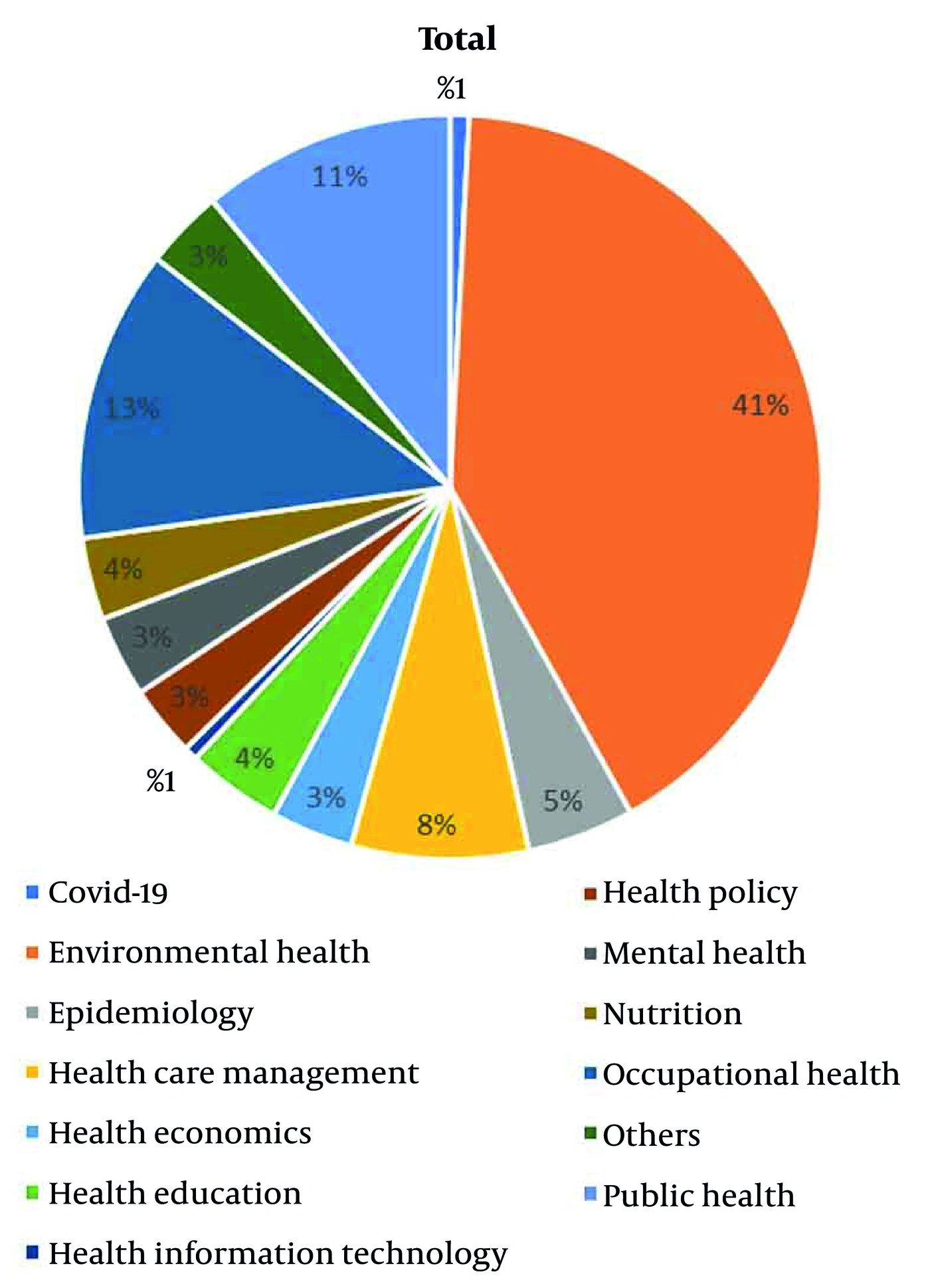
Figure 4.
Percentage of Total Web of Science Citations by Subject Domain Among Articles Published in Health Scope (2012 - 2026).
4.15. Sustainable Development Goals
Using the SDG content-analysis framework, published articles were mapped to multiple Sustainable Development Goals. SDG 3 (Good Health and Well-being) was identified most frequently (n = 485), followed by SDG 5 (Gender Equality; n = 73) and SDG 6 (Clean Water and Sanitation; n = 58) (Table 4).
Table 4.
Frequency of Sustainable Development Goal (SDG) Alignment Among Articles Published in Health Scope, 2012 - 2026
| Sustainable Development Goal | Frequency |
|---|---|
| Good Health and Well-being | 485 |
| Gender Equality | 73 |
| Clean Water and Sanitation | 58 |
| Sustainable Cities and Communities | 48 |
| Zero Hunger | 18 |
| Climate Action | 16 |
| Responsible Consumption and Production | 12 |
| Life Below Water | 11 |
| No Poverty | 8 |
| Reduced Inequality | 8 |
| Industry, Innovation and Infrastructure | 6 |
| Life on Land | 6 |
| Quality Education | 5 |
| Affordable and Clean Energy | 5 |
Note: Articles could be assigned to more than one Sustainable Development Goal (SDG). Therefore, the sum of SDG frequencies (n = 759) exceeds the total number of included articles (n = 624).
5. Discussion
The annual distribution of publications varied over the study period, with the highest volume recorded in 2018. Because formal trend analysis was not performed, these variations should be interpreted descriptively. In the present study, only 4.5% of articles in Health Scope were single-authored, whereas 95.5% were multi-authored, indicating a strong orientation toward collaborative authorship. This pattern aligns with findings for the Medical Journal of the Islamic Republic of Iran (MJIRI), in which 89.9% of articles were multi-authored and productivity increased markedly after 2014, with the highest annual growth rate in 2014 (276.19%) (17). In Health Scope, the highest annual publication output was observed in 2018 (n = 69).
In the present study, Health Scope demonstrated quantitative and qualitative growth in international indexing databases, as reflected by its inclusion in Scopus and the Web of Science and its acquisition of a Journal Impact Factor. A similar improvement in journal visibility and citation metrics has been reported for MJIRI (17). Nevertheless, these indicators should not be directly compared with the Web of Science citation counts reported for Health Scope, because the studies used different databases, metrics, time periods, and analytical procedures. Furthermore, inclusion in additional high-impact databases, particularly PubMed/MEDLINE and the Science Citation Index Expanded (SCIE), would substantially enhance the journal's global reach and scientific visibility.
The geographic authorship profile of Health Scope is dominated by Iranian-affiliated authors (90.9%), a concentration that exceeds that of most general health journals but aligns with patterns observed in other Iranian periodicals, such as the Iranian Red Crescent Medical Journal (18). A similar pattern of national institutional concentration has been reported for MJIRI (17). The very limited representation of authors from other nations—including major research producers such as China, Germany, and the United Kingdom, each contributing only a handful of articles—suggests that Health Scope should place greater emphasis on attracting international submissions to broaden its global footprint. For journals seeking to increase their international presence, evidence from other Iranian publications suggests that improving indexing status, actively recruiting international submissions, and leveraging existing collaboration networks are strategies worth considering (19).
Research gaps were identified across many studies. Authors, editors, and reviewers should consider the coded research-gap categories when identifying priorities for future research.
The timely publication of COVID-19-related research during the early stages of the pandemic demonstrates the journal's responsiveness to emerging global health priorities at both national and international levels. Mental health and health education each accounted for approximately 5 - 6% of articles, consistent with their importance as emerging priorities in public health research.
The higher citation share observed for environmental health should be interpreted in the context of factors known to influence citation performance. Citation counts are affected by article age and citation window, document type, topical relevance, methodological design, journal visibility, collaboration patterns, open accessibility, author and institutional networks, and self-citation practices (20-22). Previous bibliometric evaluations of medical and health journals have similarly shown that citation patterns are shaped by a journal's thematic profile, international collaboration, publication type, and the visibility of articles within indexed databases (17). In the present study, the relatively high citation contribution of Environmental Health may reflect both its larger publication volume and the broad relevance of environmental exposures, water, sanitation, and occupational risks to public-health research. However, because citation counts were not normalized by publication year, document type, or field-specific citation practices, these results should not be interpreted as evidence that environmental health articles had intrinsically greater scientific quality or impact than articles in other domains.
The predominance of Iranian-affiliated authors and the limited proportion of international contributions may also influence the journal's citation visibility. International collaboration has been associated with wider dissemination and, in many contexts, higher citation counts, although the magnitude of this association differs across disciplines and publication settings (17). In addition, the predominance of cross-sectional studies and the relatively low representation of cohort studies, randomized controlled trials, and systematic reviews with meta-analysis may have implications for the journal's citation profile, as study design and article type are among the factors associated with citation performance (19). These findings suggest that increasing international participation and encouraging rigorous longitudinal, experimental, and evidence-synthesis studies, when appropriate to the research question, may contribute to greater visibility and citation potential. Nevertheless, these factors were not tested as independent predictors in the present descriptive study and should therefore be interpreted as plausible explanatory factors rather than causal determinants.
The methodological profile of Health Scope was characterized by a predominance of cross-sectional study designs. Regarding data collection, laboratory and instrumental measurements were the most frequently used methods, reflecting the substantial representation of laboratory-based and environmental-health research in the journal. Simple random sampling and purposive sampling occurred at similar frequencies and were the most common sampling methods, reflecting the journal's balanced portfolio of quantitative and qualitative research. Inferential and quantitative methods were the predominant analytical approaches. The SDG coding showed that Health Scope's published content was primarily aligned with SDG 3 (Good Health and Well-being), which was identified in 485 of the 624 analyzed articles. This pattern is consistent with the journal's stated focus on public health, health sciences, disease prevention, and related research. Other frequently identified alignments were SDG 5 (Gender Equality; n = 73), SDG 6 (Clean Water and Sanitation; n = 58), and SDG 11 (Sustainable Cities and Communities; n = 48). The prominent representation of SDG 6 and SDG 11 is also compatible with the substantial share of environmental-health articles in the journal. However, the limited representation of several other SDGs indicates that the journal could encourage submissions addressing underrepresented health-related sustainability topics, consistent with its aims and scope. Moreover, the interconnectedness of health and welfare is well established; Griggs et al. found that SDG 1 (No Poverty) and SDG 3 consistently exhibit the strongest synergies among all goals (14). Similarly, Barouni et al. highlighted alignment with SDGs in Health Scope (23). Thus, the journal's dual focus reflects an understanding that progress in one area drives progress in the other, echoing the systemic thinking central to Agenda 2030. Overall, this thematic distribution indicates that the journal's published output frequently aligns with global health priorities outlined in the 2030 Agenda. However, given the descriptive bibliometric nature of this study, thematic alignment should be interpreted primarily as topical relevance rather than direct evidence of real-world impact or tangible contributions to sustainable development goals. Future evaluative studies are needed to assess the societal and policy-level impact of these publications.
5.1. Strengths, Limitations, and Challenges
This study provides a 14-year assessment of Health Scope and combines bibliometric indicators with detailed full-text content analysis of authorship, research methods, thematic domains, research gaps, funding, SDG alignment, and citation distribution. The use of predefined operational definitions, a coding manual, pilot coding, expert review of thematic classifications, and consensus procedures enhanced the transparency and consistency of data extraction.
Several limitations should be considered. This was a single-journal study; therefore, the findings may not be generalizable to journals with different scopes, indexing status, geographic profiles, or editorial practices.
The citation analysis was based on a fixed archival cohort of 624 non-retracted records. Updating citation indicators after the original retrieval date would require record-level reconciliation with the original cohort and repetition of thematic citation analyses; therefore, no partial post hoc update was undertaken. In addition, citation counts were not normalized by publication year, citation window, document type, or field-specific citation practices, and author and journal self-citations were not examined separately.
Incomplete reporting in some records and full texts may have affected the classification of study settings, sampling methods, funding, and methodological characteristics. Although consensus procedures were used, thematic classification, research-gap coding, and SDG alignment involved researcher judgment. Formal inter-rater reliability was not calculated. Future studies should use standardized and field-normalized citation indicators, assess self-citations separately, apply formal reliability measures, and conduct dedicated science-mapping analyses of citation and keyword networks.
5.2. Conclusions
This 14-year bibliometric and content analysis showed that Health Scope has published research across a broad range of health-related domains, with Environmental Health, Occupational Health, and Public Health representing the most frequent thematic areas. Although the journal is indexed in appropriate databases, further efforts are needed to enhance its visibility. The journal's publication profile was predominantly national, with most articles originating from Iranian institutions, and was characterized by a high proportion of cross-sectional studies. To broaden its international reach, the editorial board could actively recruit authors and reviewers through international collaboration networks, editorial-board contacts, and targeted calls for papers. The journal could also promote rigorously conducted longitudinal studies, randomized controlled trials, systematic reviews, and meta-analyses, when appropriate to the research question, through focused calls, special issues, and methodologically informed peer review.