
1. Introduction
The perinatal period, encompassing pregnancy and the first year postpartum, is a vulnerable time for maternal psychological well-being. Perinatal mental health (PMH) disorders, predominantly depression and anxiety, are among the most common complications of pregnancy and childbirth, affecting up to 20% of women globally (2). Beyond the immediate distress experienced by mothers, untreated PMH conditions have profound and enduring consequences, adversely affecting mother–infant bonding, infant cognitive and emotional development, and broader family dynamics (3). Consequently, early identification and effective management of PMH disorders are clinical priorities and essential public health imperatives that require robust and accessible systems of care (4).
Despite the well-documented prevalence and impact of these disorders, a substantial treatment gap persists in PMH care. Numerous systemic, interpersonal, and structural barriers hinder optimal care delivery (5). At the system level, maternity and mental health services are frequently fragmented, resulting in disjointed care pathways and a shortage of specialized PMH professionals (6). Inadequate screening protocols, limited clinician training, and logistical barriers, such as transportation and childcare, often prevent women from accessing timely interventions (7). Financial constraints and limited access to mental health facilities and specialized services in remote and rural areas may further restrict timely access to care, particularly for women living far from established healthcare centers (8, 9). Deeply ingrained societal stigma surrounding maternal mental health compounds these issues and frequently deters women from disclosing symptoms or seeking help. These challenges underscore the urgent need to identify and implement comprehensive strategies that bridge the gap between evidence-based recommendations and routine clinical practice (10).
In response to these challenges, various strategies have been developed and evaluated to improve the quality and accessibility of PMH care. These range from integrated collaborative care models and digital health interventions to targeted workforce training and peer support initiatives (11). Although quantitative research has established the clinical efficacy of many of these interventions, understanding the realities of implementation in diverse healthcare settings requires examination of qualitative evidence (12). Previous evidence syntheses have been geographically restricted or have focused solely on barriers and facilitators (5, 13-15), without identifying strategies from stakeholders' perspectives.
Therefore, this systematic review and meta-synthesis aims to comprehensively synthesize the qualitative literature on strategies for improving PMH care. By aggregating and interpreting stakeholders' experiences and perspectives, the review seeks to elucidate the core mechanisms perceived to underpin successful PMH care interventions from the perspectives of all stakeholders.
2. Methods
2.1. Study Design
A systematic review and meta-synthesis of qualitative and mixed-methods evidence was conducted to identify, appraise, and synthesize the literature on strategies to improve PMH care globally. The review was registered with the International Prospective Register of Systematic Reviews (PROSPERO) before data collection (registration No.: CRD420261501502). The final review aligns with the registered protocol. The only amendment was the addition of the Scientific Information Database (SID) to enhance coverage of Middle Eastern literature; this decision was made during the initial search phase. Reporting follows the Preferred Reporting Items for Systematic Reviews and Meta-Analyses (PRISMA) guidelines (16) and the Enhancing Transparency in Reporting the Synthesis of Qualitative Research (ENTREQ) statement (17), which provides specific guidance for transparent reporting of qualitative evidence syntheses.
2.2. Eligibility Criteria
Studies were included based on the Sample, Phenomenon of Interest, Design, Evaluation, Research Type (SPIDER) framework (18), which is recommended for structuring qualitative review questions, as outlined in Table 1. This framework was selected because its components capture the nuances of qualitative review questions, focusing on “Sample” and “Phenomenon of Interest” rather than rigid “Population” and “Intervention” categories. It was therefore more suitable for synthesizing diverse stakeholder perspectives on complex service delivery issues. Qualitative and mixed-methods primary studies were eligible regardless of country, setting, or participant group, provided they addressed experiences, perceptions, or strategies related to PMH care delivery or access. For mixed-methods studies, only the qualitative component was included in the synthesis; such studies were eligible if this component was sufficiently substantial to allow the extraction of textual data on stakeholder perspectives.
Table 1.
Eligibility Criteria Based on the SPIDER Framework
| SPIDER Element | Inclusion Criteria | Exclusion Criteria |
|---|---|---|
| Sample | Perinatal women (pregnant or up to 12 months postpartum), partners, healthcare providers, community health workers, or health system stakeholders | Studies focusing exclusively on non-perinatal populations |
| Phenomenon of Interest | Strategies, barriers, facilitators, and experiences related to perinatal mental health care delivery, access, or improvement | Studies unrelated to perinatal mental health care or service delivery |
| Design | Qualitative or mixed-methods studies | Quantitative components of mixed-methods studies, systematic reviews, editorials, case reports |
| Evaluation | Perceptions, experiences, attitudes, or views on perinatal mental health strategies | Biomedical or pharmacological outcomes only |
| Research Type | Primary qualitative or mixed-methods research with extractable qualitative data | Gray literature, conference abstracts without full text |
2.3. Search Strategy
A systematic search was conducted across 7 electronic databases: MEDLINE (via PubMed), CINAHL (via EBSCOhost), Scopus, SID, PsycINFO (via Ovid), Embase (via Ovid), and Web of Science (via Clarivate). Search terms combined Medical Subject Headings (MeSH) and free-text keywords related to PMH, strategies, barriers, facilitators, qualitative methods, and care delivery, using Boolean operators (AND/OR). No date restrictions were applied; searches were limited to English-language, peer-reviewed publications because of the review team’s language capabilities and limited translation resources. The potential implications are discussed in the Limitations section. Searches were initially conducted on May 1, 2026, and last updated on August 30, 2026. Reference lists of included studies and relevant systematic reviews were hand-searched to identify additional eligible records not captured by database searching. The complete search strings and strategies are provided in Appendix S1 in the Supplementary File.
2.4. Study Selection
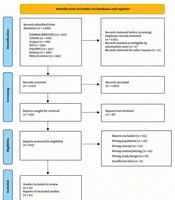
Retrieved records were imported into Rayyan systematic review software and deduplicated before screening. Two reviewers independently screened all records at the title and abstract level, followed by full-text assessment of potentially eligible studies against the predefined SPIDER criteria. Discrepancies at both stages were resolved through discussion and, when necessary, consultation with a third reviewer to reach consensus. The selection process is shown in the PRISMA 2020 flow diagram (Figure 1). A complete list of studies excluded at the full-text stage, with reasons, is provided in Appendix S5 in the Supplementary File.

Figure 1.
PRISMA flowchart
2.5. Quality Assessment
Two reviewers (R. M. and A. S.) independently appraised the methodological quality of all included studies using the Critical Appraisal Skills Programme (CASP) Qualitative Studies Checklist (19). The current 10-item version was used to evaluate rigor, credibility, and relevance across criteria covering study design, sampling, data collection, reflexivity, ethics, analysis, and findings. Discrepancies were resolved through discussion. Consistent with established meta-synthesis methodology, no studies were excluded solely on the basis of quality scores; instead, quality ratings informed the confidence assigned to the review findings. Item-level quality judgments for all included studies are provided in Appendix S2 in the Supplementary File.
The overall certainty of the synthesized findings was assessed using the GRADE-CERQual (Confidence in the Evidence from Reviews of Qualitative Research) approach (20), which appraises confidence across 4 components: methodological limitations, coherence, adequacy of data, and relevance to the review question. Each synthesized finding was assigned a confidence level of high, moderate, low, or very low. A full summary of the CERQual assessments, including detailed judgments for each component, is provided in Appendix S3 in the Supplementary File.
2.6. Data Extraction
Two reviewers independently extracted data using a prepiloted, standardized extraction form. Extracted fields included author, publication year, country, setting, study design, theoretical or methodological framework, participant characteristics, sample size, data collection method, sampling strategy, and key findings on PMH strategies, barriers, and facilitators. Discrepancies were resolved through discussion and cross-checking against the original source. The characteristics of all included studies are presented in Appendix S4 in the Supplementary File.
2.7. Reflexivity
Reflexivity was maintained throughout the review in recognition that researchers’ backgrounds, assumptions, and perspectives may influence the interpretation of qualitative findings. The review team included researchers with expertise in PMH, health services research, and qualitative methodology, representing diverse professional and cultural perspectives. The lead reviewers maintained reflective journals during data extraction and synthesis, and regular team discussions were held to examine assumptions, challenge interpretations, and ensure that emerging themes remained grounded in the primary data rather than prior expectations.
2.8. Data Synthesis
A thematic meta-synthesis approach was used, following the framework proposed by Thomas and Harden (1) for synthesizing qualitative evidence. The synthesis was led by S. S. S., with independent coding contributions from R. M. and A. S. Findings from primary studies were extracted as textual data, inductively coded line by line, and iteratively grouped into descriptive themes. Two reviewers initially coded the data independently, and disagreements were resolved through discussion. Data were managed using NVivo software to maintain an auditable chain of evidence. Descriptive themes were subsequently developed into higher-order analytical themes through constant comparison across studies, capturing strategies, barriers, and facilitators across diverse settings and populations. This process involved moving from summarizing the explicit content of primary studies to generating overarching interpretations addressing the review question. Participant quotations were treated as first-order constructs, primary authors’ interpretations as second-order constructs, and the review team’s syntheses as third-order constructs. GRADE-CERQual was applied to each final synthesized finding to communicate confidence in the evidence and highlight areas requiring further primary research.
3. Results
3.1. Overall Characteristics of Included Studies
A systematic search was conducted across 7 databases, identifying 612 records from PubMed (MEDLINE), 478 from CINAHL, 788 from Scopus, 236 from SID, 347 from PsycINFO, 536 from Embase, and 289 from Web of Science, yielding a total of 3,286 records.
After removal of 1,152 duplicate records, 2,134 unique records were screened by title and abstract against the predefined eligibility criteria.
During this screening phase, 1,902 records were excluded, and the remaining 232 reports were sought for full-text retrieval, of which 38 could not be obtained.
The full texts of the remaining 194 reports were assessed for eligibility, resulting in the exclusion of 153 reports for reasons including wrong population (n = 46), wrong concept (n = 54), wrong context/setting (n = 26), wrong study design (n = 18), or insufficient data (n = 9).
Consequently, 41 studies met all inclusion criteria and were included in the final review (Figure 1).
The 41 included studies were conducted across a wide range of countries spanning high-, middle-, and low-income settings, including the USA (n = 9), UK (n = 5), Ethiopia (n = 3), South Africa (n = 2), Iran (n = 2), Pakistan (n = 2), Australia (n = 2), and single studies from Ireland, Norway, France, Spain, Belgium, Canada, Ghana, Uganda, Indonesia, Mali, China, India, Brazil, and a cross-cultural study spanning Spain and Brazil. This is a partial geographic breakdown of the 41 included studies. Most studies employed qualitative designs, predominantly thematic analysis, phenomenology, grounded theory, and framework analysis, with three studies using mixed methods. The three mixed-methods studies contributed their qualitative interview or focus group components to the synthesis. Data were collected primarily through semi-structured interviews and focus group discussions, with fewer studies using workshops, diary studies, or combined survey and interview approaches. Sampling was almost universally purposive, reflecting the qualitative nature of the evidence base. Sample sizes ranged from 12 to 68 participants for the qualitative components included in this synthesis; participants included perinatal women, midwives, nurses, community health workers, interprofessional clinicians, health system stakeholders, and, in two studies, partners of women experiencing PMH difficulties. Studies were published between 2016 and 2026, with the majority published from 2020 onward, reflecting the growing global research interest in PMH service improvement. The overall characteristics of the included studies are provided in Appendix S4 in the Supplementary File.
3.2. Meta-Synthesis Findings
The meta-synthesis of 41 qualitative studies examining strategies to improve PMH care identified five overarching themes that collectively illuminate the essential components of effective service delivery. These themes represent interconnected strategies that address the multifaceted challenges of PMH care across diverse contexts and populations. Rather than discrete interventions, the findings suggest a comprehensive, systems-level reorientation from episodic, symptom-focused care toward relational, contextually sensitive, and structurally integrated approaches. The themes reflect stakeholder perceptions of what is acceptable, feasible, and valuable, rather than definitive evidence of clinical effectiveness.
3.2.1. Theme 1: Compassionate, Person-Centered Communication as a Therapeutic Strategy (CERQual Confidence: High)
Across the synthesis, the relational quality of clinical encounters was identified as one of the most decisive strategic levers available to PMH providers. Women consistently described clinicians’ communication—listening quality, the presence or absence of judgment, and language sensitivity—as fundamentally shaping whether they engaged with care, disclosed their distress, or withdrew entirely (21-25). This evidence supports the systematic cultivation of communication competence as a clinical strategy rather than an interpersonal virtue left to individual discretion. Actionable approaches included direct, empathic questioning during routine antenatal visits; gradual, companion-supported delivery of distressing news; clinician advocacy for women navigating complex care systems; and consistent use of nonclinical language and environments that reduced the psychological weight of help-seeking (21, 26, 27, 28). Trauma-informed formulation—helping women understand their difficulties in the context of their lived histories—was perceived to foster durable self-compassion and improved emotional availability for their infants (22, 25).
The quality of human connection was reported to transcend structural barriers when providers demonstrated genuine warmth and cultural humility. Women valued clinicians who could "put herself in my shoes like trying to ask me the questions in a way that would not hurt me" (23) and who empowered rather than directed; as one participant reflected, "They never told me what I should do. All they did was open my mind to what was happening to me.I was empowered to make my own decision to move on" (22). This nonjudgmental stance was particularly critical for women from marginalized communities who feared judgment or child removal (29-31). One participant revealed the hidden burden of screening, admitting, "sometimes I think I'm lying to myself.like I put an A instead of a B because I don't want people to think that I'm a bad mom" (31). Such disclosures illustrate how fear of judgment undermines screening validity and care quality, underscoring the need to create nonjudgmental therapeutic spaces in which women feel safe to disclose their authentic experiences (23, 31, 32).
Perinatal loss contexts further illustrated the strategic importance of language. Nurses and midwives who received bereavement-focused training shifted from avoidant communication patterns to actively initiating grief conversations, offering meaningful rituals such as footprints and prepared viewing of the baby, and using humanizing language—referring to the baby by name rather than clinical descriptors—practices perceived to meaningfully improve women’s experiences of care (21, 33). One mother articulated the devastating impact of insensitive disclosure, recalling that "as soon as the doctor started the sonography, she said that the fetus was death. My whole world came crashing down on me and I was going to die of shock. We all know that one should not break such death news suddenly" (21). This insight underscores that how information is conveyed can itself become a source of trauma or an opportunity for healing (21, 24, 28).
Continuity of the provider relationship was endorsed as indispensable to effective communication: women who had a consistent, known clinician reported greater willingness to disclose, whereas fragmented care produced repeated retraumatization through the need to retell traumatic histories (24, 27, 34, 35). Specialist perinatal expertise—encompassing knowledge of medication safety during breastfeeding, awareness of identity transitions in motherhood, and familiarity with the perinatal context—was identified as a distinct and valued competency that general mental health practitioners often lacked (27, 36). Women reported that general psychiatrists "don't think that they see enough pregnant women to really know what they're, you know, to keep up to date with what they're saying," whereas specialist perinatal clinicians demonstrated "real insight" and could confidently reassure women that "people do come out through it" (27). This expertise extended to practical accommodations: clinicians who were "used to having babies there" or who arranged for extra staff to engage children during appointments created environments in which women felt welcomed as mothers rather than judged as patients (22, 24, 27).
3.2.2. Theme 2: Integrated and Coordinated Service Delivery as a Structural Imperative
A central and recurring strategic insight across the included studies was that effective PMH care requires deliberate structural integration—not merely the coexistence of obstetric and mental health services, but active coordination through shared protocols, joint consultations, designated care roles, and formalized referral pathways (34, 35, 37-39). The evidence argues against siloed, specialty-segregated models in which mental health is addressed only after crisis presentation, and supports stepped-care, collaborative frameworks that embed psychological assessment and support within the routine flow of antenatal and postnatal care (40-43). Co-location of mental health services within obstetric settings was endorsed as one of the most influential structural strategies, minimizing referral attrition, reducing stigma associated with entering a separate mental health facility, and enabling real-time responses to positive screens (35, 38, 39).
The value of this integration was captured by clinicians who described the transformative impact of having mental health services on the same floor as obstetric care: "I feel like we're really giving the patient the one-stop-shopping. Lab is on our floor, the office is on our floor, ultrasound is on our floor, psych care is on our floor, social work is on our floor" (39). This physical proximity facilitated what providers described as "joint consultations" and multidisciplinary working, where "the connections between health providers and so later the trust between the patient who will refer herself to a midwife and then will have to refer herself to a psychiatrist or a psychologist" could be established (34). The integrated behavioral health consultant (BHC) model exemplified this approach, with providers noting that proactive engagement—introducing themselves, checking in frequently, and building trust—was perceived to facilitate better patient responses than reactive, episodic care (35, 38). One provider described how having a BHC in the clinic enabled an immediate response to positive screens: "when they score high on the postpartum, I'll give it to [BHC], like because she scored high, you might want to introduce yourself" (38).
The creation of dedicated care manager roles—responsible for patient outreach, screening registry management, and coordination of interdisciplinary communication—was shown to be foundational to program sustainability in collaborative care models (38, 39). These roles bridged the gap between detection and engagement, ensuring that positive screens translated into care rather than unanswered referral lists (31, 41). Multidisciplinary working, in which obstetric clinicians, midwives, mental health specialists, social workers, and community health workers operated within shared frameworks with clear role definitions and mutual feedback mechanisms, was identified as both a facilitator of detection and a source of professional development (34, 43, 44, 45). Midwives described how "the fact that we communicate with each other, I have the feeling that it reassures them.Each one in our place but working in the same direction. Each one with our own skills and specificities" (34).
Legislative and policy frameworks—including PMH acts mandating postpartum screening, integration of PMH within maternal and child health law, and recognition of perinatal women as a distinct population requiring dedicated protections—were identified as upstream structural strategies capable of generating the institutional momentum needed for systemic change (29, 37, 39). Experts unanimously advocated legal interventions, including amending existing laws and integrating PMH services within maternal and child health frameworks, emphasizing that "failure to recognize and assist a problem known to be prevalent, harmful, and that can be assisted, does violate the right to full health" (37). Continuity of care across the prenatal-to-postnatal transition was identified as a priority, with clear handover processes, shared electronic records, and named keyworkers serving as concrete mechanisms to prevent the experience of abandonment that women frequently described at this vulnerable juncture (21, 24, 27, 34). One participant captured the distress of this transition, describing "the lack of care. I found it hard to be abandoned.after childbirth, that I didn't have a doctor anymore and all that" (34). Midwives echoed this concern, noting that "we often ask ourselves about postpartum depression during the next pregnancy.There is a period of emptiness for women in postpartum between the end of the private practice midwife's care and the 1st appointment with the GP" (34).
3.2.3. Theme 3: Community-Based and Peer-Supported Care as a Strategy for Reach and Normalization
The evidence strongly supports the strategic deployment of community-based modalities to extend the reach of PMH care beyond clinic walls into the everyday environments where women live and seek support (43-47). Community health workers, volunteer peer supporters, women’s associations, and trusted community figures were shown to function as legitimate and effective components of the care continuum—not as informal supplements to professional services, but as strategic nodes within a coordinated system (44-47). Their proximity to women’s lives, cultural embeddedness, and capacity to provide nonstigmatizing, relational support positioned them to identify distress early and facilitate engagement with formal services (41, 43, 46, 48). Group-based models, in particular, emerged as powerful vehicles for reducing stigma, validating experiences, and reducing isolation during a life phase characterized by intense identity renegotiation (44, 47, 49-51).
Women consistently described the unique value of peer connection, with one participant explaining how "only a mother, who has gone through similar problems, can understand how another mother is feeling" (47). Another described how women’s associations functioned as de facto support networks, where "women can give her story and another person who is in the same situation will picture herself in this situation" (46). This shared understanding reduced isolation and normalized experiences that women might otherwise interpret as personal failure (32, 49, 51). The natural fit between group counseling and existing community structures was noted, with rural women described as "usefully meet[ing] in groups and talk[ing] about the issues that concern them in daily life" (44). For midwives, group counseling was endorsed not only for its therapeutic value but also for operational efficiency, enabling providers with limited resources to support multiple women simultaneously while remaining aligned with existing communal practices of mutual support (44, 46, 47).
Virtual group interventions extended this model into digitally connected contexts, facilitating community building, shared normalization of distress, and access to evidence-based skill sets among women who could not attend in person (49, 51-53). One participant described how the virtual group setting allowed her to "participate without having to be fully dressed up" and "sit there in my bathrobe and feel like a miserable, pregnant lady" while still building meaningful connections with others (49). Another reflected that "having this availability for people with crazy schedules, or when you're pregnant and you feel like crap and you don't want to go anywhere.that was just really nice and made it much easier to participate every single week" (53). The sense of community extended beyond the sessions, with participants expressing a desire for continued connection: "I don't know if it's allowed because it's a study but maybe if there was some sort of maybe a private Facebook group or something where you could connect to the people throughout the week in between meetings just so if you want a little bit of extra peer support you could reach out to them" (51).
The evidence also highlighted the strategic value of peer volunteer programs, in which women with lived experience of PMH challenges were trained to provide structured support to others, yielding dual benefits of improved care access and personal empowerment among volunteers (46, 47). One volunteer described how the program "has given me an opportunity to learn and gain experience. I hope I can get LHW's post, as I would like to contribute to house income and want my daughter to feel proud of me" (47). Women’s informal networks—including friendships, family structures, and savings associations—were recognized as existing assets to be strategically engaged rather than overlooked (30, 44, 46). Community health worker programs were identified as effective mechanisms for linking these informal networks to formal care pathways (43-45, 46). Cultural tailoring of group content, including illustrated materials for populations with limited literacy and incorporation of culturally resonant frameworks for understanding distress, was reported to markedly improve acceptability and engagement (47, 54, 55). One participant noted that "the pictures were most effective. The majority of the mothers in our village are not able to read, so just by looking at the pictures you can tell the whole story" (47).
3.2.4. Theme 4: Workforce Development and Task-Sharing as Strategic Cornerstones of Sustainable Perinatal Mental Health Care
A robust finding across the synthesis was the recognition that the scale of PMH need far exceeds the capacity of specialist psychiatric services alone, and that sustainable, equitable care requires systematic development of a tiered, competency-based workforce in which nonspecialist providers have formally recognized and supported roles (34, 40-42, 45). Task-sharing—through which midwives, nurses, community health workers, peer volunteers, and primary care clinicians are trained and supervised to deliver defined elements of PMH screening, psychoeducation, and low-intensity support—was identified across high-, middle-, and low-income contexts as feasible and acceptable, provided that training was practice-grounded, role boundaries were clear, and ongoing supervision was institutionally supported (41, 44-47, 56). The evidence calls not for replacement of specialist expertise but for strategic expansion of the workforce capable of identifying need, delivering first-line care, and facilitating timely referral (37, 43, 45, 48).
The gap between aspiration and capability was stark. Clinicians frequently expressed discomfort with mental health discussions, fearing they would "open Pandora's box" by asking questions they lacked the time or expertise to address appropriately (35, 42, 57). One obstetrician articulated this tension: "I don't have the bandwidth to get into that.When you bring it up, you have to be able to follow through, and I can't do that adequately" (35). Similarly, midwives acknowledged that "we were trained extensively in the physical aspect.but in terms of mental health, there is a huge gap, we hardly go beyond the baby blues" (36). These competency gaps led to avoidant practices, with some providers admitting that they avoided mental health discussions because of time pressures or fear of inadequate follow-up capacity (40, 42). The absence of formal protocols compounded these challenges; one clinician explained, "we don't have laid down procedures to follow when you get a case of mental illness in pregnancy so, you the nurse have to use your learnt ideas to treat the patient" (40).
Training initiatives that addressed these gaps were highly valued. Participants in perinatal bereavement training reported transformative changes in practice, including improved communication skills, greater confidence in addressing sensitive topics, and enhanced awareness of the multifaceted needs of grieving families (21, 33). One nurse described overcoming her fear of communicating with bereaved women: "now when I see the bereaved women and their families, I will tell them the following precautions for labor induction. I have received training and learned many courses, so I have a certain knowledge reserve. I have the confidence and ability to communicate with them" (33). Similarly, community health workers who received mental health training described increased motivation and capacity to identify and support women with mental health concerns (44, 46, 47). One midwife stated that "if we are taught, we will have motivation to identify them [women] and give them explanations and help.If you can chat with them in these places they can accept it, and especially if we give explanations to them" (46). The importance of practical, skills-based training aligned with clinical practice was emphasized, with providers requesting "more clinical cases" and opportunities for interactive learning rather than passive didactic content (33, 41, 56).
Integrating BHCs directly within obstetric clinic settings was shown to reduce provider stress, redistribute clinical burden, and enable obstetric staff to respond to mental health needs without exceeding their competence boundaries, highlighting embedded specialist support as a high-yield workforce strategy (35, 38, 39). Providers described how the BHC "helped reduce workload and stress by managing sensitive conversations that patients might feel uncomfortable having with physicians or nurses" (38). Feedback loops—including structured supervision, post-referral outcome communication from mental health specialists, and joint consultations—were identified as essential mechanisms for sustaining nonspecialist providers’ motivation and competence over time (34, 41, 44, 56). For pharmacists, doulas, childbirth educators, and other providers in nontraditional PMH roles, targeted training and clearly delineated screening responsibilities were identified as feasible pathways for broadening the detection architecture without requiring specialist credentialing (29, 50, 58, 59). One participant suggested that "maybe having one person in the pharmacy that's trained in mental health, just having somebody with a qualification makes it a lot stronger to have that around" (58). Given the moderate confidence in these findings, further research is needed to confirm the feasibility and impact of task-sharing across diverse healthcare settings.
3.2.5. Theme 5: Flexible, Tailored, and Technology-Assisted Delivery as an Equity-Oriented Strategy
The final theme highlights the strategic imperative to expand the modalities through which PMH care is delivered, so that access is not contingent on proximity to specialist services, freedom from caregiving obligations, or financial capacity to attend appointments (22, 24, 51-53, 60, 61). Flexible scheduling, home visiting, off-site session locations, telehealth, mobile health applications, and virtual group programs emerged as concrete strategies that expanded the reach of PMH care to populations whose circumstances had previously excluded them (22, 24, 27, 38, 45). The evidence consistently showed that accommodating the structural realities of women’s lives—including infant care demands, transportation constraints, financial pressures, and anxiety about clinical environments—was not a secondary consideration but a primary determinant of engagement and retention (22, 24, 27, 51, 53).
Telehealth and virtual care were particularly valued for convenience and accessibility. One participant stated, "honestly, I probably would opt for the virtual care, just because gas prices are going up. And a lot of the time these appointments are pretty far away from where I'm living" (52). Another described how the external location option was decisive: "The external location to the hospital—I can't stress highly enough having that off-site kind of option. It was probably the only reason why I took it up as much" (24). The flexibility of virtual delivery enabled women to participate from private settings; one participant explained, "the only reason I said yes is because I could go to my master bedroom, lock the door and I didn't have to find a babysitter, I didn't have to schedule an appointment.I could nurse my baby and be in group" (51). However, technological challenges, including connectivity issues and platform difficulties, could create frustration and barriers to engagement, with one participant describing a "perfect storm" in which "technology was a drag" (51, 52).
Mobile health applications offered promising avenues for extending reach, although implementation required careful attention to user needs and potential barriers (52, 53, 61). Participants preferred short, simple questions using yes/no responses, scales, or emoji-based formats rather than lengthy text: "I prefer to just be able to click yes/no or swipe or [check] a smiley face, sad face.or something quick like that" (61). The importance of anonymity for honest disclosure was emphasized; one participant noted, "on Reddit, I talked to a lot of people. You know, you can make a comment or post, and then they will comment on that, and we can talk back, or you can privately message, and it's anonymous.that's a big one, anonymity when you're venting is a big ONE to consider" (53). However, the value of human connection was repeatedly emphasized, particularly among postpartum mothers who stated that "I need the most is someone who can listen to me kindly in a place, someone who can give me the time, and place with no distractions, not online but face to face" (22, 24, 53).
Assertive outreach through home visits and proactive phone contact was described as essential for reaching women who would not otherwise initiate contact with services and was identified as a distinguishing feature of high-performing PMH teams (22, 27, 38, 45). Community health workers described the effectiveness of informal approaches; one explained, "I usually spend time to visit occasionally, during a spare time. So, it is not in a particular time, because it would be seen as a serious matter. Just pop in, have a chat, sharing as a neighbour friend" (45). This destigmatizing approach built trust and enabled identification of women who might never present to formal services (43-46). For women navigating postpartum psychosis, early and sustained partner involvement in care—including practical information about warning signs, inclusive communication from clinical teams, and dedicated support for partners’ own well-being—was identified as a strategic priority with implications for both safety and long-term family recovery (27, 34, 60). Partners described the overwhelming burden of responsibility, with one participant reflecting on "lots of things that my wife doesn't remember about everything that happened.whereas I can't forget any of it. I saw it all.there's no forgetting for us" (60).
Culturally tailored digital content, anonymized peer-support platforms, and language-accessible digital resources were endorsed as equity-oriented adaptations capable of reaching women from marginalized backgrounds for whom formal services remained inaccessible or unsafe (29, 30, 53, 55, 59). One participant described the importance of cultural congruence, noting that "as a Black woman, that was really quite nice to see other women of ethnic minorities in a professional field to do with mental health because there can be more stigma in our communities about that stuff" (30). Collectively, the evidence supports a diversified delivery portfolio in which in-person, virtual, peer-delivered, and digitally augmented modalities are offered in combination, with women exercising meaningful choice regarding the pathway that best fits their circumstances and preferences (22, 24, 51-53, 60, 61). The moderate confidence rating for these findings reflects the rapidly evolving nature of digital health technologies and the need for ongoing evaluation.
3.3. Conceptual Model
Based on the synthesized findings, the proposed conceptual model positions equitable and effective PMH care as the product of a synergistic, multilayered ecosystem in which structural capacity and relational quality are mutually reinforcing. At the core of the model is compassionate, person-centered communication, which serves as the foundational therapeutic mechanism that builds trust, mitigates stigma, and facilitates authentic disclosure. This relational core is situated within an integrated and coordinated structural framework that breaks down clinical silos by co-locating mental and physical health services, establishing formalized multidisciplinary care pathways, and ensuring continuity across the perinatal transition. To operationalize this structure, the model relies on workforce development and task-sharing, expanding system capacity by training, supervising, and integrating nonspecialist providers and embedded BHCs. The reach of this formal system is then extended into everyday life through community-based and peer-supported networks, which normalize distress and bridge clinical environments with women’s lived realities via culturally embedded group and peer models. Finally, the model is encompassed by a flexible, tailored, and technology-assisted delivery layer, ensuring that the entire system adapts to the logistical, cultural, and socioeconomic realities of diverse populations, thereby transforming fragmented, reactive care into a proactive, accessible, and holistic continuum. The confidence ratings for the components of this model align with the CERQual assessments for the corresponding themes, with the relational core (Theme 1) and structural framework (Theme 2) having high confidence, and the workforce (Theme 4) and flexible delivery (Theme 5) layers having moderate confidence. Figure 2 shows the conceptual model of the study.
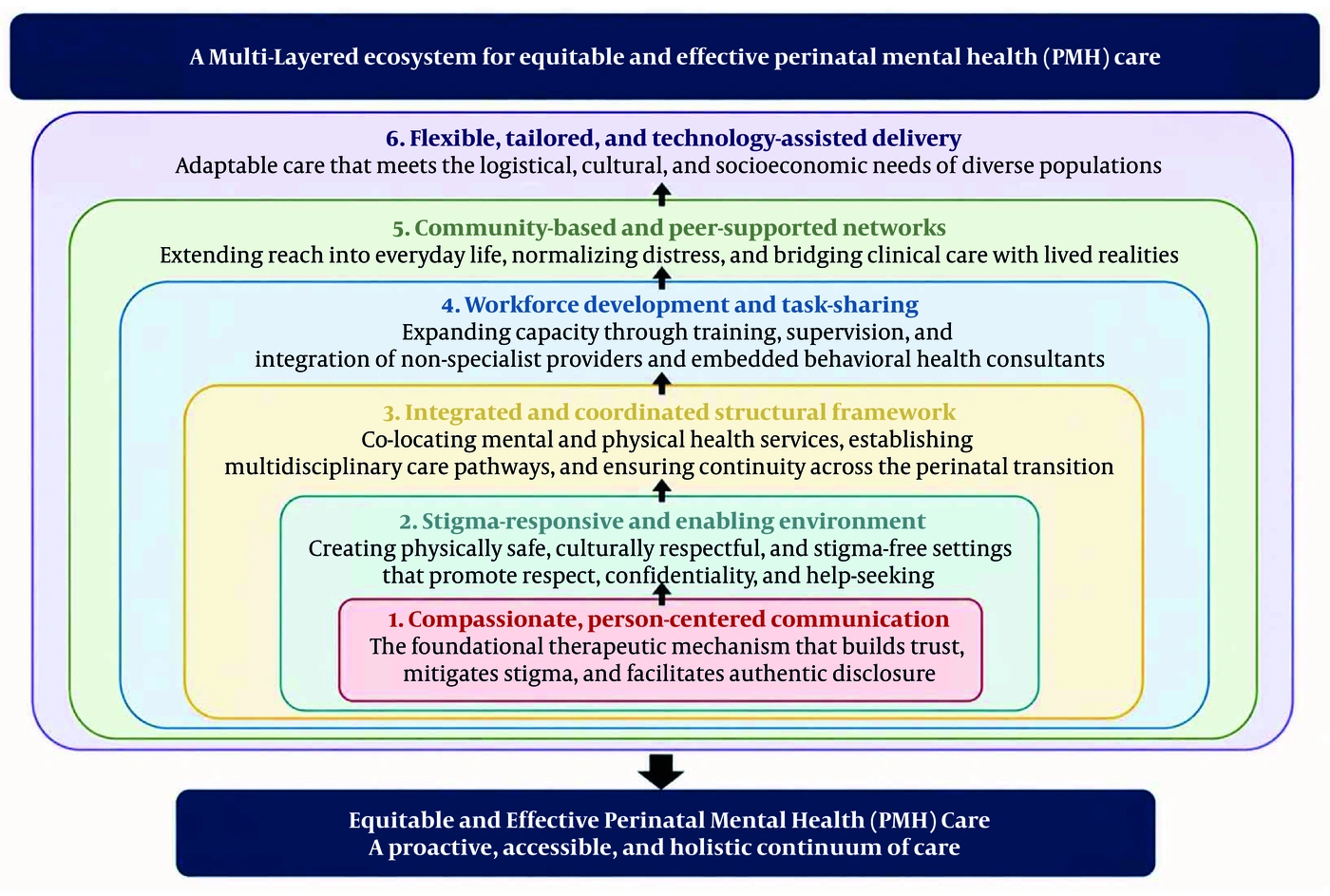
Figure 2.
Conceptual model
4. Discussion
This systematic review and meta-synthesis demonstrates that improving PMH care requires a dual focus on the relational quality of clinical encounters and the structural integration of services. The finding that compassionate, person-centered communication functions as a primary therapeutic lever aligns with existing literature emphasizing the therapeutic alliance in maternity care. Consistent with prior research, women in this synthesis reported that fear of judgment and child removal severely undermined screening validity, suggesting that communication competence must be systematically cultivated rather than left to individual discretion (62). Furthermore, the findings reinforce the global consensus that siloed care is detrimental. The strong endorsement of co-located, multidisciplinary models with formalized referral pathways echoes previous evaluations of collaborative care, which demonstrate improved uptake when mental health services are embedded within routine obstetric settings (63). However, while much of the literature focuses on the availability of services (64), the current synthesis highlights that structural integration is hollow without relational continuity; fragmented care repeatedly retraumatized women through the need to retell traumatic histories, underscoring that how care is delivered is as critical as where it is delivered.
The identified imperative for workforce development and task-sharing reflects a pragmatic response to the global shortage of specialist PMH providers. Consistent with the broader global mental health literature, training and supervising nonspecialist providers—such as midwives, community health workers, and BHCs—was perceived as a feasible and acceptable strategy to expand detection and first-line support (65). Our findings align with studies showing that obstetric providers often avoid mental health discussions due to the "Pandora's box" effect, fearing that they lack the time and competence to manage distress (66). By embedding BHCs and implementing structured supervision with clear feedback loops, the burden on primary maternity staff is reduced, and clinical confidence is enhanced. Although some literature cautions that task-sharing may dilute the quality of care or overburden frontline workers (67), the current synthesis suggests that when role boundaries are clearly delineated and specialist backup is readily available, nonspecialists can deliver highly acceptable, culturally resonant care without compromising safety, thereby bridging the aspiration-to-capability gap. However, given the moderate confidence in these findings, they should be interpreted cautiously, and further research is needed to confirm the feasibility and impact of task-sharing in diverse contexts.
The strategic deployment of community-based and peer-supported care emerged as a vital mechanism for reducing stigma and extending the reach of formal services. In line with existing research, women in this synthesis consistently valued the lived experience of peer supporters, noting that shared identity uniquely reduced isolation and self-stigma (68). Group-based models, both in-person and virtual, were particularly effective in facilitating mutual support and operational efficiency (4). However, our findings diverge slightly from studies that position peer support as a standalone, informal intervention; here, peer supporters and community health workers were most effective when functioning as integrated nodes within a coordinated system, actively bridging the gap between informal community networks and formal clinical pathways. While this contrasts with the literature suggesting that group settings may deter women with severe social anxiety or profound trauma (69), the results of this study indicate that cultural tailoring and the option of anonymous digital peer platforms can mitigate these barriers, making community-based modalities a highly adaptable and strategic component of the care continuum.
Flexible, tailored, and technology-assisted delivery models were identified as essential, equity-oriented strategies to dismantle structural barriers such as transportation, childcare, and stigma. The strong preference for telehealth and mobile health applications aligns with the recent surge in the digital health literature, which highlights the convenience and anonymity of virtual modalities (70). Consistent with previous studies, women reported that virtual groups allowed them to engage in care while managing infant demands (71). However, the current synthesis also reflects inconsistencies in the literature regarding the limitations of technology; participants frequently emphasized that digital modalities cannot fully replace human, face-to-face connection, particularly for postpartum women experiencing profound isolation (72). Furthermore, technological barriers and connectivity issues risked exacerbating inequities for marginalized populations. Therefore, rather than viewing technology as a panacea (73), our findings suggest that it should be deployed as part of a diversified delivery portfolio, offering women meaningful choice and combining the accessibility of digital tools with the depth of assertive, in-person outreach, such as home visits. The moderate confidence in the evidence on technology-assisted delivery, coupled with the rapid evolution of digital platforms, underscores the need for ongoing evaluation of these modalities.
Collectively, the findings of this meta-synthesis support a comprehensive, multilayered approach to PMH care that transcends traditional clinical boundaries. The integration of our five themes suggests that sustainable improvement requires synergistic action: structural integration and task-sharing provide the necessary infrastructure and workforce, whereas compassionate communication, community peer support, and flexible delivery ensure that this infrastructure is accessible, acceptable, and responsive to women's lived realities. For policymakers and service planners, these findings underscore the need for legislative backing to mandate integrated care pathways and to fund specialized PMH roles, including dedicated care managers and BHCs. Future efforts must prioritize the systematic training of the broader maternity workforce in trauma-informed communication and ensure that digital and community-based innovations are rigorously evaluated for their ability to bridge the treatment gap.
4.1. Limitations
Despite the robust synthesis of qualitative evidence, several limitations must be acknowledged. First, as a qualitative meta-synthesis, the findings are not statistically generalizable but instead offer transferable, context-dependent insights; the included studies span diverse geographic, cultural, and healthcare settings, meaning that specific structural strategies (such as co-location or digital health) may not be universally feasible or equally effective across resource environments. This review is inherently interpretive, and the final themes represent our construction of the evidence. Second, reliance on the published literature introduces potential publication bias, as studies demonstrating successful implementation strategies are more likely to be reported than those detailing failed or unsustainable interventions. A comprehensive search of gray literature was not conducted, which may have excluded relevant reports and unpublished studies, further contributing to this bias. Third, the search was restricted to English-language publications, which may have systematically excluded relevant evidence from non-English-speaking countries, particularly in Latin America, Francophone Africa, and Asia, thereby limiting the global representativeness of the findings. Fourth, the included studies exhibited methodological heterogeneity, varying in research objectives, designs, data-collection methods, and analytical approaches, which may have influenced how findings were generated, interpreted, and synthesized. Furthermore, the synthesis is limited by the potential for interpretive subjectivity during the translation and aggregation of findings. Finally, the rapid evolution of digital health technologies means that some findings regarding telehealth and mobile applications may quickly become outdated as platforms and post-pandemic healthcare norms continue to shift, highlighting the need for ongoing, real-time evaluation.
4.2. Implications
The findings of this review suggest several potential implications for policymakers, healthcare systems, and frontline clinicians. For service planners and policymakers, the evidence points to the value of dismantling siloed care by legislatively and financially supporting the structural co-location of mental health services within obstetric settings, establishing dedicated care manager roles, and formalizing task-sharing frameworks that expand workforce capacity. At the clinical level, healthcare institutions may benefit from shifting communication from an assumed interpersonal virtue to a systematically trained, competency-based requirement, mandating trauma-informed and culturally humble training for all maternity providers. Additionally, the integration of peer supporters and community health workers should be considered for formalization through sustainable funding and structured supervision, elevating them from informal adjuncts to recognized nodes within the care continuum. Finally, service delivery could adopt an equity-oriented portfolio approach, offering a blended model of in-person, digital, and community-based options that empowers women to choose the care pathway that best aligns with their structural realities and personal preferences.
4.3. Conclusions
In conclusion, this systematic review and meta-synthesis demonstrates that closing the PMH treatment gap may require a paradigm shift from reactive, fragmented care to proactive, integrated, and deeply relational systems of support. The synthesized evidence suggests that stakeholders perceive effective PMH care as being delivered not through a single intervention, but through an orchestrated network of strategies: structural integration, workforce task-sharing, community-based stigma reduction, and flexible, technology-assisted delivery, all of which must be underpinned by compassionate, person-centered communication. By elevating the lived experiences of women and the practical realities of providers, this review highlights that sustainable improvement hinges on treating the perinatal period as a distinct, protected clinical phase requiring specialized, culturally responsive support. Ultimately, stakeholders suggest that equitable PMH care depends on recognizing that the structural capacity to detect distress is effective only when inextricably linked to the relational capacity to foster trust, safety, and healing.