
1. Introduction
Silicosis, one of the oldest known occupational diseases, remains a major global health concern. It is characterized by progressive pulmonary fibrosis following inhalation of crystalline silica dust (1-3). The disease is associated with chronic inflammation and pulmonary scarring, leading to severe respiratory impairment and, in advanced cases, death. Epidemiological studies have documented a substantial prevalence among workers in the mining, foundry, stone-cutting, sandblasting, and ceramic industries (4-6).
This review provides a comprehensive overview of silicosis, including its epidemiology, diverse clinical presentations, and key risk factors. It also examines its complex associations with other serious pulmonary and systemic diseases, particularly tuberculosis, highlighting the multifaceted burden of the disease. By synthesizing current evidence, this study aims to identify key risk factors and inform preventive strategies.
Despite decades of regulatory efforts and the largely preventable nature of silicosis, recent evidence suggests a resurgence of the disease, particularly in emerging high-exposure industries such as artificial stone fabrication and small-scale mining. Existing prevalence estimates vary widely across regions and occupational settings, and no recent synthesis has simultaneously quantified global prevalence and systematically catalogued the full spectrum of associated risk factors. Therefore, this systematic review was undertaken to provide an updated, integrated assessment of the global burden of silicosis and its determinants.
According to estimates from the Global Burden of Disease report for 2019, approximately 2.6 million people worldwide were affected by silicosis, with 138,965 new cases occurring that year. These estimates indicate that, despite advances in occupational exposure control over recent decades, silicosis remains a global public health problem (7).
Silicosis has three main types, each with distinct epidemiological and clinical characteristics. Chronic (classic) silicosis is the most common type, usually developing after 10 to 20 years of low-to-moderate silica dust exposure and progressing relatively slowly. Accelerated silicosis occurs after 5 to 10 years of severe exposure and progresses more rapidly. Acute silicosis is the rarest but most fatal type, developing after several months to 5 years of very severe exposure and potentially leading to rapid respiratory failure and death. Understanding these types is essential for interpreting disease patterns and designing preventive strategies. In addition to lung damage, silicosis is associated with an increased risk of pulmonary tuberculosis, chronic obstructive pulmonary disease, and some autoimmune diseases (8, 9). Despite advances in dust-control technologies, numerous reports indicate that silicosis remains a significant occupational health problem in many countries, particularly in developing economies (2, 10, 11).
This systematic review had several objectives: to estimate the global prevalence of silicosis in working populations; to identify and rank the main risk factors; to compare epidemiological patterns across geographical regions; and to identify knowledge gaps for future research. This study is particularly important given the emergence of industries involving severe silica exposure. Recent reports from 2021 - 2025 on artificial stone silicosis underscore the urgency of an updated review (12, 13).
2. Methods
This systematic review was conducted in accordance with the Preferred Reporting Items for Systematic Reviews and Meta-Analyses (PRISMA) 2020 guidelines. Eligible studies included cross-sectional, cohort, and case-control studies reporting the prevalence, incidence, or risk factors of silicosis. Diagnosis had to be based on chest radiography using the International Labor Organization classification or high-resolution computed tomography. Studies published in English or Persian between 1988 and 2024 were eligible. Studies relying solely on self-reports without radiological confirmation were excluded. Studies were also excluded if the full text was unavailable or if silicosis was investigated in a population with another specific disease. A formal protocol for this systematic review was not registered with PROSPERO.
2.1. Data Sources
A comprehensive search was conducted in PubMed, Scopus, Web of Science, and Magiran. The main search terms included silicosis, prevalence, occupational exposure, crystalline silica, pneumoconiosis, systematic review, and risk factors, combined using appropriate Boolean operators. The reference lists of identified articles were also searched manually to avoid missing relevant studies. The PubMed search strategy is presented in Table 1.
Table 1.
Search Terms in the PubMed Database (English)
| Database | Search strategy |
|---|---|
| PubMed | ("Silicosis"[Mesh] OR "silicosis"[ Title/Abstract]) AND ("risk factor*"[ Title/Abstract] OR "associated factor*"[ Title/Abstract] OR "determinant*"[ Title/Abstract] AND "prevalence"[ Title/Abstract]) AND Occupational Exposure" [Mesh] AND ("population*"[ Title/Abstract] OR "worker*"[ Title/Abstract] OR "miner*"[ Title/Abstract] AND ("high risk"[ Title/Abstract] OR "high-risk"[ Title/Abstract] |
2.2. Study Selection
Two independent researchers screened and selected studies in two stages. First, titles and abstracts were assessed against the initial inclusion criteria, and disagreements were resolved by a third researcher. Second, the full texts of selected articles were reviewed; study quality was assessed, and data on study characteristics, populations, diagnostic methods, prevalence rates, identified risk factors, and statistical indices were extracted.
The methodological quality of the included studies was assessed using the Newcastle-Ottawa Scale to identify potential sources of bias and evaluate study quality.
2.3. Data Extraction
Silicosis prevalence and associated factors or variables were extracted. Factors identified as influential in at least one study were included. Data were systematically extracted from each eligible study, including study characteristics (author, year, country, sample size, silicosis prevalence, number of detected cases, and study design), participant demographics, exposure details, and reported risk factors or associations with silicosis. Extracted data were carefully reviewed for accuracy and completeness.
2.4. Data Analysis and Synthesis
Two analytical approaches were used:
1) A proportional meta-analysis to estimate silicosis prevalence.
2) Vote counting to identify the main risk factors associated with silicosis.
Pooled prevalence was estimated using a random-effects meta-analysis of single proportions to account for heterogeneity. Heterogeneity was assessed using I2, τ2, and H2. The 95% prediction interval was calculated. Analyses were performed using Stata 17. The characteristics of the included studies are presented in Table S1 in the Supplementary File.
Factors significantly associated with silicosis were classified into three categories: workplace conditions; social, economic, and demographic status; and health status. Factors associated with silicosis prevalence were identified using vote counting. This approach tallied the frequency and direction of associations reported for each factor across studies to identify those with consistent supporting evidence. Although some studies reported odds ratios, hazard ratios, or prevalence ratios, the risk factors were highly heterogeneous in terms of definition, measurement, and statistical modeling. Vote counting was therefore considered the most feasible approach for identifying the main risk factors associated with silicosis.
3. Results
3.1. Characteristics of Included Studies
The systematic search identified 336 studies. After duplicate removal, 260 records remained. Title and abstract screening identified 38 articles for full-text assessment. Ultimately, 32 studies were included in the systematic review, of which 24 were included in the meta-analysis (Figure 1).
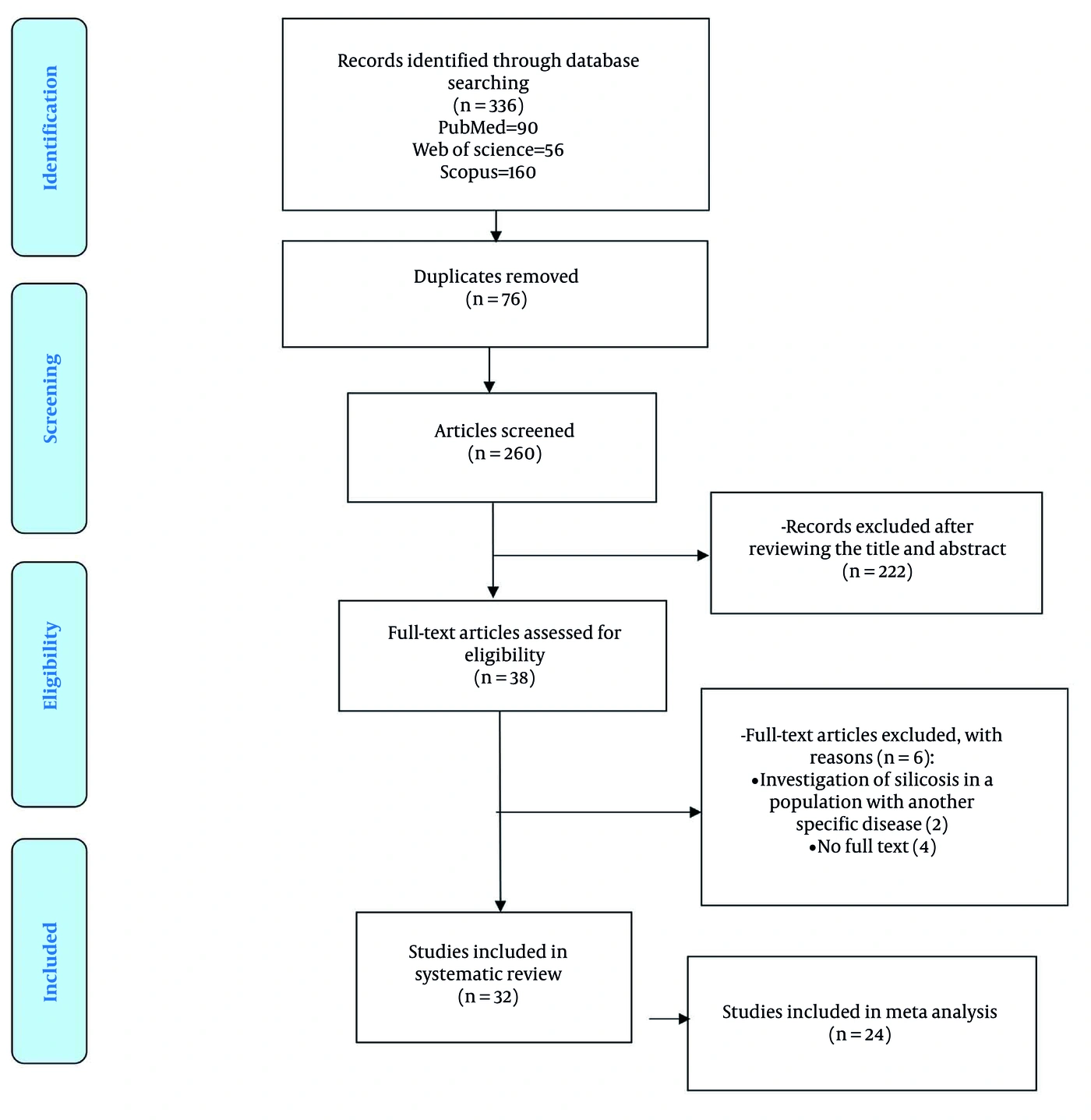
Figure 1.
Diagram of the search and study selection process based on the PRISMA workflow flowchart
The included studies were conducted in 25 countries across six continents. The largest numbers of studies were from China, with six studies (1, 7, 14-17); the United States, with five (6, 12, 18-20); Iran, with six (8, 21-25); and Turkey, with three (26-28). Of the included studies, 65% were published in the last decade, indicating increasing scientific attention to this topic. The total study population comprised 143,928 individuals, with individual study sample sizes ranging from 17 to 90,973. The mean age of the workers was 42 years (range: 20 - 68 years), and the mean duration of occupational exposure was estimated at 14.8 years (range: 0.3 - 40 years).
The characteristics of the included studies are presented in Table S1 in the Supplementary File.
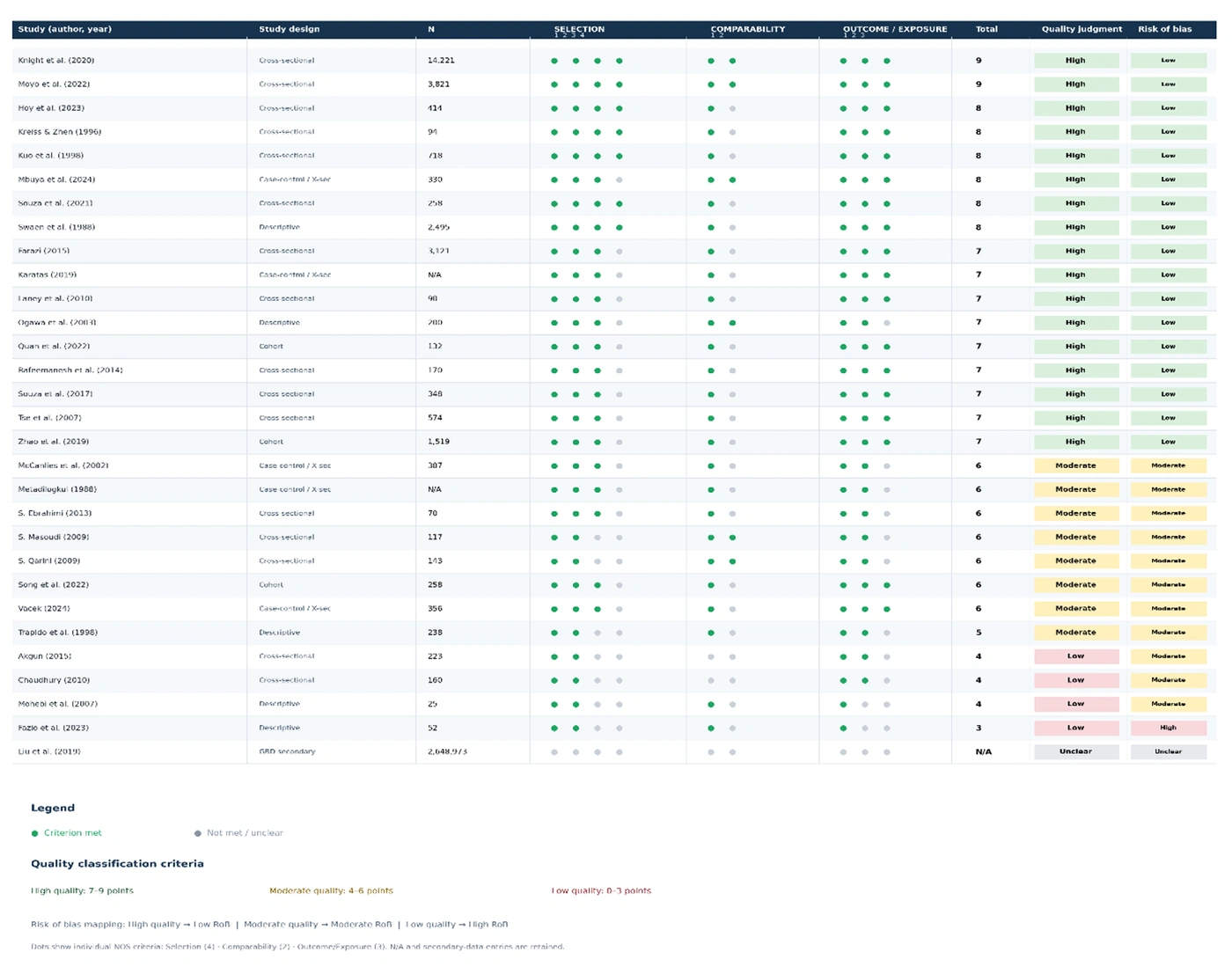
The mean Newcastle-Ottawa Scale score was 6.7 out of 9. Seventeen studies were classified as good quality, nine as moderate quality, and four as poor quality (Figure 2 - Article Quality Assessment).
3.2. Results of the Meta-Analysis
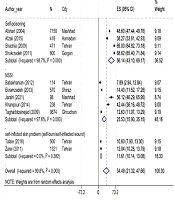
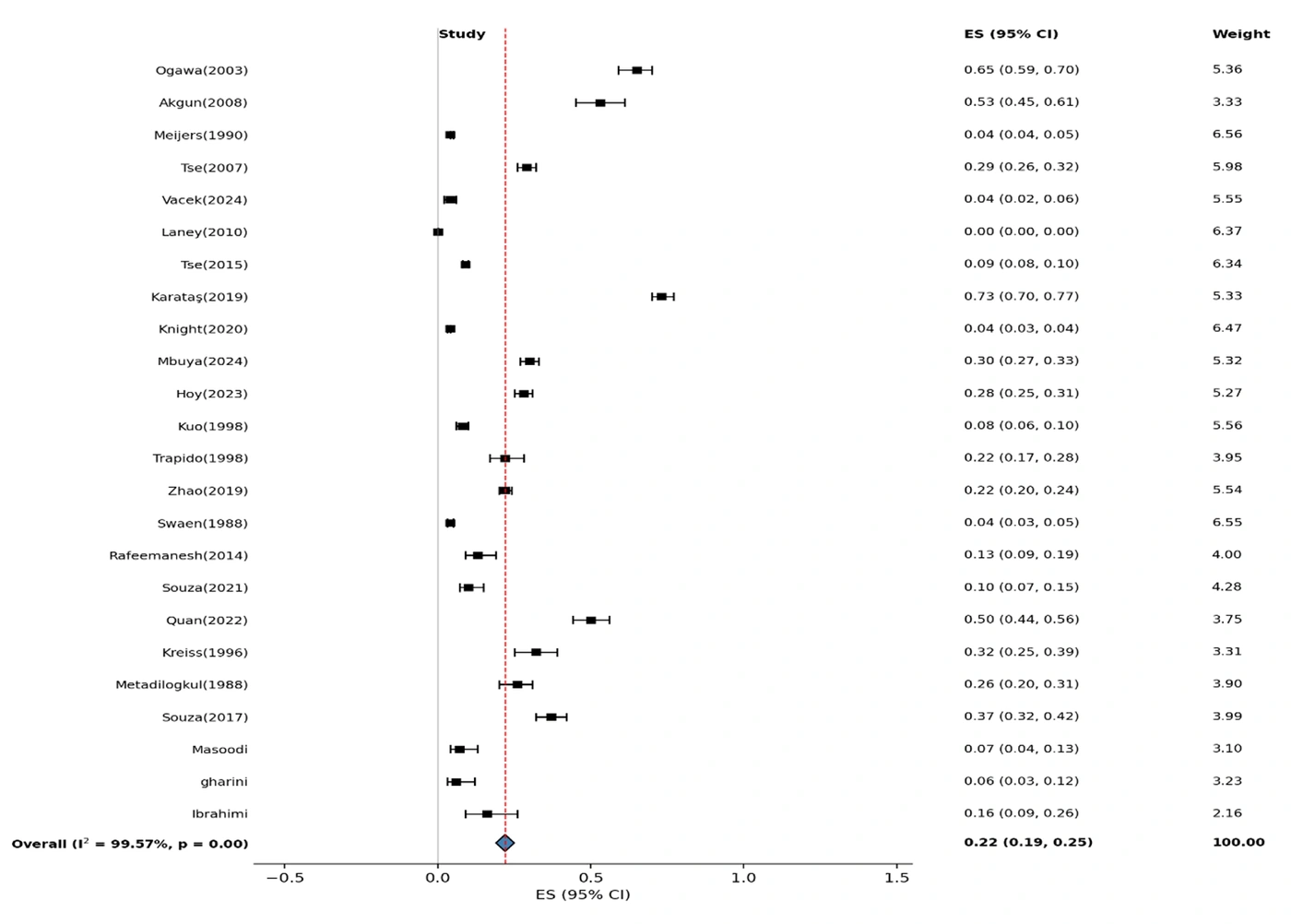
The proportional meta-analysis included 24 eligible studies (1, 4-6, 10, 11, 13-16, 18, 19, 22-25, 27-34). Using a random-effects model, the pooled prevalence of the outcome of interest was estimated at 22% (95% confidence interval: 19% to 25%). The overall meta-analysis test indicated that this estimate was statistically significant (z = 16.18, P < 0.001) (Table 2).
Table 2.
Results of the Proportional Meta-Analysis of Silicosis Prevalence in the Included Studies a
| Variables | Method | Pooled estimation | 95% Confidence Interval | P-value | No studies (references) |
|---|---|---|---|---|---|
| Prevalence of silicosis | Random effects | 0.22 | 0.19 - 0.25 | 0.00 | 24 (4-6, 9-13, 17, 19, 21-23, 25-32, 35, 36, 38) |
a Heterogeneity χ2 = 5301.05 (d.f. = 23) P = 0.00; I2 (variation in effect size (ES) attributable to heterogeneity) = 99.57%; Estimate of between-study variance τ2 = 0.00; Test of ES = 0.22 z = 16.18 P = 0.00
Between-study heterogeneity was very high (χ2 = 5301.05, df = 23, P < 0.001; I2 = 99.57%). This finding suggests that almost all observed variation in study estimates was attributable to true between-study differences. Given this heterogeneity, a random-effects model was used to estimate the pooled prevalence.
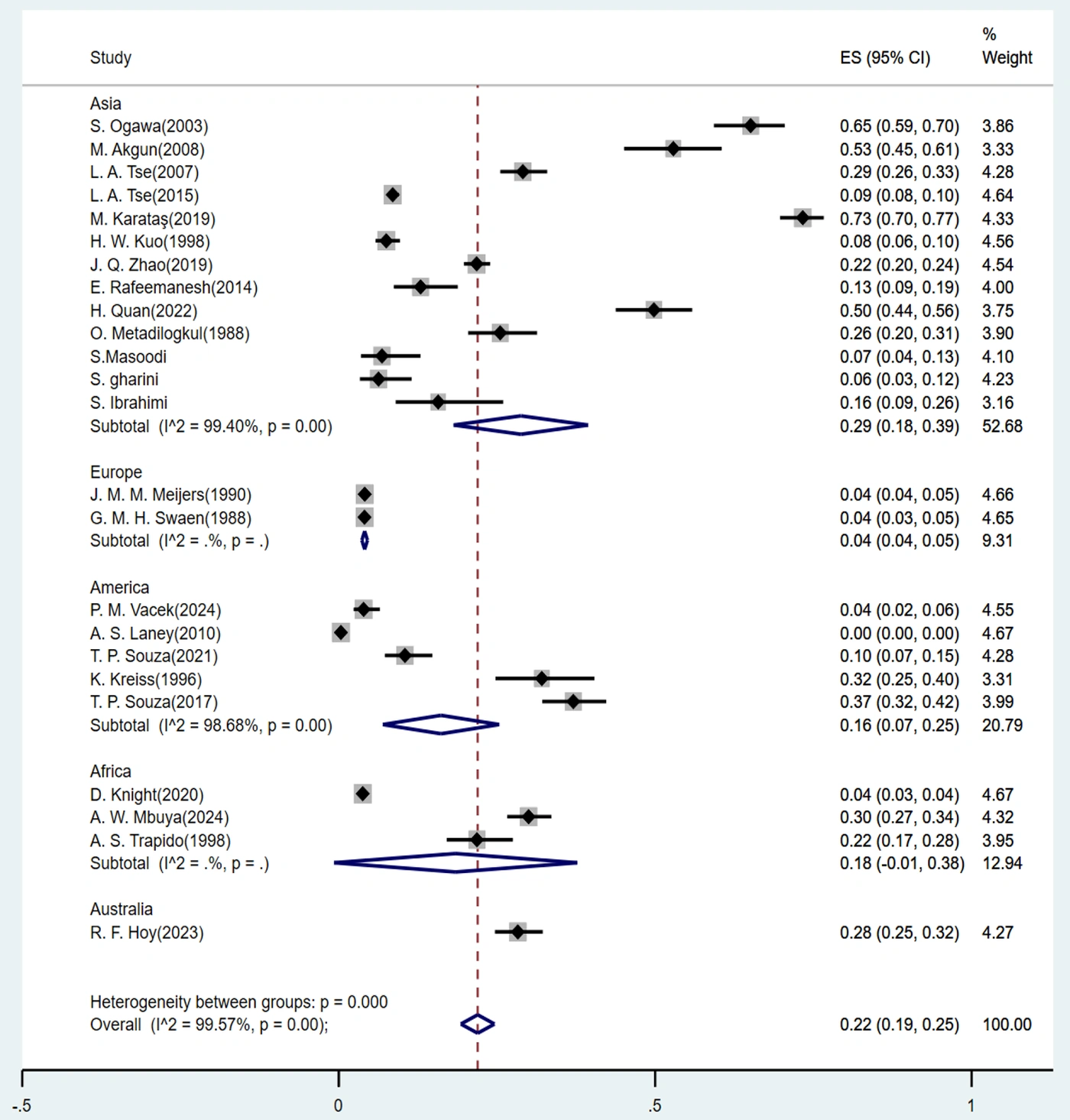
As shown in Figure 3, 24 eligible studies were included in the analysis (1, 4-6, 10, 11, 13-16, 18, 19, 22-25, 27-34). Using a random-effects model, the pooled proportion of participants diagnosed with silicosis was estimated at 22% (95% confidence interval [CI]: 19% to 25%).
3.3. Subgroup Analysis by Continent
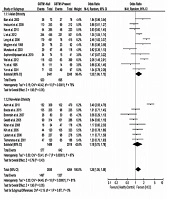
A subgroup analysis by continent was performed to investigate potential sources of heterogeneity. Pooled prevalence varied significantly across continents (test for differences between subgroups: χ2 = 183.25, df = 4, P < 0.001).
The highest pooled prevalence was observed in studies conducted in Asia (29%; 95% CI: 18% to 39%), whereas Europe had the lowest prevalence (4%; 95% CI: 4% to 5%). Pooled prevalence was 16% (95% CI: 7% to 25%) in the Americas and 18% (95% CI: 1% to 38%) in Africa. The only Australian study reported a prevalence of 28% (95% CI: 25% to 32%); a pooled estimate could not be calculated because only one study was available. Heterogeneity remained very high in Asia (I2 = 99.40%) and the Americas (I2 = 98.68%), indicating substantial between-study differences within these regions. In Europe, Africa, and Australia, the heterogeneity index could not be estimated because of the limited number of studies. Overall prevalence was 22% (95% CI: 19% to 25%), with very high heterogeneity (I2 = 99.57%, P < 0.001). The subgroup analysis is presented in Figure 4 (1, 4-6, 10, 11, 13-16, 18, 19, 22-25, 27-34) and Table 3.
Table 3.
Results of the Proportional Meta-Analysis of Silicosis Prevalence by Continent
| Subgroup | Method | Pooled estimation | 95% Confidence Interval | P-Value | No studies (references) |
|---|---|---|---|---|---|
| Asia | Random effects | 0.29 | 0.18 - 0.39 | 0.00 | 12 (4, 12, 13, 21-23, 25-28, 32, 35) |
| Europe | Random effects | 0.04 | 0.04 - 0.05 | 0.00 | 2 (5, 38) |
| America | Random effects | 0.16 | 0.07 - 0.25 | 0.00 | 5 (6, 11, 17, 18, 29) |
| Africa | Random effects | 0.18 | 0.01 - 0.38 | 0.06 | 4 (9, 10, 31, 36) |
| Australia | Random effects | 0.28 | 0.25 - 0.32 | 0.00 | 1 (30) |
3.4. Significant Risk Factors for Silicosis
Risk factors were classified into three categories: 1) workplace conditions, 2) health status, and 3) social, economic, and demographic status. Workplace conditions included silica exposure intensity and dose, exposure duration and work history, job type and sector, workplace conditions and engineering controls, and working time and period. Health status factors included smoking, comorbidities, clinical and imaging factors, and disease progression. Social, economic, and demographic factors included age, gender and race, education, socioeconomic status, and geographical factors. The findings are presented according to this framework. Table S2 in the Supplementary File presents the vote-counting matrix.
3.4.1. Variables Influencing Silicosis Risk
All objective variables assessed for their influence on silicosis risk were categorized into three groups:
Workplace determinants: High silica exposure (9 studies), longer exposure or employment duration (15 studies), high-risk job type, multiple workplaces, or specific work sections (8 studies), underground or full-time mining work (3 studies), and a poor workplace environment (3 studies) were associated with an increased risk of silicosis.
Health status and comorbidity determinants: Smoking (12 studies), a history of tuberculosis (3 studies), and advanced disease severity, complicated silicosis, or progressive massive fibrosis (3 studies) were associated with an increased risk of silicosis. Higher BMI was associated with reduced risk in 3 of 4 studies.
Socioeconomic and demographic determinants: Older age or advanced age at entry or diagnosis (13 studies) and male gender (3 studies) were associated with an increased risk of silicosis, whereas higher education (3 studies) was associated with reduced risk.
Twelve variables reported in at least one study were included in the vote-counting synthesis.
4. Discussion
This review indicates that silicosis remains an important occupational health problem, with an estimated global prevalence of 22% in at-risk working populations. Despite technological advances in dust control, industries such as engineered stone fabrication have produced new disease patterns, often characterized by a younger age at onset and more rapid progression (12, 13, 36). These findings are consistent with the Global Burden of Disease (GBD) report indicating approximately 2.6 million prevalent cases worldwide. Our pooled prevalence estimate of 22% (95% CI: 19%-25%) reflects the proportion of silicosis among actively screened or historically exposed occupational populations, whereas the GBD 2019 report presents age-standardized prevalence rates in the general population (31.60 per 100,000 globally). These metrics are not directly comparable: our estimate describes risk within exposed cohorts, whereas GBD estimates describe population-level burden. Consequently, our estimate is expected to be substantially higher than population-normalized rates. This distinction is essential to prevent misinterpretation. Significant regional differences were observed, with the highest prevalence in Asia. These differences may be attributable to inadequate dust control, increased mining activity in developing countries, and limited worker screening (2, 20, 32, 35, 37). Although the review includes data from 25 countries across six continents, substantial geographical gaps remain, particularly in Eastern Europe, Central Asia, and parts of the Middle East and North Africa, where silicosis is likely underreported because of limited occupational health surveillance. The global estimate should therefore be interpreted as a weighted average of the available evidence rather than a census of all regions worldwide.
Several concerning patterns were identified. The artificial stone industry, which has expanded since the 2000s, has contributed to a new silicosis epidemic. Increasing cases of accelerated silicosis in younger populations suggest extremely severe exposure in uncontrolled work environments. Silico-tuberculosis, the coexistence of tuberculosis and silicosis, is particularly concerning because tuberculosis incidence is significantly higher among individuals exposed to silica (38).
These findings have several clinical and public health implications. Older age at entry into employment was a strong risk factor. Workers with more than 5 years of exposure should undergo annual screening. Lack of ventilation and dry drilling were associated with a high risk of silicosis onset. Source control, including wet equipment and local ventilation, should be prioritized, with personal protective equipment (PPE) used as an additional protective measure (39, 40). Where engineering controls are not feasible, standard respiratory masks are mandatory. Individuals without formal education had approximately 3.6 times the risk of those with higher education (9); therefore, young workers require targeted training.
The prevalence estimate in this review is higher than estimates in some previous reviews. This difference may reflect the inclusion of more studies from Asia, a focus on high-risk industries, and differences in inclusion criteria.
4.1. Strengths and Limitations
Strengths include the comprehensive review of 32 studies from 25 countries and the examination of multiple risk factors associated with silicosis. However, several limitations should be considered. First, most included studies were cross-sectional, limiting definitive assessment of associations between the identified factors and silicosis, although this design is well suited to estimating prevalence in occupational health research. Second, limited data from Eastern Europe, Central Asia, and parts of the Middle East and North Africa may affect generalizability. Heterogeneity in study methods, including exposure assessment, diagnostic criteria, and risk-factor reporting, introduces potential biases and challenges for evidence synthesis. Risk factors were synthesized using vote counting. A formal quantitative meta-analysis of risk factors was not feasible because sufficiently comparable effect sizes (ORs, RRs, or HRs) were unavailable for most factors, owing to heterogeneous exposure definitions, statistical models, and covariate adjustment. Vote counting was therefore considered the most feasible approach for identifying the main risk factors associated with silicosis and was selected in accordance with the study goals. In addition, the absence of a preregistered protocol, such as PROSPERO registration, prevents readers from verifying a priori hypotheses and planned analytical methods. Nevertheless, the search strategy, inclusion criteria, and analysis plan were internally standardized and documented before screening began. Future reviews should consider prospective registration to improve methodological transparency.
4.2. Conclusions
The proportional meta-analysis of 24 studies estimated a pooled prevalence of 22% (95% CI: 19%-25%) among silica-exposed workers worldwide, with the highest burden in Asia. The qualitative vote-counting synthesis of 32 studies identified consistent risk-factor patterns: silica dose and exposure duration were the strongest predictors, whereas older age at work entry, smoking, tuberculosis, and unsafe working conditions were significant nonmodifiable and modifiable determinants. Protective factors included higher education and the use of personal protective equipment.
Silicosis remains an important, preventable occupational disease affecting millions of workers worldwide. Although overall prevalence is declining, the emergence of industries involving severe exposure, particularly artificial stone fabrication, and accelerated disease patterns has raised serious concerns. Key recommendations include stronger engineering controls in high-risk industries, regular screening of all silica-exposed workers, bans on dry processes in stone industries, national registration of silicosis cases, and further research on accelerated silicosis and the mechanisms of fibrosis.
Specifically, we recommend: 1) mandatory annual chest radiographic screening for all workers with 5 or more years of silica exposure; 2) a regulatory ban on dry cutting and grinding of engineered or artificial stone; 3) enforcement of local exhaust ventilation and wet methods in all high-risk industries; 4) national registries for silicosis notification and occupational disease surveillance; and 5) targeted health education and PPE provision for small-scale and artisanal mining sectors in low- and middle-income countries.
4.3. Key Messages
Temporal paradox: Despite regulatory advances, workers after 2000 experienced earlier disease onset than historical cohorts, suggesting emerging high-risk exposures, such as artificial stone, insufficient implementation of controls, or surveillance bias.
Modifiable social determinants: Education, engineering controls, and personal protective equipment are high-impact, feasible intervention targets, particularly in traditional and small-scale mines, where prevalence is 28.2%.
Biological interactions: The interaction among smoking, tuberculosis, and silica requires further examination.
4.4. Future Directions
Future research should focus on developing early detection methods, particularly novel biomarkers for individuals with low-intensity or prolonged silica exposure. More rigorous longitudinal studies are also needed to clarify causal relationships and support timely, effective preventive interventions for silicosis.