
1. Context
Perfectionism is characterized by excessively high-performance standards (1), an exaggerated concern about making mistakes, and persistent doubt about the adequacy of one’s own performance (2). It has been conceptualized as a unidimensional, two-dimensional, or multidimensional construct (3-5).
A growing body of research suggests that perfectionism functions as a transdiagnostic process (6). Quantitative syntheses have linked it to social anxiety (7), eating disorders (8), low self-esteem (9), and symptoms of depression, anxiety, and obsessive-compulsive disorder in adults (10) and young people (11). It is also associated with poorer marital outcomes (12), and neuroscientific work has begun to link it to brain structure and negative affect (2).
Perfectionism is also relevant to treatment. It predicted post-treatment change in cognitive behavioral therapy (CBT) for obsessive-compulsive disorder (13), and higher baseline perfectionism was associated with a lower likelihood of responding to CBT for social anxiety (14). In obsessive-compulsive disorder, perfectionism appears to reduce the effectiveness of exposure and response prevention, although evidence is mixed regarding whether lowering perfectionism leads to further reductions in obsessive-compulsive symptoms (15). In a preliminary analysis, perfectionism and therapeutic alliance were examined as moderators of response to treatment for comorbid depression and alcohol or cannabis use; higher baseline perfectionism was associated with increasing depression after therapist-delivered CBT and motivational interviewing (16). In a small inpatient sample (n = 53) with an eating disorder, self-critical perfectionism was negatively related to therapeutic alliance (17). The relationship between perfectionism and alliance has been reviewed (18), and the influence of patient perfectionism on clinicians’ impressions during an initial interview has been examined (19).
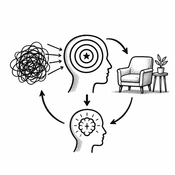
Despite this evidence, many clients do not present with perfectionism as their primary complaint, so it can go unrecognized in the initial formulation. It is plausible, though an empirical question, that leaving perfectionism unaddressed contributes to persistent symptoms, poorer treatment response, or premature termination. Early identification could help weaken a maintaining factor (6) and, through a collaborative formulation, support a sense of being understood and accepted, emotional relief, and greater readiness to move forward (20); several authors have emphasized attending to perfectionism early (19). These potential benefits rest partly on clinical experience and await empirical evaluation.
CBT protocols for clinical perfectionism exist (21, 22) and have been evaluated in trials and in quantitative syntheses of CBT and broader psychological interventions for perfectionism (23, 24), but they are designed for clients in whom perfectionism is already the recognized treatment target. To our knowledge, less practice-oriented guidance addresses how clinicians might detect perfectionism concealed behind another complaint, formulate it early, and integrate it briefly into routine disorder-specific CBT. A recent narrative review of binge eating disorder likewise found CBT to be the best-supported treatment, yet reported residual symptoms in many patients and proposed integrating selected metacognitive components into existing CBT frameworks as a direction for future research (25). The rationale for adding a complementary module to an evidence-based treatment has been proposed elsewhere; in bipolar disorder, a comparison of family-focused therapy and social cognition training suggested that integrating the latter could further improve interpersonal outcomes (26).
This narrative review aims to (1) summarize evidence on perfectionism as a transdiagnostic process relevant to treatment response; (2) outline existing approaches to treating perfectionism and their relationship to disorder-specific CBT; and (3) present a clinical framework, derived from this literature and the authors’ clinical experience, for identifying, formulating, and integrating concealed perfectionism into CBT. We make no claim of incremental validity over established manuals.
We describe perfectionism as concealed when perfectionistic standards and rules (a) are not reported by the client as a presenting complaint, (b) are often ego-syntonic, that is, experienced as personal virtues or “just how I am,” and (c) are expressed through disorder-specific symptoms (e.g., self-criticism in depression, checking in obsessive-compulsive disorder). This differs from clinical perfectionism (21), in which perfectionism is already recognized as the treatment target. Within Beck’s hierarchical cognitive model, perfectionistic rules correspond to intermediate beliefs (rules, attitudes, and conditional assumptions) that lie between automatic thoughts and core beliefs (27); “rules” in this paper refers to this level. The framework is CBT-based with integrative elements: its core mechanism is cognitive restructuring of rules, complemented by schema-informed developmental exploration (28) and a few acceptance and commitment therapy (ACT)-derived metaphors used as psychoeducational illustrations (29).
2. Evidence Acquisition
This is a narrative review supported by a structured literature search, not a systematic review. PubMed was searched on 30 October 2026 for publications from 2015 to 2026 using four search strings: (1) perfectionism AND transdiagnostic; (2) perfectionism AND (“treatment outcome” OR “treatment response” OR “treatment resistance” OR dropout) AND (“cognitive behavioral therapy” OR psychotherapy); (3) “clinical perfectionism” AND (treatment OR intervention OR “cognitive behavior*”); and (4) perfectionism AND (“therapeutic alliance” OR “case formulation”). PubMed was selected as the primary database because it is a major index of biomedical, psychiatric, and behavioral health literature. A single primary database was considered sufficient to identify core sources for a narrative rather than a systematic review. Other databases (e.g., PsycINFO, Scopus, and Web of Science) were not searched, which is acknowledged as a limitation.
The searches returned 129, 63, 49, and 16 records, respectively (257 in total before deduplication; some records appeared in more than one search). For searches 1 to 3, article-type filters (systematic review, meta-analysis, and review for search 1; systematic review, meta-analysis, and randomized controlled trial for searches 2 and 3) reduced the records to 17, 27, and 14, respectively; search 4 was not filtered. The titles and abstracts of the 74 remaining records (before deduplication) were screened for relevance to the three review aims. Records focused exclusively on narrow medical or nonclinical contexts (for example, obesity, sleep, or personality profiles) without clear relevance to the review aims were excluded. A small number of theoretically relevant neuroscientific and nonclinical studies were retained as background sources to inform the broader conceptualization of perfectionism.
A supplementary Google Scholar search was conducted on 30 October 2026 for publications from 2015 to 2026 to reduce the risk of missing psychotherapy literature not indexed in PubMed. Three search strings were used: (1) “clinical perfectionism” “cognitive behavioral therapy” OR “cognitive behavioral therapy” treatment; (2) perfectionism transdiagnostic “case formulation” OR “therapeutic alliance” psychotherapy; and (3) perfectionism comorbid “disorder-specific” treatment integration CBT. The first 20 results of each search were screened; theses, conference abstracts, and book chapters were excluded. This search identified six additional peer-reviewed sources not among the records retained from the PubMed search (15, 25, 26, 30-32). Classic theoretical works, clinical manuals, and sources already known to the authors were also included, as were a few older empirical studies (published before 2015) relevant to the historical background. In total, 40 sources are cited. The proposed framework itself derives from the authors’ clinical experience, and statements based on that experience are identified as such throughout.
From the included sources, we sought: (a) evidence on the association between perfectionism and symptoms across disorders; (b) evidence that perfectionism predicts or moderates treatment response or therapeutic alliance; (c) existing CBT-based and transdiagnostic approaches to treating perfectionism, including target population, format, length, and outcomes; and (d) clinical guidance on identifying and formulating perfectionism within disorder-specific treatment. Findings were organized narratively around these four questions. Little practice-oriented guidance on the fourth question was identified, motivating the proposed framework.
3. Results
3.1. Existing Approaches to Treating Perfectionism
CBT for clinical perfectionism builds on the cognitive-behavioral model of Shafran and colleagues (21), in which self-worth that is overly dependent on achievement produces inflexible standards, cognitive biases, and performance-related behaviors such as checking and avoidance (1). A quantitative synthesis of randomized trials reported medium-to-large effects on perfectionism measures (23), and a quantitative synthesis of psychological interventions, including internet-delivered formats, found significant reductions in perfectionism (24). A recent reflection on the first 21 years of CBT for perfectionism reports 15 randomized trials evaluating efficacy and recommends independent evaluations, comparisons with active treatments, and dismantling studies (30). Trials have evaluated guided internet-based CBT (22), group CBT (33), self-help books and online modules (34, 35), and a comparison with a transdiagnostic Unified Protocol (36).
Group CBT for perfectionism was tested in participants with a range of anxiety, eating, and mood disorders (33). In a pilot trial of guided self-help CBT, in which 80% of participants had a psychological disorder, treated participants were less likely than waitlist controls to have comorbid disorders after treatment, although the sample was small (37). Pilot work has also examined CBT for clinical perfectionism in obsessive-compulsive disorder (38), and a clinician-oriented review covers short-term CBT protocols for perfectionism in that disorder and related conditions (15). Perfectionism-focused work has also been added to disorder-specific treatment, as in a single case report in which six sessions targeting clinical perfectionism were added to CBT for eating disorders for an adolescent with anorexia nervosa and comorbid obsessive-compulsive personality disorder (39). A proposed protocol for co-occurring conditions in eating disorder treatment, which identifies perfectionism as one such feature, distinguishes alternate, modular, and transdiagnostic strategies (40). More broadly, transdiagnostic treatments have been grouped into unified approaches applied to all clients and individualized approaches tailored to the person, for example, by selecting modules (31). The present framework, built on an individual formulation, resembles the latter in spirit but complements disorder-specific CBT rather than constituting a separate treatment package.
These approaches differ from the present framework mainly in their starting point: they treat perfectionism as the identified target. In one published case illustration, the client sought help specifically for perfectionism, and 15 sessions focused on an individualized maintenance formulation, behavioral experiments, and broadening the domains of self-evaluation (1). In our framework, perfectionism is hypothesized from indirect indicators, its rules are elicited early, and the resulting formulation is incorporated into the disorder-specific protocol (Table 1). That case also offers two cautions relevant to rule restructuring: explicitly proposing lower standards may strain the alliance and prompt dropout, and treatment mainly changed perfectionistic concerns rather than personal standards (1).
Table 1.
Comparison Between Existing CBT for Perfectionism and the Present Framework a
| Feature | Existing CBT for Perfectionism | Present Framework |
|---|---|---|
| Target population | Clients for whom perfectionism is the recognized target (e.g., help-seeking for perfectionism; samples with elevated perfectionism) | Clients whose primary complaint lies elsewhere and whose perfectionism may be concealed |
| Starting point | Direct assessment and an individualized maintenance formulation | Screening for indirect indicators, then elicitation of perfectionistic rules |
| Core techniques | Psychoeducation, behavioral experiments, surveys, broadening the domains of self-evaluation, cognitive restructuring | Rule elicitation and restructuring, linking rules to the presenting problem, developmental exploration; behavioral experiments mainly as homework |
| Scope | Multi-session protocol; self-help and internet formats | Brief, formulation-based complement |
| Relation to main treatment | Stand-alone, or adjunct when perfectionism is a barrier to change | Integrated into the disorder-specific protocol |
| Evidence base | Randomized trials and meta-analyses | None yet; grounded in the literature and clinical experience |
a Abbreviation: CBT, cognitive behavioral therapy.
3.2. The Proposed Framework
The framework arose from the authors’ clinical work with clients who presented with a range of difficulties; perfectionism repeatedly appeared as a common thread underlying seemingly unrelated complaints. It comprises three phases and six sequential steps: assessment (Steps 1 and 2), formulation (Steps 3 to 5), and integration into standard CBT (Step 6). It complements, rather than replaces, diagnosis-specific protocols. Techniques were adapted from the cited sources; those without citations were developed by the authors, who cannot exclude unintentional overlap with techniques used in other approaches.
3.2.1. Phase One: Assessment
Step 1: Identifying the likelihood of perfectionism. Clinicians screen for indirect indicators organized around the three dimensions of Hewitt and Flett (3): self-oriented (very high personal standards with self-criticism), other-oriented (rigid expectations of others), and socially prescribed perfectionism (the belief that others demand flawlessness). Indicators include excessive self-criticism or disproportionate reactions to minor errors, frequent comparison with others, chronic dissatisfaction irrespective of objective accomplishment, an excessive need for approval or sensitivity to judgment, and extremely high standards for self or others. In the authors’ clinical observation, the form varies with the presenting complaint: self-oriented perfectionism often appears as severe self-criticism and a pervasive sense of failure in depression; socially prescribed perfectionism as approval seeking and fear of negative evaluation in social anxiety; and other-oriented perfectionism as rigid expectations of a partner in relationship difficulties. These mappings are clinical observations, not established findings. When several indicators cluster, the clinician proceeds to Step 2.
Step 2: Identifying perfectionistic rules and standards. The clinician first offers a “rules of the mind” metaphor: just as the external world has rules whose violation has consequences, the mind holds largely implicit rules whose transgression is “punished” by anger, anxiety, sadness, or guilt; some of these rules are unfair. Illustrative rules commonly encountered, such as “I must be 100% in everything I do,” “I must have no flaws whatsoever,” “I must never make a mistake,” and “Everything must be achieved quickly,” are offered as prompts rather than prescriptions, consistent with guided discovery. For each rule the client endorses, the therapist asks which life domains it has affected. After the rule is collaboratively revised (Step 3), a parallel question asks what might have been different if the new rule had governed the client’s past. In the authors’ experience, clients often say that a rule has “affected my entire life.”
3.2.2. Phase Two: Formulation
Step 3: Restructuring perfectionistic rules. The therapist and client work together to develop an alternative for each rule. For “I must be 100%,” the psychological ruler technique adapts the continuum technique (27): the ruler used by perfectionistic people often contains only zero and one hundred, so any shortfall is scored as zero. A more graded scale is developed collaboratively (for example, anything above 0 is “worthwhile,” and about 70 is “probably sufficient”). Because explicitly proposing lower standards can damage the alliance (1), the scale is established through guided discovery and tested through behavioral experiments rather than presented as an instruction to lower standards. The exam metaphor (reading 100% of a book once under time pressure versus 70% twice) and a mental dictionary exercise, in which meanings such as success = 100% or a flaw = worthlessness are revisited, support this work; the pen-pressure metaphor, adapted from ACT (29), shows that maximal effort does not necessarily produce the best result. For “I must have no flaws,” a proposed alternative allows part of life to be imperfect, supported by broken-scale and magnifying-glass metaphors and the ACT house-building metaphor (29). For “I must never make a mistake,” mistakes are reframed as a natural part of life using the roller-coaster metaphor. For “Everything must be achieved quickly,” metaphors of a growing seed and of speeding toward a destination illustrate that meaningful achievement takes time; this rule can also disrupt treatment because clients expect immediate gains.
As homework, the therapist and client build an “Old Rules and New Rules” table in which the client recalls past events through the lens of the new rule, lists the costs and benefits of each rule, and rates the strength of each rule each week. Sentence-completion exercises (“I must always...,” “Others must never...”) surface further rules (27). The ACT-derived metaphors serve as psychoeducational illustrations rather than as a full ACT protocol; ACT and CBT self-help for perfectionism have both been tested in a randomized trial (34).
Step 4: Linking the rules to the presenting problem. Concurrent with Step 3, the therapist builds an explicit connection between the rules and the presenting complaint so that the client sees them as active contributors to the problem rather than as isolated traits. Through guided discovery, for instance, “I must have no flaws whatsoever” can be linked to excessive preparation and avoidance in social anxiety, and “I must never make a mistake” to repetitive checking in obsessive-compulsive symptoms. Consistent with the transdiagnostic model, perfectionism is conceptualized as interacting with disorder-specific processes, such as self-focused attention in social anxiety or inflated responsibility appraisals in obsessive-compulsive disorder (6). In the authors’ experience, this step is often a turning point because the difficulty comes to be understood as the consequence of identifiable, modifiable rules.
Step 5: Exploring developmental origins. Drawing on schema therapy concepts (28), the therapist and client explore when and how the rules took shape by asking about experiences of being criticized, compared, or encouraged. The aim is to deepen insight, externalize the problem, reduce self-blame, and facilitate restructuring, not to deliver full schema therapy. In the authors’ experience, most clients recall criticism or comparison. Two core beliefs, “inadequacy” and “weakness,” emerged most often beneath perfectionistic defenses; this frequency is anecdotal and untested. These terms are broad descriptors that can encompass Beck’s “helpless” and “worthless” categories (27) and Young’s Defectiveness/Shame and Failure schemas, while perfectionistic standards correspond to the Unrelenting Standards schema (28). A ladder metaphor presents perfectionism as a way of climbing away from the belief in inadequacy. The client then generates evidence for and against the belief, the mental dictionary redefines “being enough,” a courtroom metaphor challenges emotion-driven conclusions, and imagery rescripting, drawn from the schema therapy tradition (28), offers a compassionate response to the “child self” in a memory of criticism. When the pattern does not fit, alternative origins are explored, and whatever is found is linked back to the presenting complaint.
3.2.3. Phase Three: Integration into Treatment
Step 6: Integrating the framework into the standard CBT protocol. The disorder-specific protocol (for example, CBT for social anxiety, depression, or relationship difficulties) then resumes, with the identified rules and their restructured counterparts retained in the case formulation. Integration occurs through two channels. First, when resistance or a relapse into perfectionistic thinking occurs, the therapist refers directly to the relevant rule and its revised version. Second, homework from the formulation phase, including weekly rule-strength ratings, continues alongside the protocol to monitor change. This approach is based on the premise that perfectionism may act as an underlying barrier to disorder-specific interventions (6); the central aim is to continue monitoring perfectionism alongside, rather than instead of, the primary protocol.
3.3. Clinical Illustrations
Verbal informed consent to use clinical material in scholarly publications was obtained from both clients during sessions, and identifying details were omitted or altered. The vignettes are illustrative case conceptualizations, not evidence of outcomes: no standardized measures were collected, and statements about change reflect the clients’ self-reports and the clinicians’ impressions.
Vignette 1. A woman presented with marital difficulties. She repeatedly voiced dissatisfaction with minor behaviors of her partner while emphasizing her own failure to achieve personal goals and her continuing need for “further growth,” raising the possibility of perfectionism. Perfectionistic rules were identified, and she confirmed them. After the “rules of the mind” metaphor was introduced and a link was made between her dissatisfaction and violations of these rules, cognitive restructuring began. She recalled past events in which the rules had caused difficulty and later reported that the new rules had helped in other areas of her life. During developmental exploration, she described strict parental expectations in childhood. After the belief in “inadequacy” was confirmed and Step 5 techniques were applied, she described the relationship as improved. Treatment continued with standard CBT for couple difficulties.
Vignette 2. A woman presented with anxiety and depression. Marked self-criticism, a sense of failure, and heightened sensitivity to others’ judgment were evident, consistent with socially prescribed perfectionism (3). After the rules were confirmed and cognitive restructuring began, she reported improved mood and more hope despite earlier unsuccessful treatment. In developmental exploration, she described childhood experiences in which her expressions of need were met with inattention or passive responses, linked to the core belief of “inadequacy.” In the authors’ view, this presentation was harder to address, and her treatment is ongoing.
4. Discussion
This review proposes a framework for identifying and formulating concealed perfectionism within routine disorder-specific CBT. The literature we reviewed shows that perfectionism is a transdiagnostic process (6), can predict or moderate treatment response (13-16), and is related to therapeutic alliance (17, 18); it also shows that CBT for perfectionism is effective when perfectionism is the recognized target (22-24, 33, 36). Our interpretation is that the gap lies upstream of treatment: when perfectionism hides behind another complaint, it may never reach the formulation, and the principles of these protocols are therefore not applied. The framework aims to close this gap by adding a detection and formulation step to the CBT clients are already receiving. It builds on earlier work and differs from it in several ways. Like CBT for perfectionism, it targets rigid standards and the processes that maintain them (21, 22), but it begins with screening for indirect indicators rather than with a presenting complaint of perfectionism. It also addresses a caution raised in a published case illustration—that proposing lower standards outright may strain the alliance (1)—by eliciting and revising rules through guided discovery. The closest precedents for adding perfectionism work to disorder-specific treatment include a case report in which six perfectionism-focused sessions were added to CBT for an eating disorder (39) and individualized, module-based transdiagnostic approaches (31, 40). Our framework differs by beginning with a detection step and addressing perfectionistic rules as intermediate beliefs (27). Clinically, the framework gives therapists a concrete question that routine formulation can miss: whether a rule such as "I must never make a mistake" lies behind the presenting symptoms. It also provides collaborative techniques for revising such rules. Because its steps sit alongside the main protocol rather than replacing it, the framework can be tried within existing CBT. Its effect on outcomes cannot be judged from our vignettes, and the studies proposed in the Conclusions are designed to test it.
5. Conclusions
Perfectionism is a well-documented transdiagnostic process, yet it often remains concealed behind another presenting complaint. Existing CBT protocols for perfectionism have been tested in trials, but they start from perfectionism as the recognized target. This review proposes a three-phase, six-step framework for identifying concealed perfectionism, formulating it in terms of its rules, and incorporating that formulation into routine disorder-specific CBT.
In practice, the framework suggests that clinicians screen for indirect indicators of perfectionism during assessment, collaboratively elicit and restructure rules without simply asking clients to lower their standards, link the rules to the presenting problem, and retain them in the formulation throughout the standard protocol. The framework complements established protocols rather than replacing them, and may be useful when progress stalls or perfectionistic thinking recurs; this hypothesis remains to be tested.
Public health implications. Because perfectionism often goes unrecognized, it may contribute to treatment resistance and the burden of comorbid presentations, given that it operates as a transdiagnostic process (6). A brief, formulation-based framework of this kind could, in principle, be used by clinicians in community mental health and primary care settings, fit within stepped-care models, and be adapted for clinician training. Training nonpsychologist clinicians to deliver structured CBT has precedent; for example, a trial involved a trained critical care nurse delivering CBT for insomnia after open heart surgery (32). Early identification of a shared maintaining factor might also reduce reliance on sequential, disorder-specific treatments, with possible implications for service efficiency. These implications are hypothetical: implementation studies, training evaluations, and cost-effectiveness research are needed before any population-level claims can be made.
Several limitations apply. First, and most important, the framework rests on the authors’ clinical experience, and its efficacy has not been evaluated, either as a package or by component. Second, the literature search relied on one bibliographic database (PubMed), with only a limited Google Scholar supplement, and did not include PsycINFO, Scopus, or Web of Science. Titles and abstracts were screened, and no formal quality appraisal was performed; therefore, relevant psychotherapy literature may have been missed. The review is narrative, not systematic. Third, the two vignettes come from a single clinical setting, were assessed without standardized measures (such as the FMPS, BDI-II, or BAI), and cannot support claims of effectiveness. Fourth, several techniques were designed by the authors and lack an independent evidence base, and the framework combines cognitive, schema-informed, and ACT-derived elements whose separate contributions are unknown. Fifth, clinicians who expect to find perfectionism may be prone to confirmation bias. Sixth, unlike CBT for perfectionism, in which behavioral experiments are central (1), the framework uses them mainly as homework. It has not been compared with existing protocols, so its distinct contribution, if any, is unknown.
Future work could use single-case designs or small pilot studies to test the framework as an addition to standard CBT, followed by randomized trials comparing it with CBT for perfectionism and disorder-specific CBT alone. Studies could also test whether developmental exploration (Step 5) adds value beyond rule restructuring (Step 3), a dismantling question of the kind recommended for CBT for perfectionism (30); whether the weekly rule-strength rating can become a validated measure; and whether early attention to concealed perfectionism reduces treatment resistance or dropout. The contribution of this review is a coherent, testable clinical roadmap, not evidence of efficacy.