1. Background
Both non-alcoholic fatty liver disease (NAFLD) and coronary atherosclerosis belong to the category of metabolic syndrome (MS). NAFLD increases the risk of coronary atherosclerosis, which is one of the leading causes of death resulting from NAFLD (1). The risk factors for NAFLD, such as metabolic disorders of lipids and insulin resistance, are frequently accompanied by coronary atherosclerosis. Both NAFLD and coronary atherosclerosis have a strong genetic component, and their inheritance is polygenic (2). In general, NAFLD and coronary atherosclerosis share a common genetic background, i.e., the risk alleles for NAFLD may also be involved in the increased risk of coronary atherosclerosis (2, 3).
The leptin receptor gene (LEPR), responsible for encoding the leptin receptor that binds to leptin in target tissues, is believed to be a candidate gene for NAFLD as well as coronary atherosclerosis because of its role in regulation of lipid metabolism and insulin resistance (4). However, few studies have examined the association of the LEPR K109R and Q223R polymorphisms with the risks of coronary atherosclerosis and NAFLD in the Chinese Han population. In addition, the potential link between LEPR polymorphisms and the risk of developing coronary atherosclerosis in NAFLD is largely unknown.
2. Objectives
The purpose of the present study was to investigate the association between LEPR K109R and Q223R polymorphisms and the susceptibility to NAFLD and coronary atherosclerosis, respectively, in the Chinese Han population. Our findings may ultimately provide novel means to combat the development of coronary atherosclerosis and NAFLD.
3. Patients and Methods
3.1. Study Design
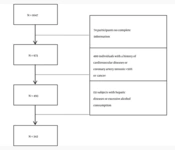
A total of 554 NAFLD patients (269 males, 285 females) and 421 coronary atherosclerosis patients (214 males, 207 females) were selected from the Qingdao area of China. The study design was described in detail previously (2, 5). Based on previous studies, we enlarged the sample size to ensure that the statistical power was greater than 80 percent. NAFLD was diagnosed under standard clinical evaluation according to the Chinese association of medicine in 2010 (6). Coronary atherosclerosis was diagnosed using a percutaneous coronary angiogram and defined by the presence of at least 50% stenosis in at least one of the coronary arteries. We also recruited 550 healthy control volunteers (276 males, 274 females) from the medical center of Qingdao Municipal hospital. The healthy participants were carefully chosen according to their medical history, general examinations, and laboratory examinations. All subjects were screened for fatty liver by abdominal ultrasound examinations and excluded, as previously described (2). All patients and controls enrolled in this study were recruited from the same population and signed a written consent form. The study was conducted according to the principles of the declaration of Helsinki. Body height and weight were measured to calculate the body mass index (BMI, weight/height2). Blood samples were obtained from each subject using anticoagulative tubes after a 12-hour fasting in the morning. The levels of total cholesterol (TC), triglyceride (TG), high-density lipoprotein (HDL), low-density lipoprotein (LDL), alanine aminotransferase (ALT), and aspartate aminotransferase (AST) were also measured, as previously described (7).
3.2. Genotyping
Genomic DNA was extracted from peripheral blood leucocytes using the genomic DNA extraction kit (Beijing Bioteke biotechnology, Beijing, China). The primers for PCR amplification of the fragments containing K109R and Q223R were synthesized by Shanghai Sangon Biotech company: K109R, 5’-TCCACTGTTGCTTTCGGAGTGA-3’ (forward), 5’,-TTCAAAGCAAATTTAGAAGACTACAAGGAATG-3’ (reverse); Q223R, 5’,-ACCCTTTAAGCTGGGTGTCCCAAATAG-3’, (forward), 5’,-AGCTAGCAAATATTTTTGTAAGCAATT-3’ (reverse). Each 10 μL reaction contained 1x GC-I buffer, 3.0 mM of Mg2+, 0.3 mM of dNTP, 1 U of HotStarTaq polymerase, 1 μL of DNA samples, and 1 μL of multiple PCR primers. The PCR amplification profile was shown below 35 cycles of 95°C for 2 minutes, 94°C for 20 seconds, 65°C for 40 seconds, 72°C for 90 seconds, and 72°C for 2 minutes. After purification, multiple PCR products were used to perform the coupled reaction. The PCR amplification conditions were 38 cycles of 94°C for 1 minute and 56°C for 4 minutes. The LEPR gene was sequenced using the ABI3730XL sequenator (Foster city, CA, USA).
3.3. Statistical Analysis
Genotypes and alleles were estimated by counting and Hardy-Weinberg equilibrium was determined using Pearson’s χ2 test. Baseline characteristics were shown as mean ± SD and analyzed using Student’s t-test, paired-samples t-test, or the χ2 test where appropriate. In addition, the chi-squared test was used to compare the distribution of genotypes and alleles in different groups. The risks of NAFLD and coronary atherosclerosis were estimated using the odds ratio (OR) with a 95% confidence interval (CI). The significance level was defined as P < 0.05.
4. Results
4.1. Characteristics of the Study Population
From these subjects, healthy controls were matched for sex and age with NAFLD or coronary atherosclerosis patients (all P > 0.05). The characteristics of the study population are shown in the Table 1.
Table 1.
Comparison of Demographic and Basal Characteristics Among Study Groupsa
| Characteristics | NAFLD, (n = 554) | Coronary Atherosclerosis, (n = 421) | Control, (n = 550) | P1 | P2 | P3 |
|---|---|---|---|---|---|---|
| Gender | 0.589 | 0.841 | 0.482 | |||
| M | 269 | 214 | 276 | |||
| F | 285 | 207 | 274 | |||
| Age, y | 46.44 ± 16.77 | 46.57 ± 11.73 | 46.45 ± 12.01 | 0.982 | 0.887 | 0.869 |
| BMI, kg/m2 | 24.23 ± 1.66 | 24.07 ± 1.63 | 23.48 ± 1.70 | < 0.001 | < 0.001 | 0.138 |
| ALT, U/L | 23.52 ± 10.40 | 21.57 ± 12.82 | 20.13 ± 9.94 | < 0.001 | 0.122 | 0.001 |
| AST, U/L | 21.45 ± 6.47 | 19.93 ± 9.32 | 19.44 ± 5.17 | < 0.001 | 0.327 | 0.004 |
| FPG, mmol/L | 5.18 ± 0.76 | 5.33 ± 3.04 | 4.94 ± 0.58 | < 0.001 | 0.008 | 0.298 |
| TG, mmol/L | 1.80 ± 1.58 | 1.58 ± 1.40 | 1.39 ± 1.52 | < 0.001 | 0.053 | 0.025 |
| TC, mmol/L | 4.79 ± 0.99 | 4.48 ± 1.03 | 4.46 ± 0.96 | < 0.001 | 0.710 | < 0.001 |
| HDL, mmol/L | 1.35 ± 0.59 | 1.41 ± 0.47 | 1.47 ± 0.32 | < 0.001 | 0.033 | 0.091 |
| LDL, mmol/L | 3.43 ± 0.96 | 3.00 ± 1.05 | 2.86 ± 0.72 | < 0.001 | 0.012 | < 0.001 |
Abbreviations: ALT, alanine aminotransferase; AST, aspartate aminotransferase; FPG, fasting blood glucose; HDL, high-density lipoprotein; LDL, low-density lipoprotein; NAFLD, non-alcoholic fatty liver disease patients; P1, NAFLD group vs. control group; P2, coronary atherosclerosis group vs. control group; P3, NAFLD group vs. coronary atherosclerosis group; TG, triglyceride; TC, total cholesterol.
aValues are expressed as mean ± SD.
4.2. Genotype and Allele Distributions of LEPR Polymorphisms
Distributions of the genotypes of LEPR polymorphisms were in accordance with the Hardy-Weinberg equilibrium in study groups (P > 0.05). As shown in Table 2, the Q223R polymorphism was significantly associated with NAFLD and coronary atherosclerosis. Carriers of the A allele had a reduced risk of NAFLD (OR = 0.683, 95% CI: 0.527 - 0.884, P = 0.004) and coronary atherosclerosis (OR = 0.724, 95%CI: 0.548 - 0.955, P = 0.022) compared with non-carriers. In contrast, no significant differences were found for the K109R polymorphism in NAFLD and coronary atherosclerosis patients compared to the controls (Table 2). However, a significant association was observed between NAFLD subjects with and without coronary atherosclerosis in the K109R polymorphism. NAFLD patients with the K109R A allele were likely to develop coronary atherosclerosis (OR = 2.283, 95% CI: 1.556 - 3.348, P < 0.001, Table 3).
Table 2.
Distribution of LEPR K109R and Q223R Polymorphisms in Study Groupsa
| Genotype | NAFLD, (n = 554) | Coronary Atherosclerosis, (n = 421) | Control, (n = 550) | P1 | OR (95% CI) | P2 | OR (95% CI) |
|---|---|---|---|---|---|---|---|
| K109R | |||||||
| GG | 356 (64.3) | 295 (70.1) | 371 (67.5) | ||||
| GA | 178 (32.1) | 110 (26.1) | 157 (28.5) | ||||
| AA | 20(3.6) | 16 (3.8) | 22 (4.0) | ||||
| AA+GA/GG | 198/356 | 126/295 | 179/371 | 0.263 | 1.153 (0.899 - 1.479) | 0.384 | 0.885 (0.673 - 1.165) |
| GG+GA/AA | 534/20 | 405/16 | 528/22 | 0.735 | 1.113 (0.600 - 2.063) | 0.874 | 1.055 (0.547 - 2.034) |
| A/G | 218/890 | 142/700 | 201/899 | 0.401 | 1.096 (0.885 - 1.355) | 0.42 | 0.907 (0.716 - 1.149) |
| Q223R | |||||||
| GG | 409 (73.8) | 306 (72.7) | 362 (65.8) | ||||
| GA | 129 (23.3) | 103 (24.5) | 162(29.5) | ||||
| AA | 16 (2.9) | 12 (2.8) | 26 (4.7) | ||||
| AA+GA/GG | 145/409 | 115/306 | 188/362 | 0.004 | 0.683 (0.527 - 0.884) | 0.022 | 0.724 (0.548 - 0.955) |
| GG+GA/AA | 538/16 | 409/12 | 524/26 | 0.110 | 1.668 (0.885 - 3.146) | 0.135 | 1.691 (0.843 - 3.392) |
| A/G | 161/947 | 127/715 | 214/886 | 0.002 | 0.704 (0.563 - 0.881) | 0.012 | 0.735 (0.578 - 0.935) |
Abbreviations: NAFLD, non-alcoholic fatty liver disease patients; OR, odds ratio; P1, NAFLD group vs. control group; P2, coronary atherosclerosis group vs. control group.
aValues are expressed as No. (%).
Table 3.
Distribution of LEPR K109R Genotypes in NAFLD Patients With and Without Coronary Atherosclerosisa
| Genotype, (K109R) | NAFLD+, Coronary Atherosclerosis+, (n = 349) | NAFLD+, Coronary Atherosclerosis-, (n = 205) | P Value | OR (95% CI) |
|---|---|---|---|---|
| GG | 201(57.6) | 155 (75.6) | ||
| GA | 133(38.1) | 45 (22.0) | ||
| AA | 15(4.3) | 5 (2.4) | ||
| AA+GA/GG | 148/201 | 50/155 | < 0.001 | 2.283 (1.556 - 3.348) |
| GG+GA/AA | 334/15 | 200/5 | 0.257 | 0.557 (0.199 - 1.555) |
| A/G | 169/529 | 55/355 | < 0.001 | 2.062 (1.479 - 2.876) |
Abbreviations: NAFLD+ coronary atherosclerosis+, non-alcoholic fatty liver disease patients with coronary atherosclerosis group; NAFLD+ coronary atherosclerosis-, NAFLD patients without coronary atherosclerosis group; OR, odds ratio.
aValues are expressed as No. (%).
4.3. Association Between LEPR Genotypes and the Clinical Characteristics
We compared the LEPR genotypes with the clinical characteristics among different study groups to investigate whether LEPR polymorphisms affected the clinical manifestations of NAFLD and coronary atherosclerosis (Tables 4 and 5). Compared with the non-carriers, higher levels of the lipid variables (BMI, FPG, TG, and TC) were observed in K109R A allele carriers who were NAFLD patients with coronary atherosclerosis. Furthermore, the serum AST level was significantly higher in K109R A allele carriers who were NAFLD patients with coronary atherosclerosis than in NAFLD patients without coronary atherosclerosis (Table 4). Thus, we conclude that the K109R A allele promotes the clinical manifestations of an altered lipid profile in NAFLD patients. NAFLD and coronary atherosclerosis are two main diseases in the category of metabolic syndrome (MS), so we merged NAFLD and coronary atherosclerosis groups to explore the association between the clinical parameters and LEPR genotypes. Compared with controls, the K109R A allele carriers who were NAFLD and coronary atherosclerosis patients showed higher levels of BMI, ALT, AST, TG, TC, and LDL and lower levels of HDL (All P < 0.05), and Q223R A carriers had lower level of ALT (P = 0.004) and higher level of HDL (P = 0.002), although there were no significant differences in the levels of BMI, ALT, TG, TC, and LDL between Q223R A allele carriers and controls (Table 5).
Table 4.
Association of LEPR K109R Genotypes With Clinical Pathological Parameters in NAFLD Patients With and Without Coronary Atherosclerosisa
| Clinical Characteristics | NAFLD+ Coronary Atherosclerosis+ | NAFLD+ Coronary Atherosclerosis- | ||||
|---|---|---|---|---|---|---|
| AA+GA, (n = 148) | GG, (n = 201) | P Value | AA+GA, (n = 50) | GG, (n = 155) | P Value | |
| Gender | 0.650 | 0.962 | ||||
| Male | 70 | 100 | 24 | 75 | ||
| Female | 78 | 101 | 26 | 80 | ||
| Age, y | 45.28 ± 11.59 | 47.00 ± 12.28 | 0.184 | 48.88 ± 10.32 | 46.04 ± 11.65 | 0.105 |
| BMI, kg/m2 | 24.67 ± 1.59 | 24.07 ± 1.69 | 0.001 | 24.34 ± 1.62 | 23.98 ± 1.65 | 0.176 |
| ALT, U/L | 24.72 ± 11.73 | 22.80 ± 9.98 | 0.096 | 25.94 ± 13.30 | 22.52 ± 8.47 | 0.092 |
| AST, U/L | 22.22 ± 6.93 | 20.79 ± 5.50 | 0.039 | 23.60 ± 9.01 | 20.86 ± 6.03 | 0.049 |
| FPG, mmol/L | 5.31 ± 0.84 | 5.02 ± 0.67 | 0.001 | 5.39 ± 0.92 | 5.18 ± 0.71 | 0.094 |
| TG, mmol/L | 2.06 ± 2.12 | 1.69 ± 1.18 | 0.039 | 2.00 ± 2.13 | 1.61 ± 1.13 | 0.101 |
| TC, mmol/L | 4.96 ± 1.02 | 4.75 ± 0.96 | 0.051 | 4.92 ± 0.87 | 4.64 ± 1.01 | 0.084 |
| HDL, mmol/L | 1.34 ± 0.71 | 1.40 ± 0.63 | 0.416 | 1.22 ± 0.31 | 1.35 ± 0.49 | 0.068 |
| LDL, mmol/L | 3.55 ± 0.95 | 3.47 ± 0.98 | 0.456 | 3.32 ± 1.08 | 3.30 ± 0.88 | 0.873 |
Abbreviations: ALT, alanine aminotransferase; AST, aspartate aminotransferase; FPG, fasting blood glucose; HDL, high-density lipoprotein; LDL, low-density lipoprotein; NAFLD, non-alcoholic fatty liver disease patients; P1, NAFLD group vs. control group; P2, coronary atherosclerosis group vs. control group; P3, NAFLD group vs. coronary atherosclerosis group; TG, triglyceride; TC, total cholesterol.
aValues are expressed as mean ± SD.
Table 5.
Determination of LEPR K109R and Q223R Polymorphisms as Risk Factors for Both NAFLD and Coronary Atherosclerosis at Baselinea
| Clinical Characteristics | K109R | Q223R | ||||
|---|---|---|---|---|---|---|
| AA+GA, (n = 324) | GG, (n = 651) | P Value | AA+GA, (n = 260) | GG, (n = 715) | P Value | |
| Gender | 0.540 | 0.401 | ||||
| M | 156 | 327 | 123 | 360 | ||
| F | 168 | 324 | 137 | 355 | ||
| Age, y | 46.81 ± 11.24 | 46.34 ± 12.00 | 0.546 | 46.50 ± 11.76 | 45.92 ± 11.15 | 0.864 |
| BMI, kg/m2 | 24.37 ± 1.62 | 24.05 ± 1.66 | 0.004 | 24.09 ± 1.76 | 24.16 ± 1.65 | 0.881 |
| ALT, U/L | 23.60 ± 10.68 | 21.96 ± 10.80 | 0.025 | 17.75 ± 4.58 | 22.56 ± 10.82 | 0.004 |
| AST, U/L | 21.75 ± 6.82 | 20.32 ± 8.29 | 0.007 | 19.25 ± 4.31 | 20.81 ± 7.89 | 0.494 |
| FPG, mmol/L | 5.27 ± 0.89 | 5.23 ± 2.46 | 0.734 | 4.83 ± 0.39 | 5.25 ± 2.09 | 0.486 |
| TG, mmol/L | 1.92 ± 1.82 | 1.59 ± 1.31 | 0.004 | 1.30 ± 0.71 | 1.71 ± 1.51 | 0.354 |
| TC, mmol/L | 4.82 ± 0.99 | 4.57 ± 1.02 | 0.001 | 4.51 ± 0.87 | 4.65 ± 1.02 | 0.600 |
| HDL, mmol/L | 1.33 ± 0.64 | 1.41 ± 0.49 | 0.031 | 1.86 ± 1.27 | 1.37 ± 0.53 | 0.002 |
| LDL, mmol/L | 3.48 ± 0.95 | 3.13 ± 1.04 | < 0.001 | 3.23 ± 1.01 | 3.25 ± 1.02 | 0.951 |
Abbreviations: ALT, alanine aminotransferase; AST, aspartate aminotransferase; FPG, fasting blood glucose; HDL, high-density lipoprotein; LDL, low-density lipoprotein; NAFLD, non-alcoholic fatty liver disease patients; P1, NAFLD group vs. control group; P2, coronary atherosclerosis group vs. control group; P3, NAFLD group vs. coronary atherosclerosis group; TG, triglyceride; TC, total cholesterol.
aValues are expressed as mean ± SD.
5. Discussion
The present study evaluated the association of the LEPR gene polymorphisms (K109R and Q223R) with the risks of both NAFLD and coronary atherosclerosis in the Chinese Han population. We summarized the key findings as follows: First, carriers of the Q223R A allele had lower susceptibilities to NAFLD and coronary atherosclerosis, respectively, in the Chinese Han population. Second, the K109R A allele was associated with a high risk of coronary atherosclerosis in NAFLD patients.
The LEPR gene, a member of cytokine-receptor family, is located on chromosome 1p31 and plays an important role in regulating body weight and energy expenditure (8, 9). Previous studies have shown that LEPR-K109R and -Q223R polymorphisms were risk factors of metabolic syndrome, including obesity (10-12), increased body weight and BMI (13), and an altered serum lipid profile (14), while the association between these two polymorphisms and NAFLD or coronary atherosclerosis were not clear.
In 2013, Zain et al. first reported that both K109R and Q223R SNPs were associated with an increased risk of NAFLD in the Malaysian population (15). In the Chinese population, the Q223R GG, but not the K109R polymorphism significantly increased the risk of NAFLD (16, 17). In accordance with previous observations, we found that the Q223R, but not the K109R polymorphism was associated with an increased incidence of NAFLD. We also found that subjects carrying the Q223R A allele (AA+GA) had a lower risk of NAFLD than those carrying the GG homozygote (P = 0.004), which was different from previous reports (15-17). This discrepancy may be attributed to the regional and/or ethical differences in these studies.
Coronary atherosclerosis usually shares a common genetic background with NAFLD. In 2009, a Czech study suggested that LEPR Q223R was a susceptibility modulating factor of ischemic heart disease or dilated cardiomyopathy patients (18). In 2010, Saukko et al. suggested that both Q223R and K109R polymorphisms were associated with early atherosclerosis independently in Finland (19). However, another study in 2013 found that the K109R GG homozygote reduced the incidence of coronary heart disease (CHD) and mortality (20). In the Chinese population, Gu et al. first reported that Q223R (AA+AG) increased the risk of essential hypertension (EH) compared with the GG polymorphism (21). In apparent disagreement with these results, Liu et al. reported that Q223R G allele carriers more likely suffered from EH (22), while no association was found between the K109R polymorphism and EH. In the present study, we found that Q223R A carriers had a reduced risk of coronary atherosclerosis in the Chinese Han population. Although the K109R polymorphism was not associated with either NAFLD or coronary atherosclerosis, the frequency of K109R A alleles in NAFLD patients with CAD was substantially higher than those without coronary atherosclerosis, suggesting that the K109R polymorphism potentially contributes to the pathogenesis of coronary atherosclerosis in NAFLD patients.
In the present study, compared with the non-carriers, the K109R A allele carriers who were NAFLD or coronary atherosclerosis patients showed higher levels of BMI, ALT, AST, TG, TC, and LDL and lower levels of HDL. In addition, Q223R A carriers had significantly lower level of ALT and higher level of HDL than controls. The mechanisms associated with the disturbance of lipid metabolism are not fully understood. However, it is possible that the polymorphism affects the activity of LEPR in modifying leptin-mediated signaling that induces feeding behavior and energy metabolism changes. Insulin resistance is recognized as an essential pathophysiological factor in the development of both NAFLD and coronary atherosclerosis. In this study, detrimental effects of the K109R A allele on the FPG levels of NAFLD patients with coronary atherosclerosis were observed, suggesting that the K109R A allele may potentially contribute to insulin resistance in coronary atherosclerosis patients, which in turn, may promote the risk of cardiovascular complications.
The major limitation of this study is the lack of a liver biopsy to diagnose NAFLD, although NAFLD was diagnosed by ultrasonography and analyzed by two experienced doctors. In addition, the size of samples in our study was not sufficiently large to comprehensively analyze the associations.
In summary, the present study provided preliminary evidence revealing the association between LEPR Q223R polymorphisms and the lower risks of both NAFLD and coronary atherosclerosis in the Chinese population. Moreover, the LEPR K109R A allele increases the risk of coronary atherosclerosis in NAFLD patients, which may provide a useful genetic marker locus to identify patients at higher risk of coronary atherosclerosis. However, further investigations are needed to determine the underlying mechanisms.