Full Text
Full text is available in PDF
Official Journal of Research Center for Gastroenterology and Liver Diseases
Authors
Background and Aims: The relative frequency of hepatitis C virus (HCV) genotypes and differences of HCV genotype distribution in relation to transmission mode, age and acquisition time of infection were investigated among 758 high- risk patients: 118 were under dialysis (DP), 109 intravenous drug users (IDU), 317 hepatologic (HP) and 214 β- thalassemic patients (βTM).
Methods: A total of 478 anti-HCV (Enzyme Immunoassay EIA) positive sera were further examined for HCV-RNA (Transcription Mediated Assay-TMA), HCV genotype (Line Probe Assay-LiPA) and hepatitis C viral load (branched DNA- bDNA). With the exception of IDU group, patients were contaminated before 1990 after blood transfusion or other nosocomial treatment. For IDU, who were significantly younger individuals than DP and HP, HCV infection occurred the ast decade after IV drug use.
Results: The overall distribution of HCV genotypes 1, 2, 3 and 4 was 38.6%, 8.4%, 40.7%, and 12.4%, respectively. With the exception of IDU group in which genotype 3 was by far the most common, genotype 1 predominated in all patients examined.
Conclusions: Results reveal a difference of HCV genotype distribution among patients of high risk groups in our area, as a sequel of epidemiologic changes in HCV transmission. IDU group may be also responsible for a new hepatitis C epidemic and may constitute the new significant reservoir in the future. This transition may require new prevention protocols and therapeutic strategies.
© 2008, Author(s). This open-access article is available under the Creative Commons Attribution 4.0 (CC BY 4.0) International License (https://creativecommons.org/licenses/by/4.0/), which allows for unrestricted use, distribution, and reproduction in any medium, provided that the original work is properly cited.
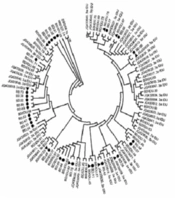
Ranjbar Kermani F, Mousavi Hosseini K, Amini-Kafiabad S, Maghsudlu M, Sharifi Z, et al. Phylogenetic Analysis of NS5B Region of Hepatitis C Genotype 3a Virus among Different Risk Groups in Iran. Hepat Mon. 2020;20(12):e108936. doi: https://doi.org/10.5812/hepatmon.108936
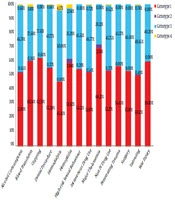
Babaei AH, Safarpour AR, Fattahi MR, Ahmadi V. Epidemiology of Hepatitis C Virus Infection Among 1,959 Patients in Shiraz, Southern Iran, Between 1991 and 2016. Arch Clin Infect Dis. 2020;15(1):e98849. doi: https://doi.org/10.5812/archcid.98849
Alavian S, Kafayee J, Yektaparast B, Rad N, Bakhtiari S, et al. Prevalence of HCV infection and related risk factors among patients on hemodialysis in Qazvin. J Inflamm Dis. 2024;7(5):e155001. doi:
Sayad B, Saeed F, Keyvani H, Rezaii M, Asadi T, et al. Seroepidemiology of Hepatitis C in Kermanshah (West of Iran, 2006). Hepat Mon. 2008;8(2):. doi:
Sabour B, Boromand P, Mehrabi Y, Ghanbari M, Zarrinfam H. Prevalence and Risk Factors of Hepatitis C infection in hemodialysis Patients (Kermanshah , 1999 – 2000). J Kermanshah Univ Med Sci. 2003;7(3):e81264. doi:
More by these authors
Last Update: 3 weeks ago
Last Update: 3 weeks ago
Last Update: 3 weeks ago
Last Update: 6 hours ago
Last Update: 1 day ago
Last Update: 4 days ago