
Fulltext
Full text is available in PDF
Official Journal of Research Center for Gastroenterology and Liver Diseases
Authors
Background: The changing pattern of hepatitis C virus (HCV) infection could have a significant impact on future medical prevention practices and therapies.
Objectives: The purpose of this study was to describe the changing pattern of HCV infection in southwest China using clinical epidemiology, and to assess the association between the genotypes distribution and certain potential risk factors.
Patients and Methods: A retrospective analysis which included 1 208 subjects with chronic HCV registered at the Southwest Hospital (Chongqing, Southwest China) was performed. The information was reviewed and the data collected from clinical records and short telephone interviews when necessary. HCV genotypes were determined by nucleotide sequencing of the CE1 regions followed by phylogenic analysis with the published HCV genotype. HCV genotype distribution was analyzed according to the patients' age, gender, risk exposure, and the initial risk exposure.
Results: Among the 1 208 patients, the HCV subtype 1b was the most prevalent (32.9%), followed by subtype 3b (18.9%), 6a (18.0%), 3a (12.8%) and 2a (10.4%), while subtypes 1a and 6k accounted for cases of HCV infection in only 9 and 3 cases respectively. Individuals older than 40 years were mainly infected with subtypes 1b and 2a, whereas younger patients were predominantly infected with genotypes 3 and 6. Subtypes 1b and 2a were observed more frequently among 44.4% and 16.0% patients respectively, with a history of invasive operations. Subtypes 3b and 6a constituted the majority of HCV infections among intravenous drug users (IDUs) (28.7% and 34.9%, respectively). A significant difference (P < 0.001) was observed between the HCV genotype distributions, according to the potential route of infection.
Conclusion: In southwest China, the most common remaining subtype is the 1b genotype, but this has declined significantly among young patients. This is followed by subtype 3b and 6a which has increased significantly, especially among young patients. The distribution of such genotypes was also variable according to gender and age. The changing pattern of HCV infection was associated with changes in the modes of HCV acquisition, which raises an alarm signal concerning the major steps that need to be taken in order to reduce such infections in southwest China.
Copyright © 2012 Kowsar Corp. All rights reserved.
© 2012, Author(s). This open-access article is available under the Creative Commons Attribution 4.0 (CC BY 4.0) International License (https://creativecommons.org/licenses/by/4.0/), which allows for unrestricted use, distribution, and reproduction in any medium, provided that the original work is properly cited.
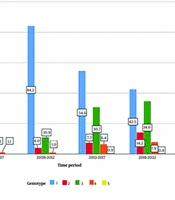
Kömür S, Kurtaran B, Kemal Arslan Y, Kuscu F, Hoşgel Sevdimbaş S, et al. Changing Epidemiology of Chronic Hepatitis C: A University Hospital Experience. Hepat Mon. 2024;24(1):e148127. doi: https://doi.org/10.5812/hepatmon-148127
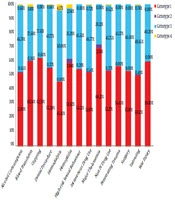
Babaei AH, Safarpour AR, Fattahi MR, Ahmadi V. Epidemiology of Hepatitis C Virus Infection Among 1,959 Patients in Shiraz, Southern Iran, Between 1991 and 2016. Arch Clin Infect Dis. 2020;15(1):e98849. doi: https://doi.org/10.5812/archcid.98849

Hadinedoushan H, Salmanroghani H, Amirbaigy MK, Akhondi-Meybodi M. Hepatitis C Virus Genotypes and Association With Viral Load in Yazd, Central Province of Iran. Hepat Mon. 2014;14(3):e11705. doi: https://doi.org/10.5812/hepatmon.11705
Woltmann J, Burke P, Brady R, Blackard JT. Demographics of Hepatitis C in Southwest Ohio (2010 to 2015). Hepat Mon. 2016;16(8):e37904. doi: https://doi.org/10.5812/hepatmon.37904
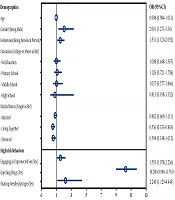
Zhang D, Zhang X, Xu L, Tyrrell DL, Houghton M, et al. Seroepidemiology of Hepatitis C Among Drug Users at a Detoxification Center in Southeast China. Hepat Mon. 2020;20(3):e99249. doi: https://doi.org/10.5812/hepatmon.99249
Last Update: 2 weeks ago
Last Update: 2 weeks ago
Last Update: 2 weeks ago
Last Update: 3 hours ago
Last Update: 9 hours ago
Last Update: 5 days ago