Full Text
Full text is available in PDF
Official Journal of Research Center for Gastroenterology and Liver Diseases
Authors
Clinical and experimental studies have suggested a link between S100 gene expression and neoplastic disorders, however, the molecular mechanisms of this association are not well understood. The aim of this review was to conduct a comprehensive literature search in order to understand the possible underlying molecular mechanisms of this association. We also discuss their application as diagnostic and prognostic markers in colorectal and hepatocellular carcinoma.
We searched Pubmed (NLM) and Web of Science (ISI Web of Knowledge).
S100 genes display a complex expression pattern in colorectal and hepatocel lular carcinoma. They are expressed in tumor and/or tumor stroma cells, and they exert both pro- and antitumorigenic actions. In view of this complexity, it becomes clear that S100 proteins might act as both friend and foe. The biological role of the S100 genes is predicted to depend on the relative contributions of the different cell types at specific stages of tumor progression.
Further research is required in order to uncover the functional role of S100 genes in tumorigenesis. Answers to this issue are needed before we can more fully understand the clinical relevance of S100 protein expression within epithelial tumors, with regard to their potential applicability as biomarkers for diagnosis and therapy decisions.
© 2012, Author(s). This open-access article is available under the Creative Commons Attribution 4.0 (CC BY 4.0) International License (https://creativecommons.org/licenses/by/4.0/), which allows for unrestricted use, distribution, and reproduction in any medium, provided that the original work is properly cited.
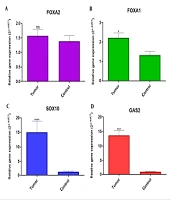
Haghirizadeh M, yousefi D, Fahimi H, Khaleghi S, Hashemi M. FOXA1, FOXA2, SOX10 and GAS2 Gene Expression in Oral Squamous Cell Carcinoma and Their Relationship with Clinicopathological Indices. Int J Cancer Manag. 2022;15(5):e117086. doi: https://doi.org/10.5812/ijcm-117086
Rezae O, Gharagozli K, Jelvehmoghadam H, Goharani R, Hajiesmaeili M. Biochemical Markers in Neurocritical Care. J Cell Mol Anesth. 2016;1(3):e149510. doi: https://doi.org/10.22037/jcma.v1i3.11742
Bassullu N, Turkmen I, Dayangac M, Yagiz Korkmaz P, Yasar R, et al. The Predictive and Prognostic Significance of c-erb-B2, EGFR, PTEN, mTOR, PI3K, p27, and ERCC1 Expression in Hepatocellular Carcinoma. Hepat Mon. 2012;12(10):7492. doi: https://doi.org/10.5812/hepatmon.7492
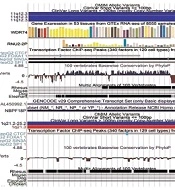
Sethi AA, Shar NA. Identification of Liver Cancer Driver Mutations from COSMIC Data. Int J Cancer Manag. 2023;16(1):e131281. doi: https://doi.org/10.5812/ijcm-131281
Bi MR, Zhu LY, Yan BZ, Chen LY, Wang FX, et al. Association of Upregulated HMGB1 and c-IAP2 Proteins With Hepatocellular Carcinoma Development and Progression. Hepat Mon. 2014;14(12):e23552. doi: https://doi.org/10.5812/hepatmon.23552
Last Update: 2 weeks ago
Last Update: 2 weeks ago
Last Update: 2 weeks ago
Last Update: 1 hour ago
Last Update: 6 hours ago
Last Update: 5 days ago