
Full Text
Full text is available in PDF
Official Journal of Research Center for Gastroenterology and Liver Diseases
Authors
Since the introduction of highly active anti-retroviral regimen for human immunodeficiency virus-1 infection, a significant increase in the incidence of hepatocellular carcinoma has been reported in patients already chronically infected with hepatitis B virus and then given this form of regimen for their retroviral infection.
This phenomenon was initially attributed to the far more prolonged survival of those patients who received this new regimen, which provided sufficient time, allowing hepatitis B virus-induced hepatocellular carcinoma to develop.
The current belief is that the increased incidence of hepatocellular carcinoma is because of co-infection with the two viruses, one known to be hepatocarcinogenic and the other suspected to increase the carcinogenic potential of the other. Because both hepatitis B virus and human immunodeficiency virus -1 are endemic in the Black population of sub-Saharan Africa and are transmitted in similar ways, as many as 20% of this population are co-infected with the two viruses. In this way, the already high risk of Black African patients developing hepatitis B virus-induced hepatocellular carcinoma is further increased.
The pathogenetic mechanism or mechanisms involved in the carcinogenic interaction between the hepatitis B virus and the human immunodeficiency virus-1 in sub-Saharan Black Africans and other populations co-infected with these viruses have yet to be determined.
© 2012, Author(s). This open-access article is available under the Creative Commons Attribution 4.0 (CC BY 4.0) International License (https://creativecommons.org/licenses/by/4.0/), which allows for unrestricted use, distribution, and reproduction in any medium, provided that the original work is properly cited.
Massoumi H, Buchheit K, Gunturu S, Thlick J, Gaglio P. Clinical Characteristics of Chronic Hepatitis B Virus Infection in Immigrants from Sub-Saharan Africa. Hepat Mon. 2017;17(4):e12305. doi: https://doi.org/10.5812/hepatmon.41781
Ramezani A, Banifazl M, Mohraz M, Rasoolinejad M, Aghakhani A. Occult hepatitis B virus infection: A major concern in HIV-infected patients. Hepat Mon. 2011;11(1):. doi:
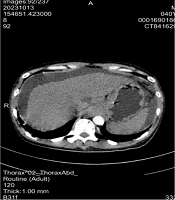
Li C, Che Y, Zhang Y, Xie N, Wang B, et al. Diagnosis and Treatment of Acute-on-Chronic Liver Failure Caused by HIV/HBV Co-infection: A Case Report. Hepat Mon. 2025;25(1):e154285. doi: https://doi.org/10.5812/hepatmon-154285

Karami C, H Adli A, Zhand S, Tabarraei A, Talei R, et al. Study of Genotype, Subtype and Mutation in the S Gene in Hepatitis B Patients Co-infected with HIV in Iran. Jundishapur J Microbiol. 2016;9(12):e34009. doi: https://doi.org/10.5812/jjm.34009
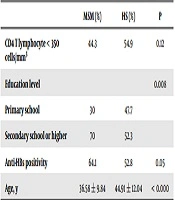
Senoglu S, Yesilbag Z, Kumbasar Karaosmanoglu H, Altuntas Aydin O. Prevalence of HBV/HCV Co-Infection and Associated Risk Factors in People Living with HIV. Hepat Mon. 2020;20(4):e98594. doi: https://doi.org/10.5812/hepatmon.98594
Last Update: 2 weeks ago
Last Update: 2 weeks ago
Last Update: 2 weeks ago
Last Update: 9 hours ago
Last Update: 14 hours ago
Last Update: 5 days ago