Fulltext
The Full text is available in PDF.
International Journal of Cancer Management
The Official Journal of Cancer Research Center (CRC), Shahid Beheshti University of Medical Sciences
Authors
Background: Chest wall irradiation for early breast cancer affects forced vital capacity (FVC), forced expiratory volume in the first second of expiration (FEV1) and may change peripheral oxygen saturation (SpO2). In our institute chest wall is irradiated with a four field technique: two tangential and two oppositional anterior and posterior supraclavicular fields. Regional recurrence in this technique is less than 5 percent. Materials and Methods: We conducted this study to compare changes in FEV1, FVC and SpO2 between standard three field and four fields technique.
Materials and methods: We randomized 51 stage I and II breast cancer cases after modified radical mastectomy and completion of chemotherapy in two groups. In group I patients were treated with four field and in group II with three field technique using cobalt 60 teletherapy. Patients with a history of smoking, pulmonary disease, heart disease and any deformities in chest wall were excluded. Patients were stratified due to central lung distance (CLD), fields separation in tangential fields and filed borders defined in standard manner. Radiotherapy dose was 50.4 Gy in 28 fractions. Spirometry and pulse oxymetry was done before, one month after and three months after the completion of radiotherapy.
Results: FEV1, FVC and FEV1/FVC showed no significant difference between two groups one month and three months after radiotherapy. Also there was no significant difference in FEV1, FVC, FEV1/FVC one month after radiotherapy comparing with pre-radiotherapy values. There were significant differences in FEV1 and FVC reduction three months after radiotherapy in comparison with preradiotherapy values (P<0.001, P<0.006 respectively). SpO2 showed no significant difference between two groups and also in each group after one and three months.
Conclusion: Locoregional radiotherapy of chest wall and supraclavicular lymph nodes causes reduction in FEV1 and FVC three months after radiotherapy but there is no significant difference between three field and four fields techniques. We suggest this study be completed by using pulmonary function tests including spirometry and diffusion capacities.
© 2009, Author(s). This open-access article is available under the Creative Commons Attribution 4.0 (CC BY 4.0) International License (https://creativecommons.org/licenses/by/4.0/), which allows for unrestricted use, distribution, and reproduction in any medium, provided that the original work is properly cited.
Khoshbin khoshnazar A, Banikarimi A, Hatami A, Badeleh M. Is Pulmonary Function Test Insensitive to Possible Pulmonary Complications after Tangential Radiotherapy of Breast Cancer?. Int J Cancer Manag. 2010;3(1):e80657. doi:
Nokhasteh S, Nazemi H, Hejazi P, Dayyani M. Comparison of Dosimetric Parameters Between Field in Field and Conformal Radiation Therapy Techniques in Early Stage of Left Breast Cancer Patients. Int J Cancer Manag. 2019;12(2):e84123. doi: https://doi.org/10.5812/ijcm.84123
Taheri H, Akhavan A, Tavakoli M, Moghareabed R, Kianinia M. Dosimetric Comparison and TCP-NTCP Modeling for Lung, Heart, Left Anterior Descending, and Right Coronary Artery in Left-sided Breast Cancer Conventional and Hypofractionated Radiotherapy. Int J Cancer Manag. 2021;14(12):e117987. doi: https://doi.org/10.5812/ijcm.117987
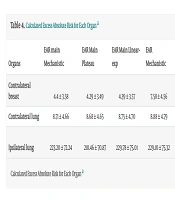
Hashemi N, R Mafi A, Mostaar A, Kamian S. Analysis of Radiation Dose and Estimation of Secondary Cancer Incidence in Organs Exposed to Radiotherapy in Breast Cancer. Int J Cancer Manag. 2025;18(1):e161806. doi: https://doi.org/10.5812/ijcm-161806
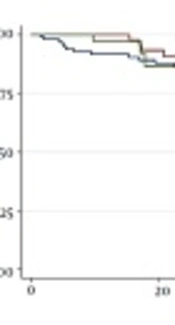
Moini N, Nafissi N, Babaee E, Mirzaei H, Akbari ME. Comparing the Outcome of Boost Dose of Intraoperative Radiotherapy with Electron (IOERT) and Low-kV X-Ray (IOXRT) and External Beam Radiotherapy (EBRT) in Breast Cancer After Neoadjuvant Chemotherapy. Int J Cancer Manag. 2019;12(8):e94547. doi: https://doi.org/10.5812/ijcm.94547
Last Update: 3 weeks ago
Last Update: 3 weeks ago
Last Update: 3 weeks ago
Last Update: 4 hours ago
Last Update: 1 day ago
Last Update: 4 days ago