Fulltext
Full text is available in PDF.
International Journal of Cancer Management
The Official Journal of Cancer Research Center (CRC), Shahid Beheshti University of Medical Sciences
Authors
Background: Doxorubicin is used in treatment of many solid malignancies and lymphomas with poorly understood mechanism underlying tissue injury. Rosemary leaves or extracts were found to contain high antioxidant activity almost equivalent to BHA (Butylated Hydroxy Anesole) and BHT (Butylated Hydroxy Toluene). Thus, the possibility of aqueous rosemary leaves extract (RE) to ameliorate doxorubicininduced histological lesions, apoptosis and oxidative stress in male mice tissues was tested.
Methods: Four doses (25, 125, 250 and 375 mg/kg b. wt.) of RE have used orally two times/ week for 15 days prior to the administration of an intraperitoneal single dose of doxorubicin (25 mg/kg b. wt.). Biochemical, histological and immunohistochemical methods were performed on liver, kidney and heart tissue sections. Results: The positive control group (DXR alone) showed severe histological lesions in the liver, kidneys and heart, including degeneration and inflammatory response accompanied with significant increase in the apoptotic index (Bax/ Bcl-2) and oxidative stress. Rosemary extract was proved to significantly attenuate the doxorubicin-related toxic effects via more than one mechanism such as: the powerful inhibition of lipid per-oxidation, the stimulation of the synthesis of cellular antioxidants, the decrease of the inflammatory response and the reduction of the apoptotic index.
Conclusion: The efficacy of the tested doses of RE in improving doxorubicindeteriorated effects was organ specific. The most potent dose of RE to abate the lesions in all examined tissues , was 125mg/ kg b. wt and the less effective was 375 mg/ kg b. wt
© 2010, Author(s). This open-access article is available under the Creative Commons Attribution 4.0 (CC BY 4.0) International License (https://creativecommons.org/licenses/by/4.0/), which allows for unrestricted use, distribution, and reproduction in any medium, provided that the original work is properly cited.
Abdella E, Ahmed R. Suppression of Doxorubicin Apoptotic, Histopathologic, Mutagenic and Oxidative Stress Effects in Male Mice Bone Marrow and Testis Tissues by Aqueous Rosemary Leaves Extract. Int J Cancer Manag. 2009;2(1):e80512. doi:
Amar Y, Meddah B, Bonacorsi I, Costa G, Pezzino G, et al. Phytochemicals, Antioxidant and Antiproliferative Properties of Rosmarinus officinalis L on U937 and CaCo-2 Cells. Iran J Pharm Res. 2017;16(1):e124931. doi: https://doi.org/10.22037/ijpr.2017.1980
Hemmatan Atarbashi R, RezaKaramibonari A, Farahvash T. Anti-inflammatory and anti-oxidative effects of Ganoderma lucidum on liver injury induced by doxorubicin in rats. koomesh. 2023;25(3):e152827. doi:
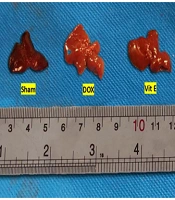
Ahsan S, Hesaraki S, Arfaee F, Vazir B. Combined the Vitamin E and Trimetazidine Therapy Ameliorate Hepatic Injury from Doxorubicin Administration in Mice. Int J Cancer Manag. 2025;18(1):e158213. doi: https://doi.org/10.5812/ijcm-158213
Seyedemadi P, Rahnema M, Bigdeli MR, Oryan S, Rafati H. The Neuroprotective Effect of Rosemary (Rosmarinus officinalis L.) Hydro-alcoholic Extract on Cerebral Ischemic Tolerance in Experimental Stroke. Iran J Pharm Res. 2016;15(4):e125212. doi: https://doi.org/10.22037/ijpr.2016.1938
Last Update: 3 weeks ago
Last Update: 3 weeks ago
Last Update: 3 weeks ago
Last Update: 4 hours ago
Last Update: 1 day ago
Last Update: 4 days ago