Fulltext
The Full text is available in PDF.
International Journal of Cancer Management
The Official Journal of Cancer Research Center (CRC), Shahid Beheshti University of Medical Sciences
Authors
Background: Euthanasia is an important subject that concerns law and medicine as well as morality and religion in the 21St century. Euthanasia has become a challengeable problem in scientific arena. In some countries, legal and medical practitioners are allowed to kill those cancer patients who suffer from excessive pain while incur enormous amount of expenses for their treatments.
Methods: We used 3 main sources to find Islamic views on euthanasia: First, the Islamic primary source, the Holy Quran, which is the most important and reliable source for finding Islamic perspectives. Second, traditions (hadith) which include Prophet Mohammad's and his relatives's (Imams) advices. Third, religious opinions and decrees (Fatwas) from great Muslim scholars who are called Mofti Al-Aazam in Sunni tradition and Ayatollah Al-Ozma in Shiite tradition.
Results: Based on the reasons proposed in the references, it can be concluded that euthanasia is forbidden in Islamic theology; and no types of euthanasia are allowed or accepted in Islam; and any action whether voluntary or involuntary that results in euthanasia of cancer patients is considered suicide and is strongly forbidden in Islam.
Conclusion: Euthanasia is purely illegal in Judaism, Christianity, and Islam. In this study, we introduced a religious law based on Islamic point of view and Emamyeh section in Islam. To investigate the sensitive issue of euthanasia in Islam, the Holy Quran as the fundamental reference of Islamic law and Sonnah as the reference of Hadith (Traditions) were studied.
© 2011, Author(s). This open-access article is available under the Creative Commons Attribution 4.0 (CC BY 4.0) International License (https://creativecommons.org/licenses/by/4.0/), which allows for unrestricted use, distribution, and reproduction in any medium, provided that the original work is properly cited.
Asadi-Lari M, Goushegir S, Madjd Z, Latifi N. Spiritual care at the end of life in the Islamic context, a systematic review. Int J Cancer Manag. 2008;1(2):e80412. doi:
Rahimi R, Rahmani A, Pakpour V, Moradi N, Mohammadpoorasl A, et al. Nurses’ Opinion About Euthanasia in East Azerbaijan Province, Iran. Jentashapir J Cell Mol Biol. 2015;6(4):e60311. doi: https://doi.org/10.17795/jjhr-22836
Ebrahimi S, Ashkani-Esfahani S. The Intersection of Muslim Physician's Religious Beliefs and End-of-Life Care: Ethical Considerations. Thrita J Neu. 2019;7(2):e62251. doi: https://doi.org/10.5812/thrita.62251
Zandian P, Habibi M, Seydi Z, Kleman B, Tayeri N, et al. How Gender, Majors, Religion and Mental Health Affect the Justified Death Attitude?. Iran J Psychiatry Behav Sci. 2017;11(4):e7700. doi: https://doi.org/10.5812/ijpbs.7700
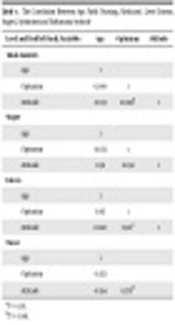
Hazrati E, Alizadeh AR, Asadi ZS. The Relationship Between Students' Attitude Toward Euthanasia and Optimism: A Descriptive Study. Ann Mil Health Sci Res. 2019;17(2):e90917. doi: https://doi.org/10.5812/amh.90917
Last Update: 3 weeks ago
Last Update: 3 weeks ago
Last Update: 3 weeks ago
Last Update: 7 hours ago
Last Update: 1 day ago
Last Update: 4 days ago