Fulltext
Full-text is available in PDF file.
Authors
Introduction: Various laboratory markers have been proposed to assess prognosis in myocardial infarction. Serum cortisol is one such laboratory marker. There are only few studies done in the recent past which prove that cortisol is a prognostic marker in STEMI.
Methods: We studied a total of 168 patients who presented with STEMI and underwent primary percutaneous intervention (PPCI) within 12 hours of symptom onset between April 2016 and November 2016.
Results: The average age of study population was 61 ± 0.12 years. Males were predominant (n = 132, 78.57%). 155 patients survived, whereas 13 patients died in the hospital. Mean syntax score was 16.65 ±5. 33 among patients who died, whereas it was 13.11 ± 5.62 among survivors (P = 0.03). Mean cortisol was significantly higher among the patients who died (46.13 ± 14.61 mcg/dl) than the survivors (31.16 ± 13.16 mcg/dl) (P = 0.003). The ROC AUC for in-hospital mortality was 0.77 (95% confidence interval [CI], 0.645–0.897). An optimal cut-point identified from the ROC curve was a random serum cortisol concentration of 33.66 mcg/dl, with corresponding sensitivity and specificity of 69.2 % and 64 %, respectively. At a cut-point of 29.55 mcg/dl, sensitivity and specificity were 84.6 and 50 %, respectively.
Conclusion: This study showed that serum cortisol level is a strong predictor of mortality in patients undergoing PPCI for STEMI. Levels more than 33.66 mcg/dl can predict mortality with a sensitivity of almost 70 percent and specificity of 64 percent
© 2019, International Journal of Cardiovascular Practice. This open-access article is available under the Creative Commons Attribution-NonCommercial 4.0 (CC BY-NC 4.0) International License (https://creativecommons.org/licenses/by-nc/4.0/), which allows for the copying and redistribution of the material only for noncommercial purposes, provided that the original work is properly cited.
Vakili H, Sadeghi R, Toofaninejad N, Akbari T, Kachoueian N. One- and Six-month Outcomes of Patients with Non-ST Elevation Myocardial Infarction. Int J Cardiovasc Pract. 2016;1(3):e130050. doi: https://doi.org/10.21859/ijcp-010303
Iranmanesh F, Sedighi B, Ziaadini B. Prognostic Value of Cortisol in Patients with Acute Ischemic Stroke. Zahedan J Res Med Sci. 2017;19(2):e6187. doi: https://doi.org/10.5812/zjrms.6187
Attar A, Zahed M, Hosseinpour A, Azami P, Kamalpour J, et al. Predictive Value of Global Longitudinal Strain on the Recovery of Left Ventricular Function Following ST-Segment Elevation Myocardial Infarction. Shiraz E-Med J. 2024;25(4):e142307. doi: https://doi.org/10.5812/semj-142307
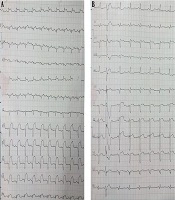
Motedayen M, Khederlou H. ST-Segment Elevation Myocardial Infarction with Normal Coronary Arteries Angiography. Multidiscip Cardio Annal. 2020;11(2):e104397. doi: https://doi.org/10.5812/mca.104397
Ghaemian A, Masoumi S, Mohammadpour R. Prognostic Value of Troponin T after Elective Percutaneous Coronary Intervention. Int Cardiovasc Res J. 2017;5(1):e14234. doi:
Last Update: 1 month ago
Last Update: 1 month ago
Last Update: 1 month ago
Last Update: 2 hours ago
Last Update: 13 hours ago
Last Update: 4 days ago