
1. Introduction
Lung transplantation (LTx) recipients are vulnerable to a wide range of complications, including neurological disorders and infections (1, 2).
Infective endocarditis (IE) is a serious and potentially fatal disease affecting both native and prosthetic heart valves (3, 4). Approximately 5% - 10% of patients with IE have right-sided infective endocarditis (RIE), and the tricuspid valve (TV) is involved in approximately 90% of RIE cases (4). A few studies have reported IE after LTx (1). The clinical presentation of IE varies widely, ranging from acute to subacute courses. The most serious extracardiac complications of IE include neurological and cerebrovascular involvement (3).
Early major neurological complications after LTx are an important cause of morbidity and can adversely affect patients' quality of life. Among these complications, cerebrovascular events such as stroke may require urgent medical evaluation and management (2).
Herein, we report a 46-year-old man who developed RIE with a cerebrovascular accident (CVA) after LTx.
2. Case Presentation
A 46-year-old man with idiopathic pulmonary fibrosis underwent single LTx. The transplantation was technically successful; however, the patient remained oxygen-dependent. After 10 days, he developed neurological symptoms, tachycardia, marked leukocytosis, and elevated erythrocyte sedimentation rate (ESR) and C-reactive protein (CRP) levels. The evaluations confirmed CVA accompanied by RIE.
Pre-transplantation evaluations, including cardiac assessment, were unremarkable. Echocardiography showed normal cardiac function, with a left ventricular ejection fraction of 55% and normal valves, and his vital signs were stable. Immunosuppressants and empiric broad-spectrum antibiotics, including meropenem, ciprofloxacin, and vancomycin, were administered. He was extubated on postoperative day 1, and limited echocardiography on day 5 was normal.
The patient developed tachycardia and marked leukocytosis on day 10 (Table 1); therefore, blood cultures (BCx), central venous line cultures, and Foley catheter cultures were obtained. Within 48 hours, his condition deteriorated, with acute visual loss, right hemiparesis, decreased consciousness, irritability, and worsening hypoxia.
Table 1.
The Patient's Laboratory Findings on Day 1 of Symptom Onset a
| Test | Value | Reference Range |
|---|---|---|
| White blood cell (/μL) | 31.1 | 4 - 11 |
| Neutrophil (%) | 84 | 45 - 75 |
| Lymphocyte (%) | 12 | 16 - 46 |
| RBC (/μL) | 6.03 | 4.5 - 5.9 |
| Hemoglobin (g/dL) | 13.8 | 14 - 17.5 |
| Hematocrit (%) | 40.5 | 41.5 - 50.4 |
| MCV (µm3) | 87.1 | 80 - 100 |
| Platelets (×103/μL) | 246 | 150 - 450 |
| pH | 7.16 | 7.36 - 7.41 |
| PCO2 | 48.2 | 40 - 45 |
| HCO3 | 24 | 21 - 28 |
| Blood culture | VRE | |
| ESR (mm) | 87 | < 20 |
| CRP (mg/dL) | 54 | < 10 |
a Abbreviations: CRP, C-reactive protein; ESR, erythrocyte sedimentation rate; HCO3, bicarbonate; MCV, mean corpuscular volume; PCO2, partial pressure of carbon dioxide; RBC, red blood cell; VRE, vancomycin-resistant Enterococcus.
Bedside echocardiography revealed preserved left ventricular function, a dilated right ventricle with mild to moderate dysfunction, mild to moderate tricuspid regurgitation, and a mass in the right atrium (RA) suggestive of a clot or vegetation. Transthoracic echocardiography (TTE) confirmed a 16 × 15 mm RA mass suggestive of a thrombus or vegetation. Computed tomography pulmonary angiography (CTPA) and brain computed tomography (CT) were performed simultaneously.
Brain CT showed a 30 × 19 mm hypodense area in the left parietal lobe suggestive of acute ischemic changes or septic emboli (Figure 1). Computed tomography pulmonary angiography showed no pulmonary artery thrombi but confirmed a hypodense filling defect in the RA, most consistent with a clot (Figure 2A and B). No intracardiac septal defect or right-to-left shunt was identified. Doppler ultrasonography ruled out deep vein thrombosis in the extremities. Central venous line and Foley catheter cultures were negative, but BCx isolated vancomycin-resistant enterococci (VRE), prompting the initiation of linezolid. These findings supported the concurrent diagnosis of stroke and TVIE after LTx.
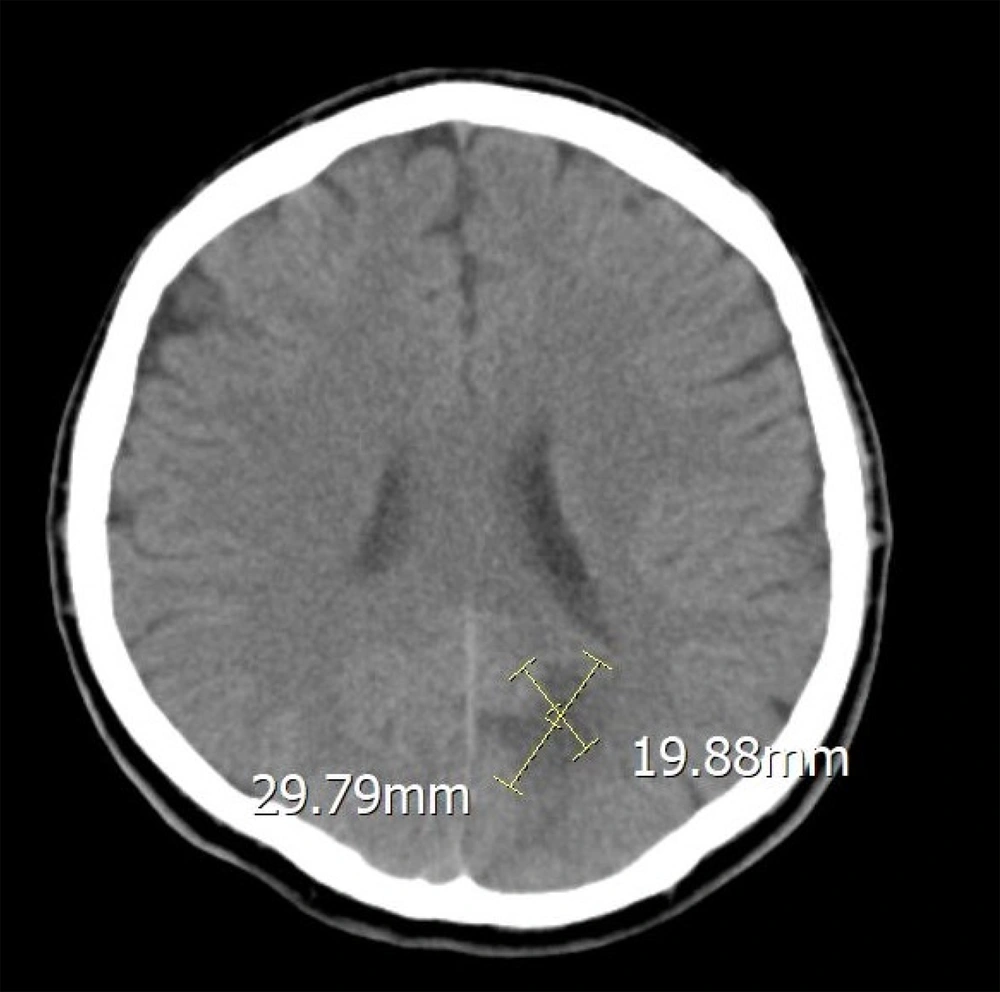
Figure 1.
Brain computed tomography scan without contrast and with 3-dimensional reconstruction showing a 30 × 19 mm hypodense area in the left parietal lobe, favoring acute ischemic changes or septic emboli. No midline shift or herniation is seen.
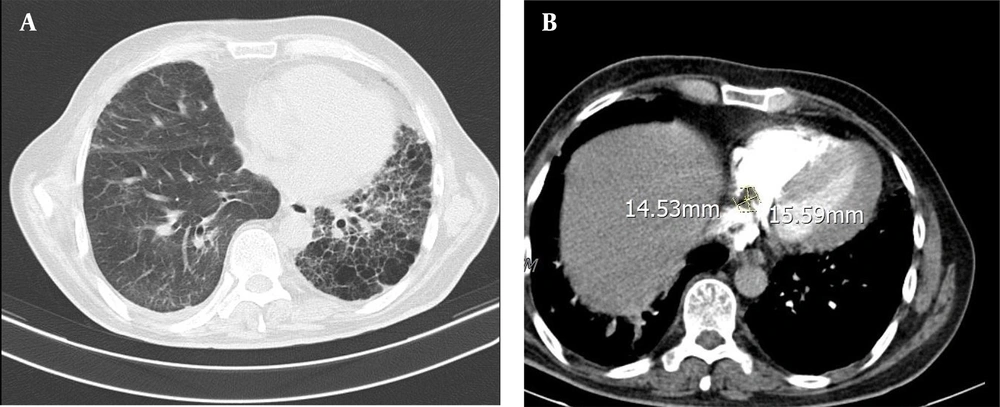
Figure 2.
Pulmonary computed tomography angiography with and without intravenous contrast and with 3-dimensional reconstruction. A, Evidence of right lung transplantation is seen, and chronic fibrotic changes are seen in the left lung. B, No intracardiac septal defects, ventricular or atrioventricular, were detected. A hypodense filling defect is seen in the RA and is most consistent with a clot.
Because of decreased respiratory function, the patient required re-intubation on day 11. Anticoagulation was also administered. Repeat BCx yielded VRE susceptible to ampicillin. Accordingly, antimicrobial therapy was changed to ampicillin-sulbactam and colistin.
The patient was extubated six days after initiation of appropriate treatment. On day 24, his condition improved, with significant neurological recovery (Table 2). Follow-up echocardiography after 6 weeks showed regression of the atrial mass to 12 × 11 mm and improved TV function. The third BCx was negative; therefore, antibiotics were discontinued after six weeks. He remained stable, and after 6 months, the RA mass had completely resolved, and he reported no complaints or symptoms.
Table 2.
The Patient's Laboratory Findings on Day 24 of Symptom Onset a
| Test | Value | Reference Range |
|---|---|---|
| White blood cell (/μL) | 10230 | 4 - 11 |
| Neutrophil (%) | 56.1 | 45 - 75 |
| Lymphocyte (%) | 30.5 | 16 - 46 |
| RBC (/μL) | 3.68 | 4.5 - 5.9 |
| Hemoglobin (g/dL) | 10.8 | 13 - 17.5 |
| Hematocrit (%) | 33.2 | 41.5 - 50.4 |
| MCV (µm3) | 87.5 | 80 - 100 |
| Platelets (×103/μL) | 347 | 150 - 450 |
| pH | 7.32 | 7.36 - 7.41 |
| PCO2 | 47 | 40 - 45 |
| HCO3 | 32.7 | 21 - 28 |
| Blood culture | Negative | |
| ESR (mm) | 31 | < 20 |
| CRP (mg/dL) | 11 | < 10 |
a Abbreviations: CRP, C-reactive protein; ESR, erythrocyte sedimentation rate; HCO3, bicarbonate; MCV, mean corpuscular volume; PCO2, partial pressure of carbon dioxide; RBC, red blood cell.
3. Discussion
Immunosuppressive therapy in LTx recipients increases susceptibility to a range of infections. In addition, cerebrovascular complications after LTx are clinically important. This case highlights the concurrent occurrence of TVIE and stroke after LTx in a patient without any identified intracardiac right-to-left shunt. After broad-spectrum antibiotic therapy and anticoagulation, the patient's symptoms improved and the mass resolved. Severe infectious and inflammatory states may be complicated by vascular events and thromboembolic phenomena, creating diagnostic and therapeutic challenges, particularly in critically ill patients (5).
In the management of IE, antibiotic therapy should be modified after the responsible microorganism has been identified and antimicrobial susceptibility has been determined (6). Intravenous antibiotics for 4 - 6 weeks are the primary treatment for TVIE (4). In this patient, linezolid was initiated and was subsequently changed to ampicillin-sulbactam plus colistin for six weeks according to culture results.
Paradoxical embolism, or systemic embolic events, usually occurs when venous emboli bypass the pulmonary circulation through a cardiac defect, such as a patent foramen ovale (PFO) or another septal defect, allowing entry into the systemic circulation and increasing the risk of major end-organ complications (7). Cerebrovascular accident following IE is not uncommon (8), and previous studies have reported several cases of systemic embolic events following RIE; however, most cases occurred in the setting of a PFO or another intracardiac shunt (9, 10). In our patient, IE was right-sided and no intracardiac shunt was detected. Therefore, a direct causal relationship between TVIE and stroke could not be established.
Positron emission tomography-computed tomography can accurately distinguish between vegetation and thrombus (11). Brain magnetic resonance imaging (MRI) was also recommended to differentiate ischemic stroke from septic emboli. However, because of the patient's clinical condition, brain MRI, positron emission tomography-computed tomography, and further advanced evaluations could not be performed.
In a study of LTx recipients, approximately 10% of patients experienced major neurological complications within two weeks after LTx, and these complications were associated with considerable morbidity and mortality. Furthermore, early major neurological complications often occurred in conjunction with non-neurological post-transplantation complications and were associated with poorer functional and survival outcomes (2). This finding is consistent with our patient's presentation, in which stroke occurred concurrently with IE after LTx. Inflammatory pathways may also influence stroke severity and recovery, as clinical research in ischemic stroke has linked inflammatory biomarkers, including interleukin-1 (IL-1), interleukin-6 (IL-6), neutrophil-to-lymphocyte ratio (NLR), and platelet-to-lymphocyte ratio (PLR), with neurological outcomes (12).
Therefore, LTx recipients should be considered at risk for neurological complications, particularly stroke. Enhanced pre-transplantation, intraoperative, and postoperative evaluation of high-risk patients may help mitigate cerebrovascular events (2). Moreover, timely recognition and management of acute ischemic stroke remain essential, as delays in hospital presentation, treatment decision-making, and eligibility assessment are important barriers to thrombolytic therapy and may adversely affect neurological outcomes (13).
The prognosis of RIE is relatively favorable because most patients respond well to antibiotic treatment (6). However, transplant recipients have increased risks of morbidity and mortality because of immunosuppressive therapies. Coordinated multidisciplinary care improves survival and functional recovery (8).
The concurrent occurrence of stroke and TVIE may instead reflect the high burden of early post-transplant complications, including infection, systemic inflammation, critical illness, and thromboembolic risk. Nevertheless, an occult or transient right-to-left shunt could not be completely excluded because advanced diagnostic modalities were limited by the patient's clinical condition. The favorable outcome after both early post-transplant infection and stroke further underscores the importance of rapid diagnosis, pathogen-directed antimicrobial therapy, antithrombotic treatment, and coordinated multidisciplinary management.
This case highlights the importance of post-transplant complications such as IE and stroke. Therefore, patients should be monitored for possible complications after transplantation, and when clinical suspicion is present, appropriate investigations should be performed to prevent subsequent problems. Prompt recognition, pathogen-directed antimicrobial therapy, antithrombotic treatment, and coordinated multidisciplinary management were important for neurological recovery and regression of the intracardiac lesion. The patient's survival and favorable recovery despite early post-transplant infection and stroke further support the importance of timely diagnosis and individualized multidisciplinary care.