
1. Background
Diabetes mellitus (DM) is one of the main chronic medical conditions worldwide in all nationalities and social classes (1). In 2017, the International Diabetes Federation reported that 451 million patients had DM, and this will grow to 693 million by 2045 (2). It causes several complications. Among them, sleep disorders have been less noticed (3). During the previous decades, the prevalence of sleep disturbances and deprivation has increased dramatically (4). Ongoing patient self-management education and support are critical for preventing acute and chronic complications in DM (5), but it seems that diabetic patients are less informed about sleep health. Previous studies by Zhu et al. (6) and van Dijk et al. (7) reported poor sleep quality in 47.1% of patients with T2DM and 35.4% in T1DM, respectively.
The third edition of the International Classification of Sleep Disorders classifies sleep disorders into insomnia, sleep-related breathing disorders, central disorders of hypersomnolence, circadian rhythm sleep-wake disorders, parasomnias, and sleep-related movement disorders (8). It is noteworthy that the high risk of various diseases such as obesity and Type 2 diabetes mellitus (T2DM) occurs due to impaired sleep quality and quantity (9). Sleep disturbance, insufficient or excessive sleep, and irregular sleep-wake patterns have been related to several body dysfunctions such as endocrine system and metabolic health (10) and increased prevalence and incidence of diabetes or the poor glycemic control of diabetic patients (11).
Reutrakul et al. reported associations between glycemic control and sleep quality or duration (12). Inadequate sleep and fragmented sleep are both associated with abnormal glucose metabolism and sleep deprivation. Sleep deprivation directly affects glucose tolerance by modulating insulin sensitivity (13, 14). Besides, sleep disorders and intermittent hypoxia may affect glucose metabolism in the body (6). Despite the evidence showing the relationship between sleep deficiencies and T2DM, little attention has been paid to patients with Type 1 diabetes mellitus (T1DM) (12). A recent systematic analysis showed significant heterogeneity among sleep disturbances and DM-related outcomes (15). Thus, we aimed to explore the subjective quantitative and qualitative sleep characteristics and the factors affecting sleep interruption in patients with T1DM and T2DM. We further evaluated the association of sleep interruptions with glycemic control in patients with diabetes mellitus. The most important reason for performing this study was to find a way to improve patients’ sleep quality, especially in young patients with T1DM who are anxious about probable complications.
2. Objectives
Our study is novel as it studied both T1DM and T2DM and evaluated the causes of poor sleep in more detail to find an association between poor glycemic control and sleep disorders.
3. Methods
3.1. Study Design
This is a cross-sectional study conducted on 266 T1DM and T2DM adult patients. They attended the Guilan University of Medical Sciences’ outpatient endocrinology clinic at their regular follow-ups from November 2019 to November 2020. Patients were recruited by convenient sampling based on their diagnosis. The diabetes of the patients was approved by an endocrinologist based on their symptoms and paraclinical examinations. We excluded subjects with a previous diagnosis of sleep disorders based on the patients’ self-statement, uncontrolled psychiatric disorders or use of antipsychotic medications, gestational diabetes, age < 18 years, traveling across time zones in the previous month, and chronic use of systemic glucocorticoids. Written informed consent was obtained from the participants. Ethical approval was obtained from the Ethics Committee of the Vice-Chancellory of Research at Guilan University of Medical Sciences (Number: IR.GUMS.REC.1398.401, date: 2019-11-09).
3.2. Data Gathering
Patients completed an online survey consisting of demographic and disease-related characteristics, as well as the Pittsburgh Sleep Quality Index (PSQI) to evaluate sleep quality and assess subjective causes of sleep interruptions. Demographic characteristics were age, sex, education level, job, marital status, weight, height, and neck size. Body mass index (BMI) was calculated based on the self-reported weight and height with the formula of weight (kg)/height (m)2. Disease-related variables were DM types and DM-related complications, types of treatment and medications, DM duration, and other chronic comorbid conditions. Laboratory indices were hemoglobin A1C (HbA1c), fasting blood sugar (FBS), and 2-hour postprandial blood sugar (2HPPBS). We referred the patients to specific reliable laboratories for measuring HbA1c. These laboratories had the same methods of measurement and used the same kits. Besides, the quality of sleep was assessed by the PSQI.
3.3. Assessment of Subjective Sleep Characteristics
The pittsburg sleep quality index (PSQI) is a validated 19-item self-rated questionnaire. It assesses subjective sleep quality in the previous month. Nineteen items indicate seven "component" scores, including subjective sleep quality, sleep latency, sleep duration, habitual sleep efficiency, sleep disturbances, use of sleeping medication, and daytime dysfunction. The cumulative scores of these seven items indicate the global score. Each component score rates from 0 to 3. The global score ranges from 0 to 21, with higher scores indicating poorer sleep quality (16). The reliability and validity of the Persian version of the PSQI have been assessed previously in Iran (17-19). Using the cutoff point of five on the PSQI, we created two subgroups. A global PSQI score > 5 indicates poor sleep quality, with a satisfactory sensitivity (90%) and specificity (87%) when compared with objective clinical and laboratory measures (15). Thus, those with the PSQI of less than five were considered good sleepers (GS), and those with the PSQI of five or higher were considered poor sleepers (PS).
3.4. Statistical Analyses
Data were analyzed using SPSS version 26 (SPSS, Chicago, IL, USA). Data were reported by frequency (percent) or mean ± standard deviation. The Shapiro-Wilk test was used to determine the normality of the distribution. Continuous variables were compared using the independent t-test or one-way ANOVA, and the χ2 or Fisher’s exact test was used to compare categorical variables. Odds ratios (OR) with 95% confidence intervals (CI) were calculated with logistic regression. A linear regression model was performed to examine the association between sleep quality measured by PSQI and HbA1c adjusted for age, sex, BMI, and diabetes-related macrovascular and microvascular complications. A P-value of less than 0.05 was considered statistically significant.
4. Results
In this study, 266 patients with DM with a mean age of 47.00 ± 19.04 years were enrolled. Of them, 40.2% had T1DM, and 59.8% had T2DM. The mean HbA1c values did not differ significantly between T1DM and T2DM (7.74 ± 1.50% and 7.43 ± 1.97%, respectively). The mean BMI and DM duration of participants were 26.55 ± 5.37 kg/m2 and 12.58 ± 8.40 years, respectively. Table 1 shows the comparison of demographic and blood chemistry indices between good sleepers (GS) and poor sleepers (PS). As indicated, 185 (69.5%) patients reported poor sleep, according to the PSQI. There was no significant difference between T1DM and T2DM patients in the report of poor sleep. There was a higher proportion of female patients in the PS group (P = 0.005). Further, the PS group had more housekeepers and fewer students (P = 0.041), higher BMI (P = 0.013), higher prevalence of diabetes-related complications (P < 0.0001), higher HbA1c (P = 0.001), and higher 2-hour postprandial blood sugar (2HPPBS) (P = 0.033). The participants who reported sleep time of fewer than five hours or more than seven hours had significantly higher HbA1c than those who slept 5 - 7 hours (P = 0.017).
Table 1.
Comparison of Demographic, Disease-related, and Hematologic Indices in Good and Poor Sleepers in Patients with Diabetes Mellitus a
| Parameters | Total (N = 266) | Good Sleeper (N = 81) | Poor Sleeper (N = 185) | P-Value |
|---|---|---|---|---|
| Sex (female) | 174 (65.4) | 43 (53.1) | 131 (70.8) | 0.005 a |
| Age (y) | 47.00 ± 19.04 | 45.41 ± 19.37 | 47.70 ± 18.92 | 0.369 b |
| Marital status (married) | 182 (71.4) | 52 (64.2) | 130 (70.3) | 0.270 a |
| Education | 0.368 a | |||
| Less than diploma | 59 (23.1) | 18 (23.4) | 41 (23.0) | |
| Diploma or bachelor | 150 (58.8) | 49 (63.6) | 101 (56.7) | |
| Postgraduate | 46 (18.0) | 10 (13.0) | 36 (20.2) | |
| Employment | 0.041a | |||
| Unemployed | 17 (6.5) | 5 (6.4) | 12 (6.5) | |
| Employed or retired | 138 (52.7) | 45 (57.7) | 93 (50.5) | |
| Housekeeper | 67 (25.6) | 12 (15.4) | 55 (29.9) | |
| Student | 40 (15.3) | 16 (20.5) | 24 (13.0) | |
| BMI (kg/m2) | 26.55 ± 5.37 | 25.30 ± 4.51 | 27.09 ± 5.62 | 0.013b |
| DM type | 0.910a | |||
| Type 1 | 107 (40.2) | 33 (40.7) | 74 (40.0) | |
| Type 2 | 159 (59.8) | 48 (59.3) | 111 (60.0) | |
| Other chronic disease (yes) | 134 (50.8) | 39 (48.8) | 95 (51.6) | 0.667a |
| DM duration (y) | 12.58 ± 8.40 | 11.93 ± 7.87 | 12.85 ± 8.62 | 0.420b |
| Treatment type (insulin) | 147 (55.3) | 42 (51.9) | 105 (56.8) | 0.459a |
| Macrovascular and microvascular complications (yes) | 80 (30.1) | 9 (11.1) | 71 (38.4) | < 0.0001 b |
| HbA1c (%) | 7.64 ± 1.54 | 7.17 ± 1.06 | 7.84 ± 1.67 | 0.001 c |
| FBS (mg/dL) | 144.47 ± 55.52 | 138.09 ± 54.34 | 147.25 ± 55.94 | 0.225 b |
| 2HPPBS (mg/dL) | 188.26 ± 71.75 | 175.21 ± 53.48 | 193.88 ± 77.80 | 0.033 b |
Abbreviations: HbA1c, glycated hemoglobin; FBS, fasting blood sugar; 2HPPBS, 2-hour postprandial blood sugar.
a Values are expressed as No. (%) or mean ± SD.
b Chi-square
c Independent t-test
Table 2 shows the data on the reasons for sleep interruptions in GS and PS groups. A higher proportion of PS compared to GS reported sleep interruptions (70.3% vs. 29.6%, P < 0.0001). The most prevalent causes of sleep interruptions were midnight or early morning awakenings, uncomfortable breathing, waking up to use a bathroom, feeling hot, feeling cold, pain, having cough or snoring, and bad dreams. The odds ratio of less than one shows fewer odds of being characterized as GP.
Table 2.
Comparison of Reasons for Sleep Interruption in Good and Poor Sleepers in Patients with Diabetes Mellitus a
| Parameters | Poor Sleepers (N = 185) | Good Sleepers (N = 81) | OR (95% CI) | P-Value |
|---|---|---|---|---|
| Midnight or early morning awakenings | 130 (70.3) | 24 (29.6) | 0.18 (0.10 - 0.32) | < 0.0001 |
| Waking up to use a bathroom | 125 (67.6) | 39 (48.1) | 0.45 (0.26 - 0.76) | < 0.005 |
| Uncomfortable breathing | 25 (13.5) | 1 (1.2) | 0.08 (0.01 - 0.60) | < 0.05 |
| Coughing or snoring loudly | 47 (25.4) | 14 (17.3) | 0.61 (0.32 - 1.19) | < 0.149 |
| Feeling too cold | 37 (20.0) | 3 (3.7) | 0.15 (0.05 - 0.52) | < 0.005 |
| Feeling too hot | 56 (30.3) | 14 (17.3) | 0.48 (0.25 - 0.93) | < 0.05 |
| Having bad dreams | 49 (26.5) | 11 (13.6) | 0.44 (0.21 - 0.89) | < 0.05 |
| Having pain | 63 (34.1) | 4 (4.9) | 0.10 (0.04 - 0.29) | < 0.0001 |
a Values are expressed as No. (%).
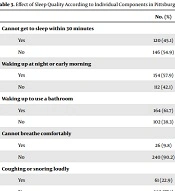
Table 3 shows the association between the subjective causes of sleep interruptions and HbA1c. Problems with sleep initiation, sleep maintenance, and early morning awakenings were associated with higher HbA1c. The participants who responded “yes” to “cannot get to sleep within 30 minutes”, had higher HbA1c than those who responded “no” (8.00% vs. 7.41%, P < 0.005). In addition, the participants who responded “yes” to “waking up at night or early morning” had higher HbA1c than those who responded “no” (7.82% vs. 7.49%, P < 0.05). Further, “waking up to use a bathroom”, “having pain”, and “coughing or snoring loudly” were associated significantly with higher HbA1c (all P-values < 0.05).
Table 3.
Relationships of Sleep Quality According to Individual Components in Pittsburgh Sleep Quality Index with Hemoglobin A1c a
| No. (%) | HbA1c (%) | P-Value | |
|---|---|---|---|
| Cannot get to sleep within 30 minutes | 0.003 | ||
| Yes | 120 (45.1) | 8.00 ± 1.71 | |
| No | 146 (54.9) | 7.41 ± 1.47 | |
| Waking up at night or early morning | 0.048 | ||
| Yes | 154 (57.9) | 7.82 ± 1.69 | |
| No | 112 (42.1) | 7.49 ± 1.48 | |
| Waking up to use a bathroom | 0.002 | ||
| Yes | 164 (61.7) | 7.91 ± 1.67 | |
| No | 102 (38.3) | 7.31 ± 1.43 | |
| Cannot breathe comfortably | 0.149 | ||
| Yes | 26 (9.8) | 8.13 ± 1.68 | |
| No | 240 (90.2) | 7.63 ± 1.60 | |
| Coughing or snoring loudly | 0.030 | ||
| Yes | 61 (22.9) | 8.07 ± 1.64 | |
| No | 205 (77.1) | 7.56 ± 1.58 | |
| Feeling too cold | 0.095 | ||
| Yes | 40 (15.0) | 8.07 ± 1.97 | |
| No | 226 (85.0) | 7.61 ± 1.53 | |
| Feeling too hot | 0.138 | ||
| Yes | 70 (26.3) | 7.93 ± 1.66 | |
| No | 196 (73.7) | 7.59 ± 1.59 | |
| Having bad dreams | 0.237 | ||
| Yes | 60 (22.6) | 7.90 ± 1.68 | |
| No | 206 (77.4) | 7.62 ± 1.58 | |
| Having pain | 0.002 | ||
| Yes | 67 (25.2) | 8.20 ± 1.84 | |
| No | 199 (74.8) | 7.51 ± 1.49 | |
| Taking medications to sleep | 0.624 | ||
| Yes | 51 (19.2) | 7.58 ± 1.60 | |
| No | 215 (80.8) | 7.70 ± 1.61 | |
| Troubles with staying awake during daily activities | 0.210 | ||
| Yes | 20 (7.5) | 8.37 ± 2.54 | |
| No | 246 (92.5) | 7.62 ± 1.50 | |
| Problems with keeping up enough enthusiasm | 0.904 | ||
| Yes | 95 (35.7) | 7.70 ± 1.49 | |
| No | 171 (64.3) | 7.67 ± 1.68 |
a Yes: ≥ 2 times a week over the last month; No: < 2 times a week over the last month
Linear regression analysis showed that sleep quality was negatively related to HbA1c when adjusted for age, sex, BMI, and DM-related complications (P = 0.003). For patients with the same level of age, sex, BMI, and diabetes-related complications, the mean HbA1c level was 0.621 (SD = 0.21) units lower in good sleepers than in poor sleepers.
5. Discussion
We examined the prevalence and causes of sleep interruptions in a cohort of patients with T1DM and T2DM. Almost two-thirds (70%) of the participants reported poor sleep quality. The prevalence of poor sleep quality was similar in patients with T1DM and T2DM. Sleep interruptions due to various causes were identified. Shorter and longer sleep duration trouble with sleep initiation, maintenance, and early morning awakenings were associated with poor diabetes control. Among reasons for sleep interruptions, several were associated with higher HbA1c, including the need for a bathroom, pain, and respiratory problems (coughing and snoring). Based on previous investigations on T1DM, better sleep satisfaction can prevent spillover effects, and relationship satisfaction can prevent stress crossover effects (20). Stress can also be related to health in T2DM (21). Therefore, it is necessary to consider stress in patients with T1DM and T2DM.
The prevalence of poor sleep among the general population of Iran in Tehran was studied in a cross-sectional study in 2012, which reported a 37% prevalence of poor sleep (22). Previous studies (6, 7) reported poor sleep quality in 47.1% of patients with T2DM and 35.4% in T1DM. The prevalence of poor sleep was higher in our cohort, which can be due to the more advanced stage of diabetes in our participants who were referred to an endocrinology clinic. In addition to causing direct sleep disturbances as a result of nocturia, polyuria, diabetic neuropathy, and neuropathy pain, DM has also been associated with several chronic illnesses like obstructive sleep apnea, cardiovascular complications, hypertension, cerebrovascular accidents, and depression, which can impair sleep and quality of life (23). Our participants completed the survey at the time of the COVID-19 pandemic, and that may partially explain the higher prevalence of disturbed sleep in our cohort. The COVID-19 pandemic and quarantine and its related conditions may have affected sleep quality, as shown in other reports in which home quarantine due to the COVID-19 pandemic had a detrimental impact on sleep quality (24, 25). Additionally, in the current study, we did not compare sleep quality and insulin resistance of DM patients with a control group; however, a similar study by van Dijk et al. considered it. They compared a group of patients with T1DM with a matched non-diabetic control group and reported a higher prevalence of subjective sleep disorders in long-standing T1DM patients than in the control group (7).
The study results suggested a relationship between sleep quality and glycemic control measured by HbA1c and 2HPPBS. The currently available literature supports the findings of our study. Spiegel et al. evaluated the effect of sleep deprivation on glucose tolerance in healthy individuals and reported lower glucose tolerance in sleep-debt than in fully rested conditions (13). Another study concluded that partial sleep deprivation during only a single night induced insulin resistance in multiple metabolic pathways in healthy participants based on the variations in glucose regulation in patients with T1DM and T2DM (26). A similar study on T1DM showed an up to 21% increase in insulin resistance after a single night of sleep restriction (27). Another study on T2DM concluded that patients had a high prevalence of sleep disorders that negatively affected glycemic control (6). These results demonstrated the importance of good sleep quality for insulin resistance and the probable predominant effect of 2HPPBS rather than FBS on HbA1c as the indicator of the mean glycemic control in the last three months. It is noteworthy that using oral agents for controlling blood glucose could mainly affect the glucose levels after eating (2, 3), regarding their potential effects on insulin resistance. Therefore, it seems that the significant relationship between sleep quality and 2HPPBS may indicate the effect of sleep quality on drug efficacy in addition to insulin sensitivity (28, 29). To guide these patients to establish a good sleep pattern, we studied the components of the PSQI to address what elements of impaired sleep were more related to poor glycemic control.
Among the components of PSQI, previous studies reported sleep duration, sleep latency (6), and sleep disturbances (6, 7) as associated factors with HbA1c, which is consistent with our findings. Our study uniquely considered the causes of sleep disturbances in more detail. Previous investigations on T1DM noted impaired sleep quality as a result of neuropathic pain (26), night hypoglycemia, and consequently higher carbohydrate use in the morning (27), as well as disrupted sleep and psychological factors (30, 31). One of the most considerable factors that caused sleep interruptions was pain probably as a result of neuropathy, which is consistent with previous studies demonstrating the effect of pain on sleep quality (32). Thus, pain control and prevention of diabetic neuropathies in diabetic patients may improve sleep quality and glycemic control. One interesting finding of our study was the higher prevalence of poor sleep quality among female patients. This finding was compatible with a similar study by Keskin et al. (33).
There were limitations in this study, including being cross-sectional and not having a control group. Besides, the participants were asked to complete an online survey for evaluating their sleep quality. In addition, our study lacked objective sleep-related parameters. Although patients were referred to specific laboratories for checking HbA1c, they used the same kit and method of assessment. In addition, we cannot neglect the coincidence of performing this study with the COVID-19 pandemic that restricted access to patients and clinicians.
5.1. Conclusions
Our data showed significant subjective sleep disturbances (both quality and quantity) in patients with diabetes mellitus (both type I and II) and its association with diabetes control. We further identified the main factors that led to sleep interruptions in this cohort. Poor sleep quality is prevalent among both types of diabetic patients, and it is associated with higher HbA1c, 2HPPBS, and poor glycemic control of these patients. We found many sleep-disrupting factors that cause higher HbA1c, including shorter sleep duration, longer sleep latency, midnight and early morning awakenings, waking up to use a bathroom, respiratory problems such as cough or snore loudly, and pain. Proper attention to the sleep quality of diabetic patients and implementing interventions that reduce sleep interruptions may improve diabetes outcomes, besides the effects of well-controlled blood glucose.