
1. Background
Diabetes is one of the most common metabolic diseases and poses a public health challenge because of its debilitating complications (1). Its high prevalence in the Middle East warrants urgent attention (2, 3). Type 1 diabetes (T1D) is characterized by autoimmune beta-cell destruction (4, 5) and is among the most common endocrine and metabolic diseases in children younger than 18 years, affecting 1 in 300 - 500 children. Iran's diabetes registration system reported prevalences of 11.4%, 85.5%, and 1.3% for type 1 diabetes, type 2 diabetes, and other diabetes types, respectively (6).
Sleep is an essential circadian process for physical and mental recovery and influences quality of life and health. Physical conditions that cause pain, discomfort, or metabolic disturbances can adversely affect sleep quality and duration. Despite the importance of sleep for health, sleep disturbances in people with diabetes remain inadequately studied (7-9).
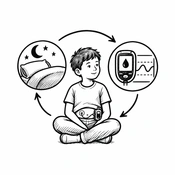
The relationship between sleep and diabetes is bidirectional. Diabetes affects multiple organs and contributes to sleep disturbances through its effects on the brain and nervous system. Conversely, sleep disturbances are negatively associated with blood sugar (BS) metabolism. Nocturnal awakenings and sleep deprivation alter heart rate variability and increase the inflammatory response, disrupting the hypothalamic-pituitary-adrenal axis and increasing the production and release of adrenocorticotropic hormone and cortisol (10). Sleep deprivation also reduces insulin sensitivity, may be accompanied by long-term complications such as microvascular and macrovascular involvement, and may affect disease outcomes (11). Recent studies have shown significant associations between sleep and disturbances in glucose metabolism (11). Even sleeping for more than 9 hours has been associated with impaired BS regulation and higher HbA1c levels in patients with diabetes (12).
Given the importance of adequate glycemic control in patients with diabetes, factors influencing BS control require attention (13). Sleep, rest, physical activity, and exercise are interdependent components of daily life; disturbances in one may be associated with changes in the others. Optimizing sleep patterns can improve diabetes control and prevent short- and long-term complications in children with T1D (14). Patients with diabetes have a shorter sleep duration than healthy individuals. Sleep-related difficulties in children with T1D may have long-term health consequences and reduce health-related quality of life (15). Further research is needed to clarify the relationship between sleep quality, BS control, and overall health outcomes in this population (16).
2. Objectives
Given the increasing prevalence of T1D in children, the importance of sleep management for diabetes control, and the limited research in pediatric populations, this study aimed to examine the correlation between glycemic control parameters and sleep quality in children with T1D receiving clinical care.
3. Methods
This cross-sectional analytical study was conducted in 2023 among children and adolescents aged 12 - 18 years with T1D who were referred to 17-Shahrivar Hospital in Rasht, Iran. A pediatric endocrinologist confirmed the diagnosis of T1D using standard clinical criteria. Consecutive sampling was used to screen 212 patients for eligibility. Of these, 17 were excluded: 9 did not meet the predefined inclusion criteria, 5 declined participation, and 3 had incomplete clinical or laboratory records. Consequently, 195 eligible participants provided written informed consent and were enrolled. The required sample size was calculated as 195 participants, assuming a 95% confidence level and 90% statistical power, based on a previous study (17). The calculation used a two-tailed test to detect statistically significant differences in sleep quality. Given an anticipated 1:3 ratio of good to poor sleep quality reported in the literature, the final analytical sample comprised 60 children with good sleep quality and 135 with poor sleep quality.
Children aged 12 - 18 years with at least one year since diabetes onset were eligible. Exclusion criteria included chronic diseases, mental disorders, sedative or anticonvulsant use, diagnosed psychiatric disorders, unwillingness to participate, and treatment nonadherence.
Sleep quality was assessed using the Pittsburgh Sleep Quality Index (PSQI), which has demonstrated high validity (86.5%) and reliability (89.5%) in the Iranian population. Participants or their parents completed this self-report instrument and a researcher-designed demographic questionnaire. The PSQI comprises 19 items that generate seven component scores. The sleep dimensions evaluated in this study were subjective sleep quality, sleep latency, habitual sleep efficiency, and daytime dysfunction. The sum of the seven component scores yields a global PSQI score ranging from 0 to 21. Participants with a global PSQI score ≤ 5 were classified as having good sleep quality, whereas those with a score > 5 were classified as having poor sleep quality.
Fasting blood sugar (FBS) and HbA1c levels were measured using fasting venous blood samples. Body Mass Index (BMI) was calculated as weight (kg) divided by height (m2) and interpreted using age- and sex-specific percentiles. BMI categories were defined as underweight, < 5th percentile; normal weight, ≥ 5th and < 85th percentile; overweight, ≥ 85th and ≤ 95th percentile; and obese, > 95th percentile. Children with diabetes were divided into two groups: HbA1c ≤ 7% (the standard target range) and HbA1c > 7%, and into four subgroups based on HbA1c level:
1) Excellent control: ≤ 7%
2) Good control: 7.1 - 7.4%
3) Moderate control: 7.5 - 7.9%
4) Poor control: ≥ 8%
Data on diabetes history and complications were collected using researcher-designed questionnaires and clinical records. Diabetic ketoacidosis (DKA) was defined using ISPAD clinical criteria, and all episodes were verified against participants' medical records to ensure data reliability. Recent DKA occurrence was defined as any episode requiring hospitalization within the 6 months preceding the study.
Fasting blood sugar was measured once using a venous blood sample collected after an 8 - 12-hour overnight fast. Other recorded variables included age, sex, BMI, age at diabetes onset, and diabetes duration. Insulin consumption was calculated as the total daily dose in units per kilogram (IU/kg).
3.1. Statistical Analysis
Data were entered into SPSS version 19. Quantitative variables were summarized as the mean and standard deviation (SD), minimum, and maximum, whereas qualitative variables were summarized as frequencies and percentages. Correlations between sleep quality index scores and quantitative variables were assessed using Pearson's correlation coefficient when the assumptions of normality and linearity were met and Spearman's correlation coefficient otherwise. Quantitative parameters related to T1D, including HbA1c, FBS, and other clinical variables, were compared between the good and poor sleep groups using an independent-samples t-test when statistical assumptions were met and the Mann-Whitney U test otherwise.
Multivariate logistic regression using the Enter method was performed to identify factors independently associated with glycemic control (HbA1c levels). Variables were selected based on P < 0.2 in bivariate analyses and clinical relevance, including sex, age, BMI, and sleep-related dimensions. Multicollinearity was assessed before model construction. All variables had a variance inflation factor < 3, indicating no significant multicollinearity. Missing data (< 3%) were handled using listwise deletion. Wide confidence intervals were observed for sleep efficiency because of sparse data in certain subgroups (quasi-complete separation), in which a high proportion of participants with poor sleep efficiency also had poor glycemic control. Despite this limitation, sleep efficiency was retained in the model because of its strong statistical association and clinical relevance in this study. P < 0.05 was considered statistically significant for all analyses.
4. Results
This study examined the correlation between glycemic control indices and sleep quality in pediatric patients with T1D.
Table 1 compares individual and sociodemographic characteristics between the good and poor sleep groups. Although mean age did not differ significantly between groups, the age distribution did. The poor sleep group had a higher proportion of participants aged 16 - 18 years than the good sleep group (P = 0.002).
Table 1.
Comparison of Individual and Sociodemographic Characteristics Between the Good and Poor Sleep Groups a
| Variables | Poor sleep group | Good sleep group | Total | P-value |
|---|---|---|---|---|
| Age group (y) | 0.002 | |||
| 12 - 15 | 93 (68.9) | 54 (90.0) | 147 (75.4) | |
| 16 - 18 | 42 (31.1) | 6 (10.0) | 48 (24.6) | |
| Mean ± SD | 13.95 ± 2.16 | 13.62 ± 1.54 | 13.85 ± 1.99 | 0.284 |
| Gender | 0.07 | |||
| Male | 73 (54.1) | 24 (40.0) | 97 (49.7) | |
| Female | 62 (45.9) | 36 (60.0) | 98 (50.3) | |
| BMI | 21.01 ± 2.95 | 21.71 ± 3.11 | 21.22 ± 3.01 | 0.136 |
| BMI status | 0.006 | |||
| Underweight | 40 (29.6) | 6 (10.0) | 46 (23.6) | |
| Normal weight | 84 (62.2) | 44 (73.3) | 128 (65.6) | |
| Overweight | 11 (8.1) | 10 (16.7) | 21 (10.8) |
a Values are expressed as No. (%) unless otherwise indicated. The sex distribution did not differ significantly between the good and poor sleep groups. Abbreviations: BMI, Body Mass Index; SD, standard deviation.
Mean BMI did not differ significantly between groups. However, the distribution of BMI categories differed significantly (P = 0.006). The proportion of children with BMI below the 5th percentile was higher in the poor sleep group. The proportion of overweight children in the good sleep group was almost twice that in the poor sleep group (Table 1).
These findings suggest potential associations between sleep quality and demographic characteristics, including age group and BMI status, in pediatric patients with T1D.
Age at diabetes onset did not differ significantly between the good and poor sleep groups (P = 0.257). However, children with poor sleep had a higher mean and median diabetes duration than those with good sleep (4.11 ± 1.95 vs 3.38 ± 2.1; P = 0.021).
As shown in Table 2, HbA1c and FBS levels, as well as the number of DKA episodes, differed significantly between groups (P < 0.001, P < 0.001, and P = 0.003, respectively).
Table 2.
Comparison of HbA1c, FBS, and Number of DKA Episodes Between the Good and Poor Sleep Groups a
| Variables | Poor Sleep Group | Good Sleep Group | Total | P-value |
|---|---|---|---|---|
| HbA1c | < 0.001 | |||
| Number | 135 | 60 | 195 | |
| Mean ± SD | 9.15 ± 2.16 | 6.84 ± 1.24 | 8.44 ± 2.20 | |
| FBS | < 0.001 | |||
| Number | 135 | 60 | 195 | |
| Mean ± SD | 134.18 ± 36.36 | 127.18 ± 58.30 | 132.03 ± 44.24 | |
| Number of DKA episodes | 0.003 | |||
| Number | 135 | 60 | 195 | |
| Mean ± SD | 1.40 ± 0.75 | 1.12 ± 0.61 | 1.31 ± 0.72 |
a Abbreviations: FBS, fasting blood sugar; DKA, diabetic ketoacidosis; SD, standard deviation.
As shown in Table 3, the prevalence of abnormal HbA1c levels in children with poor sleep was approximately twice that in children with good sleep (100% vs 56.7%; P < 0.001). FBS status also differed significantly between groups (P < 0.001).
Table 3.
Comparison of HbA1c and FBS Status by Defined Ranges Between the Good and Poor Sleep Groups a
| Variables | Poor Sleep Group | Good Sleep Group | Total | P-Value |
|---|---|---|---|---|
| HbA1c status | < 0.001 | |||
| Normal | 0 (0.0) | 26 (43.3) | 26 (13.3) | |
| Abnormal | 135 (100) | 34 (56.7) | 169 (86.7) | |
| FBS status | < 0.001 | |||
| FBS < 100 | 23 (17.0) | 16 (26.7) | 39 (20.0) | |
| FBS 101 - 124 | 40 (29.6) | 34 (56.7) | 74 (37.9) | |
| FBS > 125 | 72 (53.3) | 10 (16.7) | 82 (42.1) |
a Abbreviation: FBS, fasting blood sugar.
Recent DKA occurrence was reported in 19.3% of the poor sleep group and 0% of the good sleep group; this difference was statistically significant (P < 0.001).
The frequency of nocturnal BS checks by parents differed significantly between groups. More children in the poor sleep group were awakened twice or more by their parents than in the good sleep group (P = 0.007). All children who were awakened more than 3 times had sleep disturbances (Table 4).
Table 4.
Frequency of Nocturnal Blood Sugar Checks in the Good and Poor Sleep Groups a
| Variables | Poor Sleep Group | Good Sleep Group | Total | P-Value |
|---|---|---|---|---|
| Frequency of nocturnal blood sugar checks | 0.007 | |||
| 0 | 3 (2.2) | 4 (6.7) | 7 (3.6) | |
| 1 | 90 (66.7) | 49 (81.7) | 139 (71.3) | |
| 2 | 30 (22.2) | 3 (5.0) | 33 (16.9) | |
| 3 | 9 (6.7) | 4 (6.7) | 13 (6.7) | |
| 4 | 3 (2.2) | 0 (0.0) | 3 (1.5) |
a Values are expressed as No. (%).
Mean Lantus and Novorapid insulin consumption was higher in the good sleep group than in the poor sleep group (0.46 ± 0.19 vs 0.36 ± 0.16 and 0.48 ± 0.23 vs 0.40 ± 0.23, respectively; P = 0.001). Other insulin types (Levemir, Apidra, and Toujeo) did not differ significantly between groups because of their low frequency of use.
In the logistic regression model, subjective sleep quality was significantly associated with FBS status, with an odds ratio (OR) of 3.3 (P < 0.001), as was sleep latency (OR = 2.02; P = 0.001). Male sex compared with female sex (OR = 12.9; P < 0.001) and higher BMI (OR = 1.42; P < 0.001) were also independently associated with higher odds of elevated FBS levels (Table 5).
Table 5.
Factors Independently Associated with Fasting Blood Sugar Status Based on Sleep Dimensions in a Logistic Regression Model a
| Variables | B | Standard Error | P-Value | Odds Ratio | 95% CI | |
|---|---|---|---|---|---|---|
| Lower | Upper | |||||
| Gender | ||||||
| Male | 2.557 | 0.3961 | < 0.001 | 12.902 | 5.937 | 28.042 |
| Female | - | - | - | 1 | - | - |
| Age | -0.448 | 0.1001 | < 0.001 | 0.639 | 0.525 | 0.778 |
| BMI | 0.348 | 0.0740 | < 0.001 | 1.416 | 1.225 | 1.637 |
| Subjective sleep quality | 1.184 | 0.3126 | < 0.001 | 3.267 | 1.771 | 6.029 |
| Sleep latency | 0.702 | 0.2178 | 0.001 | 2.018 | 1.317 | 3.093 |
a Abbreviations: BMI, Body Mass Index; CI, confidence interval.
Among the sleep quality dimensions, subjective sleep quality (OR = 4.47; P = 0.06), sleep efficiency (OR = 79.5; P = 0.01), and daytime dysfunction (OR = 13.13; P = 0.02) were independently associated with abnormal HbA1c levels. Females had lower odds of abnormal HbA1c levels than males (OR = 0.16; P = 0.23), although this association was not statistically significant. Higher BMI and age were associated with higher odds of abnormal HbA1c levels (OR = 1.62 and OR = 1.37, respectively). Although BMI and age were retained in the regression model because of their clinical relevance, neither reached the conventional significance threshold (P < 0.05), and their associations were considered borderline (Table 6).
Table 6.
Factors Independently Associated with HbA1c Status Based on Sleep Dimensions in a Logistic Regression Model a
| Variables | B | Standard Error | P-Value | Odds Ratio | 95% CI | |
|---|---|---|---|---|---|---|
| Lower | Upper | |||||
| Sex (female versus male) | -1.835 | 0.806 | 0.023 | 0.160 | 0.033 | 0.775 |
| Age | 0.486 | 0.290 | 0.094 | 1.626 | 0.921 | 2.872 |
| BMI | 0.318 | 0.190 | 0.094 | 1.374 | 0.948 | 1.993 |
| Subjective sleep quality | 1.449 | 0.811 | 0.065 | 4.477 | 0.913 | 21.966 |
| Sleep efficiency | 4.376 | 1.278 | 0.001 | 79.546 | 6.496 | 974.087 |
| Daytime dysfunction | 2.575 | 1.104 | 0.020 | 13.130 | 1.508 | 114.295 |
| Constant | -10.617 | 5.043 | 0.035 | 0.000 | ||
a Abbreviations: BMI, Body Mass Index; CI, confidence interval.
5. Discussion
Sleep architecture is an important determinant of physical and mental health. Sleep deprivation is a common health problem in modern societies, and the greatest decline in sleep duration over the past decade has occurred in children and adolescents (18). Recent evidence suggests that sleep disturbances may be associated with insulin resistance and poorer disease control in children with diabetes (19). This study examined the relationship between glycemic control indicators and sleep quality in children with T1D.
Mean age did not differ significantly between the good- and poor-sleep groups; however, the age distributions differed, with the poor-sleep group including more children aged 16 - 18 years than children younger than 15 years. Macaulay et al. (20), who investigated the effects of T1D on glycemic control in children and adolescents, similarly found no significant relationship between mean age and sleep quality but observed more sleep disturbances in adolescents and school-aged children than in younger children and toddlers with diabetes. These findings are consistent with the present study. Kostkova et al. (21) also reported no significant relationship between age and sleep status.
Age at diabetes onset was not associated with sleep quality in this study. However, children with disturbed sleep had higher mean and median diabetes duration than those with normal sleep (P = 0.021). Two recent studies similarly reported a direct relationship between T1D duration and sleep quality, consistent with our findings (21, 22).
The clinical importance of sleep quality is further supported by Mehrdad et al. (17), who reported that, after adjustment for age and diabetes-related complications, good sleepers had HbA1c levels averaging 0.621 units lower than those of poor sleepers. Our findings show a similar association in a pediatric population: the prevalence of suboptimal HbA1c levels in children with sleep disturbances was approximately twice that in children with healthy sleep patterns. However, these findings should be interpreted in light of fundamental pathophysiological differences between type 1 and type 2 diabetes. Type 1 diabetes is characterized primarily by autoimmune destruction of pancreatic β-cells, resulting in absolute insulin deficiency and lifelong dependence on exogenous insulin. In contrast, type 2 diabetes is predominantly associated with insulin resistance, progressive β-cell dysfunction, obesity, metabolic syndrome, and lifestyle factors. The mechanisms linking sleep disturbances to glycemic outcomes may therefore differ between diabetes types.
In adults with type 2 diabetes, the relationship between poor sleep and glycemic deterioration may be substantially influenced by obesity-related inflammation, insulin resistance, and sleep-disordered breathing. In children and adolescents with T1D, sleep disruption may affect glycemic control through other pathways, including altered autonomic regulation, counterregulatory hormone secretion, awakenings related to nocturnal glucose monitoring, difficulties with diabetes self-management, and variability in insulin requirements. Despite these differences, the consistent association between sleep quality and glycemic outcomes across diabetes populations highlights the importance of sleep health in comprehensive diabetes management. The underlying biological pathways may nevertheless vary by diabetes type, age, and clinical context.
Although sex was not directly associated with sleep quality, our multivariate logistic regression model indicated a role for sex in metabolic outcomes: girls had a lower risk of suboptimal HbA1c, whereas male sex was significantly associated with elevated FBS levels. These observations align with the stratified analysis by von Schnurbein et al. (23), which suggested a stronger association between HbA1c and sex in boys. Ji et al. (24) also noted that poor sleep quality and unfavorable self-care behaviors are particularly detrimental to glycemic control in adolescent boys and young men. These findings suggest that, although sleep disturbances affect both sexes, the metabolic consequences and self-management difficulties may be more severe in males, warranting sex-specific approaches to diabetes education and sleep hygiene.
In the present study, despite no difference in mean BMI between the two groups, our findings suggest that sleep quality remains an independent factor in glycemic control, regardless of BMI. This indicates that the metabolic impact of sleep in children with T1D may be mediated through pathways other than weight-related insulin resistance. In the study by Mehrdad et al. (17), a significant statistical correlation was found between BMI and sleep quality, with higher BMI observed in the poor-sleep group. This contrasts with our findings. This discrepancy may be attributed to differences in age groups and diabetes type between the two studies. In Mehrdad's study, excess weight and consequent respiratory problems, including frequent cough and sleep apnea, may explain the observed association between sleep disorders and BMI. In contrast, in the studies by Macaulay et al. (20) and Kostkova et al. (21), no significant statistical correlation was found between BMI and sleep quality in patients with type 1 diabetes, which is consistent with our findings.
The physiological relationship between sleep architecture and glucose metabolism involves autonomic regulation. Parasympathetic activity predominates during slow-wave sleep (SWS); reduced SWS duration may therefore trigger sympathetic overactivity and increased counterregulatory hormone secretion, leading to hyperglycemia (21, 25). Our finding that poor sleep quality was associated with higher HbA1c and FBS levels is consistent with evidence linking suppression of SWS and rapid eye movement (REM) sleep to increased insulin resistance (18). Children with sleep disturbances in this study were nearly twice as likely to have abnormal HbA1c levels as those with healthy sleep patterns.
These observations are supported by previous studies. Mehrdad et al. (17) reported higher HbA1c and 2HPPBS levels in poor sleepers and a U-shaped relationship in which sleep durations outside the 5 - 7-hour range were associated with worse glycemic outcomes. Macaulay et al. (20) and Kostkova et al. (21) similarly found that higher HbA1c levels correlated with shorter REM phases and longer N2 stages, reinforcing the importance of fragmented sleep architecture. Although our study used validated subjective questionnaires, these findings are consistent with polysomnographic studies (25, 26, 28) that objectively demonstrated prolonged N2 and reduced N3 (deep sleep) stages in pediatric T1D populations with suboptimal glycemic control.
Despite methodological differences in age groups or assessment tools, such as the parent reports used by Jaser et al. (27) for younger children, a consistent pattern emerges: disturbed sleep, whether characterized by short duration, irregularity, or changes in architecture such as sleep apnea-related N3 reduction, predicts poorer metabolic health (24, 28). Collectively, these findings suggest that maintaining sleep integrity is important for stabilizing the neuroendocrine axis and optimizing glycemic indices in children and adolescents with diabetes.
In this study, nocturnal awakenings by parents to monitor BS were more frequent in the poor-sleep group. More children in this group awakened more than 2 times compared with the good-sleep group. Sinisterra et al. (29) found that children awakened by their parents for nocturnal blood glucose monitoring experienced greater sleep disturbances, consistent with our findings. They suggested that continuous glucose monitoring (CGM) is related to children's sleep quality by minimizing nocturnal awakenings, which is also consistent with this study. In contrast, Jaser et al. (27) found no significant relationship between sleep quality and the frequency of nocturnal BS checks. This difference may reflect the younger age range, below 12 years, in their study.
Nocturnal hypoglycemic episodes are a major cause of sleep disturbances in patients with diabetes (25, 30). However, Hazen et al. (25), who used CGM in adolescents with T1D, found no association between nocturnal hypoglycemia and sleep disturbances; most sleep problems were associated with higher BS and HbA1c levels.
Patients with good sleep had higher insulin consumption (IU/kg) in this study. Children who take their prescribed insulin accurately and regularly may have better glycemic control and sleep quality. In contrast, greater circadian misalignment was associated with increased insulin requirements in von Schnurbein et al.'s study (23).
In this study, subjective sleep quality, sleep efficiency, and daytime dysfunction were significantly associated with higher HbA1c levels in children with T1D. These sleep dimensions remained independently associated with HbA1c status in multivariate logistic regression after adjustment for relevant covariates. Hazen et al. (25), who examined 72 adolescents with T1D, similarly found that excessive sleep was associated with higher HbA1c levels and that excessive sleep duration and difficulty falling asleep were associated with higher blood glucose levels, although they used a different assessment tool, the Child Behavior Checklist.
Mehrdad et al. (17) reported more frequent sleep interruptions in poor sleepers. Common causes included awakening during the night or early morning, disturbed breathing, feeling hot or cold, pain, coughing or snoring, and nightmares. They also found a negative correlation between subjective sleep quality and HbA1c, consistent with our results. Difficulties with sleep initiation, sleep maintenance, and early-morning awakening were associated with higher HbA1c levels. Participants who could not fall asleep within 30 minutes or awakened during the night had higher HbA1c levels than others.
In a systematic review, Ji et al. demonstrated that short sleep duration and nonadherence to glucose monitoring significantly impair HbA1c levels in children and adolescents. These findings agree with experimental evidence of reduced insulin sensitivity after sleep restriction in healthy individuals and those with T1D. Beyond physiological mechanisms, disrupted sleep may impair executive functioning, thereby compromising self-care behaviors and glycemic regulation (24). Further evidence links poor sleep quality to impaired self-regulation, higher HbA1c levels, more severe hypoglycemic episodes, and more frequent DKA in adolescents (31). Daytime napping has also been implicated: daily naps were significantly associated with elevated HbA1c levels in a study in which 65% of participants with T1D reported weekly napping (19). Our findings also agree with previous research (29) showing that suboptimal subjective sleep quality is more prevalent in children with irregular blood glucose monitoring, further highlighting the bidirectional relationship between sleep hygiene and diabetes management behaviors.
Our findings show that subjective sleep quality, sleep efficiency, and daytime dysfunction were significantly associated with suboptimal HbA1c levels after adjustment for age, sex, and BMI. Barone et al. (32) similarly reported that glycemic variability correlated positively with sleep latency, the awakening index, and the arousal index, all of which were associated with elevated HbA1c levels. Yildirim Ayaz et al. (33) also found a positive association between HbA1c levels and sleep efficiency in adults with diabetes. Our multivariate analysis identified sleep efficiency as the factor most strongly associated with suboptimal HbA1c levels, suggesting that fragmented sleep may be related to achieving metabolic targets in pediatric patients.
Our multivariate logistic regression analysis identified sleep efficiency as the factor most strongly associated with suboptimal HbA1c levels. The high odds ratio (OR = 79.5) and wide confidence interval may reflect sparse data and quasi-complete separation, with a large proportion of participants with poor sleep efficiency also having poor glycemic control. The magnitude of this association should therefore be interpreted cautiously. Clinically, impaired sleep efficiency may be an important marker of suboptimal glycemic control in pediatric patients with T1D, although the cross-sectional design precludes conclusions about causality or temporal relationships.
These findings highlight the importance of incorporating sleep assessment into routine diabetes care for children and adolescents with T1D. Screening with validated sleep quality questionnaires may offer a practical, low-cost approach in pediatric diabetes clinics, particularly for patients with suboptimal glycemic control or unexplained HbA1c elevation. Identifying modifiable factors, including frequent awakenings for glucose monitoring, irregular sleep schedules, and difficulty maintaining sleep, may provide additional targets for improving metabolic outcomes. Families should receive education on balancing necessary nighttime glucose monitoring with minimizing unnecessary sleep disruption. The increasing availability of CGM systems may reduce the need for repeated awakenings by caregivers while maintaining adequate glycemic surveillance. Combining optimized diabetes technology, individualized sleep hygiene counseling, and family-centered education may therefore complement efforts to improve sleep health and glycemic management in pediatric patients with T1D.
These findings highlight the potential importance of sleep quality and daily functioning in comprehensive diabetes management, particularly in individuals with higher BMI and older age groups. Further longitudinal and interventional studies are needed to examine the underlying mechanisms and determine whether improving sleep-related factors can improve glycemic control and overall health outcomes.
5.1. Study Limitations
The study has several limitations. First, its cross-sectional design precludes establishing temporal relationships or drawing causal inferences. Although sleep quality dimensions were significantly associated with glycemic indices, it remains unclear whether poor sleep impairs glycemic control, suboptimal glycemic status affects sleep quality, or shared factors influence both outcomes. The findings should therefore be interpreted as associations rather than evidence of causality.
Second, the absence of a healthy control group without diabetes limits comparisons with the general pediatric population. Resource constraints also precluded polysomnography, the gold standard for objective sleep assessment; instead, validated subjective questionnaires were used. Some clinical parameters, including previous DKA episodes, were obtained by parent or patient recall, which may introduce recall bias.
Pubertal status and sexual maturation were not assessed. Puberty is associated with physiological changes in insulin sensitivity, including transient insulin resistance, which may affect glycemic control in children and adolescents with T1D. The absence of pubertal-stage assessment is therefore a potential confounding factor in interpreting the relationship between sleep characteristics and glycemic outcomes. Future studies should use standardized assessments of pubertal development, such as Tanner staging, to account for maturation-related changes in insulin sensitivity.
The sex distribution was not completely balanced. Although this may reflect the characteristics of patients available at the study center and referral patterns, selection bias cannot be excluded. Sex was included as a covariate in the multivariate regression to account for its potential influence on glycemic outcomes. Future multicenter studies with larger, more representative samples are needed to establish generalizability across demographic groups.
Small sample sizes in certain clinical subgroups resulted in sparse data in the logistic regression model and wide confidence intervals for some variables, including sleep efficiency. Although the exact magnitudes of the odds ratios require cautious interpretation, the observed associations remain clinically relevant. Future studies should use longitudinal or case-control designs and objective sleep measures to further examine the relationship between glycemic control and sleep health in children with T1D. Multicenter studies at the national level would also improve understanding of the association between sleep quality and metabolic outcomes in this population.
5.2. Conclusions
These findings highlight the potential importance of addressing sleep quality and daily functioning in comprehensive diabetes management, particularly in individuals with higher BMI and older age groups. Further research is needed to examine the underlying mechanisms and evaluate interventions targeting sleep-related factors associated with glycemic outcomes, including whether improving sleep quality can improve glycemic control and overall health outcomes.