1. Context
Obstructive sleep apnea (OSA) affects about 4% of men and 2% of women in the adult population (1). It is a common sleep disorder characterized by repetitive upper airway collapse with apnea/hypopnea and recurrent hypoxia during sleep, which results in fragmented sleep and intermittent drops in arterial blood oxygen saturation (hypoxemia) (2). The potential consequences of OSA involve multiple systems including cardiovascular, endocrine, and respiratory and neurocognitive dysfunction. For example, OSA causes multiple deleterious cardiovascular effects including hypertension, ischemic heart disease, stroke, pulmonary hypertension, cardiac arrhythmia, and cardiovascular mortality (3). Thus, OSA can enhance high morbidity and mortality diseases because of its multisystem involvement and its high prevalence.
Osteoporosis is defined as a skeletal disorder characterized by compromised bone strength that predisposes individuals to an increased risk of fracture (4). Its clinical spectrum ranges from asymptomatic bone loss to disabling fractures. In the United States, there are 1.5 million osteoporotic fractures per year, with an annual direct cost of nearly $18 billion (5). Therefore, osteoporosis itself has a significant impact on patient quality of life and appears to be an escalating public health burden.
Several risk factors play a role in the development of osteoporosis including age, gender, race, hormone, diet and steroid use. Recent studies suggest that OSA is a contributing factor to osteoporosis as hypoxia reduces the growth of osteoblasts and stimulates osteoclasts resulting in the thinning of bone that eventually becomes osteoporosis (6). A recent study suggested that chronic intermittent hypoxia (IH) stimulated mesenchymal stem cell (MSC) mobilization, intensifying osteoblast formation in animal models and preserving bone homeostasis (7). Another study claimed that intermittent hypoxia exerted a protective role with regard to age-related decline in bone density, reducing the prevalence of osteopenia/osteoporosis in the elderly (8).
Despite evidence illustrating the pathogenesis of osteoporosis, to the best of our knowledge, there is still no conclusive study that has clearly shown whether OSA could be a risk or protective factor for osteoporosis. An understanding of a correlation between OSA and osteoporosis might help prevent osteoporosis, which is essential as it is often undertreated and under recognized because of its clinically silent character.
2. Objectives
We performed a systematic review and meta-analysis of observational studies to clarify the association between OSA and the prevalence or incidence of osteoporosis.
3. Data Sources
This systematic review and meta-analysis was conducted and reported according to the Meta-analysis Of Observational Studies in Epidemiology (MOOSE) statement (9) and was registered in PROSPERO (registration number: CRD42014014821).
3.1. Search Methods for Identification of Studies
A.S. and S.U. independently searched published studies indexed in MEDLINE and EMBASE from database inception to November 2015. References of selected retrieved articles were also examined. Search terms used included: osteoporosis, osteopenia, bone density, bone mass, bone loss, sleep apnea, obstructive sleep apnea, sleep-related breathing disorder. The full search terms used are detailed in the supplementary material. We hand-searched bibliographies of retrieved papers for additional references.
4. Study Selection
4.1. Inclusion and Exclusion Criteria
We included all published observational studies including prospective cohort, retrospective cohort, case-control, and cross-sectional studies evaluating incidence or prevalence of osteoporosis or bone mineral density in patient with sleep apnea or obstructive sleep apnea and compared with controls were included. We excluded reviews, case reports, letters, commentaries, and abstracts because they could not be evaluated for quality of study.
4.2. Participants
Studies that investigated participants 18 years of age or older who were assessed for sleep problems and had polysomnography measured and did not have osteoporosis at baseline were included.
4.3. Obstructive sleep apnea definitions
Obstructive sleep apnea was diagnosed by polysomnography or sleep study. The severity of OSA was characterized using the apnea-hypopnea index (AHI), which measures the number of apneas or hypopneas recorded during the study per hour of sleep. Based on the AHI, the severity of OSA was classified as follows: None/Minimal: AHI < 5 per hour; Mild: AHI ≥ 5, but < 15 per hour; Moderate: AHI ≥ 15, but < 30 per hour; and Severe: AHI ≥ 30 per hour.
4.4. Outcome Measures
The primary outcomes were incidence, prevalence, relative risk or odds ratio of having osteoporosis, which was defined as having a bone mineral density (BMD) with a T-score of less than -2.5 SD as measured by dual-energy x-ray absorptiometry at spine and femoral neck. Differences in levels of BMD between patients with OSA and participants without OSA (controls) at lumbar spine and femur were the secondary outcome.
5. Data Extraction
5.1. Data Collection and Analysis
5.1.1. Data Extraction and Management
Two study investigators (A.S. and S.U.) independently reviewed the titles and abstracts of all identified citations. The inclusion criteria were independently applied to all identified studies. Differing decisions were resolved by consensus. Full-text versions of potentially relevant papers identified in the initial screening were retrieved. If multiple articles from the same study were found, only the article with the longest follow-up period was included. Data concerning study author’s last name, year of publication, study design, study duration, source of population, number of participants, participant characteristics, and outcome measures were independently extracted. We planned to contact the authors of the primary reports to request any unpublished data. If the authors did not reply, we planned to use the available data for our analyses.
5.2. Assessment of Bias Risk
The quality of observational studies (OBS) was evaluated by two investigators using the Newcastle-Ottawa quality assessment scale (10). The NOS is based on three major components: selection of the study groups (0 - 4 stars), comparability of cohorts and controls (0 - 2 stars), and ascertainment of outcome (0 - 3 stars). Discrepant opinions between authors were resolved by consensus. A total score of 3 or less was considered poor, 4 - 6 was considered moderate, and 7 - 9 was deemed high quality. We excluded poor quality study in the meta-analysis.
5.3. Statistical Methods
Data analysis was performed using Comprehensive Meta-Analysis 3.3 software from Biostat, Inc. We reported the pooled odds ratio of osteoporosis comparing between OSA and controls using a random effects model because of the high likelihood of between-study heterogeneity. We also reported the pooled mean difference (MD) of a BMD between OSA and control groups in each anatomical site. The heterogeneity of effect size estimates across these studies was quantified using the I2 statistic and Q statistic (11). For Q statistic, substantial heterogeneity was defined as P < 0.1. The I2 statistic ranges in value from 0 to 100% (I2 < 25%, low heterogeneity; I2 = 25% - 50%, moderate heterogeneity; and I2 > 50%, substantial heterogeneity). We performed subgroup analysis by gender. We planned to perform meta-regression and publication bias if there were more than five included studies in the meta-analysis.
6. Results
6.1. Description of Included Studies
The initial search yielded 353 articles (Figure 1) of which 344 articles were excluded because they were not original observational studies (114 articles), participants did not have osteoporosis or BMD as outcomes (154 articles), or did not have OSA (76 articles). A total of 9 articles underwent full-length review. Data were extracted from 7 studies (6, 8, 12-16) involving 113,558 participants. Three studies had cohort and cross-sectional designs, and one study had case-control design. The characteristics of the extracted studies included in this review are outlined in Table 1.
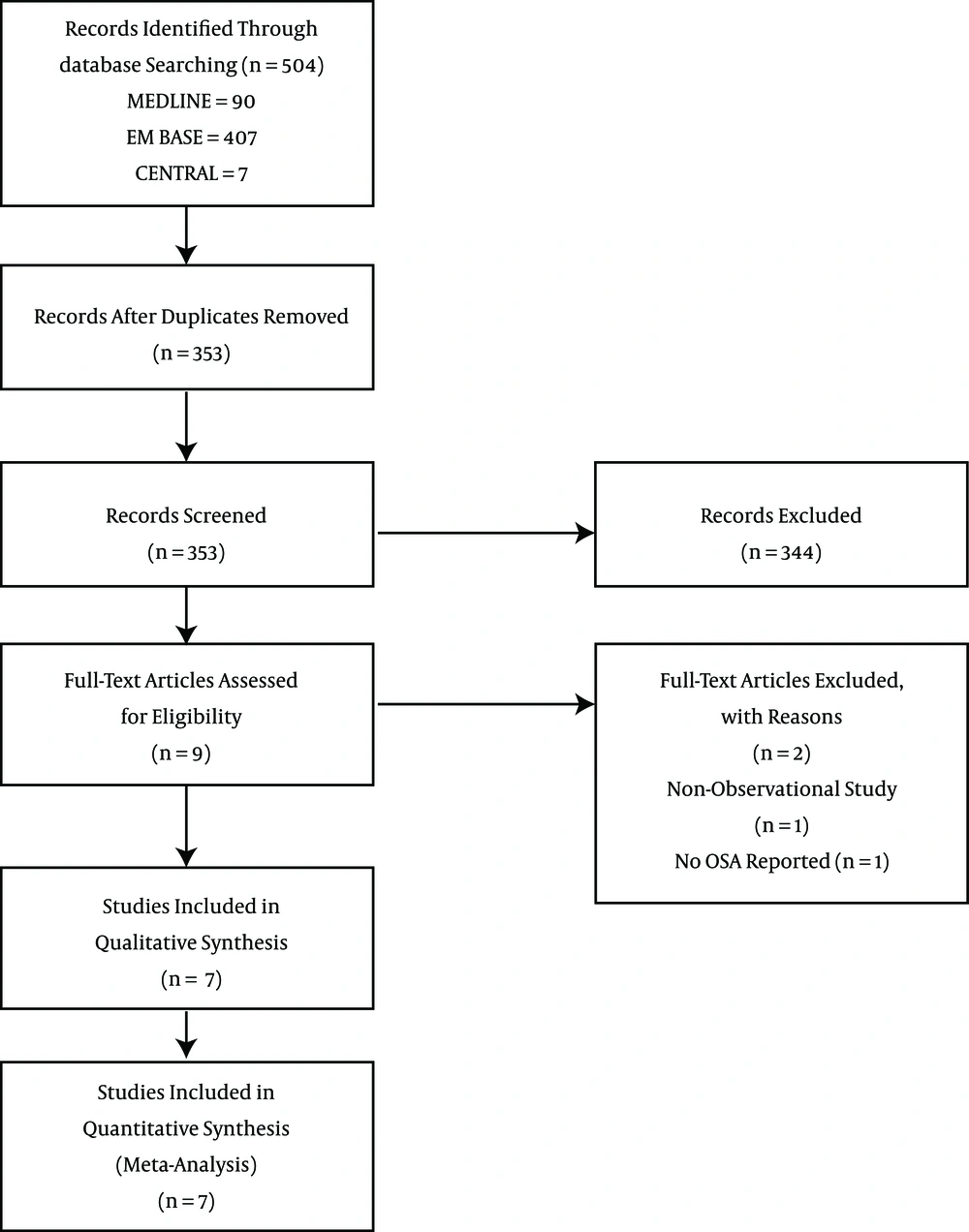
Figure 1.
Flow Chart of Study Selected for Inclusion in the Systematic Review
Table 1.
Characteristics of the Included Studiesa
| Study | Yen 2014 | Chen 2014 | Sforza 2013 | Uzkeser 2013 | Yuceege 2015 | Wang 2015 | Terzi 2015 |
|---|---|---|---|---|---|---|---|
| Design | Retrospective Cohort | Retrospective Cohort | Cross-sectional | Cross-sectional | Cross-sectional | Cross-sectional | Cross-sectional |
| Country | Taiwan | Taiwan | France | Turkey | Turkey | Taiwan | Turkey |
| Data source | Population-based cohort from the National Health Insurance Research Database (NHIRD) | Longitudinal Health Insurance Database | Population-based cohort of volunteers age 65 years in France | Sleep disorders laboratory in Ataturk University | Patients referred to Respiratory and Sleep Clinic | Medical records at a tertiary hospital in Taiwan | Sleep laboratories |
| Study duration | 1998 - 2001 | 2000 - 2008 | Seven years | N/A | January 2012 and March 2013 | January 2008 to January 2013 | 2012 - 2013 |
| Participants’ characteristics | Apnea sleep disorders diagnosed by PSG | OSA diagnosed by PSG or hospitalization with OSA | Prior treatment or diagnosis of OSA | Men who underwent PSG | Younger than 45 years old, snoring, witnessed apnea and/or excessive daytime sleepiness, with no known comorbidities | COPD patients with available PSG with no malignancy | Males who had PSG test |
| OSA diagnosis | ICD-9-CM code in medical records | ICD-9-CM code in medical records | AHI 15-30/hour: mild OSA, AHI ≥ 30/hour: severe OSA | apnea/hypopnea in the presence of thoraco-abdominal effort | AHI ≥ 30 | AHI > 15/hour, $50% were obstructive | AHI 5 - 15/hour: mild OSA, 15 - 30/hour: moderate OSA, ≥ 30/hour: severe OSA |
| Number of participants | 90,226 | 22,032 | 832 | 21 | 85 | 312 | 50 |
| Age | 48.9 (14.5) | > 40 years | 68.6 (0.03) | 54 (37 - 69) | 35.5 ± 5.7 | 71.5 ± 5.7 8.5 | 52.37 ± 8.58 |
| Comorbidity | DM, HTN, DLP, CKD, COPD | DM, HTN, DLP, CKD, CAD, stroke | DM, DLP, smoking | COPD | Smoking, hypertension | ||
| Lumbar BMD | 0.97 ± 1.6 | 0.9 (0.6 - 1.1) | −0.79 ± 1.2 | 1.08 ± 0.15 | |||
| Femur neck BMD | 0.86 ± 1.46 | 0.8 (0.7 - 1.2) | −0.61 ± 0.9 | 1.04 ± 0.15 | |||
| Lumbar T score | - 1.1 (- 3.7- 0.2) | 0.98 ± 0.1 | |||||
| Femur T score | - 0.4 (- 2.1- 1.7) | 0.98 ± 0.1 | |||||
| NOS | Selection = 4 | Selection = 4 | Selection = 3 | Selection = 2 | Selection = 3 | Selection = 3 | Selection = 2 |
| Comparability = 2 | Comparability = 2 | Comparability = 0 | Comparability = 1 | Comparability = 1 | Comparability = 2 | Comparability = 1 | |
| Exposure = 2 | Exposure = 3 | Exposure = 2 | Exposure = 1 | Exposure = 2 | Exposure = 2 | Exposure = 2 |
Abbreviations: BMI, Body mass index; CAD, coronary artery disease; CKD, chronic kidney disease; COPD, chronic obstructive pulmonary disease; DLP, dyslipidemia; DM, diabetes mellitus; HTN, hypertension; OSA, Obstructive sleep apnea; PSG, polysomnography.
aData are presented as mean ± S.D., or median (minimum - maximum).
6.2. Quality Assessment of Included Studies
6.3. Quantitative Results (Meta-Analysis)
6.3.1. Osteoporosis
Three studies (6, 8, 12) were included in the meta-analysis of incidence or prevalence of osteoporosis (Figure 2). The analysis revealed that odds of osteoporosis were higher in participants with OSA compared with controls among cohort studies (6, 12) with pooled OR of 1.92 (95% confidence interval [CI]: 1.24 - 2.97). The statistical between-study heterogeneity was moderate with an I2 of 66%, P = 0.09. Among cross-sectional studies (8), odds of osteoporosis were higher in participants with controls with pooled OR of 0.60 (95% CI: 0.42 - 0.87). The statistical between-study heterogeneity was low with an I2 of 0%, P = 0.93.
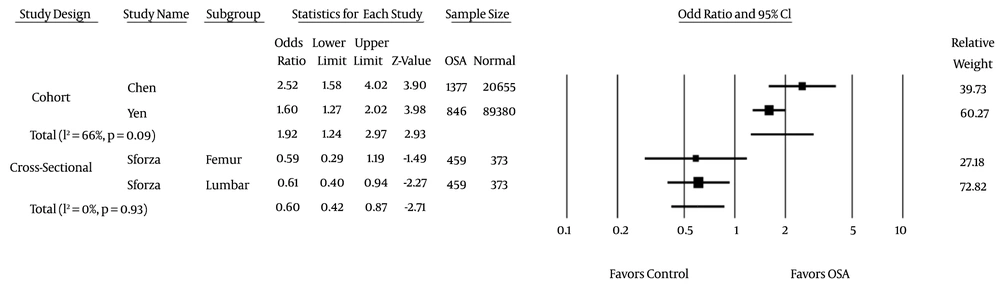
Figure 2.
Forest Plot of Participants with Osteoporosis in OSA Compared with Controls
In subgroup analysis by gender (Figure 3), both male (OR = 2.03, 95% CI: 1.24 - 3.35) and female (OR = 2.56, 95% CI: 1.96 - 3.34) also had higher odds of osteoporosis in OSA compared with control groups among cohort studies (P-value for interaction = 0.82). Among cross-sectional studies, there was no difference in odds of osteoporosis in both male (OR = 0.63, 95% CI: 0.33 - 1.19) and female (OR = 0.90, 95% CI: 0.58 - 1.40) (P-value for interaction = 0.43).
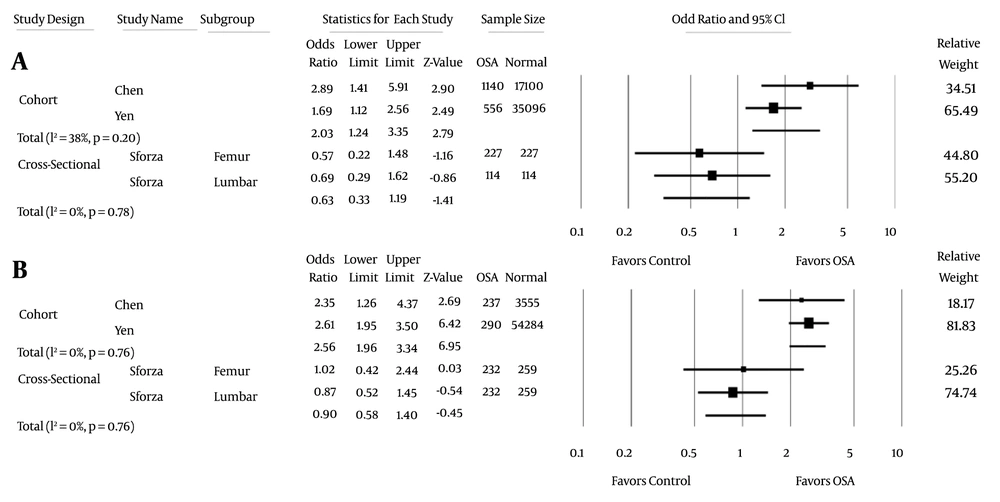
Figure 3.
Forest plot of Participants with Osteoporosis in OSA Compared with Controls by Subgroup of Gender (A = Male, B = Female)
6.3.2. Bone Mineral Density
Five cross-sectional studies (8, 13-16) were included in the meta-analysis of BMD at the lumbar spine (Figure 4). There was a significant lower BMD in the OSA group with a pooled mean difference (MD) of 0.06 (95% CI: 0.005 - 0.111) compared with control. The statistical between-study heterogeneity was moderate with an I2 of 39%, P = 0.16. Four studies (8, 13, 14, 16) were included in the meta-analysis of BMD at the femur (Figure 5). There was no significant difference in BMD with a pooled MD of 0.04 (95% CI: -0.004 to 0.09). The statistical between-study heterogeneity was low with an I2 of 0%, P = 0.52.
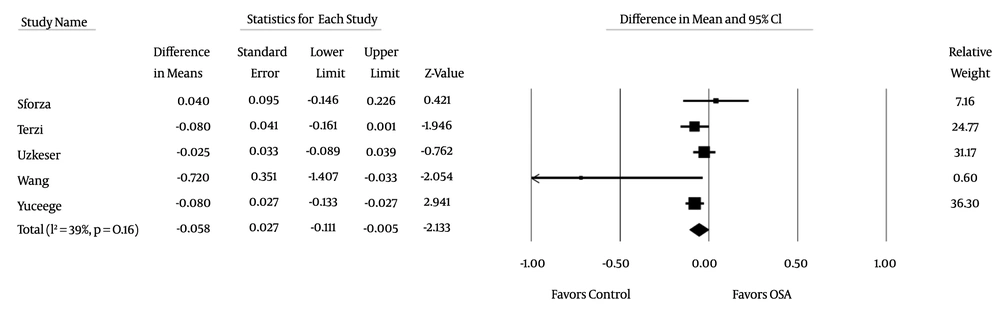
Figure 4.
Forest Plot of Bone Mineral Density at the Lumbar Spine in OSA Compared with Controls
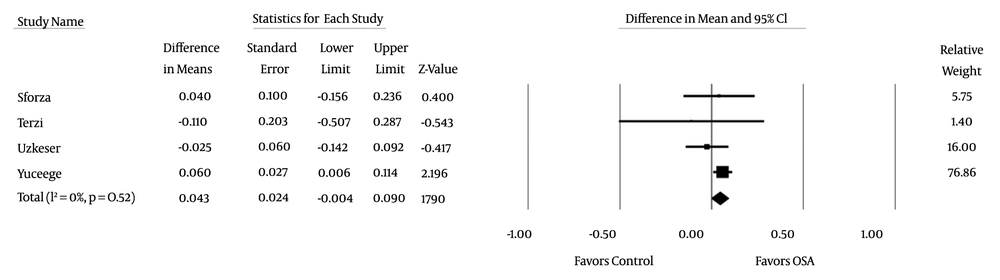
Figure 5.
Forest Plot of Bone Mineral Density at the Femur in OSA Compared with Controls
6.4. Sensitivity Analysis and Publication Bias
Sensitivity analysis, meta-regression, and publication bias were not performed because there were too few included studies in the analysis.
7. Discussion
This is the first systematic review and meta-analysis of published observational studies to evaluate the association between obstructive sleep apnea and osteoporosis. The result suggests that odds of osteoporosis is higher in patients with OSA in both genders. However, in cross-sectional studies, odds of osteoporosis is lower in patients with OSA compared with controls. There is little difference in bone mineral density at lumbar spine, which is higher in the control group.
Osteoporosis is a multifactorial chronic systemic disease characterized by a reduction in bone mass, disruption of bone microarchitecture, and skeletal fragility (17, 18). Chronic intermittent hypoxia mimicking OSA has been related to proinflammatory cytokine production in animal models, but did not significantly modify BMD in a mouse study (7). Many diseases and medical conditions, especially the presence of heart disease, depression, arthritis and obesity, are associated with an increased prevalence of sleep disturbances including symptoms of insomnia, daytime sleepiness, and restless leg syndrome (19). A previous study also demonstrated that severe OSA was associated with increased bone resorption by measuring metabolic markers independent of BMI, which was reversed by continuous positive airway pressure (CPAP) therapy (20). However, our analysis found a significant association of osteoporosis and OSA only in cohort studies, but we did not find an association in cross-sectional studies. There is a small difference in BMD only at lumbar spine between patients and controls. This may be in part due to findings that higher body weight is beneficial to bone health because of the well-established positive effect of mechanical loading conferred by body weight on bone formation (21, 22), despite being a risk factor for many other chronic disorders. Mariani et al. (23) found no correlation between AHI and BMD in obese participants with OSA, which contributed to the positive association of lean mass that was higher in moderate and severe OSA groups and BMD. There is still controversial question of whether OSA is associated with osteoporosis even with the results of this meta-analysis.
7.1. Limitations
There are several limitations in our review; therefore, our results should be interpreted with caution. First, the major limitation was the small number of studies that met our inclusion criteria; only three studies were included in the meta-analysis of osteoporosis and four to five studies in the analysis of BMD. Second, the results analyzed were from observational studies, which might be affected by factors such as selection bias, where participants do not represent the general population or a lack of description of non-OSA participants. Studies may have potential confounders such as age, gender, BMI, medication use, and comorbidities, all of which might affect the risk of osteoporosis. Third, subgroup analysis, meta-regression, and funnel plot to detect publication bias were not performed because there were too few studies included in the analysis.
7.2. Conclusions
We found a different association between OSA and osteoporosis which depends on study design. It should be noted that the results of our meta-analysis of observational studies should be interpreted with caution as the studies analyzed might contain different population characteristics. Further controlled studies involving a greater number of patients with adjusted effects for age, sex, or BMI are needed to investigate the relationship between osteoporosis and OSA.