
1. Background
Gestational diabetes mellitus (GDM) is one of the most common complications of pregnancy (1) and its prevalence widely varies worldwide. According to the study population and the diagnostic test used, the prevalence may range from 2.4% to 21% of all pregnancies (2). Cunningham defined GDM as any degree of glucose intolerance with onset or first recognition during pregnancy (3). The prevalence of GDM is about 14% in the United States (4) and In Iran it was 4.7% (95% CI, 3.91 - 5.64%) using carpenter and coustan criteria, and 3.97% using national diabetes data group (NDDG) criteria (5). The incidence is not the same in different regions of the country; for example, this is higher in southern parts of Iran (8.9%) (6). Increasing incidence of gestational diabetes causes serious concerns for health systems worldwide (7). GDM is believed to be related to short and long-term morbidity of both mother and child. Adverse infant outcomes include macrosomia, hypoglycaemia, erythema, hypocalcaemia, jaundice and birth trauma. Such infants are more likely to become obese, have impaired glucose tolerance or develop diabetes in adolescence or early adulthood, compared to offspring of normoglycaemic females (8, 9). There is a high risk of future diabetes mellitus among females diagnosed with GDM. More than 50% of such females will have type II diabetes within the next 20 years of their lives (3). In addition, there is a high probability that they display features of insulin resistance syndrome, which can lead to cardiovascular diseases (10). As a result, this population needs special attention, particularly in the developing countries.
Wang et al. (11) concluded that there is a relationship between physical activity (PA) and reduced risk of type 2 diabetes mellitus. Therefore, inactivity, especially watching television for long durations, increases the risk of diabetes (12). Recently, an attention is drawn to the relationship between PA and gestational diabetes mellitus. Since in type 2 diabetes, peripheral insulin resistance contributes to the hyperglycemia in gestational diabetes mellitus. According to the studies conducted on animals, the basic location of maternal insulin resistance is the skeletal muscles (13), which is the place for increased uptake and usage of glucose during exercise (14). Moreover, previous studies on pregnant females suggest that there is a reverse association between PA and the risk of developing GDM (1, 8, 15). However, not all studies have shown that physical activity can prevent the onset of GDM; for example, a review of five randomized controlled trials reported limited evidence available on the effect of exercise during pregnancy to prevent GDM (16, 17).
In a recent meta-analysis study, Russo et al. suggested that more research was needed to evaluate which type, duration, and intensity of physical activity are associated with the reduced risk of GDM and assess the effectiveness of various intervention models (18).
2. Objectives
The current study aimed to determine and compare the type and intensity of PA performed by pregnant females with gestational diabetes and healthy pregnant females in the first 20 weeks of pregnancy.
3. Patients and Methods
3.1. Participants and Data Collection
The current case-control study was conducted on 100 pregnant females with GDM diagnosed by impaired oral glucose tolerance test (OGTT) based on carpenter and coustan criteria (3) after 20 weeks of pregnancy admitted to high-risk pregnancy unit of Ayatollah Rohani Hospital affiliated to Babol University of Medical Sciences (North of Iran). The control group including 100 healthy pregnant females who had no GDM were randomly selected in prenatal clinics of the same center, matched to cases on gestational age. The study was approved by the ethical committee of Babol University of Medical Sciences. Informed written consent was obtained from all eligible females.
Regarding the existing analytical studies in this field, with 95% confidence interval, 80% statistical test power and 15% difference between case and control exposure, the study samples were decided to be 200 (100 participants in each group). Subjects of the analysis were recruited from September 2012 to February 2015. The inclusion criteria for the present study were: age 18 - 40 years old, pregnancy at the gestation of 20 to 28 weeks and completing the interviews. On the other hand, the exclusion criteria were: A history of gestational diabetes, pre-existing diabetes, recurrent miscarriages (three consecutive abortions), having child with congenital abnormalities or neonatal mortality in previous pregnancies, smoking before and during pregnancy, multiple gestation and known chronic disorders (cardiovascular diseases, hypertension, anemia, renal diseases, thyroid and autoimmune diseases).
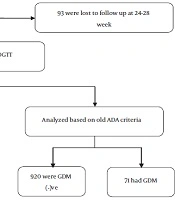
The study team registered 218 pregnant females who referred the Ayatolla Rohani hospital during the study period. Of those invited to participate, 18 females refused to take part in the study. Thus, the refusal rate for the study was 8.25% and the major reason for refusal was time constraints. Females who studied written consent were recruited for the study and interview. Before sampling, written informed consent was obtained from all participants. The sampling was done by a trained midwife and continued reaching the required sample size reaching.
3.2. Measurements and Laboratory Data
Anthropometric characteristics including height (using stadiometer) and weight (using Seca scale) were measured. Thereafter, BMI was calculated for all the cases. Gestational age was calculated according to the first day of their last menstrual cycle (LMP) (for females with regular cycles) and/or ultrasonography for those with irregular cycles or those who could not remember their LMP. Every female attending the antenatal clinic was screened for 20th to 28th weeks of pregnancy. As part of a universal screening program, the participants took a 1-hour, 50 g glucose challenge test (GCT). Females with abnormal plasma glucose concentrations on the GCT (higher than the threshold of 140 mg/dL) received the 3-hour 100 g oral glucose tolerance test (OGTT) to diagnose if they were with GDM using criteria proposed by carpenter and coustan: fasting ≥ 95 mg/dL; 1-hour ≥ 180 mg/dL; 2-hour ≥ 155 mg/dL; 3-hour ≥ 140 mg/dL (19). Based on the results of a two-step screening approach, females with a positive GCT test and two or more abnormal OGTT readings were diagnosed with GDM. Normal glycaemia was defined as glucose concentrations < 140mg/dL on the GCT. Females with an abnormal GCT but a normal OGTT and females with a single abnormal OGTT were excluded from the study. All laboratory tests were performed at the Ayatollah Rouhani hospital lab. Measurement was made by the glucose oxidase method, using a Hitachi 704 autoanalyzer.
3.3. Definitions of the Study Variables
The following instruments were used for data collection in the study: Form 1 for entry criteria and plasma glucose check-list, form 2 containing demographic, medical and reproductive details, and form 3 containing physical activity details drafted using a modified version of the pregnancy physical activity questionnaire (PPAQ), which is a semi quantitative questionnaire validated to be used during pregnancy (20). The data were collected by a trained midwife in a private room, in the prenatal clinics of Ayatolla Rohani hospital in Babol, Iran. Maternal pre-pregnancy body mass index (BMI) (kg/m2) was calculated using self-reported pre-pregnancy weight and measured height collected during the prenatal examination. To ensure the quality of data, weight measurements taken at the first prenatal clinic visit (within 12 weeks of gestation) were compared to self-reported pre pregnancy weights. Moreover, the gestational age was estimated from the last menstrual period and was confirmed or corrected by ultrasonography.
The physical activity performed by the participants during their first 20 weeks of pregnancy was assessed at the time of enrollment, from 20th to 28th weeks of gestation. The PPAQ evaluates participation in four domains of activities: household/caregiving, occupational, sports/ exercise and transportation. The duration of each activity was summed and multiplied by its intensity as defined by the compendium of physical activities (21).
The intensity of physical activity is measured in metabolic equivalent test (MET). To calculate the intensity of activity, value of MET is multiplied by duration of activity in every day of the weeks. The activity rate, based on the type of activity, is the sum of intensity per day or per week. In the present study, four categories are constructed for maximal intensity: Activity with MET value ≤ 1.5 is considered as sedentary, from 1.5 to ≤ 3 as light, from three to six as moderate and MET scores ≥ 6 as vigorous intensity. Total physical activity (total MET hours/day) across all activity domains was also calculated. To estimate hours per week of sedentary behavior, participants were asked to report the amount of time they spent watching TV or videos or sitting or standing at home, at work or during transportation. Each physical activity variable was then divided into two with the median (low and high). Since there were few pregnant working women among the participants, occupational activity was divided into two: unemployed (none), employed females (any).
The PPAQ was originally developed in English by Chasan-Taber et al. (2004), and Cronbach’s alpha assessed the reliability of the total scale as 0.78 and ranging from 0.78 to 0.93 for each subscale (20). Moreover, in a study conducted by Morkrid et al., its reliability was confirmed by Cronbach’s alpha of 0.85% in Iran (22)
In order to apply the PPAQ in the present study, it was translated into Persian and then translated back into English and was reviewed independently by two bilingual (Persian and English) researchers to ensure that the translations were accurate, reflected local terminology and were appropriate to be used in the field. The face validity of questionnaire was pilot-tested with 10 pregnant females (six with GDM and four without GDM). The pre-test revealed the need for modifications in a few of the items which had to be more simplified for respondents. Accordingly, the research team revised the questionnaire after careful consultations to ensure that the wording of each question could be easily understood by the respondents.
3.4. Statistical Analysis
The data were coded and analyzed using the statistical package for social sciences (SPSS) software version 21, and descriptive analysis was performed using standard statistical methods. In addition, inferential statistical methods including the Chi-square and/or the Fisher exact and independent T-tests were used to ascertain the associations between the variables. Logistic regression procedures were used to estimate the relative risks (odds ratios) of GDM regarding variable levels of different aspects of the examined physical activity (e.g. time, intensity and energy expenditure). To assess confounding, covariates were inserted into a logistic regression model one at a time and then compared the adjusted and unadjusted odds ratios. P≤0.05 was considered as the cutoff value for statistical significance.
3.5. Ethics Statement
The study protocol was approved by the research ethics committee of Babol University of Medical Sciences. After explaining the objectives of the study, all participants gave verbal and written consent when the study objectives were explained to them and then they were requested to complete the questionnaires.
4. Results
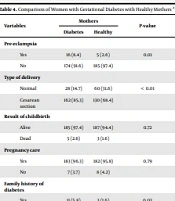
The demographic and reproductive characteristics of the participants are demonstrated in Table 1. The mean age of the participants was 27.61 ± 6.30 years. All females lived with their husbands and none of them were divorced or widowed; 92% were unemployed and 47% were nulliparous. Almost more than half of the participants were overweight or obese prior to pregnancy (35.5% overweight and 26% obese). The age, pre-pregnancy BMI, gravidity and a family history of diabetes were all significantly higher in females with GDM compared to healthy pregnant females. Females with GDM had significantly multi gravidity and were older and heavier than the subjects in the control cases (P < 0.001). The mean age of the females with GDM and the healthy pregnant ones were 30.58 ± 5.97 and 24.64 ± 5.13, respectively (P < 0.001). Moreover, the mean pre-pregnancy BMI was 29.01 ± 5.10 for pregnant females with GDM and 25.22 ± 4.69 for healthy ones (P < 0.001). There was no association between GDM and educational level, occupation and permanent residences.
Table 1.
Demographic and Reproductive Characteristics of Gestational Diabetes Mellitus and Control Cases (N = 200)a
| Variables | Total | GDM | Control Cases | P-Value |
|---|---|---|---|---|
| Age Group (year) | 0.001 | |||
| < 25 | 69 (34.5) | 15 (21.7) | 54 (78.3) | |
| 25 - 34 | 99 (49.5) | 58 (58.6) | 41 ( 41.4) | |
| > 35 | 32 (16.0) | 27 (84.4) | 5 (15.6) | |
| Pre-Pregnancy BMI (Kg/m2) | 0.001 | |||
| < 25 | 77 (38.5) | 21 (27.3 ) | 56 ( 72.7) | |
| 25 - 29.9 | 71 (35.5) | 43 (60.6 ) | 28 (39.4) | |
| ≥ 30 | 52 (26.0) | 36 (69.2 ) | 16 (30.8) | |
| Family History of Diabetes | 0.001 | |||
| Yes | 75 (37.5) | 59 (78.7) | 16 (21.3) | |
| No | 125 (62.5) | 41 (32.8) | 84 (67.2) | |
| Gravidity | 0.002 | |||
| G1 | 94 (47.0) | 36 (36.3) | 58 (61.7) | |
| ≥ G2 | 106 (53) | 64 (60.4) | 42 (39.6) | |
| Education | 0.777 | |||
| Less than high school | 98 (49.0) | 50 (51.0) | 48 (49.0) | |
| High school or more | 102 (51.0) | 50 (49.0) | 52 (51.0) | |
| Occupation | 0.118 | |||
| Jobless | 184 (92.0) | 95 (51.6) | 89 (48.4) | |
| In-paid job | 16 (8.0) | 5 (31.3) | 11 (68.8) | |
| Permanent Residences | 0.313 | |||
| Urban | 81 (40.5) | 44 (54.3) | 37 (45.7) | |
| Rural | 119 (59.5) | 56 (47.1) | 63 ( 52.9) |
Abbreviation: BMI, body mass index.
aValues are expressed as No. (%).
The association between physical activity during the first 20 weeks of pregnancy and GDM was assessed in the present study using different variables. By the binary logistic regression model in an unadjusted analysis, females who had a low total physical activity during their first 20 weeks of pregnancy based on the PPAQ, had a higher odd ratio to develop GDM (OR = 4.12, 95% CI (2.28 - 7.43), P = 0.001) compared to those with a high total physical activity. On the other hand, after adjusting for age, BMI, gravidity and a family history of diabetes, females who had a low total physical activity (PPAQ) during their first 20 weeks of pregnancy had a 9% higher risk of developing GDM (OR = 1.09, 95% CI (0.30 - 3.96), P = 0.894) compared to those with a high total physical activity. However, this correlation was not significant.
The adjusted odd ratios for factors that were significantly associated with the risk of GDM are summarized in Table 2. Females with 1ower BMI (< 25kg/m2) before pregnancy (OR 0.23; 95% CI 0.08 - 0.64, P = 0.001) were at nearly 84% lower risk of developing GDM compared to those with a BMI higher than or equal to 30 kg/m2. Females who were younger than 25 years old during pregnancy (OR 0.05; 95% CI 10.01 - 0.23, P = 0.001) were at a lower risk of developing GDM. Compared to females without a family history of diabetes, those with a positive family history were at a higher risk of developing GDM (OR 6.22; 95% CI 2.68 - 14.41, P = 0.001) (Table 2).
Table 2.
The Association Type of Physical Activity During the First 20 Weeks of Pregnancy and GDM With the Variables in Study (N = 200)
| Variables | Unadjusted OR (95% CI) | P-Value | Adjusted OR (95% CI) | P-Value |
|---|---|---|---|---|
| Age Group | ||||
| < 25 | 0.05 (0.02 - 0.15) | 0.001 | 0.05 (0.01 - 0.23) | 0.001 |
| 25 - 34 | 0.26 (0.09 - 0.73) | 0.011 | 0.26 (0.07 - 0.96) | 0.044 |
| ≥ 35 | Reference 1.00 | |||
| Pre-Pregnancy BMI | ||||
| < 25 | 0.16 (0.07 - 0.36) | 0.001 | 0.23 (0.08 - 0.64) | 0.005 |
| 25 - 29.9 | 0.68 (0.32 - 1.45) | 0.323 | 0.86 (0.31 - 2.35) | 0.772 |
| ≥ 30 | Reference 1.00 | |||
| Family history of diabetes | 0.001 | |||
| Yes | 7.55 (3.87 - 14.71) | 0.001 | 6.22 (2.68 - 14.41) | |
| No | Reference 1.00 | |||
| Gravidity | 0.783 | |||
| G1 | 0.40 (0.23 - 0.72) | 0.002 | 1.14 (0.43 - 3.00) | |
| ≥ G2 | Reference 1.00 | |||
| Total Physical Activity | 0.894 | |||
| Low | 4.12 (2.28 - 7.43) | 0.001 | 1.09 (0.30 - 3.96) | |
| High | Reference 1.00 | |||
| Physical activity At home | 0.223 | |||
| Low | 3.91 (2.10 - 7.28) | 0.001 | 2.17 (0.62 - 7.59) | |
| High | Reference 1.00 | |||
| Transportation physical activity | 0.008 | |||
| Low | 6.79 (3.63 - 12.69) | 0.001 | 3.85 (1.41 - 10.49) | |
| High | Reference 1.00 | |||
| Occupational physical activity | 0.504 | |||
| Low | 2.06 (0.96 - 4.45) | 0.063 | 1.45 (0.48 - 4.41) | |
| High | Reference 1.00 |
Abbreviation: BMI, body mass index; GDM, gestational diabetes mellitus.
The present findings showed the association between the type of physical activity (i e, household/care giving, occupational and transportation) and the risk of GDM (Table 2). There were statistically significant findings for reduced risk of GDM in all types of physical activities except the occupational. The crude and adjusted odd ratios and P values are demonstrated in Table 2. Since the pregnant females in both case and control groups rarely had sports/exercise or physical activity, this type of physical activity was omitted from the analysis.
The present study findings showed that the association between the intensity of each activity (i e, sedentary, light, moderate, and vigorous) and the risk of GDM were evaluated in the study (Table 3). The low intensity of sedentary, light and moderate physical activity had a statistically significant relationship with increased risk of developing GDM (OR 2.32; 95% CI 1.21 - 4.43, P = 0.010, OR 6.26; 95% CI 2.95 - 13.30, P = 0.001 and 6.73 (3.15 - 14.38) respectively, P = 0.001) compared to females with a high intensity of sedentary, light and moderate physical activity. The odd ratios and P-values are demonstrated in Table 3. Since the pregnant females in both case and control groups rarely had vigorous physical activity, this intensity of physical activity was omitted from the analysis.
Table 3.
The Association Between the Intensity of Physical Activity During the First 20 Weeks of Pregnancy and GDM, and the Variables in Study (N = 200)
| Physical Activity by Intensity | B (SE) | OR (95% CI) | P-Value |
|---|---|---|---|
| Sedentary | |||
| Low | 0.84 (0.33) | 2.32 (1.21 - 4.43) | 0.010 |
| Moderate | 0.53 (0.37) | 1.70 (0.81 - 3.57) | 0.155 |
| High | Reference 1.00 | ||
| Light | |||
| Low | 1.83 (0.38) | 6.26 (2.95 - 13.30) | 0.001 |
| Moderate | 1.07 (0.36) | 2.91 (1.41 - 6.01) | 0.004 |
| High | Reference 1.00 | ||
| Moderate | |||
| Low | 1.90 (0.38) | 6.73 (3.15 - 14.38) | 0.001 |
| Moderate | 0.81 (0.36) | 2.26 (1.10 - 4.63) | 0.026 |
| High | Reference 1.00 |
5. Discussion
The current study aimed to assess the association between the levels of physical activity during early 20 weeks of pregnancy and the risk of GDM. It was found that females with low total physical activity during early pregnancy, according to PPAQ, were at a four times higher risk of developing GDM compared to those who reported a high level of physical activity. Moreover, after adjusting for age, BMI, gravidity and a family history of diabetes, females with lower physical activity (PPAQ) in the domain of transportation activity during the first 20 weeks of pregnancy were at a significantly higher risk of developing GDM.
In accordance with previous reports (9, 23), it was also found that some factors such as increased pre-pregnancy BMI, maternal age and family history of diabetes were strongly independent predictors of developing GDM. But early pregnancy physical activity was also associated with a statistically significant 25% lower risk for females participating in high levels of physical activity.
Holloszy stated that: regular physical activity is known to improve peripheral insulin sensitivity (24). Beneficial effect of physical activity on glucose metabolism and insulin sensitivity are well documented in non-pregnant populations. Participation in physical activity decreases blood glucose concentration, increases insulin sensitivity, improves cardiovascular fitness and leads to a lower body fat (25). Evidence indicates the existence of these beneficial effects during pregnancy, with respect to insulin sensitivity and B cell response (26, 27). Han et al. did not observe any overall benefit of exercise during pregnancy (16). However, in that study physical activity throughout pregnancy was assessed after delivery, which might have led to some differential misclassification because females with GDM may have initiated exercise after their diagnoses.
The association between the levels of physical activity during pregnancy and risk of GDM in the present study was consistent with the published literature (28, 29). In contrast to the current study results, both Dempsey et al. (8) and Oken et al. (30) found that physical activities during pregnancy were associated with reduction in risks of GDM ranging from approximately 10% - 40%; however, none of the estimations reached statistical significance in the adjusted models. However, the present study demonstrated that after adjusting for age, BMI, gravidity and a family history of diabetes, females with low PA in the domain of transportation activity during the first 20 weeks of pregnancy were at a significantly higher risk of developing GDM. In addition, Chasen-Taber et al. reported an 80% - 90% lower risk of GDM for females with the highest quartiles of household/caregiving and sports or exercises at the 28th week of gestation compared to those with the lowest quartile (28).
The findings of the present study showed a statistically significant relationship between the intensity of sedentary, light, and moderate physical activity and a lower risk of developing GDM. Previous studies found that light to moderate intensity of PA in early gestation is associated with a lower risk of developing GDM (1, 22). Oken et al. reported that light to moderate activity during pregnancy may reduce the risk of abnormal glucose tolerance and GDM (30). Furthermore, Harizopoulou et al. found that females who were inactive during early pregnancy had an OR 1.3 (95% CI 1.2 - 1.4) of developing GDM, compared to minimally active or active females. However, the physical activity during early pregnancy, failed to reach statistical significance in the binary logistic regression model (P = 0.998) (23). The findings of the present study were entirely consistent with the results of the two above mentioned studies.
One of the strengths of the present study was the use of a physical activity questionnaire validated for pregnant females. Nevertheless, some limitations need to be considered. First of all, the data were strongly dependent on participants’ self-reports which were prone to recall bias due to complexity of PA and sedentary behavior; however, recall bias is unlikely because authors collected exposure information before females knew their glucose test results, and the questionnaire was not validated locally against objective methods such as pedometers or accelerometer (31, 32). Secondly, PA was restricted to the first 20 weeks of pregnancy. The present study did not assess activities during the later period of pregnancy. This is while the previous studies indicated that PA decreased in the third trimester (33).
Finally, the clinical interpretation of the present study was that pregnant Iranian females should be encouraged to have regular daily physical activity during pregnancy, if there is no specific contraindication to do it. These findings send a hopeful message to pregnant females that promoting an active lifestyle may lower the risk of GDM. However, the findings of the study should be confirmed by appropriate randomized controlled trials.