Fulltext
Full text is available in PDF
International Journal of Endocrinology and Metabolism
Research Institute for Endocrine Sciences
Authors
Background: In 1983, Daponte et al. first reported an increase in the peripheral white blood cell (WBCs) counts of prostate cancer patients treated with estramustine phosphate (EMP) therapy.
Objectives: In order to confirm Daponte’s observation, we reviewed the clinical data of prostate cancer patients treated with EMP. We also examined the association between WBC counts and 17β-estradiol levels throughout the duration of the EMP therapy.
Patients and Methods: The study population comprised of 66 prostate cancer patients who were being treated with EMP. The complete blood count with a differential WBC count and the levels of serum 17β-estradiol and C-reactive protein measured during the therapy were compared with the baseline levels. The correlation between serum 17β-estradiol level and WBC count was calculated using the Pearson correlation test.
Results: We observed that the total WBC and the neutrophil counts were significantly elevated during the therapy. The serum 17β-estradiol level significantly correlated with the WBC count (r2 = 0.031, P = 0.002). The granulocyte colony-stimulating factor levels measured during therapy were approximately 2-fold higher than the upper limit and decreased after cessation of the treatment (P = 0.037).
Conclusions: We successfully confirmed Daponte’s observation. The increase in WBC counts was possibly attributable to elevated serum 17β-estradiol levels.
Please cite this paper as:
Suzuki M, Fujimura T, Fukuhara H, Enomoto Y, Nishimatsu H, Ishikawa A, et al. 17β-Estradiol-Mediated Elevation of Peripheral White Blood Cell Count During Estramustine Phosphate Therapy for Prostate Cancer. Int J Endocrinol Metab. 2011; 9(4):347-51. DOI: 10.5812/Kowsar.1726913X.2246
Copyright © 2012 Kowsar M. P. Co. All rights reserved.
© 2011, Author(s). This open-access article is available under the Creative Commons Attribution 4.0 (CC BY 4.0) International License (https://creativecommons.org/licenses/by/4.0/), which allows for unrestricted use, distribution, and reproduction in any medium, provided that the original work is properly cited.
emami J, Mohammadzadeh M, Arbabi F. Radiation effect on the number of circulating blood cells in patients receiving pelvic radiotherapy. Zahedan J Res Med Sci. 2005;7(1):e94969. doi:
EHajiseidjavadi E, Ghoreishi V. Comparison of serum testosterone in preeclamptic and normotensive pregnant women. J Inflamm Dis. 2024;7(4):e154990. doi:
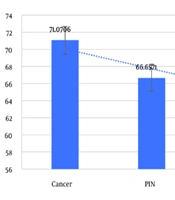
Mohseni Rad H, Hosseinkhani A, Hosseinkhani E, Aali M. Investigation of the Relationship Between Prostate-Specific Antigen Levels and Prostate Cancer in Patients Attending a Urology Clinic from 2014 to 2023. Nephro-Urol Mon. 2024;16(3):e147023. doi: https://doi.org/10.5812/numonthly-147023
Etedali A, Hosseni AK, Derakhshandeh A, Mehrzad V, Sharifi M, et al. Melatonin in the Management of Mood and Sleep Problems Induced by Androgen Deprivation Therapy in Prostate Cancer Patients: A Randomized Double-blinded, Placebo-controlled Clinical Trial. Iran J Pharm Res. 2022;21(1):e128817. doi: https://doi.org/10.5812/ijpr-128817
Shahraki MR, Mirshekari H, Shahraki AR. Chronic Administration of High Doses of Nandrolone Decanoate on the Pituitary-Gonadal Axis in Male Rats. Int J High Risk Behav Addict. 2015;4(3):e24419. doi: https://doi.org/10.5812/ijhrba.24419
More by these authors
Last Update: 2 weeks ago
Last Update: 2 weeks ago
Last Update: 2 weeks ago
Last Update: 1 hour ago
Last Update: 7 hours ago
Last Update: 4 days ago
