
1. Background
Methamphetamine, a potent stimulant with strong addictive and neurotoxic characteristics, is at the core of a worldwide epidemic (1). Its abuse is linked to a broad spectrum of detrimental effects on the cardiovascular system, including dilated cardiomyopathy, malignant and benign arrhythmias, coronary vasospasm, and atherosclerotic coronary artery disease (1, 2). Methamphetamine abuse is known to cause an increase in heart rate and blood pressure. It also leads to oxidative stress, inflammation, and heart tissue fibrosis (2, 3). These factors collectively contribute to the development of cardiovascular disease (1) and alterations in the heart cell structure (2). According to a histopathological study of cardiac lesions in methamphetamine poisoning-related deaths, methamphetamine contributes to clinically significant histological changes in the cardiac tissue (4). Another study reported histopathological changes in the heart tissue samples of rats in the methamphetamine group. These changes included cellular infiltration, enlargement of cells, and internalization of nuclei (5). Furthermore, a study detailed the detrimental effects of methamphetamine on the myocardium, providing a comprehensive dataset on histological changes, such as changes in the myocyte structure (3).
Berberine, a compound found in the barberry plant, has been traditionally used for treating inflammation (6) and protects against heart failure, hypertension, hyperlipidemia, and arrhythmias (7). It was observed that individuals who consumed Berberine for eight weeks exhibited improved heart function and increased exercise capacity (8). Additionally, it has been shown that Berberine can improve the cardiac structure and systolic function of rats with left ventricular hypertrophy (9) and inhibit cardiac fibrosis (10).
Crocin, a natural carotenoid compound derived from saffron, holds potential advantages for cardiovascular health and has antioxidant effects on the heart (11). Crocin can improve cardiac function by reducing inflammation and oxidative stress, as well as ameliorating histopathological changes, including myocardial cell necrosis, hemorrhage, hypertrophy, and inflammatory cell infiltration (12).
Regular aerobic exercise can cause histopathological changes in the heart and improve its structure and function. These changes include an increase in ventricular weight, improved contractility, and the development of physiological cardiac hypertrophy, which is different from pathological hypertrophy and is associated with improved cardiac function (13). Furthermore, physical activity has been linked to a reduction in oxidative stress, which can lead to a decrease in inflammation and congestion (14).
Women are more susceptible to methamphetamine damage and respond better to treatments (15). Methamphetamine use has significant medical and social burdens, including excess healthcare use, productivity losses, crime, and child endangerment (16). Therefore, it is necessary to investigate potential strategies to prevent health damage, especially to the heart, and provide effective treatment solutions, including aerobic exercise and nutritional supplements. On the other hand, no studies have been conducted on the effect of sports activity or the effect of crocin and berberine supplements on heart tissue in rats addicted to methamphetamine. Also, the search results provide general information on the cardioprotective effects of aerobic exercise but do not cover the specific combination of aerobic exercise, crocin, berberine, and methamphetamine-induced heart damage in female rats. Therefore, we decided to investigate the structure of the heart tissue using the histopathology method and the cardio-respiratory test to investigate the cardiovascular function of the rats studied in this research.
2. Objectives
The current body of research on the effects of methamphetamine on heart health and the potential heart-protective effects of aerobic exercise, Berberine, and Crocin, does not indicate sufficient comparative studies. This study aimed to fill this gap by investigating the effects of these interventions on the cardiac tissue and cardio-respiratory endurance of female rats. Therefore, the question of the current research is whether each of the Crocin and Berberine supplements alone and in combination with exercise can reduce cardiac structural damage and improve cardio-respiratory endurance in methamphetamine-addicted female rats.
3. Materials and Methods
3.1. Study Design
The research protocol was approved by the Animal Ethics Committee of Shahrood University of Medical Sciences [(IR.IAU.SHAHROOD.REC.1401.022), (IR.IAU.SHAHROOD.REC.1401.023)]. The statistical population of this study included female Wistar rats from Shahrood University of Medical Sciences. Forty-two rats were procured as a statistical sample and maintained in a controlled environment with a consistent room temperature of 22°C, 50% humidity, and a light source in a 12:12 hour light-dark cycle for one week. After the adaptation period, the rats were divided into 7 groups of 6 according to the average weight (160 ± 10 grams) and were placed in the following groups: Healthy control group, methamphetamine group, methamphetamine + aerobic exercise group, methamphetamine + Crocin group, methamphetamine + Berberine group, methamphetamine + aerobic exercise + Crocin group, and methamphetamine + aerobic exercise + Berberine group. Methamphetamine (Sigma Company, USA) was administered intraperitoneally for five days at a dose of 10 mg/kg body weight per day to all groups except the control group (17). After developing addiction in all groups (except the control group), according to the type of intervention, the groups received each of the supplements or aerobic exercise or both for a four-week methamphetamine withdrawal period. The control and methamphetamine groups were kept in their cages during these four weeks of abstinence and did not receive any intervention. After four weeks of intervention, all rats underwent a cardio-respiratory endurance test on a treadmill. On the next day, tissue samples were prepared to be sent to the histopathology laboratory.
3.2. Exercise Protocol
The aerobic exercise protocol was implemented on a treadmill designed for rodents, featuring five separate lanes. Before initiating the training protocol, the animals underwent a familiarization period with the treadmill, in which the treadmill speed was gradually increased over several minutes, eventually reaching 18 m/min. The primary aerobic training regimen consisted of a four-week running, conducted six days a week (24 sessions) at a speed of 25 m/min for 30 minutes per day (18).
3.3. Extract Preparation and Administration
3.3.1. Crocin
Crocin, derived from saffron flower extract (under the license of Crosina, Iran), was prepared for use in this study. It was dissolved in a Normal Saline solution and intraperitoneally injected into the animals six days per week at 40 mg/kg (19) for 4 weeks.
3.3.2. Berberine
Berberine was sourced from the Glucober Company (Iran). The animals were administered Berberine at 100 mg/kg daily by dissolving it in drinking water over a four-week withdrawal period (20).
3.4. Cardio-Respiratory Endurance Test
After four weeks of interventions, all the rats participated in a graded exercise tolerance test, which involved running on a treadmill at 15 m/min and a 5% incline in the first 3 minutes. Every three minutes, 15 m/min was added to the treadmill speed and 5% to its incline until the rats reached exhaustion. The time to exhaustion (in seconds) was determined when the rats stayed at the lower end of the treadmill near the shock rod and were unable to continue running.
3.5. Weighting
The day after the cardio-respiratory test, the rats were weighed by a digital scale, and their heart tissue was separated after dissection. After measuring the heart tissue, the ratio of heart weight to total body weight was calculated.
3.6. Tissue Preparation and Histology
Following the trial, the animals were subjected to an overnight fast for 12 hours, although they were allowed unrestricted access to water. Subsequently, they were anesthetized using an intraperitoneal injection of a ketamine-xylazine mixture (60 mg/kg body weight). The animal’s heart was subsequently removed. The samples were then preserved in a 10% formalin solution for preparation for routine histological analysis. Following the initial 24 hours, the formalin was refreshed with a new batch. After stabilization, the samples were rinsed with alcohol and embedded in paraffin. Using a microtome, sections of 5-micron thickness were prepared through random sampling at regular and uniform intervals. The selected microscopic sections were stained with hematoxylin and eosin and finally studied under light microscopy at 100× and 400× magnification. Various images were acquired for a histopathological evaluation of the heart tissue. A pathologist quantitatively graded the structural changes observed in the heart cells and tissue on a scale from zero to three. A grade of zero signified no change, grade one represented mild change, grade two corresponded to moderate changes, and grade three denoted severe changes.
3.7. Statistical Analysis
For statistical analysis, SPSS 26 was used. According to the pathologist's ranking of tissue changes, a non-parametric Kruskal-Wallis test, chi-square, and Mann-Whitney U test were performed. For cardio-respiratory endurance and the ratio of heart weight to body weight, the Shapiro-Wilk test was used to check the normality of the data. Due to the non-normality of the data, non-parametric Kruskal-Wallis and Mann-Whitney U tests were used to examine the differences between groups. The significance level was set at 5% (P < 0.05).
4. Results
Based on the histopathological findings, the heart tissue samples from the control group (Figure 1A) exhibited natural characteristics. The tissue demonstrated orderly arrangement and coherence, along with typical cellular features. In both longitudinal and transverse sections, the cardiac cells exhibited an acidophilic cytoplasm with distinct basophilic nuclei (white arrow). Cell bifurcations were consistently observed in all sections, including the ends of the cells (yellow arrow), and the intercellular spaces in the heart tissue of the control samples were regular and clear. No significant changes were observed in the tissue across various heart regions.
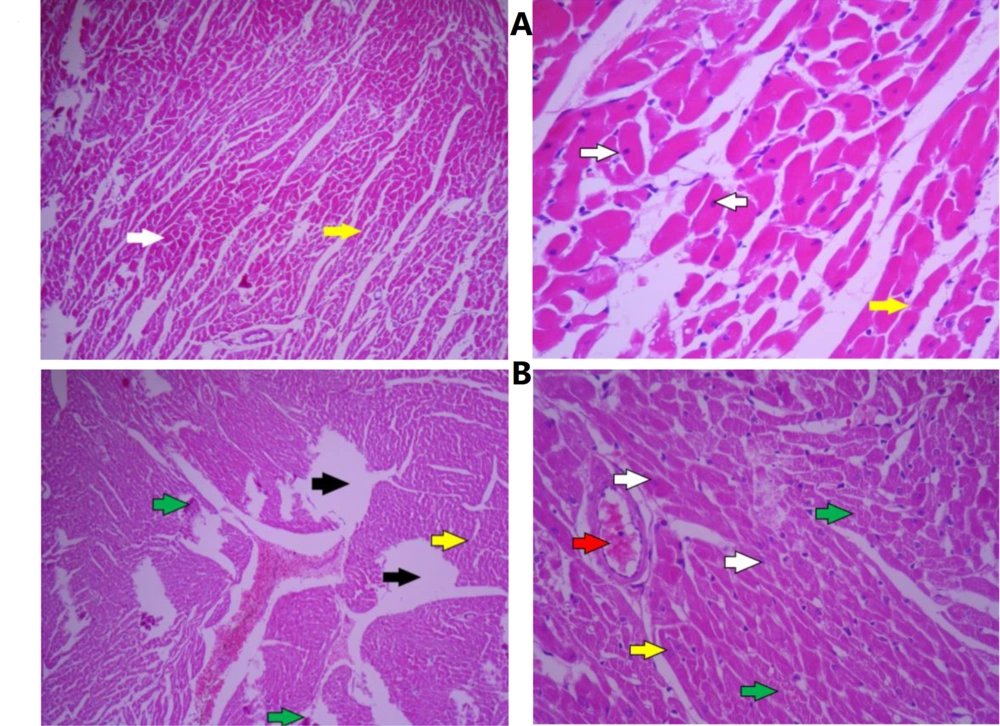
Figure 1.
Histopathological changes in heart tissue of female rats in the control (A); and methamphetamine (B) groups with magnifications of 100 (right) and 400 (left) (H&E staining).
In the methamphetamine group (Figure 1B), several changes were observed in the heart tissue, especially in the cells. Moreover, the tissue exhibited disorganization, disintegration, and irregular tissue spaces (black arrow). Degenerative changes in the cells, observable in both longitudinal and transverse sections, manifested as cytoplasmic and nuclear problems (green arrow). Cell shrinkage was also observed (white arrow), along with hyperemia (red arrow) and irregular bifurcations (yellow arrow).
In the aerobic exercise group (Figure 2A), heart tissue showed healthier characteristics than the methamphetamine group. The tissue exhibited a distinct and organized structure, with no signs of disintegration in the longitudinal and transverse sections of the heart tissue. While there were no signs of hyperemia, some cardiac cells exhibited degenerative changes (green arrow), along with small cells and indistinct nuclei (white arrow). Cell bifurcations were observed to be of natural shape and size and were consistently present (yellow arrow).
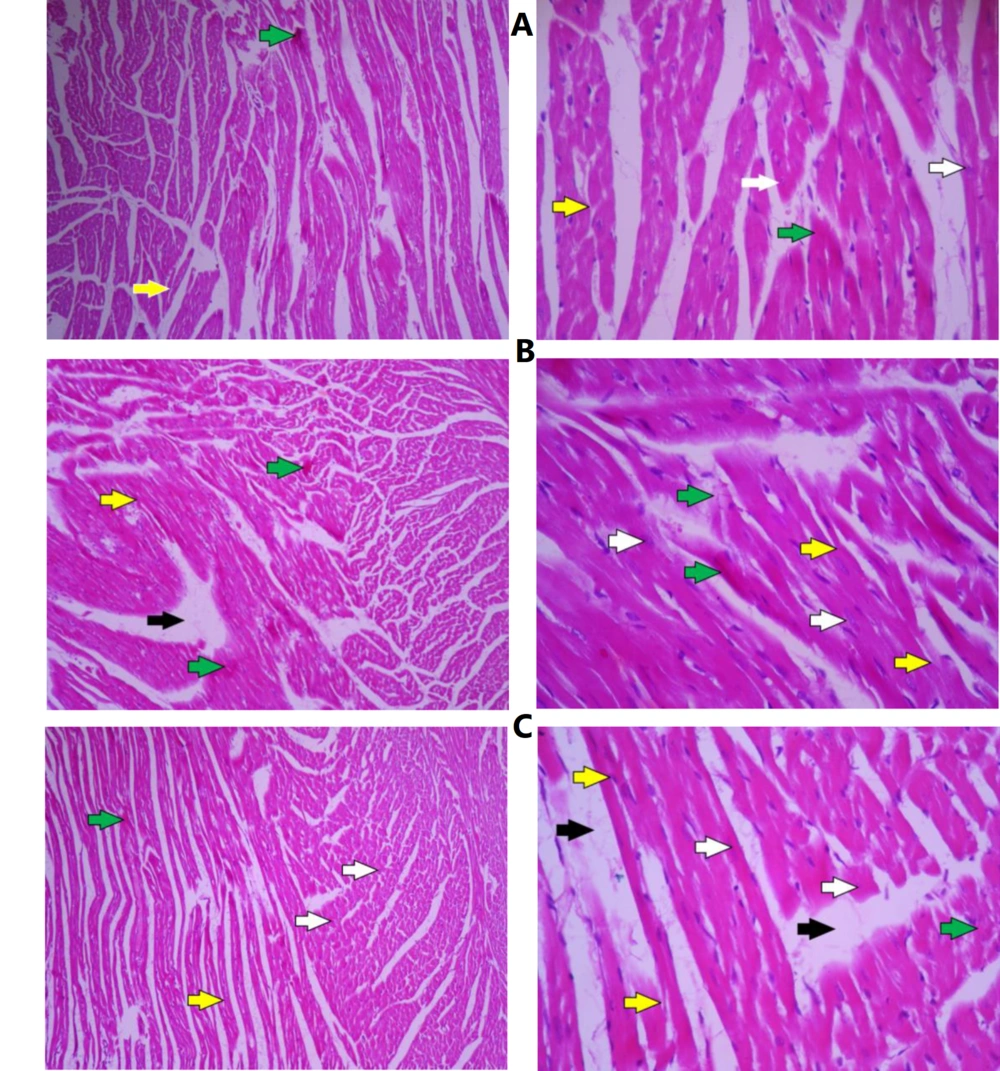
Figure 2.
Histopathological changes in heart tissue of female rats in the aerobic (A), Crocin (B), and Berberine(C) groups with magnifications of 100 (right) and 400 (left) (H&E Staining).
In the histological samples of the group receiving Crocin (Figure 2B), the heart tissue demonstrated the evident cohesion and orderly arrangement of cells and tissues. A slight disintegration could be only seen in some areas (black arrow). In most cells, the cellular characteristics were observed to be natural. The nuclei appeared elongated and bright, while the cytoplasm exhibited an appropriate acidophilic coloration (white arrow). A few cells still exhibited degenerative changes, characterized by a darkened cytoplasm and indistinct nuclei (green arrow). Also, cell bifurcations were found in an appropriate quantity and displayed natural diameter (yellow arrow).
In the samples of the group receiving Berberine (Figure 2C), Minor disintegration and uneven tissue spacing were still observable in the heart tissue (black arrow). However, there were cellular bifurcations in an appropriate quantity and thickness (yellow arrow). In certain regions of the tissue, the heart cells exhibited cellular alterations, including cytoplasm that appeared dark and vibrant (green arrow), and also nuclei were indistinct and shrunken (white arrow).
In the samples of the group receiving Crocin and performing exercise (Figure 3A), the tissue cohesion and order were almost appropriate, and no disintegration or irregular intervals were observed. In all stages, the cells typically exhibited a distinct cytoplasm and nucleus (white arrow), and only a few cells still showed degenerative changes and unclear or abnormal nuclei (green arrow). Intercellular junctions and cell bifurcations were also regular, with appropriate diameters and numbers (yellow arrow).
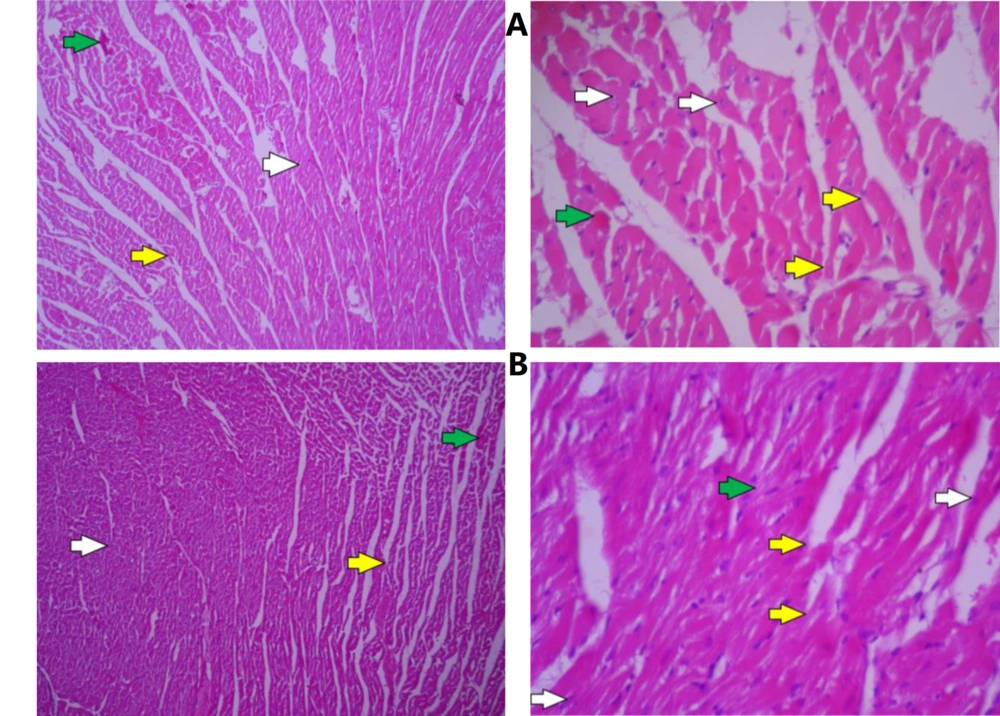
Figure 3.
Histopathological changes in heart tissue of female rats in the aerobic with Crocin (A), and aerobic with Berberine (B) groups with magnifications of 100 (right) and 400 (left) (H&E Staining).
In the samples of the exercise plus Berberine group (Figure 3B), the whole tissue had proper order and cohesion, and the intercellular spaces and cell bifurcations were of natural shape and thickness in all transverse and longitudinal sections (yellow arrow). The majority of the cells exhibited a natural shape and size. However, cytoplasmic changes were observed in some tissue cells, which included irregular staining (green arrow). Additionally, nuclear changes were observed, such as darkening and shrinkage (white arrow).
Based on the observed changes in the above figures, quantitative results of histopathological damage at the level of cells, tissue, and inflammation and hyperemia of heart tissue in different groups are given in Figure 4. The results of the study indicate that methamphetamine use causes hyperemia, inflammation, and histopathological damage in the heart cells and tissue (P = 0.001). However, the combination of exercise with Crocin eliminated methamphetamine-induced heart tissue damage (P = 0.001). The combination of exercise with Berberine only eliminated methamphetamine-induced heart cell damage (P = 0.001). Additionally, all intervention groups showed a significant reduction in hyperemia and inflammation compared to the methamphetamine group (P = 0.001).
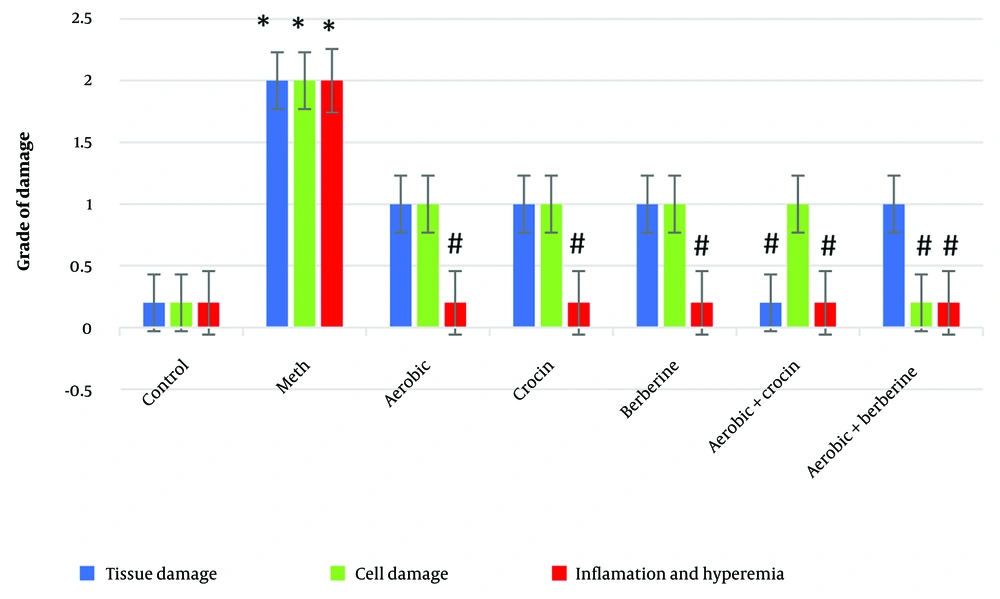
Figure 4.
The results of histopathological damage in different groups (*significant difference with the control group; #significant difference with the methamphetamine group).
According to Table 1, there is no significant difference between the groups in the ratio of heart weight to body weight of rats (P = 0.08). However, there is a remarkable difference between the groups in cardio-respiratory endurance (P = 0.01). The results of the Mann-Whitney U test showed the Crocin + aerobic exercise group caused a significant increase in Cardio-respiratory endurance compared to the control (P = 0.004), methamphetamine (P = 0.01), and Crocin (P = 0.004) groups. Also, the cardio-respiratory endurance in the Berberine + aerobic exercise group was significantly increased compared to the control (P = 0.024) and methamphetamine (P = 0.05) groups (Figure 5).
Table 1.
Descriptive Statistics and Kruskal-Wallis Test Results on Cardio-Respiratory Endurance and Heart Weight/Body Weight Variables in Different Groups
| Variables and Group | Cardio-Respiratory Endurance (Time to Exhaustion) (s) | Heart Weight to Body Weight (mg) | ||||
|---|---|---|---|---|---|---|
| Mean ± SD | Kruskal-Wallis | P | Mean ± SD | Kruskal-Wallis | P | |
| Control | 378.00 ± 37.22 | 16.52 | 0.01 a | 4.41 ± 0.41 | 11.29 | 0.08 |
| Meth | 402.50 ± 92.00 | 3.58 ± 0.45 | ||||
| Aerobic | 448/33 ± 171.52 | 4.18 ± 0.66 | ||||
| Crocin | 417.17 ± 57.38 | 3.88 ± 0.37 | ||||
| Crocin +Aerobic | 589.33 ± 72.47 | 3.90 ± 0.40 | ||||
| Berberine | 433.00 ± 27.14 | 3.84 ± 0.49 | ||||
| Berberine + Aerobic | 686.83 ± 272.13 | 4.20 ± 0.19 | ||||
a Significant difference between groups.
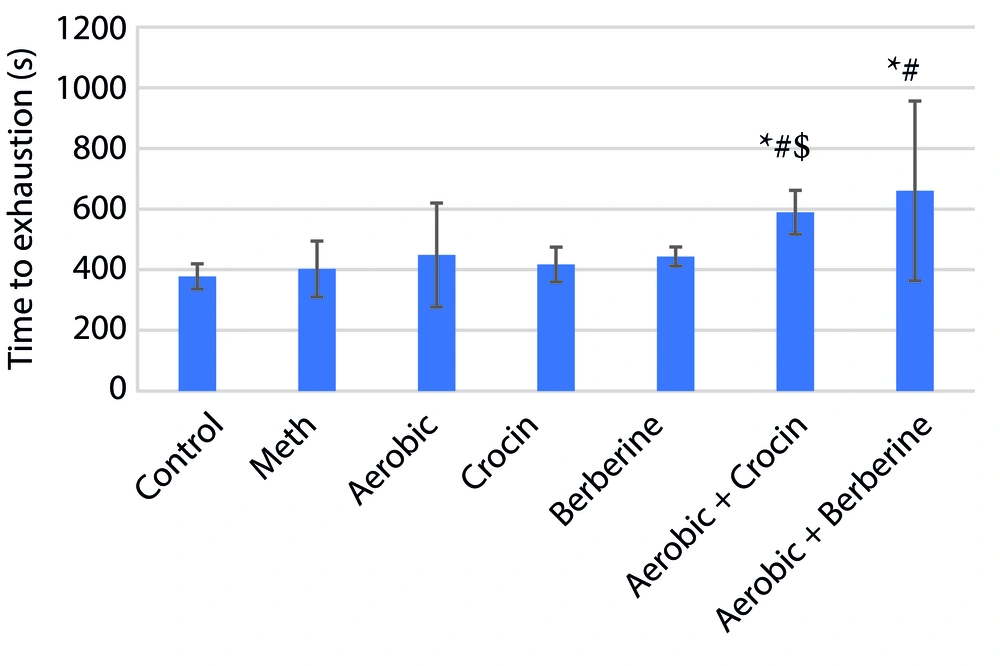
Figure 5.
The results of cardio-respiratory endurance (time to exhaustion) in different groups (*significant difference with the control group; #significant difference with the methamphetamine group; $Significant difference with the Crocin group).
5. Discussion
The present study on the detrimental effects of methamphetamine consumption for 5 days with a dose of 10 mg/kg on the cardiac structure and the mitigating impacts of Berberine and Crocin in conjunction with aerobic exercise in rats revealed that at the tissue level, methamphetamine induction led to significant structural damage in the heart tissue compared to the healthy control group. After four weeks of supplementation and exercise, despite improvement of these side effects in all interventions, statistically significant improvements in these complications were observed solely in the aerobic exercise group supplemented with Crocin. Moreover, at the cell level, the structural damage induced by methamphetamine in the heart cells was significant when compared to the control group. Although all interventions improved this cellular damage, these changes were solely mitigated to the level of the healthy control group in the aerobic exercise group supplemented with Berberine. Regarding the score of inflammation, the results showed that methamphetamine induction caused a significant increase in the inflammation of heart cells, and all supplements with/without exercise reduced inflammation in these cells. Also, the cardio-respiratory endurance in the aerobic exercise group in combination with berberine and combination with crocin was significantly improved compared to the control group and methamphetamine.
In our other research, the results showed that a 5-day injection of methamphetamine at a dose of 10 mg/kg followed by a 4-week withdrawal period without any intervention (similar to the present study) could not significantly increase the expression of PARP and dopamine receptor genes in the heart tissue of rats (21). Methamphetamine is a potent neuro-stimulant that has been associated with a wide array of adverse effects on the cardiovascular system, including dilated cardiomyopathy, malignant and benign arrhythmias, coronary vasospasm, and atherosclerotic coronary artery disease (22). While the specific mechanisms of methamphetamine-induced cardiotoxicity have not been fully established, new research has suggested the activation of several methamphetamine-induced downstream cellular targets, including the increased production of reactive oxygen species (ROS), mitochondrial dysfunction, and modulation of intracellular calcium. A rise in circulating catecholamines also triggers additional pathological effects. Their chronic activation is known to harm the cardiovascular system (22). Methamphetamine can potentially cause constriction and spasms in blood vessels, leading to hazardous spikes in blood pressure. It can also increase plaque buildup in the arteries and alter the heart’s electrical system. This can cause structural changes in the heart muscle (2).
This is the first study investigating the interaction effect of exercise and supplements such as Berberine and Crocin on the structure and function of heart tissue in female rats addicted to methamphetamine. However, there have been several studies on the effects of berberine in methamphetamine addicts. Berberine has demonstrated potential efficacy as a neuroprotective agent against methamphetamine addiction. In addition, it has been found to improve cognitive function in methamphetamine addiction (23). However, there is currently no direct evidence to suggest that Berberine can alleviate the structural changes in the heart induced by methamphetamine. Berberine may improve cardiac function and prevent heart failure by regulating the mTOR pathway, the Pak1 pathway, and Ca2+ concentration. Moreover, it has been shown to have potential anti-inflammatory effects (24). While these studies suggest the potential benefits of Berberine in reducing inflammation, further research is required to comprehend its specific effects on heart cells.
Crocin is recognized for its cardioprotective properties. It has been demonstrated to mitigate myocardial toxicity in a lipopolysaccharide (LPS)-induced sepsis model by enhancing superoxide dismutase and glutathione peroxidase levels (25). However, there is no direct evidence available that Crocin can mitigate meth-induced structural changes in the heart. It may have antiarrhythmic effects by regulating connexin 43 expression, a critical protein in the cardiac gap junction structure (26). Besides, Crocin has been shown to have protective effects on the heart in a rat model of cigarette smoke-induced lung injury by reducing oxidative stress and restoring antioxidant activity (27). Crocin has been demonstrated to prevent and treat cardiovascular disease, which may be attributed to its antioxidant and anti-inflammatory properties (28). Therefore, Crocin could be potentially used to reduce inflammation in heart cells.
There is no direct evidence available that aerobic exercise can mitigate meth-induced structural changes in the heart. Aerobic exercise has been shown to increase ventricular weight and cardiomyocyte dimensions and can improve contractility and Ca2+ handling in the heart (29). Aerobic exercise triggers changes in the blood vessels, muscles, metabolism, and brain, all promote cardiac health (30). Additionally, aerobic exercise has the potential to reduce inflammation through several mechanisms. It stimulates the release of anti-inflammatory cytokines. Furthermore, regular physical activity is associated with decreased levels of fibrinogen and ROS and increased nitric oxide, promoting a healthy endothelial environment (31). Moreover, aerobic exercise can trigger physiological changes that improve blood vessels and metabolism and help prevent all the crucial risk factors for heart disease (30).
Information regarding the synergistic effects of aerobic exercise in conjunction with Crocin, and Berberine in the context of addiction is currently limited. Nevertheless, there is evidence that aerobic exercise and Berberine affect positively metabolic syndrome, diabetes, kidney, and cardiovascular health (32, 33).
This research also showed that the Crocin + aerobic exercise and Berberine+ aerobic exercise groups caused a significant increase in cardio-respiratory endurance and time to exhaustion. There is limited information on the specific effect of Crocin and exercise on time to exhaustion. However, the available evidence suggests that Crocin and exercise, when administered simultaneously, can extend swimming-induced exhaustive time in mice. Crocin can exert its anti-fatigue effect by regulating oxidative stress (34). Additionally, endurance training and Crocin consumption have been shown to increase aerobic power in rats with Alzheimer's disease (35). The combination of Crocin and voluntary exercise has been found to enhance catalase (CAT) activity in the hearts of high-fat diet-induced type 2 diabetic rats, indicating a protective effect against oxidative stress (36). There is no direct information available on the simultaneous effect of aerobic exercise and Berberine on cardiovascular endurance. A study showed that aerobic exercise with berberine chloride hydrate supplementation did not cause significant changes in mitochondrial biogenesis indices in the heart of diabetic rats (37). Moreover, berberine has been found to enhance myocardial contractility, improve left ventricular function, and exhibit cardioprotective effects by controlling oxidative stress and reducing myocardial injury (38).
5.1. Conclusions
To the best of our knowledge, this study was the first to investigate the simultaneous effects of aerobic exercise supplemented with berberine or crocin on the cardiac tissue structure of methamphetamine-exposed rats. Therefore, this research provides a new insight into the synergistic effects of aerobic exercise and berberine or crocin in the heart tissue of rats addicted to methamphetamine. The combination of aerobic exercise with each of crocin and berberine showed strong effects in reversing the levels of cellular, tissue, and inflammatory damage in the heart of rats addicted to methamphetamine during the 4-week withdrawal period and improving cardio-respiratory endurance (time to exhaustion) at the end of the methamphetamine withdrawal period. These findings suggest that the combination of aerobic exercise with specific supplements such as Crocin or Berberine can effectively reduce the adverse effects of methamphetamine on the heart, improve cardiac function, and offer potential therapeutic strategies.