Fulltext
Click here to download PDF.
Innovative Journal of Pediatrics
The Scientific Journal of Growth & Development Research Center
Image Credit:Inn J Pediatr
Authors
Objective: The Pediatric Risk of Mortality (PRISM) score is one of the scores used by many pediatricians for prediction of the mortality risk in the pediatric intensive care unit (PICU). Herein, we intend to evaluate the efficacy of PRISM score in prediction of mortality rate in PICU. Methods: In this cohort study, 221 children admitted during an 18-month period to PICU, were enrolled. PRISM score and mortality risk were calculated. Follow up was noted as death or discharge. Results were analyzed by Kaplan-Meier curve, ROC curve, Log Rank (Mantel-Cox), Logistic regression model using SPSS 15. Findings: Totally, 57% of the patients were males. Forty seven patients died during the study period. The PRISM score was 0-10 in 71%, 11-20 in 20.4% and 21-30 in 8.6%. PRISM score showed an increase of mortality from 10.2% in 0-10 score patients to 73.8% in 21-30 score ones. The survival time significantly decreased as PRISM score increased (P≤0.001). A 7.2 fold mortality risk was present in patients with score 21-30 compared with score 0-10. ROC curve analysis for mortality according to PRISM score showed an under curve area of 80.3%. Conclusion: PRISM score is a good predictor for evaluation of mortality risk in PICU.
© 2013, Author(s). This open-access article is available under the Creative Commons Attribution 4.0 (CC BY 4.0) International License (https://creativecommons.org/licenses/by/4.0/), which allows for unrestricted use, distribution, and reproduction in any medium, provided that the original work is properly cited.
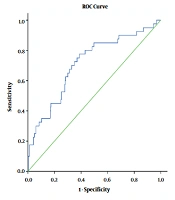
Saidi H, Basir Ghafouri H, Aghdam H, Khanbabaei G, Ahmadizadeh N, et al. Validation of Pediatric Index of Mortality 3 in a Single Referral Pediatric Intensive Care Unit in Iran. Arch Pediatr Infect Dis. 2021;9(3):e104428. doi: https://doi.org/10.5812/pedinfect.104428
Ramazani J, Hosseini M. Comparison of the Predictive Ability of the Pediatric Risk of Mortality III, Pediatric Index of Mortality3, and Pediatric Logistic Organ Dysfunction-2 in Medical and Surgical Intensive Care Units. J Compr Ped. 2019;10(2):e82830. doi: https://doi.org/10.5812/compreped.82830
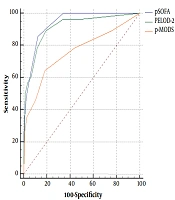
Mianling Z, Yuge H, Tufeng L, Lu X, Ting T, et al. Performance of the Pediatric Sequential Organ Failure Assessment Score in Assessing the Prognosis of Children with Sepsis in A PICU of A Developing Country: A Single-Center Retrospective Observational Study. Inn J Pediatr. 2019;29(5):e89024. doi: https://doi.org/10.5812/ijp.89024
Salamati P, Talaee S, Eghbalkhah A, Chaman R, Mokhtari Z, et al. Validation of Pediatric Index of Mortality-2 Scoring System in a Single Pediatric Intensive Care Unit in Iran. Inn J Pediatr. 2012;22(4):. doi:
Khajeh A, Fayyazi A, Miri-Aliabad G, Askari H, Noori N, et al. Comparison between the Ability of Glasgow Coma Scale and Full Outline of Unresponsiveness Score to Predict the Mortality and Discharge Rate of Pediatric Intensive Care Unit Patients. Inn J Pediatr. 2014;24(5):. doi:
Last Update: 1 week ago
Last Update: 1 week ago
Last Update: 1 week ago
Last Update: 7 hours ago
Last Update: 10 hours ago
Last Update: 5 days ago