
1. Background
Alzheimer’s disease (AD) is a terminal neurodegenerative illness and a prototype of cortical dementia. It can be characterized by various memory and cognitive impairments, eventually leading to death (1). Previous studies have estimated that 5 - 6% of individuals aged over 65 years develop dementia, and 50% - 80% of these cases can be attributed to AD. The trajectory period of AD is estimated to be 15 - 24 years. However, a major proportion of this process concerns the preclinical stage. The disease process is highly variable, and it has been claimed that the clinical signs of AD can only be identified in the later stages of the disease (2).
The pathological process of AD spans more than a decade before the clinical stage of the disease. In other words, patients have typically already experienced a decade of significant neuronal damage before being diagnosed with AD. This means that there are no successful therapeutic interventions for AD. Therefore, it is vital to detect the process of the relevant cognitive decline and identify individuals at the risk of developing the clinical signs of AD before the onset of inevitable neuropathology (2).
Recent studies have focused on identifying individuals in the early stages of dementia, and several subtypes have emerged concerning the preclinical stage. The concept of mild cognitive impairment (MCI) has been used for more than two decades to define subjects whose condition falls somewhere between healthy aging and dementia (3-5). According to Patterson and Clarfield cited in Emery and Oxman (6), MCI includes three subtypes, namely amnestic, multiple-domain mild impairment, and the unrelated single non-memory domain. Amnestic MCI (aMCI), often the main clinical criterion in the early diagnosis of AD, consists of deficits in learning, memory, and especially episodic memory, making it the focus of most research and clinical works (7-10). Research has shown that patients experiencing the preclinical stage of AD initially develop episodic memory impairment despite other cognitive abilities remaining intact for the most part. These impairments occur approximately 6 - 8 years before diagnosis. In addition to the negative impacts on learning and memory in the early stages of AD, patients gradually develop global cognitive impairments, further revealing the severity of memory impairment in such patients. It can be said that memory or verbal learnings are higher-order, multi-faceted cognitive abilities that depend on other cognitive functions, such as attention, language, and executive functions. As a result, it can be concluded that the longitudinal defects observed in episodic memory cannot solely be attributed to neuroanatomical abnormalities in the medial temporal lobe (8, 11).
The California Verbal Learning Test (CVLT) is among the verbal memory tests that provide an in-depth assessment of and specific profile for verbal memory impairment in patients with aMCI and AD cortical dementia. Studies have revealed that cortical and subcortical neurodegenerative conditions, such as AD and Parkinson’s disease, differ in degree and pathology. Therefore, the subgroups of memory profiles in these patients can be predicted using CVLT (10, 12). While CVLT assesses overall learning and memory impairments, it can also be used for the in-depth analysis of the mechanisms involved in such impairments, for example, the type of learning strategies and their impact on the level of recall. This tool can be categorized as a shopping list learning test comprising five attempts encompassing immediate recall, free recall, and cued recall. The word list consists of four semantically distinct categories of vocabulary. The semantic structure of CVLT helps to understand and evaluate learning strategies in a way that is simply not possible by unrelated words. Effective learning using semantic structure involves the activation of word clusters from the same semantic group on the part of the test taker. Moreover, CVLT includes a cued recall task after the immediate free recall but before the delayed free recall. In the cued recall task, a test taker is tasked with recalling items from each of the four categories, which can further shed light on the test taker’s semantic structure. This method facilitates both the recall and subsequent categorization of clusters. The structure of CVLT not only examines memory consolidation deficiencies but also helps assess acquisition problems (13). The CVLT yields both quantitative memory and learning scores (e.g., the extent of learning across trials 1 - 5, short delayed recall, and long-delayed recall) and qualitative descriptors which characterize memory functions (e.g., serial-position effects and recall consistency) (11). Most memory tests only provide a single score to assess the memory of respondents, taking a merely quantitative approach to the evaluation of memory function. In contrast, CVLT-II is a quantitative and qualitative assessment that provides a strong characterization of subjects’ learning and failure at learning and verbal items. This information is often valuable and used for different and often difficult diagnoses to assess the impact of memory impairment on an individual’s daily life. Furthermore, the results of such tests can be used to design cognitive rehabilitation programs tailored to the strengths and weaknesses of patients’ memory and learning (11).
According to various studies, the qualitative memory function profiles and learning strategies of patients with AD in the CVLT and CVLT-II typically include poor memory function in immediate, short, and delayed recall, rapid amnesia, flat learning curves, impaired primary effect, elevated recency effect, low middle recall, and greater use of serial clustering strategies rather than semantic clustering, all of which pertain to recall consistency and poor learning slope (1, 11-15). Such memory impairments in patients with AD are usually associated with the initial involvement of the medial temporal lobe, which is the primary anatomical layer for encoding, storage, and consolidation of memory (14). However, in the preclinical stages of AD or aMCI, the nature of the memory profile remains unrecognized. Numerous questions may arise on the difference between memory profiles in patients with AD compared to those with aMCI. For example, are mild impairments in patients’ memory functions due to poor storage at the aMCI stage and encoding of the memory system? Another question is whether patients with AD experience retrieval deficits before encountering deficits in encoding and storage from the very early stages of the illness, similar to those with subcortical dementia (11). The answers to such questions can help us better understand how the stages of memory function may change as a result of AD, expand our core knowledge of the matter, and achieve earlier and more accurate diagnoses of AD.
In this study, Shiraz Verbal Learning Test (SVLT), a test inspired by CVLT-II, was used to evaluate and characterize memory impairments and verbal learning profiles of patients with AD and aMCI. This test, similar to CVLT, can provide an in-depth assessment of the cognitive processes and learning strategies employed by patients with aMCI and AD (16). This made SVLT a suitable tool for a more comprehensive assessment of process-oriented memory and verbal learning in patients with AD and aMCI. The aim was to better understand the nature of memory function, the extent of brain atrophy, and the area of neuropathology in these patients.
2. Objectives
The present study was conducted to better understand learning strategies and memory process deficits in individuals with aMCI and AD.
3. Methods
3.1. Participants
The present study was conducted on 197 subjects aged 60 - 90 years in three groups (64 patients with AD, 66 subjects with aMCI, and 67 healthy individuals) who were assessed from March to July 2021 at the clinics and nursing homes in Shiraz, Iran. The patients comprised individuals referring to psychiatric and neuropsychological evaluation clinics and nursing homes in Shiraz, Iran, and were selected voluntarily. The participants were assured of the confidentiality of their information.
The inclusion criteria for the AD group were a diagnosis of mild to moderate AD cortical dementia based on psychiatric and neurological diagnostic criteria (magnetic resonance imaging) and clinical psychology in accordance with the diagnostic and statistical manual of mental disorders, fifth edition (DSM-5), SVLT, and mini-mental state examination (MMSE). The exclusion criteria for the same group entailed the presence of mental health disorders (e.g., major depressive disorder) or neurological disorders (e.g., Korsakov or Huntington’s disease) that could affect patients’ cognition, as well as any type of aphasia.
The inclusion criteria for the aMCI group, derived from Patterson and Clarfield cited in Emery and Oxman (6), comprised mental memory complaints (the benchmark for patients’ mental complaints in this study was obtaining a mean ± SD score of -1 ± -1.5 in the SVLT subscales), normal daily life activity, normal general cognitive function, abnormal memory for that age, and a lack of dementia. The exclusion criteria for the same group consisted of mental health disorders (e.g., major depressive disorder) or any cortical and subcortical dementia (e.g., AD or Huntington’s disease) that influence patients’ cognition, as well as any type of aphasia.
The control group was selected from Jahandidegan and Soroush daycare centers and nursing homes in Shiraz, Iran. The individuals in this group were matched with the patient groups in terms of different variables, such as age and educational level. The inclusion criteria for the control group encompassedan age of over 60 years, a high cut-off score in the MMSE, the absence of mental health or neurological diseases, and a lack of any cognitive complaints.
As mentioned earlier, SVLT was devised based on CVLT-II (developed by Delis et al. in 2000 (12)). Similar to CVLT, it evaluates the strategies and processes involved in the learning and recall of verbal items (16). The adult version of this test is suitable for individuals aged 20 - 89 years old. The Persian version of SVLT showed excellent psychometric properties. Rahmani et al. (16), using the test-retest and alternative form methods, found the reliability of the test to fall within the medium to high range (range of 29 - 94 for the main variable of SVLT). Moreover, measurements of the validity of the test indicated medium to high correlations with other learning and memory tests, including the Wechsler Memory Scale, with a range of 43 - 63 on the main variable of SVLT (16).
The scales of SVLT include two shopping lists, simply called List A and List B, which were presented to the subject. This test examines the recall and recognition of words presented in different experiments. The test begins with a 5-attempt assessment of an individual’s ability to recall List A, which includes 16 words falling under four vocabulary categories, namely vegetables, animals, means of transportation, and household items (four words per category). The interference list (i.e., List B), consisting of 16 words (four words per category), is also presented to the respondent in one attempt. After the free recall of List B, the subject is asked to recall List A items again freely. After 20 min, during which the non-verbal examinations can be performed, free recall, clue-based reminders, and List A recognition are measured. However, in SVLT, the components of learning slope and learning strategies are evaluated as follows:
(1) Learning slope: The SVLT, similar to CVLT-II, quantifies the learning slope by calculating the minimum regression line obtained from the correct response score throughout five immediate recall trials from List A. The slope of the regression line indicates the extent of new learning per effort. In addition to the total learning slope obtained by the rate of learning during all five immediate recall attempts, two new slope indicators for the CVLT-II are obtained as follows: learning slope from the first to the second attempt of List A, and learning slope from the second to the fifth attempt of List A. This new method measures the learning slope to assess changes in learning at different levels and can be helpful during immediate recall attempts (12).
(2) Organizational strategies (i.e., serial clustering & semantic clustering): When encoding verbal information, SVLT evaluates two recall strategies, namely serial and semantic clustering. Serial clustering is used when the subject recalls the word list in the same order provided by the examiner. Semantic clustering demonstrates the subject’s ability to organize the words read into categorical groups.
(3) Serial position effects (primary-recency effects): This measure is obtained based on the subject’s degree of recollection from the primary region and the recency region of List A. Another type of learning style involves memorizing words from different areas of the main list. For example, the respondent may be inclined to recall words coming up in the beginning, middle, or end of the main list (12). In SVLT, similar to CVT-II, the primacy and recency are defined as the first four and the last four words, respectively. Moreover, the eight words coming in between constitute the middle part of the list. This grouping was consistent with Salthouse’s description of the average size of list sections based on his review of relevant texts cited in Delis et al. (12).
(4) Recall consistency percentage: This percentage represents the extent of recalling the same words during the expression of a list of words. It is obtained by calculating the frequency of correct words recalled once in each of the first four trials of List A as well as in later attempts.
3.2. Procedure
The study participants consisted of individuals referred to psychiatric and neuropsychological evaluation clinics and nursing homes in Shiraz, Iran. Considering the fact that the population variance was not available to estimate the sample size, the method of minimum sample size estimation for variance analysis tables 2 × 3 (two genders and three groups) was used, resulting in 25 for each group. After the subjects or their guardians signed the informed consent, the MMSE and SVLT were administered to evaluate their memory performance. A trained examiner conducted these assessments in a quiet room in one session (17).
3.3. Data Analysis
Data analysis was performed using SPSS version 16 at the significance level of P < 0.05. The demographic characteristics (age, education, and gender) and neuropsychological data (MMSE, immediate recall, delayed recall trials, learning slope, and learning strategies) for the three participant groups (AD, aMCI, and healthy) were analyzed using the chi-squared test for the categorical data and the analysis of variance (ANOVA) followed by the Scheffe post hoc test for the numerical data with normal distribution and similar variance.
4. Results
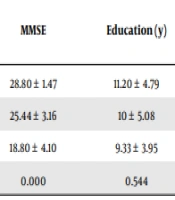
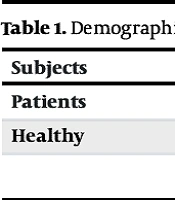
The demographic characteristics, namely age, gender, educational level, and MMSE scores, are listed in Table 1. The chi-squared test results showed no significant difference between the three study groups in terms of gender distribution (χ2 = 3.44, P = 0.17). The one-way ANOVA revealed that age and educational level [F (2, 1.37), P = 0.35; F (2, 1.02), P = 0.25, respectively] were not significantly different between the three groups (AD, aMCI, and controls). These findings indicated that the research groups were well-matched in demographic characteristics. Concerning cognitive functions, the results of MMSE [F (2, 307.2), P < 0.001] demonstrated that patients with AD and aMCI had a significantly lower cognitive function compared to the healthy group. The Scheffe post hoc test was also used to examine the between-group differences, the results of which indicated significant differences between all study groups (Scheffe, P < 0.001; Table 1).
Table 1.
Demographic and Baseline Characteristics a
| Variable | AD (n = 64) | aMCI (n = 66) | Normal (n = 67) | P - Value | Post Hoc Test |
|---|---|---|---|---|---|
| Age | 69.2 ± 8.5 (61 - 90) | 69.6 ± 7.1 (62 - 85) | 67.5 ± 7.3 (60 - 89) | 0.25 b | |
| Gender % (FM) | 51.6/48.4 | 40.9/59.1 | 55.9/44.1 | 0.17 c | |
| Education | 9.34 ± 3.6 (6 - 18) | 9.56 ± 4.2 (6 - 20) | 10.3 ± 3.6 (6 - 18) | 0.35 b | |
| MMSE | 17.7 ± 2.6 (13 - 22) | 22.6 ± 2.1 (19 - 25) | 27.1 ± 1.7 (22 - 30) | 0.001 b | N > aMCI > AD d |
Abbreviations: N, normal; aMCI, amnestic mild cognitive impairment; AD, Alzheimer’s disease; MMSE, mini-mental state examination.
a Values are mean ± SD, except gender.
b ANOVA
c χ2
dPosthoc comparisons, Scheffe test, P < 0.05
In order to evaluate the differences in encoding and the extent of immediate recall, the number of raw words correctly recalled from List A on the first trial, the fifth trial, and trials 1 - 5 cumulatively, as well as the number of words correctly recalled from List B, were measured and compared between the study groups. Furthermore, we evaluated the encoding and learning curve by comparing four types of learning slopes (learning slope for trials 1 - 2, 2 - 5, 1 - 3, and 3 - 5) between the study groups. Table 2 summarizes the mean ± SD raw scores of the immediate recall trials variables between the AD, aMCI, and normal groups. The results of one-way ANOVA demonstrated that the number of the words from list A correctly remembered in List A trial 1, List A trial 5, List A trials 1 - 5, along with the recalled List B words [F (2, 42.7), P < 0.001, F (2, 158.4), P < 0.001; F (2, 143.4), P < 0.001; F (2, 36.2), P < 0.001, respectively] were all significantly lower among patients with AD and aMCI compared to the healthy participants. The results of the Scheffe test also showed a significant difference between all research groups (Scheffe, P < 0.001; Table 2).
Table 2.
Immediate Recall (Learning and Encoding) on the SVLT
| SVLT Measures | AD (n = 64) | aMCI (n = 66) | Normal (n = 67) | P-Value | Post Hoc Test |
|---|---|---|---|---|---|
| List A trial 1 | 3.35 ± 2.09 | 4.6 ± 1.4 | 5.80 ± 1.86 | 0.001 b | N > aMCI > AD c |
| List A trial 5 | 5.79 ± 2.01 | 8.46 ± 2.7 | 12.5 ± 2.4 | 0.001 b | N > aMCI > AD c |
| List A trial 1 - 5 | 25.1 ± 7.52 | 35.1 ± 7.48 | 49.5 ± 9.73 | 0.001 b | N > aMCI > AD c |
| List B | 2.92 ± 1.76 | 4.71 ± 1.69 | 5.61 ± 2.02 | 0.001 b | N > aMCI > AD c |
| Learning slope trial 1 - 2 | 1.42 ± 2.3 | 1.87 ± 1.49 | 3.07 ± 1.73 | 0.001 b | N > aMCI > AD c |
| Learning slope trial 2 - 5 | 0.36 ± 0.6 | 0.52 ± 0.79 | 1.19 ± 0.55 | 0.001 b | N > aMCI > AD c |
| Learning slope trial 1 - 3 | 0.96 ± 1.2 | 1.36 ± 0.78 | 2.41 ± 0.96 | 0.001 b | N > aMCI > AD c |
| Learning slope trial 3 - 5 | 0.25 ± 0.92 | 0.30 ± 1.27 | 0.93 ± 0.71 | 0.001 b | N > aMCI > AD c |
Abbreviations: N, normal; aMCI, amnestic mild cognitive impairment; AD, Alzheimer’s disease.
a Values are mean ± SD.
b ANOVA
c Posthoc comparisons, Scheffe test, P < 0.05
The ANOVA results also revealed significant differences between the study groups regarding all four types of learning slopes [F (2, 13.8), P < 0.001, F (2, 29.6), P < 0.001; F (2, 37.8) P < 0.001; F (2, 9.6), P < 0.001, respectively]. The Scheffe post hoc test also indicated significant differences (Scheffe, P < 0.001) in terms of all four variables of learning slope (i.e., trials 1 - 2, 2 - 5, 1 - 3, and 3 - 5) between the control group and the other two groups. However, the AD and aMCI groups were not significantly different in any of the four variables (Scheffe, P > 0.05; Table 2). Individuals typically use two types of clustering to recall words, namely semantic clustering (semantic response style) and serial clustering (responding in the same order as the word list). Patients with AD and MCI may experience learning difficulties, as indicated by the insufficient use of learning strategies. They may recall target words in the same manner stated by the examiner.
However, when employing semantic clustering, the subject applies an active strategy to reorganize words based on categorical groupings. Such techniques help facilitate the retrieval process of the word list, especially in cases where free recall is impaired. The semantic clustering and serial clustering indicators were calculated via the extent of learning (total learning). Based on the results of one-way ANOVA, the AD, aMCI, and normal groups had significant differences in terms of employing total semantic and serial clustering [F (2, 6.67), P < 0.001; F (2, 4.05), P < 0.05, respectively]. Scheffe test indicated that individuals with MCI used the total semantic clustering method less frequently than the normal group, and this difference was statistically significant (Scheffe, P < 0.001). There was also a significant difference in the mean scores of the total serial clustering measurements between the AD and aMCI groups (Scheffe, P < 0.05; Table 3).
Table 3.
Learning Strategies on the SVLT a
| SVLT Measures | AD (n = 64) | aMCI (n = 66) | Normal (n = 67) | P-Value | Post Hoc Test |
|---|---|---|---|---|---|
| Semantic clustering 1 - 5 | 0.12 ± 0.57 | -0.11 ± 0.64 | 0.39 ± 1.06 | 0.002 b | N > aMCI c |
| Serial clustering 1 - 5 | -0.18 ± 0.38 | 0.09 ± 0.56 | -0.05 ± 0.66 | 0.01 b | aMCI > AD c |
| Primary recall trial 1 | 35.4 ± 27.8 | 31.5 ± .22.3 | 33.2 ± 16.7 | 0.63 b | |
| Middle recall trial 1 | 39.4 ± 25.8 | 43.4 ± 23.3 | 43.3 ± 17.8 | 0.52 b | |
| Recency recall trial 1 | 23.6 ± 26.4 | 25.6 ± 22.4 | 23.6 ± 18.8 | 0.89 b | |
| Primary recall trial 1 - 5 | 27.1 ± 16.4 | 26.4 ± .8.71 | 27.5 ± 5.46 | 0.83 b | |
| Middle recall trial 1 - 5 | 46.7 ± 16.33 | 48.4 ± 11.4 | 47.9 ± 7.70 | 0.70 b | |
| Recency recall trial 1 - 5 | 25.8 ± 14.9 | 25.4 ± 10.9 | 24.3 ± 6.42 | 0.71 b | |
| Recall consistency | 66.5 ± 15.9 | 73.5 ± 14.1 | 81.3 ± 11.5 | 0.001 b | N > aMCI > AD c |
Abbreviations: N, normal; aMCI, amnestic mild cognitive impairment; AD, Alzheimer’s disease.
a Values are mean ± SD.
b ANOVA
c Posthoc comparisons, Scheffe test, P < 0.05
The evaluation of words order recall patterns in trial 1 List A demonstrated that the AD and MCI groups showed primacy (31.5%, 35.4%), middle (43.4%, 39.4%), and recency (25.6%, 23.6%) response patterns similar to those of the normal group (primary: 33.2%; middle: 43.3%, recency: 23.6%), and the observed difference was not significant [F (2, 0.18), P = 0.83; F (2, 0.35), P = 0.7; F (2, 0.34), P = 0.71; respectively]. Similarly, the results of the analysis of words order recall patterns pertaining to all learning trials (trials 1 - 5) suggested no significant difference between the AD, aMCI, and control groups (27.1%, 26.4%, and27.5%: primary; 46.7%, 48.4%, and 47.9%: middle; and 25.8%, 25.4%, and 24.3% recency, respectively) in terms of applying response patterns [F (2, 0.46), P = 0.63; F (2, 0.65), P = 0.52; F (2, 0.11), P = 0.89; respectively; Table 3].
In contrast, the research groups were significantly different regarding recall consistency [F (2, 18.9), P < 0.001]. The results of the Scheffe test also revealed a significant difference between the normal/aMCI, normal/AD, and aMCI/AD pairs concerning recall consistency (Scheffe, P < 0.001; Table 3). Table 4 presents the mean ± SD raw scores of the delayed-recall trials (short-delay free recall, short-delay cued recall, long-delay free recall, long-delay cued recall, and delayed retention rate) between the AD, aMCI, and normal groups. One-way ANOVA showed that the differences between the mean scores of these five variables were significant [F (2, 209.1), P < 0.001; F (2, 260.8), P < 0.001; F (2, 220.8), P < 0.001; F (2, 251.8), P < 0.001; F (2, 57.2), P < 0.001]. in addition, the Scheffe test revealed significant differences between all three group pairs (normal/aMCI, normal/AD, and aMCI/AD) in all the aforementioned subscales, namely short-delay free recall, short-delay cued recall, long-delay free recall, long-delay cued recall, and delayed retention rate (Scheffe, P < 0.001).
Table 4.
Delayed-Recall Trials (Memory) on the SVLT
| SVLT Measures | AD (n = 64) | aMCI (n = 66) | Normal (n = 67) | P-Value | Post Hoc Test |
|---|---|---|---|---|---|
| Short delay free recall | 2.78 ± 1.78 | 5.46 ± 1.89 | 10.7 ± 2.86 | 0.001 b | N > aMCI > AD c |
| Short delay cued recall | 4.3 ± 1.85 | 7.22 ± 1.86 | 12.1 ± 2.27 | 0.001 b | N > aMCI > AD c |
| Long delay free recall | 2.20 ± 2.21 | 5.80 ± 2.71 | 11.5 ± 2.68 | 0.001 b | N > aMCI > AD c |
| Long delay cued recall | 4.06 ± 1.89 | 7.59 ± 2.03 | 12.3 ± 2.31 | 0.001 b | N > aMCI > AD c |
| Delayed retention rate | 32.3 ± 37.1 | 65.1 ± 33.1 | 88.9 ± 17.1 | 0.001 b | N > aMCI > AD c |
Abbreviations: N, normal; aMCI, amnestic mild cognitive impairment; AD, Alzheimer’s disease.
a Values are mean ± SD.
b ANOVA
c Posthoc comparisons, Scheffetest, P < 0.05
5. Discussion
The early detection of MCI in individuals who report subjective cognitive complaints and the evaluation of the gradual process of cognitive decline in these patients is critical in the realm of dementia research (18). One of the most common methods to understand the memory profile in this group of individuals is using verbal learning assessment tests, such as CVLT (19). Therefore, in the present study, three research groups, including people with AD, individuals with aMCI, and a control group consisting of healthy people employed to assess and achieve a better understanding of the multiple learning and memory strategies. Also, to investigate whether the disability characteristics and memory performance profile of patients with AD (e.g., rapid forgetfulness, poor recall, and poor learning strategies) could also be found in patients with aMCI, we used the SVLT, a test that is similar to the CVLT which is capable of measuring these indicators.
5.1. Immediate Recall Trials (Learning and Encoding)
The findings of the present study indicated that patients with aMCI had significantly weaker learning and encoding performance compared to the control group. This was evident in List A trial 1, List A trial 5, List A trials 1 - 5, List B, learning slope trials 1 - 2, learning slope trials 2 - 5, learning slope trials 1 - 3, and learning slope trials 3 - 5. On the other hand, they performed significantly better than the AD group. These findings are consistent with previous studies highlighting that patients with aMCI, similar to AD cases, had below-average learning performance, storage, and encoding (10-14, 20, 21). As demonstrated by CVLT, healthy individuals greatly vary when it comes to new learning during immediate recall attempts depending on their emotional states or cognitive abilities. Accordingly, people with anxiety or depression may perform poorly in the first trial of List A because List A is read for the first time, and they do not know how long the list may be. Such ambiguity can make them feel highly anxious. This reaction can interfere with their ability to recall words. However, after the first attempt, they recognize that the list is limited and manageable, so they may remain calm and perform normally. These individuals perform poorly only on the first attempt. Consequently, they typically generate a moderate to high learning slope during trials 1 - 5, especially during trials 1 - 2 (12).
In contrast, patients with central frontal lobe injuries or AD (in the preclinical or early stages of the disease) may achieve normal or near-normal scores on the first and second trials of List A. However, they usually end up performing poorly in the subsequent attempts. These individuals are typically observed as quickly reaching a steady-state or plateau in learning. Their auditory attention span (assessed in the first attempt of List A) may be adequate, and their learning slope from trial 1 to trial 2 may be acceptable. However, they often perform poorly on the total learning slope pertaining to trials 1 - 5 and especially trials 2 - 5. Patients with cortical dementia, such as those with AD or Korsakov syndrome, who have moderate to severe coding defects, often fail to demonstrate the evidence of meaningful new learning at any stage of the five learning trials. This performance pattern is known as flat learning, and in these groups, none of the different types of learning slopes (e.g., trials 1 - 2, 2 - 5, and 1 - 5) showed any changes in learning (12).
One specific pattern of episodic memory impairment is known as the amnesia of the hippocampal type, which is the main clinical criterion for the early diagnosis of AD. The main features of this amnesia profile are poor learning ability and rapid memory impairment over a relatively short period. It is usually associated with the initial instance of medial temporal lobe involvement (14). The nature of the memory profile of patients at the preclinical stage of AD or aMCI seems to be similar to that of AD cases in terms of defects in coding and learning disabilities.
5.2. Learning Strategies
The obtained results revealed no significant difference between the AD and control groups in terms of serial/semantic clustering. However, patients with aMCI used more serial clustering strategies than semantic clustering approaches in the control and AD groups, and this difference was significant. This finding was in line with those of previous studies that suggested patients with aMCI used fewer semantic clustering strategies than cognitively sound participants as well as people with AD (11, 13, 19). On the other hand, it was inconsistent with the results of Delis et al. (12). They argued that patients with AD were similar to those with aMCI intending to use semantic clustering strategies less frequently and ineffectively (11).
Studies have reported that defects in semantic memory (which helps to understand concepts, word meanings, and factual knowledge) are associated with neuropathological alternations in the inferolateral temporal neocortex. However, impairments in proper learning strategies (which fall under the category of executive functions) are related to the neocortical degeneration of the frontal lobes. Several imaging studies have indicated that the prefrontal cortex is linked to organizational strategies, which can help improve episodic memory (11). Therefore, the higher serial clustering ratios in patients with aMCI seem to result from damage to the frontal lobe and subsequent dysfunction. However, because patients with AD were only capable of recalling a few words (usually three or four words) per trial, it was challenging to adjudge the presence of any particular learning strategy.
The group comparison results showed that the participants with AD and aMCI had similar primacy-recency effects (a word order recall pattern in learning trials) to the healthy individuals. This finding was inconsistent with the previous findings (10-12). Individuals with optimal learning skills usually remember most of the words in the first (primacy) and last (recency) sections. This phenomenon is called the primacy-recency effect, occurring with varying degrees of semantic or serial clusters. The words at the beginning of the list often receive more practice time than those in the middle of the list. Consequently, they are more likely to be recalled. Moreover, the words at the end of the list are repeated through short-term memory, causing them to be often recalled by the subject. The most challenging words to remember are in the middle of the list. One explanation for this problem is that the anterograde interference of words at the beginning of the list and the retrograde interference of words at the end of the list may prevent the recall of words in the middle of the list (12).
Average to above-average recall of words in the first and middle sections of the list can indicate strong learning skills, as it demonstrates that the individual has coded these words in their long-term memory. However, the most straightforward words on the list to remember during learning attempts are those at the bottom of the list (a phenomenon referred to as recency recall). A person can recall these words from their short-term memory without any encryption in the long-term memory. Patients with severe coding deficits mostly recall words from the last part of the list. Such data suggest that they are using a passive recall strategy as they demonstrate rote learning of items repeated in their short-term memory. Studies have revealed that this passive style is characteristic of patients with AD, Korsakoff syndrome, or left hippocampal/left temporal lobe injuries (12). Taking into account previous findings along with the results of the present study, it can be deduced that the condition of our patient groups was more likely to fall under the category of preclinical/mild AD. Therefore, their performance concerning a word’s position on the list was similar to the healthy participants.
A comparison of recall consistency between the three research groups revealed another important finding. Patients with aMCI had significantly lower memory stability than the control group. However, they presented significantly better performance and higher stability than the AD group. This finding is consistent with Delis et al. (12) and Grenfell-Essam et al. (22), who suggested that patients with organic brain disorders have inconsistent or unstable memory.
Previous studies have shown that patients with organic brain disorders are usually inconsistent in the extent of memorization of the same words during the recital of a list. This group of patients has limited learning ability and employs incorrect learning strategies. As a result, they may recall words inconsistently. The inconsistent or unstable recall is usually due to issues with the frontal lobe. Such individuals often respond to the repeated presentation of words in a list as if they were new and being read for the first time. Luria addressed these problems as an “inability to retain the plan of memorizing” (12).
5.3. Delayed-Recall Trials (Memory and Retrieval Processes)
The results of delayed recall trials (i.e., storage and retrieval) suggested that patients with aMCI had significantly lower performance than the controls in all five variables (short-delay free recall, short-delay cued recall, long-delay free recall, long-delay cued recall, and delayed retention rate). Nonetheless, they performed significantly better than the AD group in these metrics. These results are in line with those of previous studies, suggesting that delayed recall scores may be one of the best predictors of AD (7, 10, 11). Rapid forgetting and deficits in long-term storage are characteristic of numerous neurological disorders. Therefore, this can be considered a standard measurement method (12).
Studies using CVLT have indicated that most neurological groups with severe retrieval defects demonstrate impairments in free recall and cued recall, despite their normal or close to normal functions in the recognition segment. One reason individuals with retrieval defects cannot make disproportionate improvements in cued recall compared to free recall might be that both types of retrieval attempts, as the name implies, require correct word retrieval. In contrast, there is no need for this when it comes to recognition (11, 12). This may lead to mistakes as well as instances of intrusion (i.e., uttering a word that is not on List A). If an individual is prone to confabulation, cued recall attempts reveal it and intensify this tendency. Patients with AD are particularly susceptible to high degrees of intrusion in recall with clues. These clues end up deceiving the patient rather than guiding them. Consequently, instead of using the meaning to search their memory semantically in order to recall the word, the patient resorts to free association (12).
Overall, the results of the present study indicated that aMCI cases, similar to patients with AD, initially develop defects in encoding and storage but to a lesser degree, followed by retrieval memory problems. Furthermore, investigating the qualitative and quantitative aspects of memory impairment, including both the extent of learning and learning strategies and the recovery process, could help identify the exact nature of verbal learning and memory deficits in patients with aMCI and AD. In addition, the findings of the current investigation suggested that SVLT can be a useful diagnostic tool to predict the progression of aMCI or the prodromal stage of AD type dementia.
Nevertheless, the present study had several limitations, one of which was that the sample population predominantly consisted of outpatient neurological cases that were referred to the clinic on a voluntary and self-referred basis. Another limitation of the current research was that only the verbal learning of the participants was assessed, and learning disabilities in the nonverbal or practical memory functions of patients with aMCI and AD were out of the scope of this study. Finally, this investigation exclusively examined patients with amnestic MCI and AD. Future studies are required to evaluate memory function and learning strategies in patients with MCI as well as subcortical groups using SVLT.
5.4. Conclusions
According to the results of the present study, individuals with aMCI, similar to patients with AD, initially develop defects in encoding and storage but to a lesser degree, followed by retrieval memory problems. Furthermore, investigating the qualitative and quantitative aspects of memory impairment, including both the extent of learning and learning strategies and the recovery process, could help identify the exact nature of verbal learning and memory deficits in patients with aMCI and AD. In addition, the findings of the present study suggested that SVLT can be a useful diagnostic tool to predict the progression of aMCI or the prodromal stage of AD type dementia.