
1. Background
Iran faces a substantial public health challenge due to opioid use disorder, with a 2011 prevalence of 3.02%—almost triple the global rate. Furthermore, nearly two-thirds of overdose-related deaths in Iran are attributed to opioid use (1, 2). Opioids are commonly prescribed for the management of acute and chronic pain, and approximately 20% of U.S. adults received at least one opioid prescription in 2018. Despite an estimated 400,000 opioid-related deaths annually worldwide, the demand for opioid use persists (3, 4).
Opioid agonist maintenance therapy is an effective harm-reduction strategy for individuals unable to achieve sustained abstinence (5). Methadone, a long-acting full μ-opioid receptor agonist, has demonstrated efficacy and safety in reducing illicit opioid use, disrupting drug-seeking behavior, and improving social functioning. Methadone maintenance treatment (MMT) consistently reduces substance use, criminal activity, and adverse health outcomes (6).
However, in addition to its intended therapeutic effects, long-term methadone use may be associated with a range of adverse effects, including hepatic, endocrine, immunologic, dermatologic, gastrointestinal, and cardiac complications (7-9). Among cardiac adverse effects, QT interval prolongation on ECG has received particular attention because of its association with life-threatening ventricular arrhythmias (10). Methadone inhibits voltage-dependent potassium channels encoded by the hERG gene, delaying ventricular repolarization and resulting in QTc prolongation on ECG (11). This electrophysiological disturbance increases the risk of torsades de pointes, which can progress to ventricular fibrillation and sudden cardiac death. The risk of torsades de pointes increases with higher methadone doses (typically > 100 - 120 mg/day), electrolyte disturbances (hypokalemia and hypomagnesemia), concomitant use of QT-prolonging medications, and underlying cardiac disease (12).
QTc prolongation has been associated with increased all-cause mortality, cardiac events, and sudden cardiac death (4). Nevertheless, not all patients receiving methadone develop QTc prolongation, suggesting a complex interaction among demographic, clinical, pharmacological, and possibly genetic factors (12, 13). Identifying these determinants is critical for effective screening and monitoring and for ensuring patient safety. Factors such as age, sex, drug-drug interactions, methadone dose and treatment duration, medical comorbidities, and genetic susceptibility have been examined in previous studies (13, 14).
Although methadone-related cardiac risks, particularly QTc prolongation, have been investigated in Iranian populations (15, 16), real-world epidemiological data remain limited, especially among vulnerable groups such as patients with psychiatric comorbidities. Shafa Psychiatric Hospital is the only psychiatric hospital in Gilan Province, which has a population of approximately three million. Its addiction clinic provides a range of services, including MMT. A considerable proportion of patients attending this clinic have a history of psychiatric disorders, and many are referred after discharge from psychiatric hospitalization. These patients often receive concomitant pharmacotherapy (e.g., antidepressants, antipsychotics, mood stabilizers) alongside methadone, potentially increasing the risk of clinically significant drug-drug interactions and QTc prolongation.
2. Objectives
Previous research has primarily examined the arrhythmic risk associated with single agents, such as methadone alone. In real-world clinical practice, however, the cumulative and interactive effects of multiple medications—particularly combinations involving antidepressants, antipsychotics, or mood stabilizers—may substantially increase the arrhythmic risk (17). This study aimed to 1) determine the prevalence of QTc prolongation (defined as > 450 ms using a unified threshold for all participants) (18) among patients receiving MMT at a specialized outpatient addiction clinic; 2) identify independent predictors of QTc prolongation, with a particular focus on the concomitant use of QT-prolonging medications (antidepressants, antipsychotics, and mood stabilizers); and 3) evaluate whether medication risk classification based on the highest-risk prescribed drug is associated with QTc prolongation, independent of demographic and clinical factors.
3. Methods
3.1. Study Design and Ethical Considerations
This cross-sectional analytical study was conducted from December 2024 to May 2025 at the Addictive Disorders Clinic of Shafa Psychiatric Hospital, Rasht, Gilan Province, northern Iran. The study protocol was reviewed and approved by the Ethics Committee of Guilan University of Medical Sciences (IR.GUMS.REC.1403.179). Before participation, all participants provided written informed consent. Participant confidentiality was strictly maintained throughout the study, and participants were informed of their right to withdraw at any time without any consequences.
3.2. Study Population and Eligibility Criteria
The study population comprised patients attending the Addictive Disorders Clinic who were receiving methadone maintenance therapy. Inclusion criteria were age ≥ 18 years, receipt of stable methadone treatment for at least four months, attendance at ≥ 90% of scheduled treatment sessions during the preceding two months, and provision of written informed consent. Exclusion criteria comprised severe cardiac conditions (uncontrolled heart failure, recent myocardial infarction, hypokalemia), congenital long QT syndrome, pregnancy or breastfeeding, and unstable psychiatric or medical illnesses that could impair active participation. The exclusion criteria were reviewed and confirmed by a collaborating cardiologist for all participants.
3.3. Sample Size and Sampling
During the study period, approximately 180 patients were receiving MMT. The sample size was calculated based on an estimated QTc prolongation prevalence of 34% from a previous study (17), with a 95% confidence level and a margin of error of 5%. This calculation yielded a required sample size of 120 participants.
All patients who met the eligibility criteria and attended the clinic on sampling days were consecutively invited to participate. The clinic operates using a coordinated care model with regular patient attendance and no fixed order of visits. During the study period, two patients were hospitalized and subsequently re-entered the study after discharge, and two patients relocated to another city. No eligible patient declined participation, and no data were missing. Therefore, the final sample consisted of 120 participants (Figure 1).
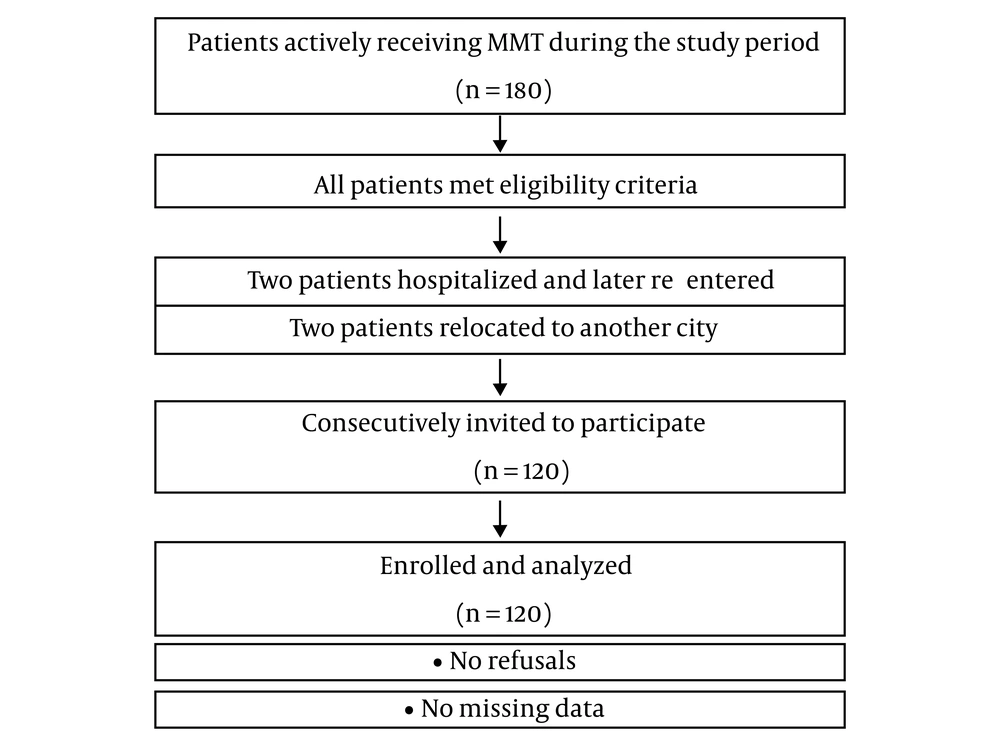
Figure 1.
Participant flow diagram
3.4. Data Collection and Measurements
Consecutive sampling was used to enroll participants until the predetermined sample size was reached. Demographic information, medication history, MMT-related variables (dose and duration), concurrent use of QT-prolonging medications (categorized based on the highest risk category of any prescribed medication according to Woosley et al. (19), and history of cardiac disease were obtained through participant interviews, review of electronic medical records, and consultation with the treatment team. Substance use patterns were assessed using self-report, clinical interviews, medical records, and laboratory data.
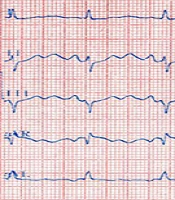
A resting 12-lead ECG was recorded in the morning (between 09:00 and 13:00), approximately 12 hours after the last oral methadone dose. ECGs were performed by trained personnel using standard equipment at a paper speed of 25 mm/s and a calibration of 10 mm/mV. QT and RR intervals were measured from lead II (20) using a single representative cardiac cycle with clear T-wave morphology, manually applying Bazett's formula (QTc = QT / √RR), and verified with the Medscape ECG Calculator. All measurements were performed by the same trained physician. A cardiologist (co-author A.F.M.), blinded to clinical data including medication exposure and cardiac history, independently reviewed all ECGs and verified the QTc measurements. When the initial measurement and the cardiologist's reading differed by more than 10 ms, the cardiologist repeated the measurement, and the final value was determined by consensus. In practice, no such discrepancy occurred. Given the lack of consensus on QTc thresholds in MMT research and the small number of female participants (n = 3), a unified QTc threshold of > 450 ms was applied to all participants for the primary analysis. This threshold aligns with Grade 1 QTc prolongation according to the CTCAE, both in version 5.0 (current at the time of data collection) and version 6.0 (published during manuscript preparation) (18).
Psychiatric diagnoses were determined based on DSM-5-TR criteria documented in the medical records and confirmed by experienced clinical psychologists under psychiatric supervision.
Concurrent medication use was categorized according to QT risk classifications from Woosley et al. (19). Based on prescribed medications used for at least two months, patients were grouped into low-risk, moderate-risk, or high-risk classes. This hierarchical classification reflects the principle that QT-prolonging risks are not simply additive. For example, a patient receiving both a moderate-risk and a high-risk medication was classified as high-risk. Patients taking multiple moderate-risk medications alone remained in the moderate-risk category.
Medications without known QT-prolonging risk according to the CredibleMeds classification (including warfarin, captopril, insulin, statins, levothyroxine, aspirin, amlodipine, losartan, clopidogrel, gemfibrozil, beta-blockers, ACEIs, nitrates, and calcium channel blockers) were not included in the descriptive medication table (Table 1).
Table 1.
Distribution of Moderate- and High-Risk QT-Prolonging Medication Combinations (CredibleMeds Classification) a
| Risk Categories and Medication Combination (mg/day) | Frequency |
|---|---|
| Moderate-risk | |
| Risperidone (4 - 6) | 4 |
| Lithium (900) + Quetiapine (25 - 100) | 3 |
| Olanzapine (10) | 2 |
| Sertraline (100) + Quetiapine (25 - 50) | 2 |
| Sertraline (100) + Risperidone (2 - 3) | 2 |
| Venlafaxine (75) + Quetiapine (25 - 50) | 2 |
| Fluoxetine (20) + Amitriptyline (25) | 1 |
| Clozapine (200) | 1 |
| Aripiprazole (10) + Quetiapine (25) | 1 |
| Sertraline (50) | 1 |
| Valproate (1500) + Quetiapine (200) | 1 |
| Quetiapine (400) | 1 |
| Total | 21 |
| High-risk | |
| Escitalopram (10) + Risperidone (1) | 3 |
| Citalopram (20) + Quetiapine (25 - 50) | 2 |
| Citalopram (40) + Risperidone (2) | 2 |
| Escitalopram (10 - 20) + Quetiapine (25) | 2 |
| Citalopram (20) + Mirtazapine (15) | 1 |
| Chlorpromazine (300) | 1 |
| Chlorpromazine (50) + Escitalopram (10) | 1 |
| Escitalopram (10) + Clonazepam (1) | 1 |
| Haloperidol (15) | 1 |
| Haloperidol (15) + Quetiapine (25) | 1 |
| Haloperidol (5) + Sertraline (150) | 1 |
| Pimozide (2) + Fluvoxamine (150) | 1 |
| Total | 17 |
a Medications without QT-prolonging risk according to CredibleMeds (including warfarin, captopril, insulin, statins, levothyroxine, aspirin, amlodipine, losartan, clopidogrel, gemfibrozil, beta-blockers, ACEIs, nitrates, and calcium channel blockers) were not included in this table. Patients were classified into the highest risk category of any prescribed medication. This table is descriptive only and does not imply causal associations for specific drugs.
3.5. Statistical Analysis
Data were analyzed using SPSS version 27. Continuous variables were expressed as mean ± standard deviation, and categorical variables as frequencies and percentages. Fisher's exact test was used to examine associations between categorical variables and QTc status. Variables with significant univariate associations (P < 0.10) were entered into a multivariable binary logistic regression model (enter method) to identify independent predictors of QTc prolongation. Model fit was assessed using the Hosmer-Lemeshow test and Nagelkerke R2. Statistical significance was set at P < 0.05.
4. Results
4.1. Participant Characteristics
Among the 120 patients included, most were male (97.5%), with a mean age of 49.61 ± 12.01 years (range: 19 - 74). Most participants had an educational level below a high school diploma (57.5%) and resided in urban areas (75%). Self-employment and unemployment were the most common employment statuses, and more than half of the participants were married (Table 2).
Table 2.
Demographic Characteristics of Patients Receiving Methadone Maintenance Treatment at Shafa Psychiatric Hospital, Rasht (N = 120) a
| Variables | Value |
|---|---|
| Sex | |
| Male | 117 (97.5) |
| Female | 3 (2.5) |
| Age (y) | |
| ≤ 40 | 21 (17.5) |
| 41 - 50 | 35 (29.2) |
| 51 - 60 | 37 (30.8) |
| > 60 | 27 (22.5) |
| Mean ± SD (range) | 49.61 ± 12.01 (19 - 74) |
| Education level | |
| ≤ Primary | 17 (14.2) |
| Below diploma | 69 (57.5) |
| Diploma | 22 (18.3) |
| University | 12 (10.0) |
| Place of residence | |
| Urban | 90 (75.0) |
| Rural | 30 (25.0) |
| Employment status | |
| Unemployed | 9 (7.5) |
| Self-employed | 57 (47.5) |
| Retired | 13 (10.8) |
| Employed | 41 (34.2) |
| Marital status | |
| Single | 31 (25.8) |
| Married | 77 (64.2) |
| Divorced/Widowed | 12 (10.0) |
a Values are expressed as No. (%) unless otherwise indicated.
Opium was the most commonly reported primary substance used before MMT, and nearly all participants were cigarette smokers. Concurrent dependence on other substances was mainly related to benzodiazepines. A total of 10.8% of patients reported a history of cardiac disease, and 45.8% had a psychiatric history. QTc prolongation (defined as > 450 ms) was observed in 15 patients (12.5%) (Table 3).
Table 3.
Clinical Characteristics of Patients Receiving Methadone Maintenance Treatment at Shafa Psychiatric Hospital, Rasht (N = 120)
| Variables | No. (%) |
|---|---|
| Smoking | |
| No | 2 (1.7) |
| Yes | 118 (98.3) |
| History of cardiac disease | |
| No | 107 (89.2) |
| Yes | 13 (10.8) |
| Concomitant substance use | |
| No | 74 (61.7) |
| Yes (any) | 46 (38.3) |
| Psychiatric history | |
| No | 65 (54.2) |
| Yes | 55 (45.8) |
| QTc prolongation (> 450 ms) | |
| No (≤ 450) | 105 (87.5) |
| Yes (> 450) | 15 (12.5) |
| Drugs affecting QTc a | |
| Low-risk | 82 (68.3) |
| Moderate-risk | 21 (17.5) |
| High-risk | 17 (14.2) |
a Medication risk classification was based on the highest risk category of any prescribed medication according to Woosley et al. (CredibleMeds). Patients receiving both moderate- and high-risk medications were classified as high-risk.
The mean duration of methadone maintenance treatment in our sample was 72.28 ± 64.04 months (range: 4 - 218 months), and the mean daily methadone dose was 79.74 ± 29.07 mg/day (range: 25 - 130 mg/day) (Table 4).
Table 4.
Duration of Treatment and Methadone Maintenance Dose in Patients Receiving Methadone Maintenance Treatment at Shafa Psychiatric Hospital, Rasht (N = 120) a
| Variables | Value |
|---|---|
| Duration of MMT (mo) | |
| 4 - 12 | 21 (17.5) |
| 13 - 120 | 73 (60.8) |
| > 120 | 26 (21.7) |
| Mean ± SD (min – max) | 72.28 ± 64.04 (4 - 218) |
| Methadone dose (mg/d) | |
| 25 - 50 | 37 (30.8) |
| 51 - 100 | 74 (61.7) |
| > 100 | 9 (7.5) |
| Mean ± SD (min – max) | 79.74 ± 29.07 (25 - 130) |
a Values are expressed as No. (%) unless otherwise indicated.
4.2. Univariate and Multivariable Analyses
In univariate analysis (Table 5), a history of cardiac disease (P = 0.003), the use of moderate-risk QT-prolonging medications (P = 0.024), and marital status (P = 0.035) were significantly associated with QTc prolongation. MMT duration showed a borderline association (P = 0.060). Age, education, employment status, smoking, methadone dose, and psychiatric history were not significantly associated (P > 0.05 for all).
Table 5.
Comparison of Patients with and Without QTc Prolongation (> 450 Ms): Univariate Analysis a
| Variables | Normal (QTc ≤ 450) (n = 105) | Prolonged (QTc > 450) (n = 15) | P-Value b |
|---|---|---|---|
| Sex | 1.000 | ||
| Male | 102 (97.1) | 15 (100) | |
| Female | 3 (2.9) | 0 (0) | |
| Age (y) | 0.868 | ||
| ≤ 40 | 23 (21.9) | 4 (26.7) | |
| 41 - 50 | 32 (30.5) | 3 (20.0) | |
| 51 - 60 | 32 (30.5) | 5 (33.3) | |
| > 60 | 18 (17.1) | 3 (20.0) | |
| Education | 0.673 | ||
| ≤ Primary | 16 (15.2) | 1 (6.7) | |
| Below diploma | 60 (57.1) | 9 (60.0) | |
| Diploma | 18 (17.1) | 4 (26.7) | |
| University | 11 (10.5) | 1 (6.7) | |
| Residence | 0.290 | ||
| Urban | 78 (74.3) | 12 (80.0) | |
| Rural | 6 (5.7) | 2 (13.3) | |
| Suburban | 21 (20.0) | 1 (6.7) | |
| Employment | 0.414 | ||
| Employee | 8 (7.6) | 1 (6.7) | |
| Self-employed | 52 (49.5) | 5 (33.3) | |
| Retired | 12 (11.4) | 1 (6.7) | |
| Unemployed | 33 (31.4) | 8 (53.3) | |
| Marital status | 0.035 c | ||
| Single | 26 (24.8) | 5 (33.3) | |
| Married | 71 (67.6) | 6 (40.0) | |
| Divorced/Widowed | 8 (7.6) | 4 (26.7) | |
| Smoking | 1.000 | ||
| No | 2 (1.9) | 0 (0) | |
| Yes | 103 (98.1) | 15 (100) | |
| History of cardiac disease | 0.003 c | ||
| No | 97 (92.4) | 10 (66.7) | |
| Yes | 8 (7.6) | 5 (33.3) | |
| Medications affecting QTc | 0.024 c | ||
| Low-risk | 76 (73.1) | 6 (40.0) | |
| Moderate-risk | 15 (14.4) | 6 (40.0) | |
| High-risk | 13 (12.5) | 3 (20.0) | |
| MMT duration (months) | 0.060 | ||
| 4 - 12 | 17 (16.2) | 4 (26.7) | |
| 13 - 120 | 68 (64.8) | 5 (33.3) | |
| > 120 | 20 (19.0) | 6 (40.0) | |
| Methadone dose (mg/day) | 0.145 | ||
| 25 - 50 | 33 (31.4) | 4 (26.7) | |
| 51 - 100 | 66 (62.9) | 8 (53.3) | |
| > 100 | 6 (5.7) | 3 (20.0) | |
| Concurrent substance use | 0.619 | ||
| None | 65 (61.9) | 9 (60.0) | |
| Yes (any) | 40 (38.1) | 6 (40.0) | |
| Psychiatric history | 0.253 | ||
| No | 63 (60.0) | 6 (40.0) | |
| Yes | 42 (40.0) | 9 (60.0) |
a Values are expressed as No. (%).
b Fisher's exact test.
c P values are statistically significant (P < 0.05).
Multivariable logistic regression analysis (Table 6) identified a history of cardiac disease (OR = 26.59; 95% CI: 3.57 - 198.12; P = 0.001) and concomitant use of moderate-risk QT-prolonging medications (OR = 18.81; 95% CI: 2.76 - 128.06; P = 0.003) as independent predictors of QTc prolongation. High-risk QT medications (OR = 3.98; 95% CI: 0.53 - 29.83; P = 0.179) and an MMT duration of longer than 120 months (OR = 4.54; 95% CI: 0.40 - 52.00; P = 0.224) did not reach statistical significance. The final model demonstrated good fit (Nagelkerke R2 = 0.447) and correctly classified 89.9% of cases.
Table 6.
Multivariable Logistic Regression Analysis: Independent Predictors of QTc Prolongation (> 450 Ms) a
| Variables | Adjusted OR | 95% CI | P-Value |
|---|---|---|---|
| History of cardiac disease | |||
| Yes vs. No | 26.59 | 3.57 - 198.12 | 0.001 |
| Medications affecting QTc | |||
| Moderate-risk vs. Low-risk | 18.81 | 2.76 - 128.06 | 0.003 |
| High-risk vs. Low-risk | 3.98 | 0.53 - 29.83 | 0.179 |
| Marital status | |||
| Married vs. Single | 0.23 | 0.04 - 1.50 | 0.126 |
| Divorced/Widowed vs. Single | 4.19 | 0.54 - 32.56 | 0.171 |
| MMT duration (mo) | |||
| 13 - 120 vs. 4 - 12 | 0.32 | 0.04 - 2.29 | 0.254 |
| > 120 vs. 4 - 12 | 4.54 | 0.40 - 52.00 | 0.224 |
| Age (y) | |||
| 41 - 50 vs. ≤ 40 | 0.52 | 0.06 - 4.95 | 0.572 |
| 51 - 60 vs. ≤ 40 | 0.85 | 0.12 - 6.01 | 0.872 |
| > 60 vs. ≤ 40 | 0.73 | 0.06 - 9.18 | 0.810 |
| Constant | 0.06 | – | 0.013 |
a Model fit statistic: Omnibus test: χ2 = 32.262, df = 7, P < 0.001; Nagelkerke R2 = 0.447; Hosmer-Lemeshow test: P > 0.05; Overall classification accuracy: 89.9%; Sensitivity: 40.0% (6/15); Specificity: 97.1% (101/104)
The distribution of specific medication combinations within the moderate- and high-risk groups is presented in Table 1. To assess the robustness of our findings, a more parsimonious sensitivity model was fitted that included only the most clinically justified predictors: history of cardiac disease, medications affecting QTc (moderate-risk and high-risk vs. low-risk), and age as a continuous variable. The results of this sensitivity analysis are presented in Table 7. The model demonstrated good fit (Nagelkerke R2 = 0.231; Hosmer-Lemeshow P = 0.907) and correctly classified 88.3% of cases.
Table 7.
Sensitivity Multivariable Logistic Regression Analysis: Independent Predictors of QTc Prolongation (> 450 Ms) (Parsimonious Model) a
| Variables | Adjusted OR | 95% CI | P-Value |
|---|---|---|---|
| A history of cardiac disease | |||
| Yes vs. No | 10.596 | 2.170 - 51.750 | 0.004 |
| Medications affecting QTc | |||
| Moderate-risk vs. Low-risk | 8.225 | 1.958 - 34.561 | 0.004 |
| High-risk vs. Low-risk | 3.179 | 0.600 - 16.844 | 0.174 |
| Age (y) | |||
| Per 1-year increase | 0.997 | 0.946 - 1.050 | 0.899 |
a Model fit: Nagelkerke R2 = 0.231; Hosmer-Lemeshow P = 0.907; overall accuracy = 88.3%
5. Discussion
5.1. Sociodemographic and Clinical Characteristics
The mean age of participants in the present study was 49.61 ± 12.01 years, indicating an older population than that reported in the meta-analysis by Paknahad et al. (17) (40.8 years), which generally reported mean ages in the late third or early fourth decade of life. After the study by Hassamal et al. (21), which reported a mean age of 59 years in a sample of 55 participants, our study represents one of the oldest MMT populations investigated to date. Men comprised 97.5% of our sample, a proportion notably higher than that reported in the most recent meta-analysis (approximately 73%) (17). However, this finding is consistent with reports from the Iranian study by the international study by Hassamal et al. (21).
The predominance of men in addiction treatment settings appears to persist across geographic regions and clinical contexts. In Iran, more than half of psychiatric hospitalizations involve men with substance use disorders (22), with opioids being the most prevalent substances. Accordingly, structural and contextual characteristics of treatment-providing centers, such as referral pathways, accessibility, and service profiles, may substantially influence these skewed age and sex distributions.
In our study, 57.5% of participants had an educational level above primary school but below a high school diploma. This finding aligns with Iranian studies such as that by Taheri et al. (23), in which approximately 70% of patients had fewer than five years of formal education, as well as with international evidence consistently demonstrating lower educational attainment among individuals with substance use disorders (24). Furthermore, 64.2% of our participants were married. While this may partly reflect the older age distribution of our sample, it may also suggest that participation in MMT programs has contributed to preventing family disintegration. Clinically, these findings underscore the importance of involving spouses in treatment planning, psychoeducation, and assessment of family-related stressors as part of comprehensive care. Marital status was significantly associated with QTc prolongation in univariate analysis (P = 0.035), with divorced/widowed patients showing the highest rate (33.3%). However, this association did not remain significant in the multivariable model after adjusting for a history of cardiac disease and QT-prolonging medications. Approximately 25% of participants were unemployed, and 10% were retired. Given the higher mean age of our participants, a larger proportion of individuals with long employment histories or retirement status would be expected. This pattern may also reflect the combined effects of psychiatric treatment and MMT in facilitating job retention or workforce reintegration. Employment may contribute to lower rates of treatment failure by fostering a supportive psychological environment, enhancing social status, and increasing self-confidence (24).
Almost all participants were cigarette smokers (98.3%), and approximately 30% were taking moderate- or high-risk QT-prolonging medications. Additionally, 10.8% had a history of cardiac disease. The substantial health burden observed in this study likely reflects the combined effects of long-term opioid and polysubstance use, nicotine dependence, polypharmacy involving QT-prolonging agents, and underlying cardiac disease. Notably, older or seemingly socially stable individuals do not necessarily have a lower risk of medical comorbidities. These findings emphasize the importance of comprehensive medical assessment and cardiac monitoring in all patients receiving MMT.
5.2. Methadone Treatment Duration and Dose
The mean duration of methadone maintenance treatment in our sample was 72.28 ± 64.04 months (range: 4 - 218 months). In univariate analyses, longer treatment duration showed a borderline association with QTc prolongation (P = 0.060); however, this association did not persist in the multivariable logistic regression model. This ambiguous finding regarding treatment duration—often interpreted as a proxy for cumulative drug toxicity—mirrors the heterogeneity in the existing literature. For example, in the early study by Cruciani et al. (25), methadone treatment duration of less than 1 year was significantly associated with QTc prolongation, but this association was not replicated in subsequent studies. Similarly, the meta-analysis by Paknahad et al. (17) did not identify treatment duration as an independent predictor of QTc prolongation. Consistent with this, Santin et al. (26) reported that methadone dose, rather than duration of exposure, predicted QTc prolongation.
Notably, the mean duration of treatment in most previous studies was shorter than that observed in our study. Even in studies with relatively longer exposure durations, such as those by Fanoe et al. (27), no significant association between treatment duration and QTc prolongation was reported. These findings suggest that prolonged exposure of the cardiac conduction system to methadone does not necessarily result in clinically significant QTc prolongation.
Several explanations may account for this observation. First, QTc prolongation may have occurred earlier in treatment but subsequently resolved following dose adjustments or medication changes by the treating physician—events that would not be captured in a cross-sectional design. In routine clinical practice, methadone doses are frequently adjusted based on therapeutic response and tolerability, and patients who develop cardiac symptoms may undergo dose reduction. Such adaptive clinical management could obscure the true relationship between treatment duration and QTc prolongation. The exclusion of treatment duration from the final regression model may therefore reflect mediation or confounding by other variables. Given the uniquely long exposure duration in our study, future longitudinal studies with repeated QTc measurements are needed to clarify the temporal dynamics of methadone-related cardiac effects.
Daily methadone dose was not identified as an independent predictor of QTc prolongation in our study. This finding contrasts with some reports describing a linear dose-response relationship but is consistent with others. For instance, Deuss et al. (28) reported that QTc prolongation was not associated with increased serum methadone concentrations, suggesting that higher QTc values do not necessarily require higher plasma drug levels.
In our study, the mean daily methadone dose of 79.74 mg was not significantly associated with QTc prolongation (P = 0.145). Previous studies have reported inconsistent findings: Peles et al. (mean dose 30 mg) (29) and Huh et al. (mean dose 170.9 mg) (30) also found no significant association, whereas Ehret et al. (mean dose 100 mg) (31) observed a significant relationship. Katz et al. (32) reported QTc prolongation at lower methadone doses, although this association did not reach statistical significance. A systematic review by Paknahad et al. (17) indicated that approximately two-thirds of studies supported a dose-response relationship, with higher methadone doses correlating with longer QTc intervals.
Notably, studies that failed to demonstrate a dose-QTc association were often limited by small sample sizes and methodological heterogeneity, including variable dosing protocols, short follow-up periods, or active dose adjustments during treatment. Such variability has hindered formal quantitative meta-analysis. In our study, both treatment duration and sample size exceeded the average values reported in the meta-analysis (17), while the mean methadone dose was comparable. These findings underscore the need for well-designed prospective studies with standardized methodologies to clarify the relationship between methadone dose, exposure duration, and QTc prolongation.
5.3. Cardiac Disease and QT-Prolonging Medications
A strong and statistically significant association was observed between a history of cardiac disease and QTc prolongation (OR = 26.59; 95% CI: 3.57 - 198.12; P = 0.001). Cardiac conditions such as ischemic heart disease, heart failure, and cardiomyopathy place the myocardium in a state of electrical instability by reducing repolarization reserve. Under such conditions, exposure to potassium channel-blocking agents such as methadone—even at moderate doses—can substantially increase the risk of malignant ventricular arrhythmias (33, 34). This finding highlights the need for thorough cardiac screening, baseline ECG assessment before MMT initiation, and ongoing ECG monitoring, particularly in older patients and those with established cardiac risk factors (35).
In this study, the use of medications classified as having moderate QT risk was associated with an 18.8-fold increase in the odds of QTc prolongation (OR = 18.81; 95% CI: 2.76 - 128.06; P = 0.003). One possible explanation is that clinicians are generally more cautious when prescribing medications known to carry a high arrhythmogenic risk (e.g., class III antiarrhythmics or certain antibiotics) to patients receiving methadone (36). Consequently, such medications may be prescribed sparingly and under strict monitoring conditions. In contrast, commonly used psychiatric medications such as certain second-generation antipsychotics (e.g., quetiapine) (37) and selective serotonin reuptake inhibitors (38) are often classified as moderate-risk agents and may be prescribed with comparatively less caution. This perceived safety may lead to broader use and increased cumulative exposure. Our findings emphasize that, in patients receiving methadone, even medications with moderate QT risk can substantially elevate arrhythmia risk when used concomitantly. These effects may arise from complex pharmacokinetic or pharmacodynamic interactions with methadone, underscoring the need for comprehensive medication review rather than focusing solely on high-risk agents (39).
Our findings demonstrate that a hierarchical classification based on the highest CredibleMeds risk category, without additive weighting, effectively identifies patients at increased risk of QTc prolongation. Notably, moderate-risk medications were independently associated with 18.8-fold increased odds of QTc prolongation (OR = 18.81; 95% CI: 2.76 - 128.06; P = 0.003). A clinically important implication is that, while physicians typically exercise caution with high-risk agents (e.g., class III antiarrhythmics) in patients receiving methadone, moderate-risk medications—commonly prescribed psychiatric drugs such as certain antidepressants and second-generation antipsychotics—may be perceived as safer and prescribed with less vigilance, leading to broader use and unrecognized cumulative risk. Our findings challenge this assumption, emphasizing that even moderate-risk agents can substantially elevate arrhythmic risk, particularly in the context of polypharmacy. Simple additive scoring systems are insufficient because of the complex, context-dependent nature of methadone metabolism via CYP3A4 and CYP2B6 and hERG channel interactions (36-38). Therefore, individualized clinical assessment, comprehensive medication review, and regular ECG monitoring remain essential in all patients receiving methadone, with equal attention to both high-risk and moderate-risk QT-prolonging agents.
5.4. Sensitivity Analysis
The sensitivity analysis using a more parsimonious model (Table 7) confirmed the main findings, with cardiac disease and moderate-risk medications remaining significant independent predictors of QTc prolongation. High-risk medications and age were not significant in this model.
However, the full multivariable model estimates should be interpreted with caution because of the limited number of outcome events (n = 15) and the resulting wide confidence intervals. In contrast, the parsimonious sensitivity model—which included only the most clinically justified predictors (history of cardiac disease, medication risk category, and age as a continuous variable)—provides more stable and reliable estimates. This model confirmed a significant independent association of cardiac disease (OR = 10.60, 95% CI: 2.17 - 51.75, P = 0.004) and moderate-risk medications (OR = 8.23, 95% CI: 1.96 - 34.56, P = 0.004) with QTc prolongation. Therefore, we encourage readers to place greater emphasis on the sensitivity analysis when interpreting the findings. The consistency of results across both models, however, supports the robustness of our conclusions regarding the role of a history of cardiac disease and moderate-risk medications.
5.5. Study Limitations
This study has several limitations. First, due to the cross-sectional design, causality cannot be inferred. Second, the single-center design and small number of female participants (n = 3) limit generalizability. Third, the consecutive sampling approach may have introduced selection bias, although no refusals or missing data occurred. Fourth, although the sample size allowed detection of large effects, it may not have been powered for smaller associations. Fifth, medication classification by highest risk category may have underestimated cumulative risk in patients receiving multiple moderate-risk agents; the small sample size within specific drug combinations precludes analysis of individual agents. Sixth, several clinically important confounders—including electrolytes, renal/hepatic function, baseline QTc, and acute intoxication/withdrawal status—were not systematically measured. Finally, plasma methadone concentrations and genetic factors were not assessed.
5.6. Conclusions
This study suggests that, among patients receiving methadone maintenance treatment in a specialized psychiatric hospital setting, a history of cardiac disease and concomitant use of moderate-risk QT-prolonging medications may be independently associated with QTc prolongation. Due to the small number of outcome events and the cross-sectional design, these results warrant cautious interpretation. The consistency of findings across both the primary and sensitivity models, however, supports the clinical relevance of these associations. The findings also highlight the intrinsic complexity of drug-drug interactions and suggest that arrhythmia risk may not be fully captured by a simple cumulative score. Effective risk mitigation likely requires a nuanced understanding of the pharmacology of individual drug combinations, high-quality diagnostic standards, and vigilant clinical monitoring. Ultimately, balancing methadone's therapeutic advantages with cardiac safety requires sustained clinical awareness, systematic monitoring, and judicious use of concomitant drugs.