Fulltext
Full text is available in the PDF.
IJ Psychiatry and Behavioral Sciences
IJPBS is the Official Journal of Mazandaran University of Medical Sciences
Image Credit:Iran J Psychiatry Behav Sci
Authors
Objective: This study aimed to determine the relations between cognitive variables (self efficacy, locus of control, and dysfunctional attitudes) and psychological morbidities with using doping agents in adolescent athletes.
Methods: We conducted a case-control study in Kermanshah among adolescent athletes using 50 athletic drug users with reported use as a case group and 50 athletic nonusers and 50 nonathletic nonusers as controls that were matched on salient demographics. Controls selected by a simple random sampling. They were then studied by self-efficacy questionnaire, locus of control scale, dysfunctional attitude scale, and general health questionnaire. Hypotheses tested by variance analysis and Tukey’s test.
Results: Our findings showed that athletic drug users had a lower self-efficacy, more dysfunctional attitudes, and exhibited external locus of control rather than control groups. They were also more sensitive to psychological morbidity. Most of relations were statistically significant.
Conclusion: Our findings were in accordance with the theoretical basis of cognitive psychology and they are comparable to most of the similar studies.
© 2009, Author(s). This open-access article is available under the Creative Commons Attribution 4.0 (CC BY 4.0) International License (https://creativecommons.org/licenses/by/4.0/), which allows for unrestricted use, distribution, and reproduction in any medium, provided that the original work is properly cited.
Blank C, Schobersberger W, Leichtfried V, Duschek S. Health Psychological Constructs as Predictors of Doping Susceptibility in Adolescent Athletes. Asian J Sports Med. 2016;7(4):e35024. doi: https://doi.org/10.5812/asjsm.35024
Asefi A, Ghanbari Barzian A. Investigating the Prevalence of High-Risk Behaviors among Professional Athletes. Int J High Risk Behav Addict. 2020;9(4):e98804. doi: https://doi.org/10.5812/ijhrba.98804
Seif Barghi T, Halabchi F, Dvorak J, Hosseinnejad H. How the Iranian Football Coaches and Players Know About Doping?. Asian J Sports Med. 2015;6(2):e24392. doi: https://doi.org/10.5812/asjsm.6(2)2015.24392
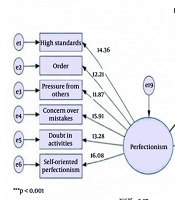
Ahmadi M, Jadidi M, Safaei I, Manouchehri Nasab M. Pathways to Risky Behavior: Perfectionism, Doping Intention, and Moral Disengagement Among Elite Athletes. Int J High Risk Behav Addict. 2026;15(3):e173638. doi: https://doi.org/10.5812/ijhrba-173638
Mohammadi S, Naghdi H. Prevalence and awareness of the side effects of anabolic steroid use among school students in Kurdistan, 2012. J Kermanshah Univ Med Sci. 2013;17(3):e77113. doi:
Last Update: 1 month ago
Last Update: 1 month ago
Last Update: 1 month ago
Last Update: 6 days ago
Last Update: 3 hours ago
Last Update: 3 days ago